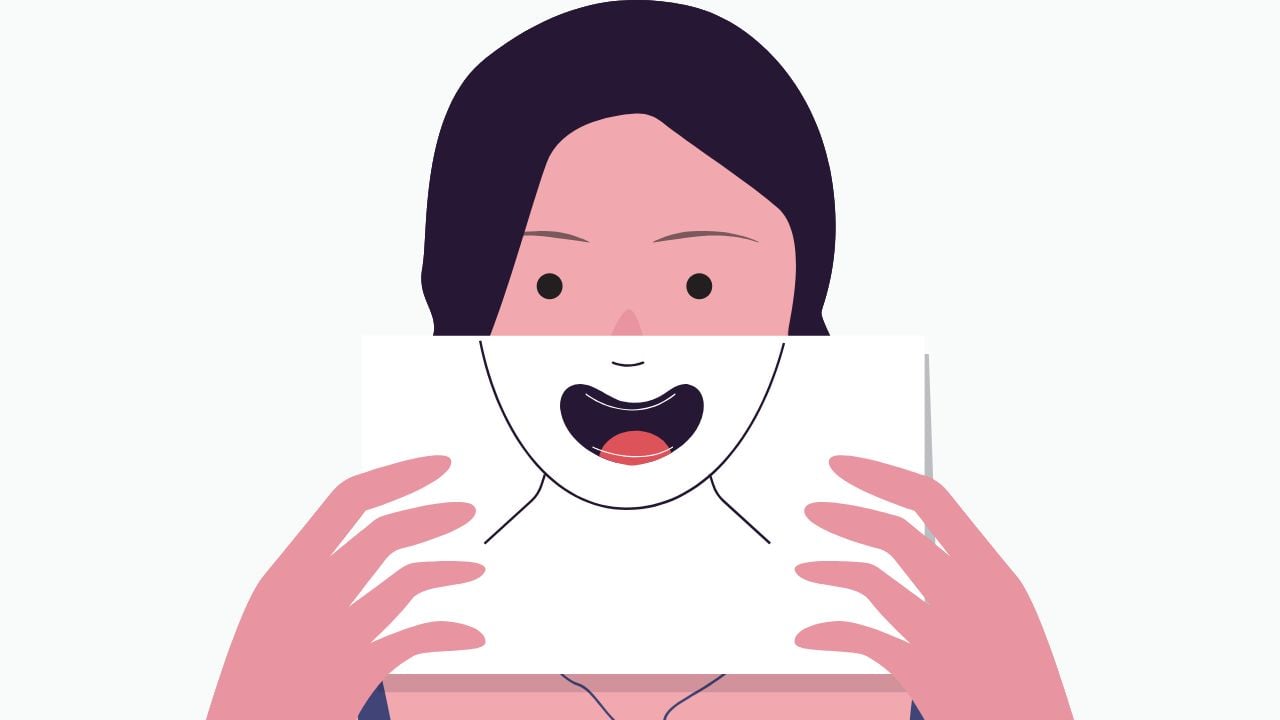
A massive new critical review has taken a deep dive into over 300 studies to see if we truly understand the phenomenon of autistic camouflaging (or “masking”). The authors found that while the stories of autistic people are clear, the scientific data is currently confusing and messy.
This investigation highlights a “conceptual fog” that might be holding back better support and more accurate diagnoses.
Key Points
- Researchers analyzed 389 studies and found that the term camouflaging is used inconsistently across the scientific community.
- Current tools like the CAT-Q may accidentally measure social anxiety or general social learning rather than autism-specific traits.
- Most research focuses on women diagnosed in adulthood, leaving a gap in our understanding of men, children, and those with higher support needs.
- The study suggests that some camouflaging behaviors are actually standard human strategies for managing first impressions and navigating stigma.
A Dictionary with Too Many Definitions
One of the biggest hurdles in this field is that scientists cannot seem to agree on what to call this behavior.
Some call it masking, while others use terms like compensation, assimilation, or even “adaptive morphing.”
The review found that nearly 60% of studies used these different terms interchangeably as if they all meant the same thing.
This is not just an academic argument over vocabulary. When researchers use the same word to describe different behaviors, it becomes impossible to compare their findings.
It is like trying to bake a cake when every chef has a different definition of what a “cup” of flour looks like.
Is It Autism or Just Human Nature?
The review also raises a provocative question about whether our current tests are truly measuring autism.
The most popular tool, the Camouflaging Autistic Traits Questionnaire (CAT-Q), shows signs of being “confounded.”
This means it might be picking up on general social anxiety or “impression management” rather than something unique to autism.
Almost everyone manages their “public self” to some degree. We all have a “backstage” where we prepare for social interactions.
The researchers suggest that many behaviors labeled as camouflaging are actually things that neurotypical people do too. This overlap makes it difficult for clinicians to tell where a personality trait ends and a coping mechanism begins.
The Missing Faces in the Research
If you look at the typical participant in a camouflaging study, you will likely see a specific profile.
Most research has focused on autistic women who were diagnosed as adults and do not have intellectual disabilities. While their experiences are vital, they do not represent the entire autistic community.
The study points out that we know very little about how camouflaging looks in men or children. We also lack data on people with language difficulties or those who require significant daily support.
By only looking at one group, we might be creating a “one size fits all” theory that actually fits very few.
Cracking the Code of the Social Script
Some of the camouflaging strategies identified in the research look a lot like “social scripts.” These are pre-planned lists of questions or topics used to keep a conversation moving. While these scripts help people “fit in,” they often come at a high internal cost.
The review notes that there is a difference between camouflaging “intent” and camouflaging “efficacy.” Someone might try very hard to blend in (intent) but still be perceived as different by others (efficacy).
Understanding this gap is crucial for helping people manage the burnout that often follows long periods of “performing” as neurotypical.
Why It Matters
This research is a wake-up call for how we view mental health and identity in the neurodivergent community.
For the general public, it is a reminder that social “smoothness” is often a result of invisible labor. Many people you meet may be working overtime just to appear “normal” in a brief conversation.
For clinicians, the takeaway is one of caution. The study suggests that tools like the CAT-Q should not be used as a simple shortcut for diagnosis yet. Instead, doctors need to look deeper into whether a patient is camouflaging or if they are experiencing social anxiety or standard social learning.
In our everyday lives, this findings encourage us to build a world where “masking” is not a requirement for acceptance.
When we reduce the stigma surrounding autistic traits, the need for exhausting camouflaging begins to fade. Real-world impact starts with moving away from a “deficit” model and toward a society that values different ways of interacting.
Reference
Arnold, W. M., Bitsika, V., & Sharpley, C. F. (2026). Camouflaging and autism: Conceptualisation and methodological issues. Autism, 13623613261420085. https://doi.org/10.1177/13623613261420085

