The Hawthorne effect is people’s tendency to change their behavior simply because they know they are being watched, not because of what is actually being tested. It was first observed in 1920s productivity studies at a Chicago factory, and remains a key threat to the validity of psychological research today.
Key Takeaways
- Definition: The Hawthorne effect refers to the increase in the performance of individuals who are noticed, watched, and paid attention to by researchers or supervisors.
- Term Origin: In 1958, sociologist Henry A. Landsberger popularised the term ‘Hawthorne effect’ while re-evaluating studies at Western Electric’s Hawthorne Works near Chicago. Researcher John R. P. French had originally coined the term in 1953.
- Alternative Explanations: The novelty effect, demand characteristics and feedback on performance may explain what is widely perceived as the Hawthorne effect.
- Modern Critique: Although the Hawthorne effect’s possible implications remain relevant in many contexts, recent research challenges many of its original conclusions.
- Verdict: Supported with qualifications. Being studied can change behavior, but the size and cause of the effect remain unclear.
Fox et al. (2008) describe the Hawthorne effect as the tendency to alter behavior when aware of being observed.
People may therefore act differently once they know they are subjects in an experiment. Simply receiving attention from experimenters can be enough to change their behavior.
Hawthorne Experiments
The Hawthorne effect is named after a set of studies conducted at Western Electric’s Hawthorne Plant in Cicero during the 1920s.
The scientists on this research team were Elton Mayo (Psychologist), Roethlisberger and Whitehead (Sociologists), and William Dickson (company representative).
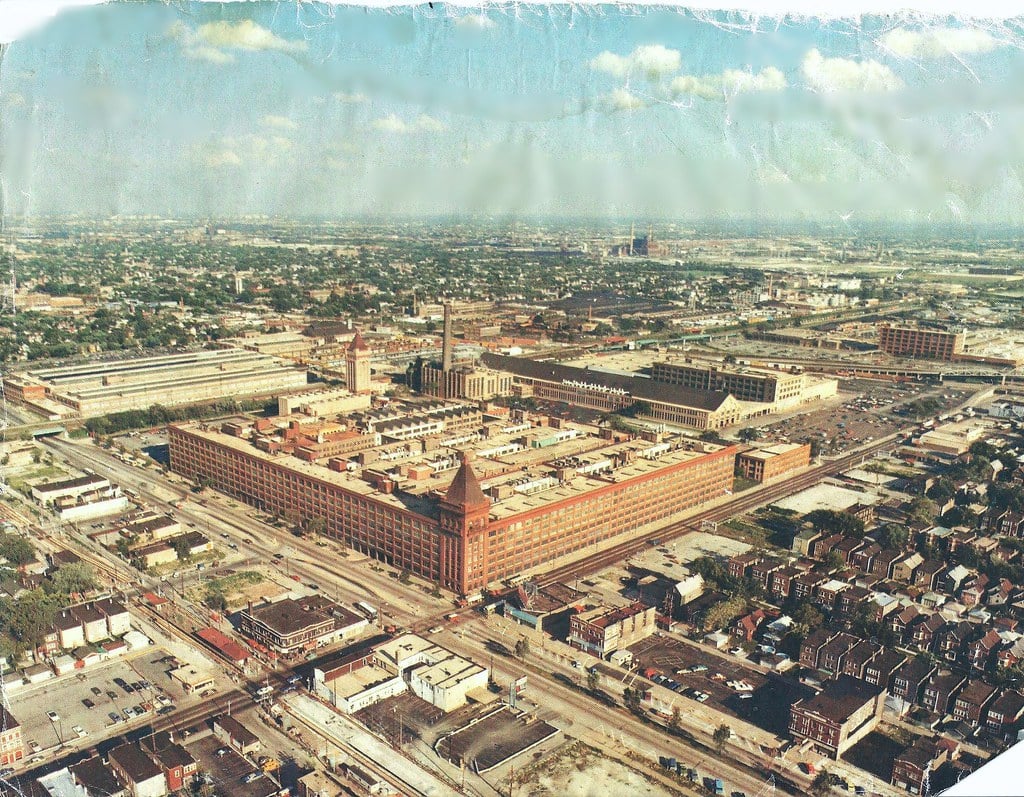
There are 4 separate experiments in Hawthorne Studies:
- Illumination Experiments (1924–1927): Tested whether lighting levels affected productivity.
- Relay Assembly Test Room Experiments (1927–1932): Tracked output as rest breaks and the working day’s length were varied for a small group of women.
- Experiments in Interviewing Workers (1928–1930): Interviewed tens of thousands of employees; being listened to appeared to raise morale.
- Bank Wiring Room Experiments (1931–1932): Observed fourteen men wiring telephone switching equipment.
The Hawthorne Experiments, conducted at Western Electric’s Hawthorne plant in the 1920s and 30s, fundamentally influenced management theories.
They highlighted the importance of psychological and social factors in workplace productivity, such as employee attention and group dynamics. Many credit them with launching the human relations movement.
That movement challenged scientific management, the view that workers were individual economic units to be optimized through physical conditions and piece-rates. The Hawthorne reading argued instead that morale, attention, supervision style and informal group life decided productivity.
It seeded decades of research on job satisfaction, leadership and group dynamics, including Herzberg’s two-factor theory.
The reading is contested. Critics argue the moral that attention raises productivity was drawn selectively. The Bank Wiring results, where attention lowered output, sit awkwardly with it. The studies were also as much about discipline, feedback, pay and rest as about being observed.
Illumination Experiment
- Aim: Sponsored by the National Research Council, the Illumination Experiment (1924–1927) tested whether workplace lighting levels affected the productivity of workers assembling electrical relays.
- Method: Researchers raised and lowered the lighting in stages and observed how the workers’ output responded to each change.
- Results: Output rose after almost every change in lighting, brighter or dimmer, even when it returned to a poor level. These gains disappeared once attention faded (Roethlisberger & Dickson, 1939).
- Conclusion: The researchers concluded the increase reflected workers’ awareness of being observed, not the physical lighting conditions themselves. Their attention, not the lighting, appeared to explain the higher output.
These claims rest on the 1939 account. When Levitt and List (2011) later analyzed the recovered records, the dramatic pattern was largely absent (see the criticisms below).
Hawthorne Experiment by Elton Mayo
Relay Assembly Test Room Experiment
- Aim: Spurred by the illumination findings, Elton Mayo (1880–1949) and colleagues tested whether rest breaks, working-day length and other conditions affected productivity.
- Method: From 1927 to 1932, researchers varied rest breaks, working-day length and refreshments for five women assembling telephone relays in a separate test room.
- Results: Output generally rose whichever way conditions changed: rest periods added or removed, workday lengthened or shortened.
- Conclusion: Mayo’s team concluded that awareness of being observed, plus the friendly atmosphere and team spirit, drove the improvement (Mayo, 1933).
Freedman (1981, p. 49) summarizes the results.
“Regardless of the conditions, whether there were more or fewer rest periods, longer or shorter workdays…the women worked harder and more efficiently.”
Researcher John R. P. French (1953) coined the term Hawthorne effect, and sociologist Henry A. Landsberger (1958) gave it wide currency when he re-analyzed these findings decades later. It describes the increase in the performance of individuals who are noticed, watched, and paid attention to by researchers or supervisors.
Further Hawthorne Studies
Inside the Relay Test Room
The Relay Assembly Test Room study followed six women, the five assemblers plus the operator who laid out the parts (Harvard Business School, Historical Collections).
Following the secret measuring of their output for two weeks, the women were moved to a special experiment room.
The experiment room, which they would occupy for the rest of the study, had a supervisor who discussed various changes to their work. The women’s breaks varied in length and regularity. Food was sometimes provided and sometimes withheld, and the length of the workday also changed.
Most changes to these variables, including returns to the original state, were accompanied by an increase in productivity. Most strikingly, the special conditions were withdrawn and the women returned to a full 48-hour week with no rest pauses or refreshments. Output still climbed to its highest level yet recorded.
The researchers concluded that the women’s awareness of being monitored improved their productivity. So did the team spirit created by the close environment (Mayo, 1933).
Bank Wiring Observation Room Study
Subsequently, a related study was conducted by the anthropologist W. Lloyd Warner and the Harvard psychologist Elton Mayo (Henslin et al., 2015).
They studied 14 men who assembled telephone switching equipment. A full-time observer sat in the room and recorded everything that happened, and pay was linked to output through a group wage-incentive scheme.
The outcome ran against the earlier phases:
- Output fell: Rather than rising, productivity dropped, because the men restricted their output.
- Suspicion: The men feared higher productivity would lead the company to lower their base rate or find grounds to fire some workers.
- Cliques: Observers found smaller cliques within the group, each with its own rules of conduct and ways to enforce them.
- Peer pressure: Workers were influenced more by their peer group than by incentives from their superiors.
This did not challenge the previous findings. It showed that social factors, whether attention, group spirit or group pressure, were the powerful common driver. Observation cut both ways.
Hawthorne Effect Examples
Managers in the Workplace
The studies discussed above reveal much about the dynamic relationship between productivity and observation.
On the one hand, letting employees know they are being observed may create a sense of accountability. Such accountability may, in turn, improve performance.
But what if employees perceive ulterior motives behind the observation? A different set of outcomes may then ensue.
If employees reason that higher productivity could harm their colleagues, or eventually reduce their own earnings, they may not be motivated to improve their performance. Trust matters.
This suggests that while observation in the workplace may bring real benefits, it must still account for other factors. These include the camaraderie among workers, the existing relationship between management and employees, and the compensation system.
Education
A study investigated whether pupils’ awareness of experimentation, based on direct and indirect cues, affected their performance (Bauernfeind & Olson, 1973). Among children in grades 3 to 9, the researchers found little evidence of a Hawthorne effect.
The effect was weak or absent. Either the intended cues failed to evoke it, or it was too weak to alter the results.
What if the Hawthorne effect were present in other educational contexts, such as older students or teachers being observed? The implications could be important.
For instance, teachers might alter their approach if they know they are being observed and evaluated. This could be via camera or an observer sitting in the class.
Likewise, if older students were informed that their classroom participation would be observed, they might have more incentives to pay diligent attention to the lessons.
Medicine and Clinical Trials
The Hawthorne effect is a recognised problem in clinical research.
Trials guard against it with control groups, placebo conditions, and blinding, which keeps participants, or participants and researchers alike, unaware of who is in which condition.
McCarney and colleagues (2007) ran a randomised controlled trial designed to test for the effect. They followed older people with dementia in a drug trial and varied how often they were assessed, not whether they knew they were being studied.
Those assessed more intensively did better on a cognitive measure. Those assessed minimally rated their own quality of life higher.
The effect is especially troublesome for treatment adherence.
An electronic pill-bottle cap that timestamps every opening can itself change behavior, so patients may take medication more reliably because they know it is being tracked. The measurement then acts as an unintended intervention, not an accurate record of normal adherence.
Fox and colleagues (2008) found a similar pattern in clinical judgement: obstetricians’ estimates of fetal weight shifted once they knew their accuracy was being checked.
Why Observation Changes Behavior
Why Being Watched Changes Behavior
Participants who know they are the object of attention respond to the fact of being studied. Several processes plausibly contribute:
- Motivation: People become more motivated and put in more effort.
- Self-consciousness: They become more careful and self-conscious about their performance.
- Self-presentation: They may try to present themselves favorably, either to help the researcher or to look competent.
The common thread is the social situation of being observed.
If output, symptoms or scores improve after an intervention, the improvement may reflect awareness of being monitored rather than the intervention itself.
Being observed therefore becomes a confounding variable: something other than the manipulated variable that could equally explain the change. It offers a rival explanation for any improvement.
This is a form of reactivity: the act of measurement changes the very thing being measured.
Threats to Internal and External Validity
That rival explanation threatens internal validity: the change may be due to observation rather than the independent variable. It also threatens external validity and ecological validity, because behavior produced under observation may not generalize to how people act when nobody is studying them.
The two are contrasted in internal vs external validity.
Field and applied research is especially exposed, because a formal control for being observed is often absent.
Objective measures are not immune either. That is one reason behavioral measures are not automatically superior to self-report: an objective measure can still be reactive.
Suppose a hospital tests whether a new leaflet improves medication adherence, measured with an electronic pill-bottle cap that timestamps every opening. Adherence looks excellent. Yet some of it may reflect patients opening the bottle on schedule because they know the cap is recording them.
The cap has acted as an intervention, so the leaflet’s true effect is overstated. A repeat study without the monitoring device might find no benefit at all.
The general lesson is that being measured is rarely neutral. Wherever participants know an outcome is being watched, part of any change may belong to the watching rather than to the intervention.
Alternative Explanations
Despite the possibility of the Hawthorne effect and its seeming impact on performance, alternative accounts cannot be discounted.
The Novelty Effect
The Novelty Effect describes how human performance improves in response to new stimuli in the environment (Clark & Sugrue, 1988).
Such improvements result not from any advances in learning or growth, but from a heightened interest in the new stimuli. They tend to fade once that novelty wears off.
Some of the early gains in the Hawthorne illumination studies may reflect this novelty rather than the effect of being observed as such.
Demand Characteristics
Demand characteristics describe the phenomenon in which the subjects of an experiment draw conclusions about the experiment’s objectives. They then alter their behavior, consciously or subconsciously, as a result (Orne, 1962).
The participant’s intentions would play a vital role here. These may range from striving to support the experimenter’s implicit agenda, to attempting to undermine the credibility of the study entirely.
Feedback on Performance
Regular evaluations by experimenters can function as a scoreboard that boosts productivity. Simply being more aware of their own performance may motivate workers to increase their output.
Parsons (1974) argued that this, not observation itself, explains the Relay Assembly Test Room findings. The women received continuous feedback on their output and were paid under a small-group incentive scheme. Faster work was therefore rewarded directly and promptly. This was an ordinary process of operant reinforcement, in which a rewarded behavior becomes more frequent, rather than a mysterious effect of being watched.
Evaluation Apprehension and Social Desirability
People may also change their behavior out of anxiety about being judged, known as evaluation apprehension (Rosenberg, 1965).
A related idea is social desirability: the wish to be seen favorably, especially on self-report measures (Crowne & Marlowe, 1960).
Both differ from the Hawthorne effect in emphasis, describing a motive to look good rather than a general response to being watched.
Other Reactivity Effects
Because “the participants knew they were being studied” can explain almost any unexpected result, the Hawthorne effect is easily confused with neighboring ideas. Telling them apart helps diagnose why a study might be biased.
- John Henry effect: Participants who know they are in the untreated control group work extra hard to beat the treatment group, distorting the comparison (Cook & Campbell, 1979).
- Observer effect: The broad principle that observing or measuring something can change it. The Hawthorne effect is its human-behavioral case.
- Experimenter effects: The mirror-image bias on the researcher’s side, where expectations shape how participants are treated or data are interpreted (Rosenthal, 1966).
Where the Hawthorne effect is a bias in participants’ behavior, experimenter effects are a bias in how the researcher behaves toward participants or interprets their data.
Evidence Check: Does the Hawthorne Effect Hold Up?
Verdict: Supported with qualifications.
Being studied can change behavior. The dramatic textbook version of the Hawthorne findings does not survive a return to the recovered records.
How large, how reliable and by what mechanism observation changes behavior is still poorly established. In the best recent pooled estimate, the effect is no longer statistically significant once only well-designed studies are counted.
Does Taking Part in Research Change Behavior?
Level of evidence: Meta-analysis or systematic review; partly replicated.
Research participation can change the behavior being studied. The effect is inconsistent, though, and its mechanisms are unclear. It therefore threatens internal and external validity.
Three studies bear on the claim:
- McCambridge et al. (2014): Nineteen studies that isolated the effect of being studied, eight of them randomised trials. Most reported some effect, but bias was judged likely.
- Berkhout et al. (2022): A primary-care meta-analysis pooled binary outcomes to an odds ratio of 1.41 (95% CI 1.13 to 1.75; I2 = 97%).
- McCarney et al. (2007): A randomised trial of 176 people with mild to moderate dementia, comparing intensive with minimal follow-up.
The McCambridge team searched for studies that separated being studied from any co-intervention, almost all in the health sciences. They concluded that participation does affect behavior. Little could be said securely about conditions, mechanisms or size.
The Berkhout team searched reports from January 2012 to March 2022. They retained 74 records for defining the effect and 15 for quantifying it. The effect lost significance in well-designed studies. It also varied with the outcome, the setting and the status of the people involved.
The trial tested one ingredient of observation. Intensive follow-up meant assessment visits at baseline and two, four and six months. Minimal follow-up meant baseline and six months only.
At six months the intensive group did better on the cognitive score. The minimal group rated its own quality of life higher.
The reviews support the claim that being studied is not neutral. They do not support one stable Hawthorne effect.
Wide variation, the shrinking effect in well-designed studies and a mixed trial result fit a family of research-participation effects better than a single phenomenon.
How far can this be trusted? The McCambridge review is the most trustworthy for the bare claim that an effect exists, because it screened out co-interventions.
The Berkhout analysis is the best guide to size, but only in primary care. An I2 of 97% means most variation between studies reflects real differences rather than chance.
The McCarney trial is the cleanest causal test. Yet it is one modest dementia trial, and its two significant outcomes point in opposite directions. It varied how often people were assessed, not whether they knew they were studied.
Did the Original Studies Show the Dramatic Effect?
Level of evidence: Correlational or self-report study; not yet replicated.
The textbook story says output jumped whenever lighting changed. The recovered records do not show this.
Levitt and List (2011) analyzed the recovered daily output records from the lighting experiments, which had been assumed lost. Lighting changes were made on Mondays, and output rises on Mondays without any change too.
The weekday rhythm, not the lighting, explains the rise.
They did find weak signs of a subtler effect. Output tended to be higher while experiments were running. Output also responded somewhat more to deliberate lighting changes than to natural changes in daylight.
The first sign disappears once seasonal controls are added. The second is small and, in the authors’ word, circumstantial.
Earlier statistical re-analyses of the relay-room data by Franke and Kaul (1978) and Jones (1992) likewise found the story hard to sustain once other influences were allowed for.
The recovered data undercut the claim that every lighting change raised output, because the same rise appears when nothing changed. That shows a story was mis-reported. It does not show that observation never matters.
Reinforcement through feedback and pay, or discipline and economic pressure, would produce the same rising output with no role for observation. The data cannot choose between those accounts and the human-relations reading.
The supported claim is narrower: the original studies fail as a demonstration of the textbook effect.
How far can this be trusted? The Monday comparison is the strongest element, because unchanged Mondays act as a built-in control.
Yet this is one plant in the 1920s, with output as the only measure and incomplete original documentation. The three re-analyses use overlapping records, so they are successive readings of related data, not independent tests.
They cover only the illumination phase.
Criticisms and Reappraisal
Despite the seeming implications of the Hawthorne effect in a variety of contexts, recent reviews of the initial studies challenge the original conclusions.
For instance, the data from the first experiment were long thought to have been destroyed. Rice (1982) notes that “the original [illumination] research data somehow disappeared.”
Gale (2004, p. 439) put it more starkly. “[T]hese particular experiments were never written up, the original study reports were lost, and the only contemporary account of them derives from a few paragraphs in a trade journal.”
Economists Steven Levitt and John List later recovered and re-analyzed the original data (Levitt & List, 2011).
- Aim: To test whether the dramatic pattern attributed to the illumination experiments appears in the data, and to design a stronger test for the effect.
- Method: They analyzed the recovered records, never formally analyzed before. Their new test looked for excess responsiveness of output to experimenter-induced lighting changes, relative to naturally occurring variation.
- Results: The supposedly remarkable data patterns proved to be “entirely fictional.” The authors found only more subtle, possible manifestations of a Hawthorne effect.
- Conclusion: The famous illumination version of the effect is an exaggerated reading of thin data. Any real reactivity to observation is subtle and inconsistent.
This carries particular weight because Levitt and List went back to the primary records rather than re-interpreting the story second-hand. It covers only the illumination phase. It says less directly about the more heavily cited Relay Assembly Test Room findings.
Another study asked whether the Hawthorne effect actually exists at all (McCambridge, Witton & Elbourne, 2014). It asked under what conditions, and how large.
Following a systematic review of the evidence, weighing the findings of many studies rather than relying on one, the researchers concluded that research participation can genuinely change behavior. More research is needed to pin down its operation, magnitude, and mechanisms.
Confounds in the Original Studies
The original phases were small, with five women in the Relay Assembly Test Room and fourteen men in the Bank Wiring Room. They were also riddled with confounds: other changes that could explain rising output without any special effect of observation.
Over the course of the studies, participants also experienced several other changes:
- More feedback: Workers received more feedback on their performance.
- Altered pay: Pay incentives changed.
- Better rests: Rest breaks were more frequent and better timed.
- Faster workers: In the Relay Room, two workers were replaced with faster ones partway through.
Statistical re-analyses point the same way. Franke and Kaul (1978) offered the first full statistical re-interpretation. They concluded that managerial discipline, the economic pressure of the Depression and rest breaks explained the gains better than workers’ awareness of being observed.
Jones (1992) re-analyzed the Relay Assembly data and found little evidence of a genuine Hawthorne effect once other factors were taken into account.
Adair (1984) called it a methodological artifact. That is a spurious result of how studies were conducted, and its definition and estimated size vary widely between studies.
The label has also drifted. Wickström and Bendix (2000) argued that the original studies do not demonstrate the simple phenomenon that textbooks attribute to them. “Hawthorne effect” has become an over-used and under-defined shorthand, often applied to any unexplained improvement in an observed group.
Toward ‘Research Participation Effects’
Rather than debating whether ‘the’ Hawthorne effect exists, most researchers now measure research-participation effects directly and design studies around them.
McCambridge and colleagues (2014) argue for replacing the single, catch-all ‘Hawthorne effect’ label with more precise concepts tailored to each study. The issue is increasingly relevant to digital research too.
In large-scale A/B testing, participants who realise they are part of a study may behave differently. Researchers therefore rely on unobtrusive logging and identically treated control groups, to stop observation itself from confounding the results.
Methodologists have also studied the observer.
Oswald, Sherratt and Smith (2014) described eighteen months of participant observation on a large UK civil engineering project. They set out a six-stage routine.
It runs: judge the person in front of you, appear non-threatening, introduce yourself, build rapport, wait for a relaxed signal, then steer toward the topic. They argue that trust helps workers behave naturally.
This is a single-site case study written from the observer’s own experience. It shows what one practitioner found workable. It does not show that the routine reduces reactivity.
Across these strands the modern emphasis is the same: treat being in a study as a measurable, controllable influence, not a mysterious, uniform force.
Why the Concept Still Matters
The enduring value of the Hawthorne effect is as a methodological caution.
It reminds researchers that measurement is not neutral and that participants react to being studied. That caution is well founded. A systematic review confirmed that research participation can change behavior (McCambridge et al., 2014).
Applied findings show observation, or more intensive assessment, shifting real clinical outcomes (Fox et al., 2008; McCarney et al., 2007).
The concept also justifies core features of good design.
Each one neutralizes a way in which observation could confound results: identically treated control groups, blinding, placebo conditions, naturalistic or covert observation, and discarding acclimatization data.
Use it critically, though.
Re-analyses of the founding data (Franke & Kaul, 1978; Adair, 1984; Jones, 1992; Levitt & List, 2011) show the original effect was small, confounded and possibly illusory.
Reactivity to observation is real and worth designing against. But there is no single, large, well-evidenced Hawthorne effect of the textbook kind. That is why methodologists prefer the language of research-participation effects (McCambridge et al., 2014).
How to Reduce the Hawthorne Effect
The credibility of experiments is essential to advances in any scientific discipline. Testing hypotheses becomes exceedingly difficult, though, when results are significantly influenced by the mere fact that subjects were observed.
Several strategies can help reduce the Hawthorne Effect:
- Discard the initial observations: participants need time to adjust to a new environment, so early changes may reflect discomfort rather than the variable being tested.
- Use control groups: when the control group and intervention group are treated alike, observation affects both equally, so their difference isolates the true effect.
- Keep it secret: where ethically permissible, concealing information or collecting data covertly removes participants’ awareness of being watched, often yielding more reliable outcomes.
- Weigh the ethics: covert methods trade off against the ethical requirement of informed consent.
- Use blinding: single- or double-blind designs keep participants, or participants and researchers alike, unaware of which condition someone is in.
- Why blinding works: nobody can adjust their behavior to what they believe is being tested, which reduces both demand characteristics and the Hawthorne effect.
Frequently Asked Questions
What did the researchers, who identified the Hawthorne effect, see as evidence that employee performance was influenced by something other than the physical work conditions?
The clearest evidence came from the illumination experiments (1924-1927) at Western Electric’s Hawthorne plant. Researchers changed the lighting for workers assembling electrical relays, making it brighter or dimmer. Output rose after almost every change, even when the light was turned back down to a poor level.
From 1927 to 1932, Elton Mayo’s team studied five women assembling telephone relays in the Relay Assembly Test Room. They varied rest breaks, workday length and refreshments. Output rose almost regardless of the direction of each change, whether breaks were added or removed.
Most strikingly, the special conditions were later withdrawn and the women returned to a full 48-hour week with no rest pauses or refreshments. Output still climbed to its highest level yet recorded. Mayo’s team concluded that being observed, not the physical conditions, drove the change (Roethlisberger & Dickson, 1939).
What is the Hawthorne effect in simple terms?
In simple terms, the Hawthorne effect is people changing their behavior simply because they know someone is watching them. It is not a response to whatever the researcher actually changed. It is named after the Hawthorne Works, a Western Electric factory near Chicago where the effect was first documented.
John French (1953) coined the term. Landsberger (1958) made it famous, re-analyzing the findings later. Workers’ output rose when supervisors noticed and watched them.
It is a warning sign, not a guaranteed finding. Awareness of being studied can distort results. Blinding or a control group helps guard against it.
References
Adair, J. G. (1984). The Hawthorne effect: A reconsideration of the methodological artifact. Journal of Applied Psychology, 69(2), 334–345.
Bauernfeind, R. H., & Olson, C. J. (1973). Is the Hawthorne effect in educational experiments a chimera? The Phi Delta Kappan, 55 (4), 271-273.
Berkhout, C., Berbra, O., Favre, J., Collins, C., Calafiore, M., Peremans, L., & Van Royen, P. (2022). Defining and evaluating the Hawthorne effect in primary care, a systematic review and meta-analysis. Frontiers in Medicine, 9, Article 1033486. https://doi.org/10.3389/fmed.2022.1033486
Clark, R. E., & Sugrue, B. M. (1988). Research on instructional media 1978-88. In D. Ely (Ed.), Educational Media and Technology Yearbook, 1994. Volume 20. Libraries Unlimited, Inc., PO Box 6633, Englewood, CO 80155-6633.
Cook, T. D., & Campbell, D. T. (1979). Quasi-experimentation: Design and analysis issues for field settings. Rand McNally.
Cox, E. (2001). Psychology for A-level. Oxford University Press.
Crowne, D. P., & Marlowe, D. (1960). A new scale of social desirability independent of psychopathology. Journal of Consulting Psychology, 24 (4), 349-354.
Fox, N. S., Brennan, J. S., & Chasen, S. T. (2008). Clinical estimation of fetal weight and the Hawthorne effect. European Journal of Obstetrics & Gynecology and Reproductive Biology, 141 (2), 111-114.
Franke, R. H., & Kaul, J. D. (1978). The Hawthorne experiments: First statistical interpretation. American Sociological Review, 43(5), 623–643.
French, J. R. P., Jr. (1953). Experiments in field settings. In L. Festinger & D. Katz (Eds.), Research methods in the behavioral sciences (pp. 98-135). Holt, Rinehart & Winston.
Gale, E. A. M. (2004). The Hawthorne studies – a fable for our times? QJM: An International Journal of Medicine, 97(7), 439–449.
Henslin, J. M., Possamai, A. M., Possamai-Inesedy, A. L., Marjoribanks, T., & Elder, K. (2015). Sociology: A down to earth approach. Pearson Higher Education AU.
Jones, S. R. G. (1992). Was there a Hawthorne effect? American Journal of Sociology, 98(3), 451–468.
Landsberger, H. A. (1958). Hawthorne revisited: Management and the worker, its critics, and developments in human relations in industry. Cornell University.
Levitt, S. D., & List, J. A. (2011). Was there really a Hawthorne effect at the Hawthorne plant? An analysis of the original illumination experiments. American Economic Journal: Applied Economics, 3 (1), 224-38.
Mayo, E. (1933). The human problems of an industrial civilization. Macmillan.
McCambridge, J., Witton, J., & Elbourne, D. R. (2014). Systematic review of the Hawthorne effect: new concepts are needed to study research participation effects. Journal of Clinical Epidemiology, 67 (3), 267-277.
McCarney, R., Warner, J., Iliffe, S., Van Haselen, R., Griffin, M., & Fisher, P. (2007). The Hawthorne Effect: a randomised, controlled trial. BMC Medical Research Methodology, 7 (1), 1-8.
Orne, M. T. (1962). On the social psychology of the psychological experiment: With particular reference to demand characteristics and their implications. American Psychologist, 17(11), 776–783.
Oswald, D., Sherratt, F., & Smith, S. (2014). Handling the Hawthorne effect: The challenges surrounding a participant observer. Review of Social Studies, 1(1), 53–73.
Parsons, H. M. (1974). What happened at Hawthorne? New evidence suggests the Hawthorne effect resulted from operant reinforcement contingencies. Science, 183(4128), 922–932.
Rice, B. (1982). The Hawthorne defect: Persistence of a flawed theory. Psychology Today, 16 (2), 70-74.
Roethlisberger, F. J., & Dickson, W. J. (1939). Management and the worker. Harvard University Press.
Rosenberg, M. J. (1965). When dissonance fails: On eliminating evaluation apprehension from attitude measurement. Journal of Personality and Social Psychology, 1 (1), 28-42.
Rosenthal, R. (1966). Experimenter effects in behavioral research. Appleton-Century-Crofts.
Wickström, G., & Bendix, T. (2000). The “Hawthorne effect”—what did the original Hawthorne studies actually show? Scandinavian Journal of Work, Environment & Health, 26(4), 363–367.
Further Information
- Wickström, G., & Bendix, T. (2000). The” Hawthorne effect”—what did the original Hawthorne studies actually show?. Scandinavian journal of work, environment & health, 363-367.
- Levitt, S. D., & List, J. A. (2011). Was there really a Hawthorne effect at the Hawthorne plant? An analysis of the original illumination experiments. American Economic Journal: Applied Economics, 3(1), 224-38.
- Oswald, D., Sherratt, F., & Smith, S. (2014). Handling the Hawthorne effect: The challenges surrounding a participant observer. Review of social studies, 1(1), 53-73.
- Bloombaum, M. (1983). The Hawthorne experiments: a critique and reanalysis of the first statistical interpretation by Franke and Kaul. Sociological Perspectives, 26(1), 71-88.


