“You don’t seem autistic,” “You’re so inspiring for doing that,” or “I didn’t think you’d want to come.”
These phrases may sound like compliments or simple observations, but for many autistic adults, they represent a “death by a thousand paper cuts.”
A groundbreaking new study of 330 autistic adults reveals that these subtle social slights, known as ableist microaggressions, are not just annoying; they are the primary fuel for an exhausting psychological survival strategy.
Key Points
- Subtle discrimination, like “helpful” backhanded compliments, forces autistic adults to hide their natural traits.
- External acceptance—how others treat autism—matters more for mental health than an individual’s self-acceptance.
- Chronic loneliness acts as a primary driver, compelling people to “assimilate” and blend into the non-autistic crowd.
- The environment, not the individual, needs to change to reduce the exhausting burden of social camouflaging.
The Sting of “Hidden” Prejudice
We often think of discrimination as overt bullying, but this study highlights the power of “ableist microaggressions”.
These are the small, everyday slights—like being told “you don’t seem autistic” or being praised for doing simple tasks.
The brain’s safety system interprets these “paper cut” moments as warnings that it is not safe to be oneself.
The research found that the more frequently someone experiences these slights, the more they feel the need to mask their traits.
It’s a protective reflex: if the world reacts to your true self with confusion or condescension, you hide that self away.
A Tale of Three Masks
The study breaks down camouflaging into three distinct “phenotypes,” each serving a different role in a person’s social “toolkit”.
- Compensation: This is like a “promotion-focused” strategy where a person actively works to overcome social challenges, such as practicing eye contact.
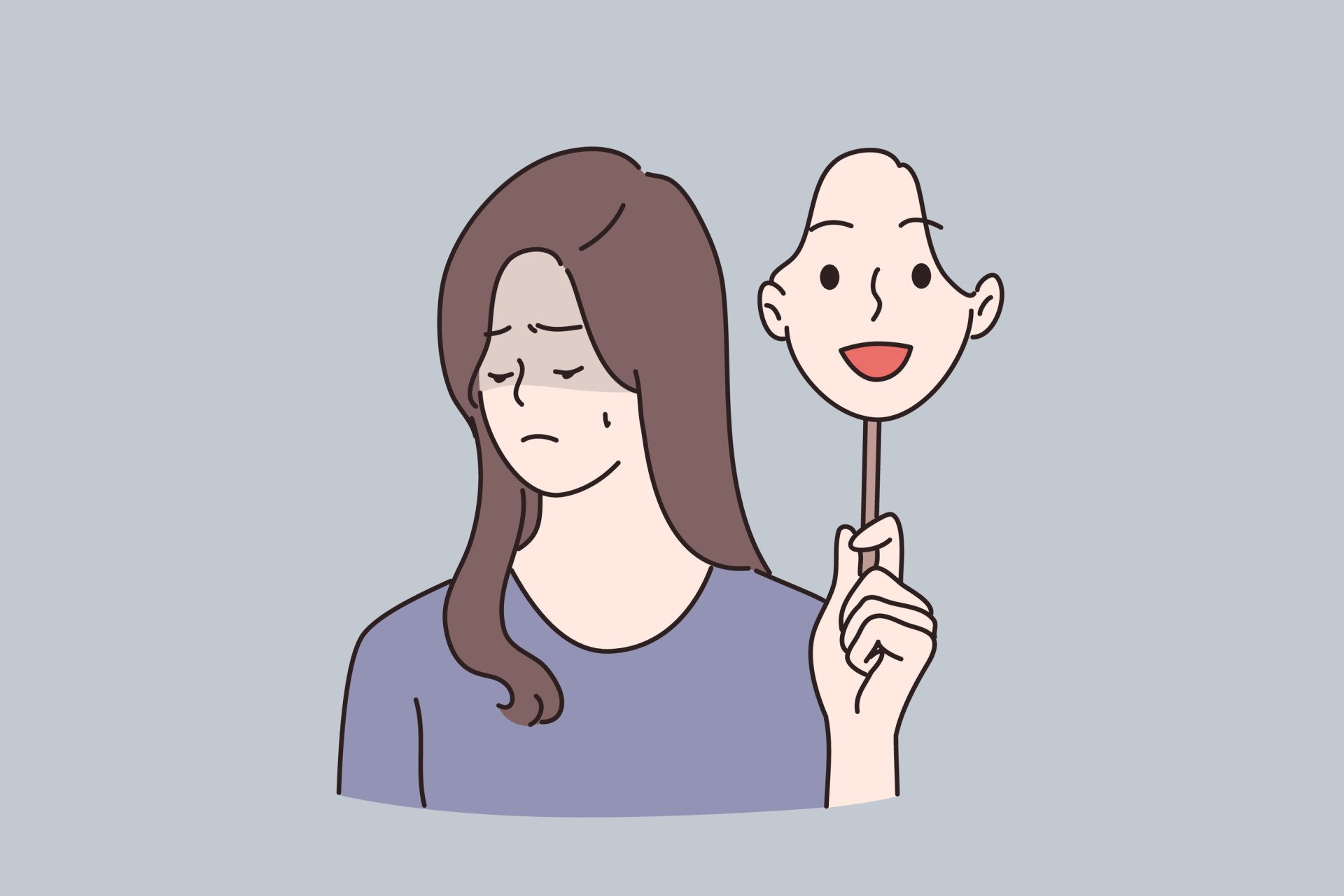
- Masking: This involves covering up autistic characteristics, such as suppressing the urge to stim or fidget, to avoid being stigmatized.
- Assimilation: This is the most profound form, where a person tries to blend into a group so completely that their autistic identity becomes invisible.
The researchers discovered that while compensation and masking are common reactions to stress, assimilation is uniquely fueled by loneliness.
When the gap between the relationships we have and the relationships we want becomes too painful, the urge to “fit in” at any cost takes over.
The Loneliness Connection
The findings suggest a “chain reaction” where the environment dictates how a person feels about themselves.
It starts with subtle discrimination, which leads to a feeling of low “external acceptance”—the sense that society doesn’t value you as you are.
This lack of acceptance creates a vacuum of social connection, leading to intense loneliness.
Loneliness then acts as a “prevention-focused” engine, driving the person to assimilate to avoid the threat of further rejection.
Interestingly, the study found that internal self-acceptance didn’t stop this chain. Even if you like yourself, if the world doesn’t accept you, the pressure to hide remains just as heavy.
Moving Beyond “Fixing” People
For years, social skills training for autistic individuals often focused on teaching them how to act more “neurotypical”.
This study turns that approach on its head by suggesting that the burden of change belongs to the community, not the individual.
The researchers argue for a “person-environment fit” model. If we can reduce ableist microaggressions and increase genuine acceptance in workplaces and schools, the “need” to camouflage will naturally decrease.
When the environment is safe, the mask becomes optional rather than a heavy, mandatory suit of armor.
Why It Matters
This research is a wake-up call for anyone interested in mental health and social equity. It shows that our “polite” comments and subtle judgments have a measurable, compounding impact on the well-being of neurodivergent people.
For the general public, the takeaway is simple: genuine acceptance is an active choice, not a passive one.
It means moving beyond “tolerating” differences to actively valuing diverse ways of thinking and communicating.
For clinicians, it suggests that “treating” an autistic person’s anxiety may require looking at the ableism they face in their daily lives rather than just their internal thoughts.
By fostering inclusive spaces, we don’t just help people feel better—we allow them to finally be themselves.
Reference
Guan, S., Takahashi, F., Wada, M., Takashina, H. N., Ueda, M., Kawashima, M., Kawaguchi, Y., Kato, T., Ogawa, S., Tsuchiya, K., & Oshima, F. (2025). Understanding autistic identity contingencies: The chain mediation effect of autism acceptance and loneliness in ableist microaggressions and social camouflage. Autism. https://doi.org/10.1177/13623613251389876

