When an autistic person shares their diagnosis, they are often met with a phrase intended to be kind: “But you don’t look autistic!”
While the speaker might think they are paying a compliment, experts warn that these words can be deeply dismissive.
According to renowned researchers like Dr. Amy Pearson and Professor Francesca Happé, this common reaction is actually a “microaggression“—a subtle slight that invalidates a person’s lived experience.
As an autistic person myself, this disbelief from others when I disclose my autism diagnosis is a very common occurrence and is something many autistic people face.

This article explores why our society’s narrow view of autism is causing real harm and how we can shift toward a world of true acceptance.
Based on the insights of leading psychologists and neurodiversity experts, we will break down the hidden costs of “masking” and how to respond when your identity is questioned.
Why “You Don’t Look Autistic” Is Not a Compliment
Most people have a very specific image in their head when they think of autism. Often, it’s based on fictional characters like Rain Man or Sheldon Cooper from The Big Bang Theory.
Dr. Amy Pearson, a Senior Lecturer in Psychology and an expert on autistic stereotypes, explains that when people say you don’t “look” autistic, they are comparing you to a narrow, outdated mold.
Dr. Pearson notes that these comments often stem from a medical model of autism. This view assumes that being autistic must look visibly “impaired” or “unwell.”
When an autistic person appears successful, holds a conversation, or is “well put together,” others may doubt their diagnosis because it doesn’t fit the negative stereotype.
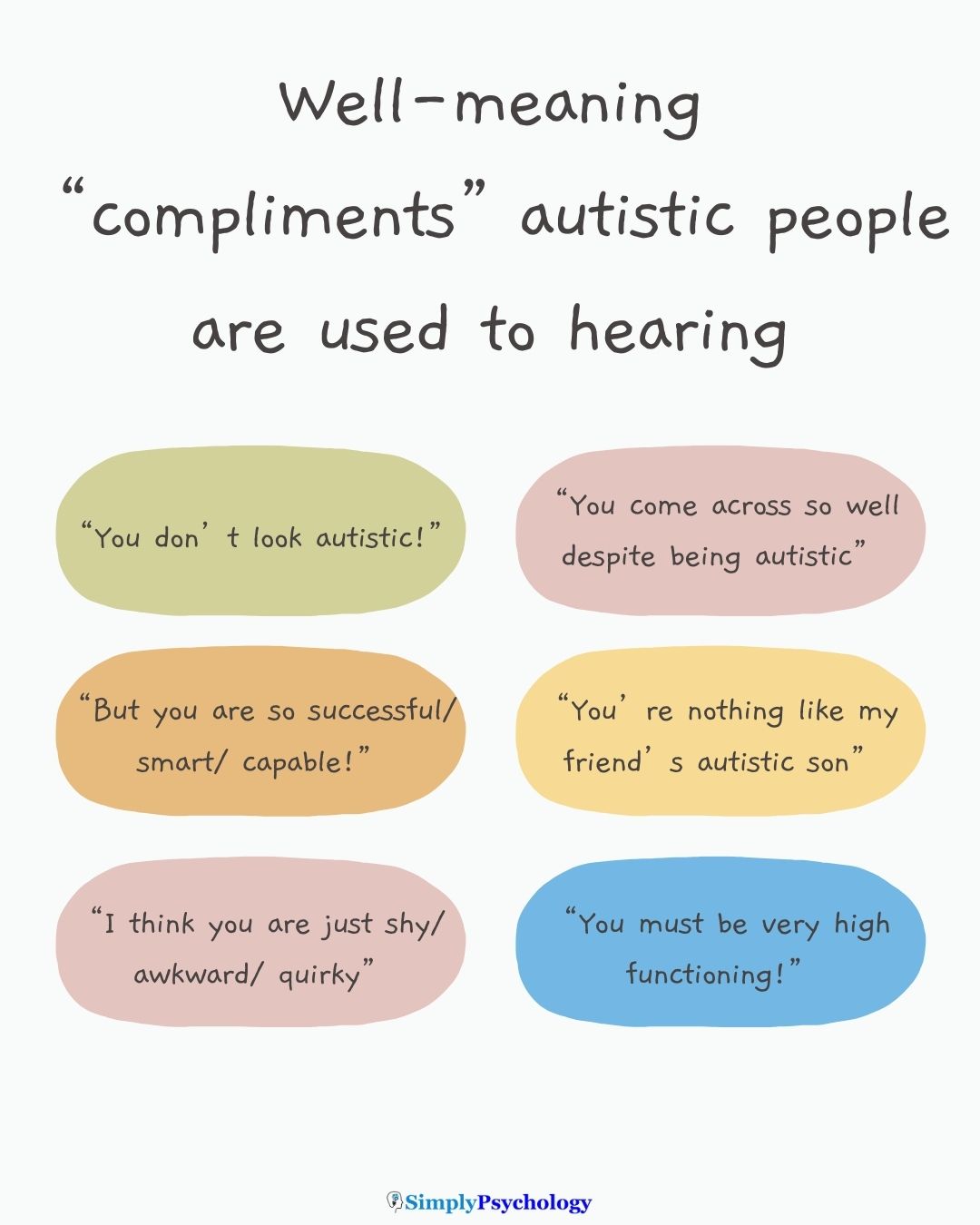
Common Phrases That Are Actually Microaggressions
Here are a few examples of what autistic people frequently hear:
- “I would never have guessed! You come across so well.”
- “But you’re so successful/smart/articulate!”
- “You’re nothing like my friend’s autistic son.”
- “Aren’t we all a little bit autistic?”
- “You’re just shy, don’t label yourself.”
- “You must be very high functioning!”
When I hear one of these comments directed at myself, it is always very tempting to respond by saying, "Sorry, would you like me to do more autism for you?"
The Hidden Effort: Understanding “Masking”
The reason many people “don’t look autistic” is often due to camouflaging or masking.
Professor Francesca Happé, a leading expert in cognitive neuroscience, describes this as a massive internal effort to perform “normal” social behaviors.
According to Professor Happé’s research, autistic individuals, especially women or ethnic minorities, frequently use intellectual rules to navigate social cues that others find intuitive. They might:
- Force themselves to maintain eye contact.
- Pre-prepare jokes or scripts for small talk.
- Suppress “stimming” (repetitive movements) to avoid judgment.
As someone who has heavily masked and is late-diagnosed, it is incredibly difficult to start dropping the mask around people who have known you for a long time and have come to love the masked version.
While masking might help someone “pass” in a meeting or a classroom, it is physically and emotionally draining. It can lead to severe burnout, anxiety, and a loss of one’s own identity.
Well-meaning “compliments” about how well an autistic person comes across might just be commenting on how well they are masking. This might encourage the autistic person to continue masking as a way of seeking approval, which can have negative impacts.
The Impact: Invalidation and “Imposter Syndrome”
When a person’s diagnosis is met with disbelief, it creates a sense of invalidation.
Dr. Felicity Sedgewick, an expert on autistic women and social relationships, notes that being told you don’t “seem” autistic can feel like the whole world is gaslighting you.
This skepticism often leads to Imposter Syndrome. Autistic adults may start to doubt their own reality, feeling they aren’t “autistic enough” to ask for help or join community spaces.
Even worse, this disbelief creates barriers to support. If a boss or teacher thinks you “look fine,” they may deny you the simple adjustments like noise-canceling headphones or clear written instructions that would help you thrive.
As an autistic researcher, my heart drops every time someone says to me that I don't "look autistic", because it comes with the realization that we still have so much progress with autism acceptance in society.
Shifting the Perspective: The Double Empathy Problem
For a long time, the burden of “fitting in” has been placed solely on autistic people. However, experts suggest we should look at the Double Empathy Problem. This concept suggests that communication breakdowns are a two-way street.
As Professor Happé and Dr. Pearson highlight, non-autistic people often struggle to read autistic signals just as much as the reverse. Instead of asking autistic people to change, society needs to change the environment.
How to Be a Better Ally
If you want to support the autistic people in your life, Dr. Amy Pearson and Dr. Felicity Sedgewick suggest these steps:
- Drop the Labels: Stop using terms like “high functioning” or “low functioning.” These labels are often rude and tell us nothing about what a person actually needs.
- Validate Their Experience: If someone tells you they are struggling, believe them—even if they look “fine” on the outside.
- Accept Different Communication: Understand that a lack of eye contact or a different tone of voice doesn’t mean someone isn’t interested or empathetic.
- Focus on Safety: Don’t force someone to “unmask.” Instead, make the environment safe enough so they don’t feel they have to hide who they are.
- Follow Autistic Creators: Seek out “insider understanding” from autistic voices on social media or through books to see the true diversity of the community.
My additional advice is to be mindful of the comments you make to autistic people. If you wouldn't say "You don't look disabled" to someone who does not have an obvious physical disability, why is it ok to say "You don't look autistic" to an autistic person?
Conclusion: Toward True Acceptance
Moving beyond “you don’t look autistic” requires us to see autism as a natural part of human diversity, rather than a problem to be fixed.
By listening to the voices of experts and autistic people themselves, we can stop policing how people “should” behave and start creating spaces where everyone can be their authentic selves.