The “ADHD tax” represents the cumulative financial and emotional cost of living with Attention Deficit Hyperactivity Disorder.
It encompasses the involuntary expenses incurred due to executive dysfunction, impulsivity, and dopamine deficiency. These costs manifest through forgotten bills, impulse purchases, and the systemic price of accessing necessary healthcare.
Unlike standard living expenses, these financial burdens are direct consequences of neurodivergent neurobiology.

Examples of ADHD tax
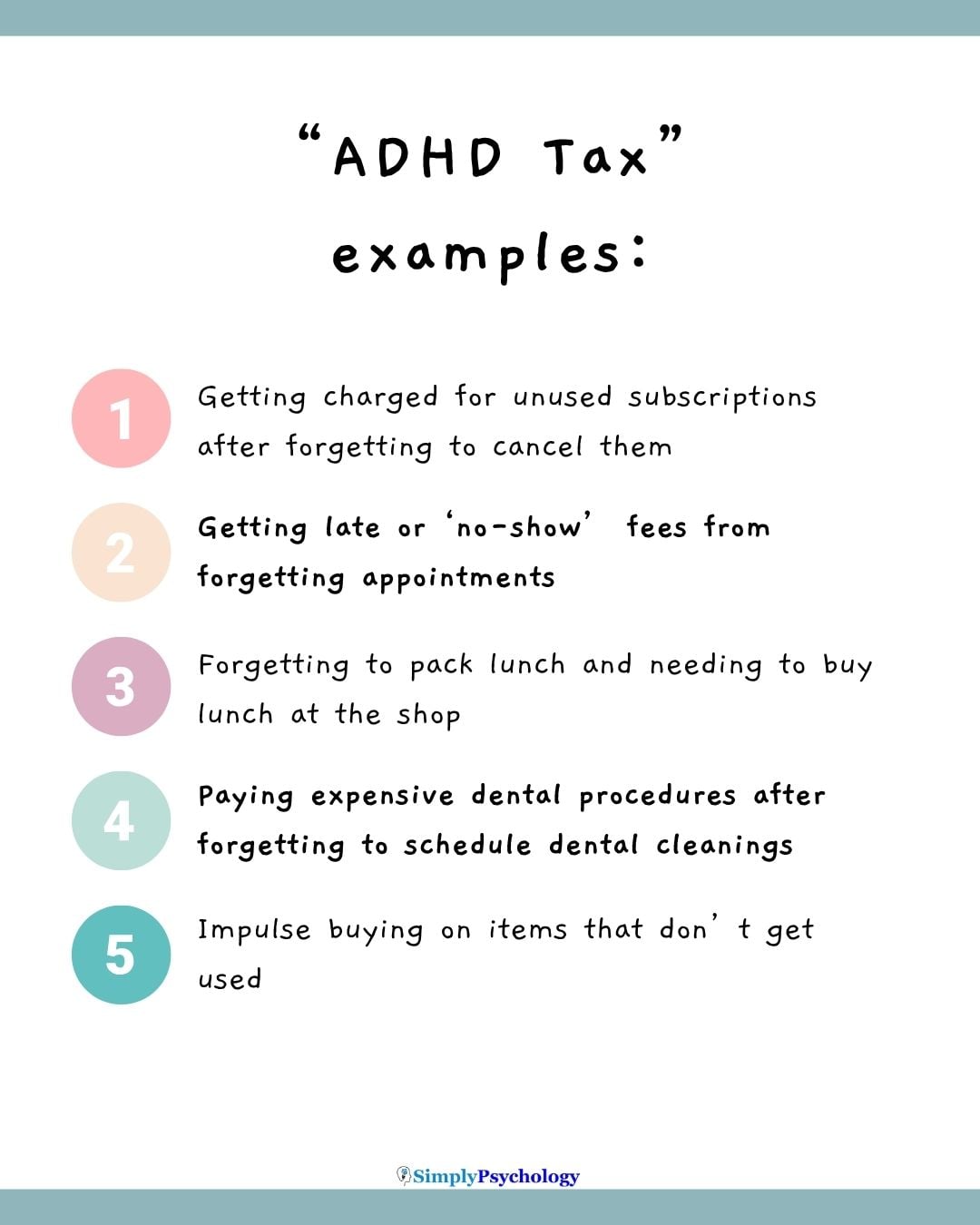
Below are some specific examples to illustrate how this “ADHD tax” can show up for people with ADHD:
- Impulsive shopping on items that are rarely used
- Late and no-show fees for forgetting appointments
- Obtaining fine for failing to renew a driving licence
- Forgetting to schedule dental cleanings, which results in expensive dental procedures later on
- “Ghost taxes” from forgetting to unsubscribe from unused services and by the end of a free trial period
- Paying a premium for retail alternatives when failing to pack a lunch or drink
Neurobiological Drivers of Impulse Spending
Dopamine seeking serves as the primary catalyst for the “Magpie Brain” phenomenon in ADHD populations.
This term describes a neurological craving for novel or “shiny” stimuli to compensate for lower baseline dopamine levels. Individuals often experience an intense, physiological drive to engage with new hobbies or hyperfixations.
High levels of dopamine are released during the acquisition of these items, providing temporary cognitive relief. Unfortunately, this relief is brief, often leading to a repetitive cycle of high-cost consumerism.
Fear of Missing Out (FOMO) further exacerbates this dopamine-driven spending pattern. Anxiety arises when an individual perceives a limited opportunity to acquire a specific item.
This emotional distress bypasses the prefrontal cortex, which governs rational decision-making and long-term planning.
Consequently, a person may purchase multiple versions of the same product to avoid the perceived pain of making a single, permanent choice.
Executive Dysfunction and Financial Instability
Executive dysfunction alters the cognitive processes required for mundane financial maintenance and long-term planning. It involves deficits in working memory, task initiation, and organization that directly impact monetary health.
Mundane necessities like car repairs or utility bills are often neglected in favor of immediate, high-interest stimuli. This lack of a financial buffer forces many into a cycle of debt. They may rely on overdrafts or credit card transfers to cover basic survival costs.
Forgetfulness acts as a hidden multiplier of the neurodivergent tax in daily life. Objects that are not physically visible often cease to exist in the individual’s working memory.
This “out of sight, out of mind” phenomenon frequently leads to food waste and expired subscriptions. Groceries may rot in the refrigerator because the person forgot they were purchased.
Such repetitive losses represent a steady, silent drain on an individual’s monthly income and resources.
The Psychological Burden of Accumulated Waste
The ADHD tax imposes a heavy psychological toll that extends far beyond a diminished bank balance.
Physical clutter from abandoned hyperfixations often fills the living environment of a neurodivergent person. These items serve as permanent visual triggers for feelings of intense guilt and shame.
Every unused gadget or unplayed game reminds the individual of their perceived failure to manage their life. This emotional tax depletes the mental energy required to implement better financial habits.
Systemic Costs and Healthcare Barriers
Systemic inequities significantly inflate the total cost of the ADHD tax through medical and professional barriers.
Public health backlogs often force individuals to seek private diagnostic assessments costing thousands of pounds. After diagnosis, the financial burden continues with the lifelong requirement to fund essential medications.
These stimulants are critical for safety and emotional regulation, yet they remain a significant out-of-pocket expense.
Accessing private therapy or sensory-friendly transport adds further layers to this involuntary financial mountain.
Strategic Interventions for Financial Regulation
Effective management of the ADHD tax requires the implementation of external cognitive scaffolds and environmental modifications.
“Basket Method”
The “Basket Method” creates a mandatory temporal buffer between the initial dopamine urge and the final transaction. By leaving items in a digital cart for several weeks, the initial hyperfixation often fades.
This allows the prefrontal cortex to resume control over the purchasing decision. Removing digital triggers, such as deleting shopping applications, further reduces the frequency of impulse prompts.
Gamification
Gamification serves as a powerful tool to redirect dopamine-seeking behavior toward productive financial goals. By treating mortgage overpayments or savings targets as high-score objectives, individuals can leverage their neurobiology.
Modern banking tools also assist by automating the categorization of spending and utilizing “round-up” features. These apps trick the brain into feeling the satisfaction of spending while actually building a savings reserve.
Societal structures
Societal structures can be modified to reduce the systemic impact of the neurodivergent tax through policy changes and inclusive institutional practices.
These adjustments shift the burden of accommodation from the individual to the organization:
- Financial Grace Periods and Fee Waivers: Banks and service providers can implement “neuro-inclusive” billing policies which involves waiving first-time late fees or overdraft charges for individuals with a documented ADHD diagnosis. Organizations can also provide extended grace periods for bill payments to account for time-blindness.
- Systemic Healthcare Subsidies: Public funding must be increased to eliminate the need for expensive private diagnostic assessments. Expanding the “Right to Choose” model ensures that patients can access timely care without personal financial ruin.
- Workplace Accommodations and Fair Compensation: Protective labor laws should mandate neurodivergent-friendly environments to prevent the tax of underemployment. This includes providing administrative assistants or specialized software to help employees manage deadlines and organizational tasks.
- Proactive Notification Systems: Institutions can reduce the “forgetfulness tax” by implementing redundant, multi-channel notification systems. Instead of a single email, services could provide SMS alerts and automated phone calls 24 hours before a deadline.

