Caregiving is a healthy and compassionate act of providing support and assistance to someone in need, such as a family member, friend, or loved one.
Caretaking, in contrast, is a behavior associated with codependency, where a person takes on the role of “fixer” or “rescuer” in a relationship.
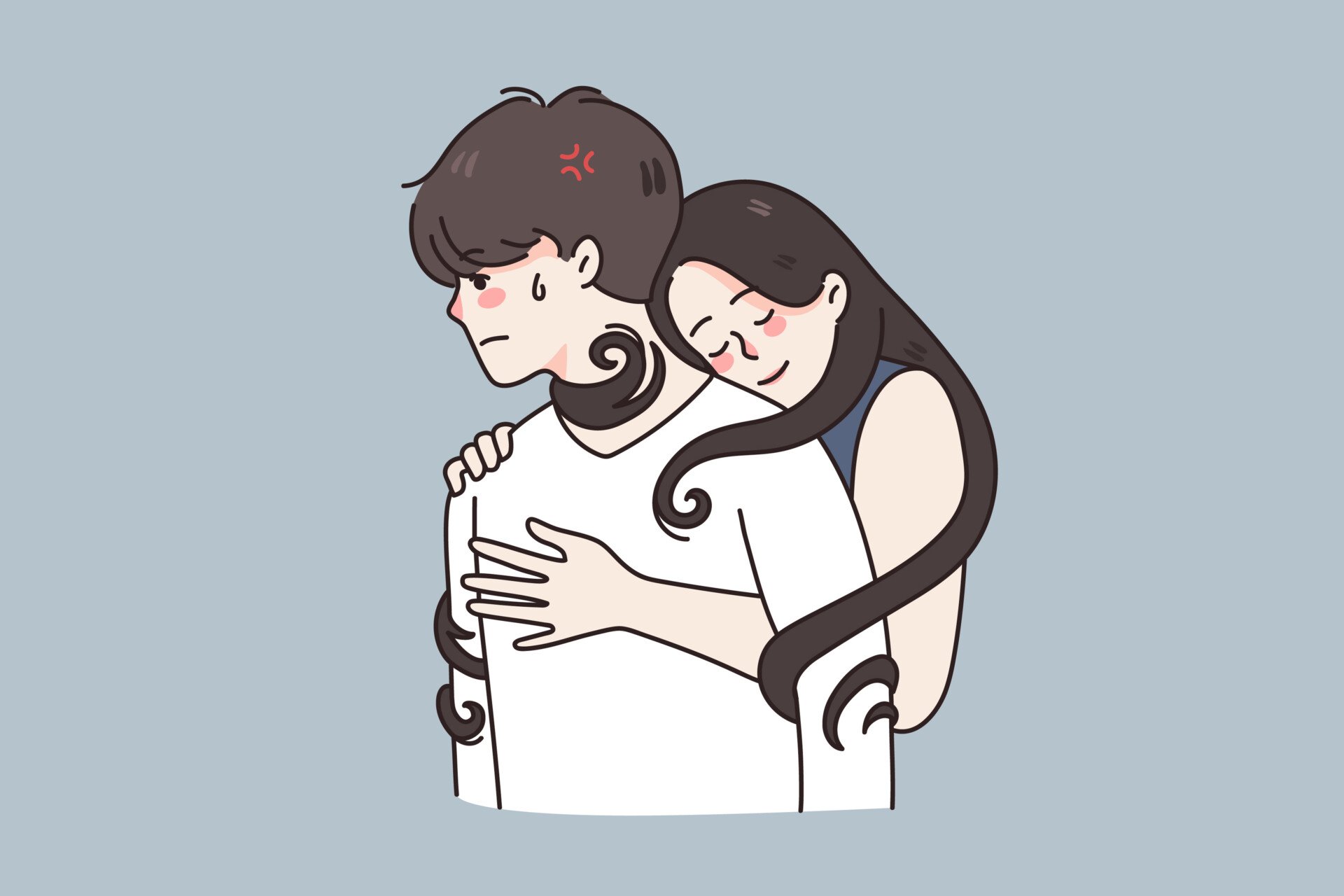
Codependent individuals often draw their self-worth from the approval of others, especially the person they depend on.
This need for external validation can lead to caretaking behavior, which is a central aspect of codependent relationships.
The difference lies in motive. Caretaking is driven by a need for validation or purpose, whereas caregiving comes from genuine empathy and love.
Codependent caretaking can be unhealthy for both parties involved, as it can perpetuate dysfunction and prevent personal growth and autonomy.
Key Takeaways
- Caretaking: Helping driven by a need for approval or purpose. It often becomes fixing, rescuing or enabling, and it is linked to codependency.
- Caregiving: Support given out of empathy and respect. It protects the other person’s autonomy and builds their independence.
- Boundaries: Caretakers struggle to say no and neglect their own needs. Caregivers keep firm limits and look after themselves too.
- Enabling: Covering for someone or shielding them from consequences can keep their problems going.
- Self-Check: The questions in this article are prompts for reflection, not a diagnosis. Codependency is not a formal diagnosis either.
- Verdict: Supported with qualifications. Studies link codependency to distress and strained relationships, but they cannot show that it causes either.
What Is Codependency?
Codependency is a relationship pattern built around another person’s needs. A codependent person’s identity, self-worth and emotional stability depend on meeting those needs, usually at the cost of their own needs, feelings and boundaries.
Professor of psychology Sandra C. Anderson describes it this way:
“A pattern of painful dependence on compulsive behaviors and on approval from others in an attempt to find safety, self-worth, and identity.”
Sandra C. Anderson
The term has no single agreed definition and is not listed as a diagnosis in the DSM, the main psychiatric diagnostic manual. Even so, an analysis of eleven published definitions found four recurring elements (Dear et al., 2004).
The Four Core Elements
The analysis identified four elements that run through most definitions and describe where a person’s attention and energy go:
- External focusing: Attention goes to other people’s needs and feelings instead of inward, which helps avoid uncomfortable emotions.
- Self-sacrifice: Personal needs come second, and self-worth depends on other people’s approval and validation.
- Control: Managing other people feels safer, and it rests on a belief that they cannot look after themselves.
- Emotional constraint: Feelings are suppressed to avoid upsetting others, which fuels people-pleasing and difficulty saying no.
Together, the elements describe a person who looks outward, gives up their own needs, tries to manage others and hides their feelings. Self-worth then depends on how other people respond.
Many people recognize one or two of these in themselves without being codependent.
Enabler and Enabled Roles
Codependency usually involves two interlocking roles. The enabler, or caretaker, takes a protective, fixing role. The enabled person comes to rely on them for emotional support, practical rescue, or both. Caretaking is the everyday form this role takes.
Each role reinforces the other. The enabled person’s struggles trigger the caretaker’s urge to rescue, and rescue deepens reliance. The loop sustains itself.
Fear drives much of this. A pervasive fear of rejection or abandonment fuels the compliance and self-suppression, and can make it hard to leave even a toxic or abusive relationship.
Codependency exists on a spectrum, and caring for others is not a problem in itself. Healthy interdependency is a balanced, mutual reliance in which both people contribute and keep their own identities.
What is Caretaking?
Caretaking refers to the act of taking responsibility for the physical, emotional, or practical needs of another person.
While caretaking may appear as caregiving on the surface, the underlying motivations, goals, and expectations differ significantly.
Caretaking Motivations and Goals
The motivation and goals of caretaking for codependents are often driven by deep-seated emotional needs and dysfunctional patterns of thinking and behavior.
Although a caretaker’s intentions may appear genuine, their primary motivation behind helping and supporting others is to receive appreciation and feel a sense of purpose.
Codependents often need external validation and approval.
They believe that by caring for others and meeting their needs, they will receive praise and validation, which boosts their self-esteem and sense of self-worth.
Additionally, caretaking is often an attempt to fill a void or emotional need. Codependents may believe that by helping and being needed by others, they can find purpose and satisfaction in their own lives.
Esther Perel has a name for a closely related pattern.
As she explains on her podcast Where Should We Begin?, it is a “hero complex” or “rescue fantasy.” She traces it to earlier life, often childhood (Perel, n.d.).
In her telling, the person either rescued a struggling family member or never got the chance to. They may then feel that others reach out mainly “when they need me because I can do something for them.”
Perel notes that such arrangements rarely last. The rescuer, treated as “the nurse,” “the counselor” or “the coach,” starts to wonder whether there will “ever be space for me.”
Caretaking Expectations
Caretakers expect that sacrificing their needs and feelings for others will be met with gratitude, approval, and validation.
However, the other person often fails to meet this expectation. The usual result is disappointment and resentment.
Even if caretaking does temporarily provide some of these benefits, it often leads to unhealthy, dysfunctional, and ultimately unsatisfying relationships in the long term.
Over time, it can result in burnout, resentment, and a sense of emptiness for the codependent individual.
Caretaking Boundaries
Codependent individuals with caretaking tendencies often have trouble establishing and maintaining boundaries.
They may have a hard time distinguishing where their own needs, emotions, and responsibilities end and where those of the other person begin.
In an interview study of eight adults attending UK codependency support groups, participants described this blurring of identity in their own words. Selma, a pseudonym, put it this way:
“…it is like the chameleon, you know, trying to fit in with every situation rather than allowing myself to be who I am…”
Selma, participant in Bacon et al. (2018)
Having such blurred boundaries often results in caretakers neglecting their own needs and emotions in favor of the person they are trying to help.
They may struggle to say no. They feel compelled to meet the needs of others, often at the expense of their own well-being.
The strong sense of obligation to care for and please others, which is often a hallmark of codependency, can lead to burnout and emotional exhaustion.
Enabling
An important distinction between caretaking and caregiving is that caretaking, especially in the context of codependency, often does not provide genuine help.
Instead, it serves to enable and perpetuate the other person’s dysfunctional or unhealthy behavior.
Enabling can take several forms:
- Covering up: Hiding the other person’s mistakes.
- Making excuses: Explaining their behavior away to other people.
- Shielding: Protecting them from the natural consequences of their actions.
This behavior can inadvertently reinforce unhealthy dynamics. By consistently rescuing or fixing the other person’s problems, the caretaker prevents them from taking responsibility for their actions or seeking necessary help.
Research on couples supports this concern.
A systematic review of 60 studies covered 16,394 individuals and 4,945 couples. Negative dyadic coping, meaning unhelpful ways of handling stress as a couple, consistently harmed outcomes for both partners (Landolt et al., 2023).
The review was not about codependency. Still, one cluster of its studies matches the enabling described above. Overprotecting a partner who uses substances, and over-identifying with their use, increased unhelpful coping and made recovery harder.
Support that treated the relationship as a safe haven without minimizing the problem was linked to reduced use (Landolt et al., 2023). Honest support fared better.
A Hungarian survey of 246 adults found a similar pattern. Higher codependency went with more negative dyadic coping, a more problematic view of the relationship and, through both, lower life satisfaction (Happ et al., 2023).
Both studies are correlational. They show patterns that travel together, not causes.
Where Caretaking Comes From
Caretaking rarely appears from nowhere. Codependency usually develops over time, and a person’s upbringing and family relationships play an especially large part. Research on the causes of codependency often points to the family of origin.
In one study, students who reported chronic family stress, such as a parent with alcoholism or mental illness, scored higher on codependency measures (Fuller & Warner, 2000). The students looked back on their own childhoods, though. So the study shows an association, not a cause.
The early environments most often linked to codependency include:
- Addiction or mental illness at home: Children often become caregivers or peacekeepers to keep the family stable, and build an identity around helping.
- Overprotective parenting: Sheltering children from ordinary challenges can hinder self-reliance, decision-making and assertiveness.
- Neglect: Feeling unimportant can lead to a belief that approval must be earned by being perfect.
- Abuse: Children often blame themselves and conclude that they deserve love only if they submit.
- Poor emotional boundaries: Growing up without clear boundaries makes it hard to tell one’s own feelings and needs from other people’s.
- Conditional positive regard: Approval given only when expectations are met teaches a child that love must be earned.
Interviews add the personal side. In a study of eight adults attending UK codependency support groups, participants described an unstable, shifting sense of self. They traced it to childhoods that combined parental control with little emotional support (Bacon et al., 2018).
None of this makes caretaking a personal failing. These traits often develop as adaptive responses to difficult circumstances.
What is Caregiving?
Caregiving refers to the act of providing physical, emotional, or practical support to another based on genuine love, selflessness, and respect.
Caregiving Motivations and Goals
Caregiving is motivated by a deep sense of empathy and compassion for another person.
It’s not about receiving approval or feeling needed. It’s about genuinely wanting to alleviate the other person’s suffering or improve their well-being.
The goal is to support the person’s ability to make decisions and maintain their dignity, while helping them overcome challenges, achieve independence, and experience an improved quality of life.
Caregiving Expectations
Caregiving is often characterized by its unconditional nature, where the caregiver provides help and support without expecting anything in return.
It is a selfless, kind, and compassionate act that focuses on the well-being of the person receiving care without expecting any material rewards, recognition, or reciprocation.
Unconditional does not mean one-sided. In a partnership, healthy support often runs both ways. This mutual reliance is called interdependency: both people contribute to each other’s well-being while keeping their own identities.
Caregiving Boundaries
Caregiving means help is provided when it is needed and asked for. Caregivers respect the autonomy and dignity of the individual receiving care.
They do not overstep on the other person’s boundaries or impose their own values or preferences. Instead, they work to support the person’s choices and decisions.
Additionally, caregivers understand the importance of practicing self-care themselves and implementing firm boundaries to effectively help others while also maintaining their own well-being.
Empowerment
Caregiving is fundamentally about empowering the other person to take control of their own life and maintain their independence, while caretaking may inadvertently enable dependency and hinder personal growth.
Caregivers aim to empower the individual they are caring for by helping them develop the skills and resources needed to maintain their independence.
This might involve rehabilitation, education, or assistance in gaining greater self-sufficiency.
Caregiving emphasizes support that is sustainable in the long term.
It aims to create a foundation for the individual to manage their own well-being, even after the formal caregiving relationship ends.
The same distinction shows up in parenting. A caregiving mother supports her child to grow toward independence and self-sufficiency. A caretaking mother overly attends to her child’s needs, anticipating problems or stepping in before she is asked.
Are you a Caregiver or Caretaker?
The following is a list of questions that will help you to identify whether you might be a caregiver or a caretaker.
If you answer yes to most of these questions, caretaking may be playing a part in your relationships.
Please note that this is not diagnostic. It is a prompt for reflection, not a validated test.
If your answers show a pattern of caretaking that is causing distress or imbalance, consider talking to a professional. They can help you explore these dynamics and work toward healthier, more balanced relationships.
Take some time and consider the following questions:
- Do you often find yourself putting the needs and desires of others ahead of your own, even when it means neglecting your own well-being?
- When you help someone, do you do it primarily because you genuinely want to support them, or do you expect something in return, such as validation, approval, or a sense of self-worth?
- Do you struggle to set and maintain healthy boundaries in your relationships, finding it challenging to say no when someone asks for your help?
- Are you afraid that if you don’t provide assistance or support to others, they will reject you or abandon the relationship?
- Have you noticed that you often take on the role of “fixer” or “rescuer” in your relationships, trying to solve other people’s problems even when they haven’t asked for your help?
- Are there times when you feel emotionally drained, overwhelmed, or exhausted due to the care and support you provide to others?
- Do you ever enable or cover up the destructive behaviors of someone you care for, even if you know it’s not in their best interest?
- Is your sense of self-worth closely tied to how well you can meet the needs and expectations of others?
- Have you experienced a loss of your own identity or personal boundaries in the process of caring for others?
- If you stopped helping, would the relationship survive?
| Caretaking | Caregiving |
|---|---|
| Motivation is validation from others | Motivation is empathy and genuine concern |
| Seeks to control or change the other person | Respects the autonomy of the other person |
| Weak or non-existent boundaries | Healthy, well-defined boundaries |
| Discourages individual autonomy | Respects and supports autonomy |
| Provides short-term relief | Offers sustainable, long-term support |
| Encourages dependency | Empowers and supports independence |
| Conditional, expecting something in return | Unconditional, selfless support |
| Often enables destructive behaviors | Supports personal growth and healing |
| Draining and emotionally exhausting | Balanced, maintains caregiver’s well-being |
| Neglects personal well-being | Prioritizes self-care and self-preservation |
Evidence Check: Does the Research Back Codependency?
Verdict: Supported with qualifications.
Two things are worth separating:
- Secure: The best evidence supports codependency as a recurring pattern that goes with emotional distress, a disrupted sense of identity and impaired relationships.
- Untested: No study has yet used a design that could show whether a troubled family causes codependency, or how.
The strongest evidence is an integrative systematic review by Molina, Taiwo, and Grey (2026), registered in advance. It combined 30 studies published from 2013 to 2024 and found that co-dependency was consistently associated with emotional distress, disrupted identity and impaired relational functioning.
The review did not combine the results into one overall effect size, so it cannot say how strong the link is. Only 14 of the 30 studies were quantitative. Distress could follow from codependency, lead to it, or both could stem from a stressful upbringing.
Family background is less secure.
In one study of 257 students, those reporting a parent with alcoholism, mental illness or physical illness scored higher on codependency (Fuller & Warner, 2000). But the students reported on their own childhoods, so recall bias cannot be ruled out.
The one mechanism tested directly did not hold up.
A pilot study (Harkness, 2001) tested Cermak’s (1986) proposal that family substance abuse leads to dissociation (feeling detached from yourself), which then leads to codependency.
It found no support for that link. Few details are reported, so this is a reason for caution, not a refutation. No study has followed children into adulthood to test the family pathway.
Treat codependency as a well-described pattern with unsettled origins. Use the questions in this article as a prompt for reflection, not as a test.
References
Bacon, I., McKay, E., Reynolds, F., & McIntyre, A. (2018). The lived experience of codependency: An interpretative phenomenological analysis. International Journal of Mental Health and Addiction, 18(3), 754–771. https://doi.org/10.1007/s11469-018-9983-8
Cermak, T. L. (1986). Diagnosing and treating co-dependence: A guide for professionals who work with chemical dependents, their spouses, and children. Johnson Institute.
Dear, G. E., Roberts, C., & Lange, L. (2004). Defining codependency: A thematic analysis of published definitions. In S. Shohov (Ed.), Advances in psychology research (Vol. 34, pp. 189–205). Nova Science Publishers.
Fuller, J. A., & Warner, R. M. (2000). Family stressors as predictors of codependency. Genetic, Social, and General Psychology Monographs, 126(1), 5–22.
Happ, Z., Bodó-Varga, Z., Bandi, S. A., Kiss, E. C., Nagy, L., & Csókási, K. (2023). How codependency affects dyadic coping, relationship perception and life satisfaction. Current Psychology, 42(18), 15688–15695. https://doi.org/10.1007/s12144-022-02875-9
Harkness, D. (2001). Testing Cermak’s hypothesis: Is dissociation the mediating variable that links substance abuse in the family of origin with offspring codependency? Journal of Psychoactive Drugs, 33(1), 75–82. https://doi.org/10.1080/02791072.2001.10400471
Landolt, S. A., Weitkamp, K., Roth, M., Sisson, N. M., & Bodenmann, G. (2023). Dyadic coping and mental health in couples: A systematic review. Clinical Psychology Review, 106, Article 102344. https://doi.org/10.1016/j.cpr.2023.102344
Molina, E., Taiwo, A., & Grey, B. (2026). Co-dependency revisited: An integrative review of conceptualisations and mental health outcomes. Clinical Psychology & Psychotherapy, 33(2), Article e70265. https://doi.org/10.1002/cpp.70265
Perel, E. (n.d.). My hero complex | Where Should We Begin? with Esther Perel [Video]. YouTube. https://www.youtube.com/watch?v=H8JCV8xboeI
Julia Simkus edited this article.