ADHD may significantly alter interpersonal dynamics, though it does not inherently ruin human relationships.
Neurocognitive differences can cause predictable patterns of friction in relationships but deep understanding and structured communication frequently mitigate these challenges.
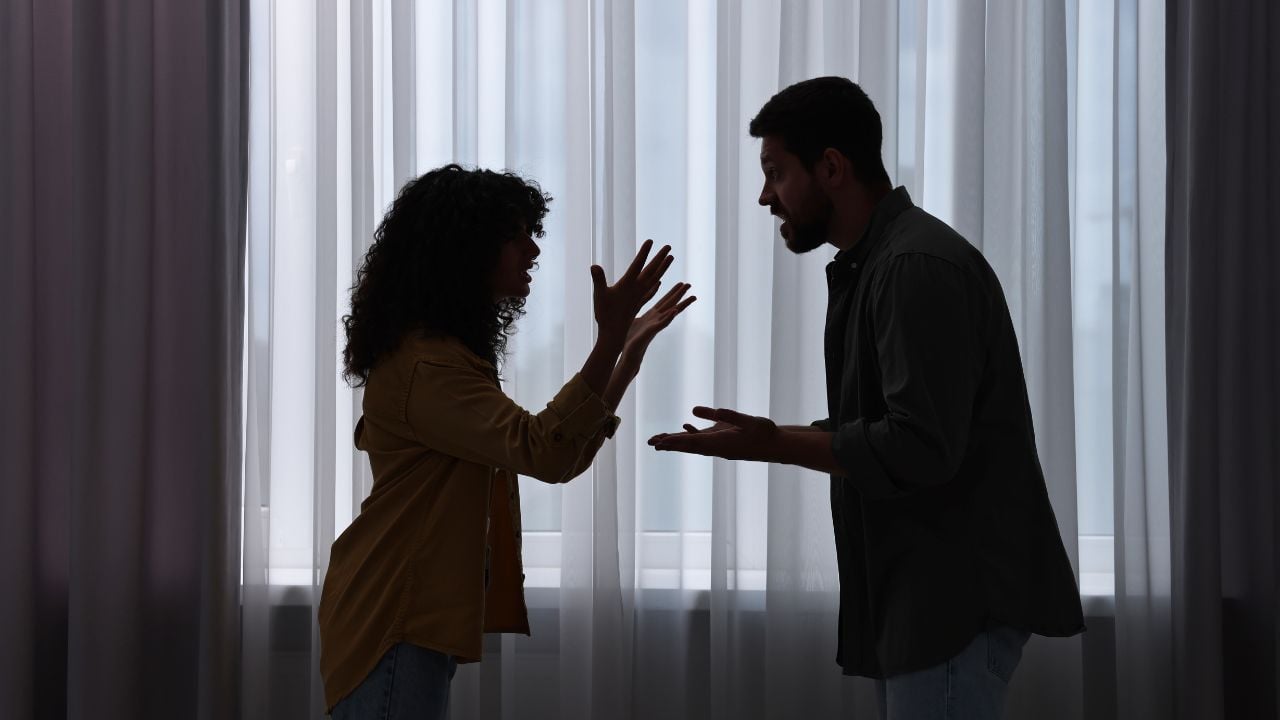
Partners can build resilient bonds by shifting away from a deficit model and embracing proactive accommodation strategies.
Executive functioning challenges in relationships
Executive dysfunction forms a barrier to relationship harmony for individuals with ADHD.
Executive dysfunction refers to differences in the brain’s self-regulation networks. These run mainly through the prefrontal cortex and its connections to deeper structures such as the striatum.
This underlying biological difference disrupts daily tasks, time management, and conversational pacing.
Much of this disruption is executive.
It is not a matter of knowledge or effort. A partner may know exactly what to do and still struggle to start, sequence or finish it.
Barkley (1997) proposed that weak behavioral inhibition, the ability to pause an impulse, drives the rest. It disrupts working memory, emotional and motivational self-regulation, inner speech, and the ability to recombine actions into new plans.
Sonuga-Barke’s dual-pathway model adds a second route (Sonuga-Barke, 2003). It centers on delay aversion, where waiting feels aversive. Later work added a third, separable difficulty with judging time (Sonuga-Barke et al., 2010). Current thinking treats these accounts as complementary, not rival.
Core Executive Function Challenges
- Time Blindness: Individuals struggle to sense the passage of time accurately. This can lead to chronic lateness, missed appointments, and broken schedules. Non-ADHD partners often misinterpret this behavior as intentional neglect or a lack of personal investment.
- Object Permanence Issues: Out of sight often translates to out of mind for the ADHD brain. Forgetting to reply to messages or complete household chores stems from attentional shifts, not a lack of love.
- Inattention and Mind Wandering: Inattention means difficulty sustaining focus. Attention can drift away from the speaker during deep conversations, leaving the non-ADHD partner feeling ignored, isolated, and disconnected.
“So much of my life I forget that people exist and it’s not like I forget that they exist, it’s if you aren’t in front of me you don’t exist.”
Emotional Regulation and the Strain on Intimacy
Emotional regulation challenges serve as a major driver of relationship dissatisfaction and conflict.
The technical term is emotional dysregulation: difficulty managing how strong emotional reactions get and how long they take to settle.
When a provocative event occurs, the ADHD brain is flooded with emotion, which makes standard rational problem-solving difficult.
The Impact of Intense Emotional States
Many people with ADHD feel emotions intensely and find them slow to settle, so small setbacks can provoke explosive or avoidant responses.
This intensity can fuel catastrophic thinking and quick anger, creating a volatile domestic environment. Non-ADHD partners may feel as if they are constantly walking on eggshells.
Emotional dysregulation is common in ADHD.
It is not one of the 18 diagnostic criteria, though. A major review found it prevalent across the lifespan and a leading contributor to impairment (Shaw et al., 2014).
A meta-analysis pooled 13 studies (2,535 participants). Adults with ADHD showed much higher emotional dysregulation than adults without ADHD, a large effect (Hedges’ g = 1.17). It also rose with ADHD severity (Beheshti et al., 2020).
Shaw et al. traced it to difficulty orienting to, recognizing and directing attention toward emotional cues. That points to a brain network spanning the striatum, amygdala and medial prefrontal cortex. Intense reactions, then, reflect brain-based differences in handling emotion. They are not a character flaw.
Rejection Sensitive Dysphoria (RSD)
Rejection sensitive dysphoria is an intense, unbearable emotional pain triggered by the perception of being criticized or rejected. Even a gentle piece of feedback can feel like a devastating personal attack.
In response, an individual might lash out defensively or withdraw completely, creating a cycle of distance and resentment.
RSD is a clinical term, not a diagnosis. It does not appear in the DSM-5-TR, and researchers are still calling for a validated way to measure it (Rowney-Smith et al., 2026).
The experience itself is well documented. In a study of 162 adults with ADHD, criticism often hurt out of proportion. Understanding from others played an important role in how it was experienced (Beaton et al., 2022).
In a focus-group study, five university students described withdrawing early to avoid expected rejection, masking their reactions, and feeling unpleasant bodily sensations (Rowney-Smith et al., 2026).
Communication Barriers and Misinterpretations
Neurological differences disrupt conversational reciprocity, which describes the equal back-and-forth exchange required for healthy dialogue.
Due to impulse control issues, people with ADHD often interrupt or switch topics rapidly.
Common Patterns of Miscommunication
- Hyperactive Monologuing: An individual may speak excessively about a specific passion without pausing for input.
- Apparent Disengagement: Missing subtle social cues can cause the individual to seem cold or emotionally unavailable.
- Masking Fatigue: Masking means camouflaging ADHD traits to fit neurotypical standards. The exhaustion this causes reduces the energy needed for genuine relationship maintenance.
“Especially when it comes to interrupting, which I struggle with… Because it’s often seen as me not caring or listening to them.”
What the Research Shows About ADHD and Relationships
Research does not show that ADHD ruins relationships. It does show more strain on average, and it points to why.
Most of the evidence comes from small, single-timepoint surveys, so it shows associations rather than causes.
Marital Adjustment and Family Strain
Eakin et al. (2004) compared 33 married adults with ADHD and their spouses with 26 control adults and their spouses. Adults with ADHD reported poorer marital adjustment and more family dysfunction than the control adults.
Their spouses did not differ from control spouses overall. More of their scores, though, fell in the maladjusted range.
The adults with ADHD also rated their marriages more negatively than their spouses did.
Interviews showed that spouses often compensated. They took over household organization, time management and communication tasks. The authors concluded that ADHD care should routinely assess marital and family functioning, not just individual traits.
The sample was small and clinic-based, and the design cannot show cause. Findings may not generalize beyond couples seeking treatment.
Emotion Regulation and Attachment Style
Bruner et al. (2015) surveyed 189 undergraduates. All were aged 18 to 25. Those with elevated hyperactive-impulsive and inattentive traits reported lower relationship quality.
Among women, emotion regulation problems and hostile conflict statistically explained part of that link. The authors concluded that ADHD traits affect relationship quality through identifiable psychological mechanisms.
Partners matter too.
Knies et al. (2021) surveyed 159 partners of adults with elevated ADHD traits. Those high in anxious attachment had lower relationship quality. The negative link between ADHD traits and relationship quality also appeared stronger in those couples.
Avoidant attachment, oddly, was linked to better outcomes, the reverse of what attachment theory usually predicts. The same ADHD profile can play out differently depending on who it meets.
Both studies were single-timepoint surveys.
Support Gaps and Couples Therapy
Duede et al. (2025) surveyed 286 adults with ADHD who were in romantic relationships. Those with more severe ADHD traits wanted more emotional, esteem, informational and tangible support. Wanting more did not mean feeling more supported.
Relationship satisfaction acted as a buffer. Happier couples reported more perceived support and less hurt, largely regardless of ADHD severity.
Help for couples is promising but thin. Wymbs and Molina (2015) piloted a six-session group program for 15 couples that blended cognitive behavioral techniques for adult ADHD with couples therapy. Couples attended and liked it, and both ADHD traits and relationship problems improved. There was no control group.
A review of the field concluded that, despite ample evidence of shorter-lived and more discordant relationships, little research has identified what strengthens them (Wymbs et al., 2021).
Moving from Frustration to Connection
Couples can thrive by utilizing specific workarounds and managing expectations proactively. Shifting from personal blame to an understanding of ADHD as a difference in self-regulation can change how couples respond to each other.
Strategies for Strengthening Partnerships
- Radical Openness: Disclosing specific challenges openly helps build trust and safety within the relationship.
- External Scaffolding: Using shared digital calendars and visible reminders takes the pressure off short-term working memory.
- Social Accountability: Setting clear rules ahead of time helps manage behavioral expectations before resentment builds up.
- Co-Regulation Practices: Practicing slow breathing or pausing before responding to conflict helps soothe the nervous system.
“My wife really struggles with paperwork… and I’m great at that… But then when it came to moving, that’s when she took over… So she then made like accommodations and helped me there. So when it works, it really, really works.”
As therapist Esther Perel explains on her podcast Where Should We Begin?, labels such as ADHD help people understand themselves. They can also shrink a person to a diagnosis. She says she prefers “to meet the people before I meet their problems.”
Perel also suggests separating a criticism from a request, since in some couples every ordinary request lands as an attack. Naming a recurring anxiety, she says, lets a partner address the feeling rather than the person.
Ultimately, ADHD brings unique hurdles, but also real strengths.
A 2026 scoping review of 125 studies found creativity was the most documented strength, reported in 66% of them. Prosocial attributes such as empathy and humor came next (31%) (Rafael et al., 2026).
With flexible systems and a focus on progress rather than perfection, couples can build a more satisfying partnership.
Key Takeaways
- Short Answer: ADHD does not inherently ruin relationships. It can create predictable friction around time, emotion and communication.
- Executive Function: Lateness and forgotten tasks usually reflect differences in attention and planning, not a lack of care.
- Emotional Intensity: Emotional dysregulation is common in ADHD, and a meta-analysis found a large difference from adults without ADHD (Beheshti et al., 2020).
- Rejection Sensitivity: Intense reactions to criticism are widely reported, but rejection sensitive dysphoria is a clinical term, not a DSM-5-TR diagnosis.
- Partner Fit: Relationship quality also depends on a partner’s attachment style and on how couples share roles (Knies et al., 2021).
- What Helps: Open disclosure, shared calendars, agreed rules and ADHD-informed couples support are promising, though trial evidence is still thin.
References
Barkley, R. A. (1997). Behavioral inhibition, sustained attention, and executive functions: Constructing a unifying theory of ADHD. Psychological Bulletin, 121(1), 65–94. https://doi.org/10.1037/0033-2909.121.1.65
Beaton, D. M., Sirois, F., & Milne, E. (2022). Experiences of criticism in adults with ADHD: A qualitative study. PLOS ONE, 17(2), e0263366. https://doi.org/10.1371/journal.pone.0263366
Beheshti, A., Chavanon, M.-L., & Christiansen, H. (2020). Emotion dysregulation in adults with attention deficit hyperactivity disorder: A meta-analysis. BMC Psychiatry, 20, Article 120. https://doi.org/10.1186/s12888-020-2442-7
Bruner, M. R., Kuryluk, A. D., & Whitton, S. W. (2015). Attention-deficit/hyperactivity disorder symptom levels and romantic relationship quality in college students. Journal of American College Health, 63(2), 98–108. https://doi.org/10.1080/07448481.2014.975717
Duede, L. A., Ray, C. D., & Brisini, K. S. (2025). Preferences for social support and perceived support gaps among attention-deficit/hyperactivity disorder (ADHD) adults. Journal of Social and Personal Relationships, 42(8), 2002–2024. https://doi.org/10.1177/02654075251332687
Eakin, L., Minde, K., Hechtman, L., Ochs, E., Krane, E., Bouffard, R., Greenfield, B., & Looper, K. (2004). The marital and family functioning of adults with ADHD and their spouses. Journal of Attention Disorders, 8(1), 1–10. https://doi.org/10.1177/108705470400800101
Knies, K., Bodalski, E. A., & Flory, K. (2021). Romantic relationships in adults with ADHD: The effect of partner attachment style on relationship quality. Journal of Social and Personal Relationships, 38(1), 42–64. https://doi.org/10.1177/0265407520953898
Rafael, R. B., Jia, H., Rouel, M., Wootton, B. M., & Mitchison, D. (2026). Attention deficit/hyperactivity disorder (ADHD)-related strengths in adults: A scoping review. Journal of Attention Disorders. Advance online publication. https://doi.org/10.1177/10870547261425737
Rowney-Smith, A., Sutton, B., Quadt, L., & Eccles, J. A. (2026). The lived experience of rejection sensitivity in ADHD: A qualitative exploration. PLOS ONE, 21(1), e0314669. https://doi.org/10.1371/journal.pone.0314669
Shaw, P., Stringaris, A., Nigg, J., & Leibenluft, E. (2014). Emotion dysregulation in attention deficit hyperactivity disorder. American Journal of Psychiatry, 171(3), 276–293. https://doi.org/10.1176/appi.ajp.2013.13070966
Sonuga-Barke, E. J. S. (2003). The dual pathway model of AD/HD: An elaboration of neuro-developmental characteristics. Neuroscience & Biobehavioral Reviews, 27(7), 593–604. https://doi.org/10.1016/j.neubiorev.2003.08.005
Sonuga-Barke, E., Bitsakou, P., & Thompson, M. (2010). Beyond the dual pathway model: Evidence for the dissociation of timing, inhibitory, and delay-related impairments in attention-deficit/hyperactivity disorder. Journal of the American Academy of Child & Adolescent Psychiatry, 49(4), 345–355. https://doi.org/10.1016/j.jaac.2009.12.018
Wymbs, B. T., Canu, W. H., Sacchetti, G. M., & Ranson, L. M. (2021). Adult ADHD and romantic relationships: What we know and what we can do to help. Journal of Marital and Family Therapy, 47(3), 664–681. https://doi.org/10.1111/jmft.12475
Wymbs, B. T., & Molina, B. S. G. (2015). Integrative couples group treatment for emerging adults with ADHD symptoms. Cognitive and Behavioral Practice, 22(2), 161–171. https://doi.org/10.1016/j.cbpra.2014.06.008