Psychotherapy, often called talk therapy or simply therapy, involves using verbal and psychological techniques to treat emotional distress and mental health conditions. It is delivered by trained professionals, such as psychologists, psychotherapists, counselors, psychiatrists, or social workers.
Therapy is collaborative, based on dialogue between client and therapist within a supportive, non-judgmental environment.
Through these conversations, clients explore their feelings, thoughts, and behaviors. They gain insight and skills for managing life’s challenges.

The specific therapeutic approach varies depending on individual needs and therapist expertise – whether that’s a psychologist or psychiatrist, counselor, or social worker.
Despite differences, all psychotherapy emphasizes building a trusting therapeutic relationship and addressing problematic thoughts and behaviors, helping individuals live healthier and more fulfilling lives.
Here’s a quick note before you continue.
This article is for informational and educational purposes only and is not intended to be a substitute for professional medical advice, diagnosis, or treatment.
Always seek the advice of your physician, therapist, or other qualified health provider with any questions you may have regarding a medical or mental health condition. Never disregard professional advice or delay in seeking it because of something you have read on this site.
Key Takeaways
- What It Is: Psychotherapy uses talking-based techniques, delivered by trained professionals, to treat emotional distress and mental health conditions.
- Many Approaches: CBT, ACT, DBT, psychodynamic, humanistic, and family therapy differ in technique but share a common goal: healthier thinking and behavior.
- Who It Helps: Therapy supports diagnosable conditions like anxiety and depression, and everyday struggles like stress, grief, or low self-esteem.
- It Works: Decades of research show the average therapy client ends up better off than roughly 79% of people who go untreated.
- The Relationship Matters: How well client and therapist connect predicts outcome about as strongly as which specific approach is used.
- Not Risk-Free: A minority of clients feel worse before they feel better, and finding the right therapist can take time.
Types of Psychotherapy
Below are some types of psychotherapy.
Note that this is not an exhaustive list and should only be taken for informational purposes, not as a replacement for medical advice.
Cognitive Behavioral Therapy (CBT)
Cognitive Behavioral Therapy (CBT) is one of the most well-established forms of psychotherapy.
It is a structured, goal-oriented talking therapy focused on identifying and changing negative thought patterns and behaviors.
Because of its strong evidence base, CBT is widely used for many mental health issues (from depression to phobias) and is often considered the “gold standard” of psychotherapy.
CBT works as well as other treatments. The American Psychological Association notes that, in many studies, it can be even more effective than other forms of therapy or psychiatric medication in treating various disorders.
The approach teaches practical skills to reframe unhelpful thinking and develop healthier coping behaviors.
After a course of CBT, people often describe significant improvements in their day-to-day coping. For instance, one client wrote:
“Through CBT I’ve rediscovered my voice… I’m no longer over-analyzing every small thing that happens, worrying about any potential error or mistake that I have made.”
Acceptance and Commitment Therapy (ACT)
Acceptance and Commitment Therapy (ACT) is a modern behavior therapy that takes a different tack from traditional CBT.
ACT encourages people to accept their thoughts and feelings rather than fight or avoid them, and to commit to actions aligned with their core values.
Instead of challenging the content of negative thoughts, ACT teaches mindfulness skills to observe thoughts without getting entangled in them (a process known as cognitive defusion). That distance helps.
The goal is to increase psychological flexibility – the ability to stay present with what life brings and still take guided action toward what matters most to you.
Many mental health professionals highlight that ACT helps clients clarify what they truly value in life and use those values as motivation for positive change.
People who have tried ACT often report gaining a new perspective on their emotions. For example, one young person who applied ACT principles said,
“ACT has helped me to feel my emotions rather than distract myself from them. In actively embracing all my feelings, I actually have a much better sense of wellbeing.”
A 2026 systematic review compared ACT against other well-established therapies, rather than against no treatment at all. It pooled 137 effect sizes from 30 randomized trials of therapist-delivered ACT covering its full model.
The result: no reliable overall advantage for ACT over other bona fide therapies (Gower et al., 2026). The result held even in the highest-quality trials.
Dialectical Behavior Therapy (DBT)
Dialectical Behavior Therapy (DBT) is a specialized form of cognitive-behavioral therapy, originally developed to help people with borderline personality disorder. It’s now also used for other hard-to-treat conditions, including chronic self-harm, suicidal ideation, and intense mood swings.
DBT places equal emphasis on acceptance and change – the term “dialectical” reflects finding a balance between two opposites. The two are not enemies.
In practice, DBT focuses on learning to understand and accept difficult feelings, while also teaching skills to change unhelpful behaviors. Both skills matter equally.
Treatment usually covers four key skill modules: mindfulness (staying present in the moment) and distress tolerance (coping with crisis and pain in healthier ways). It also includes emotion regulation (managing intense emotions) and interpersonal effectiveness (communicating and setting boundaries in relationships).
Clients often attend both one-on-one therapy and group skills training in DBT, and they may have access to coaching between sessions so they can practice skills in real life.
One young woman explains:
“While DBT didn’t cure me overnight, it has given me the tools to talk about my experiences and create some breathing space between my emotions and actions,”
She noted that the structured approach helped calm her “turbulent emotions” and motivated her to fully engage in therapy.
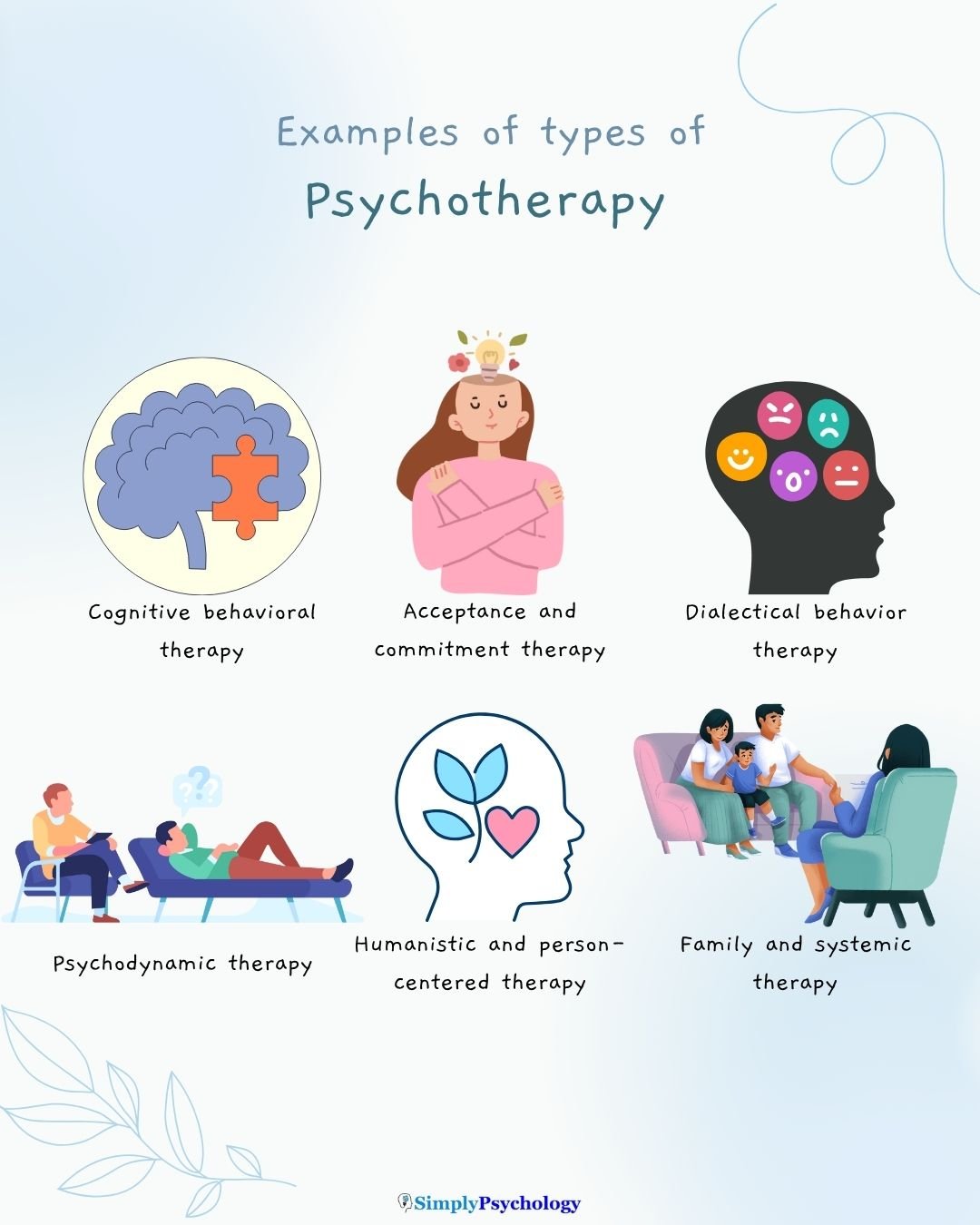
Psychodynamic Therapy
Psychodynamic therapy (including traditional psychoanalysis and related approaches) seeks to uncover the deeper, often unconscious roots of one’s emotional struggles.
It invites self-reflection and looking at longstanding patterns in relationships and behavior. As an APA article describes,
“Psychodynamic therapy focuses on the psychological roots of emotional suffering. Its hallmarks are self-reflection and self-examination, and [using] the relationship between therapist and patient as a window into problematic relationship patterns.”
In other words, the therapist pays attention not just to what a client says, but how they relate to the therapist, since this can mirror issues outside the room.
The aim is not only symptom relief, but insight.
Psychodynamic therapists use free association – encouraging clients to speak freely about whatever comes to mind, without censoring it.
Hidden feelings and memories can surface this way. Over time, recognizing these patterns can lead to meaningful change.
As psychotherapist Esther Perel explains, this attention to the relationship itself is not a boundary problem to manage away, but clinical material to use.
In her words, “it’s a very common thing for patients to have feelings for their therapist because the relationship is so deep.”
That instinct matters here too.
The UK Council for Psychotherapy (UKCP) links psychodynamic therapy to good outcomes for people with depression and personality disorders, groups whose difficulties are often complex and entrenched.
Psychodynamic work does typically take longer than brief therapies. Many consider the self-knowledge and emotional growth it yields well worth the time.
Humanistic and Person-Centered Therapy
Humanistic therapy refers to a group of approaches (such as person-centered therapy, Gestalt therapy, and existential therapy) that are united by a positive, growth-oriented view of people.
Humanistic therapists emphasize the inherent potential for self-healing and personal growth within each client. Growth already lives in the client.
The therapist provides an accepting, non-judgmental environment so that the client can explore their own experience and find their own solutions.
As the UK Council for Psychotherapy (UKCP) explains, the humanistic philosophy “emphasises the collaborative nature of the therapy relationship, seeking to understand the client’s experience of their world.”
The therapist’s role is not to “fix problems” for the client, but to help them develop better ways of handling them. That builds resilience. It also builds acceptance of life’s challenges.
Over time, clients in humanistic therapy tend to become more self-aware, more self-accepting, and better able to use their inner resources to find meaning and make positive changes.
Family and Systemic Therapy
Family therapy, also called systemic therapy, takes a very different approach from individual therapy. It treats the family unit as the “client,” not just one person in isolation.
The basic premise is that many problems are best understood in the context of family relationships and dynamics. That context matters most.
Instead of asking “What’s wrong with this individual?”, a family therapist will ask “What’s happening between the people in this family that might be contributing to the problem?”
Practical techniques might include family dialogues, role plays, or assigning families homework tasks to try new ways of dealing with conflicts at home.
Importantly, research suggests that involving family can reduce relapse rates in certain mental illnesses by improving the home environment.
A support-forum user shared this:
“We learned to really listen to each other. It was surprising to realize that each of us felt unheard in different ways. Now, instead of yelling, we pause and try to see where the other person is coming from.”
Integrative and Eclectic Therapy
Not every therapist works from a single approach for an entire course of treatment. Integrative and eclectic therapy describes practice that deliberately draws on more than one of the approaches above within the same treatment, rather than treating them as separate brands.
This takes a few different forms. Technical eclecticism borrows specific techniques from different modalities based on what seems likely to help a particular client, without necessarily adopting the theory behind each one.
Theoretical integration goes further, blending the underlying theories themselves into one coherent framework. Few therapists go this far.
A third route organizes practice around the shared relationship and process factors that many modalities have in common, rather than around any single technique.
Deciding when to bring in a technique from outside a client’s primary approach is itself a skilled judgment call. It is not automatic.
Therapists are trained to watch for markers – a client stuck at a particular point, or a shift in what they seem to need in the moment. Then they track closely how the client responds, rather than assuming a change of tack has worked.
Who Is Psychotherapy for?
Psychotherapy comes in many forms, but all are designed to help people to overcome challenges, develop coping strategies, and lead happier healthier lives.
If someone has been diagnosed with a mental health condition, their medical specialist may recommend psychotherapy in conjunction with medicative treatment.
Medication is often prescribed to lessen the symptoms of a mental health condition, while therapy can help to work through unhelpful or unwanted thoughts and behaviors.
Below is a list of mental health conditions that may require psychotherapeutic treatment:
- Anxiety disorders such as obsessive-compulsive disorder (OCD), phobias, panic disorder, posttraumatic stress disorder (PTSD), social anxiety disorder, or generalized anxiety disorder (GAD).
- Mood disorders such as depression or bipolar disorder.
- Eating disorders such as anorexia or bulimia.
- Addictions such as substance-use disorder or compulsive gambling.
- Personality disorders such as borderline personality disorder or dependent personality disorder.
- Schizophrenia or other disorders that cause detachment from reality (psychotic disorders).
Although psychotherapy is often thought of as being used to treat these conditions, people do not need to have a diagnosable mental health condition to consider therapy. Therapy can be useful for many life stresses and conflicts. It can help with the following:
- Relieving stress or anxiety caused by work or any other situation.
- To cope with major life changes such as divorce, death of a loved one, or loss of a job.
- Recovering from physical or sexual abuse or being a witness to violence.
- Learning to manage unhealthy reactions such as aggressive behaviors.
- Getting better sleep, e.g., insomnia.
- Increasing low self-esteem.
Benefits and Effectiveness of Psychotherapy
Mental health experts agree that psychotherapy can benefit a wide range of people and issues.
Several major bodies have looked at the evidence and reached the same conclusion:
- NHS: Talking therapy is for anyone dealing with emotional problems or tough times, and for many adults it works as well as – or better than – medicine.
- UKCP: Psychotherapy can solve immediate problems and transform how we think, feel, and behave, benefiting not just individuals but their families and communities too.
- APA: The average client receiving psychotherapy is better off than 79% of untreated clients; therapy is “remarkably effective,” though not a cure-all.
- Long-term evidence: Decades of studies and meta-analyses consistently show positive, enduring outcomes, and many clients say therapy helps them cope better and feel happier day to day, even when problems don’t fully disappear.
The Therapeutic Relationship
The relationship between client and therapist is not just a backdrop to treatment.
It is part of the treatment itself. Every approach above depends on it in some form – whether that’s called the alliance, unconditional positive regard, or simply trust.
A poor match between client and therapist can slow progress, or even work against it.
How Attachment Shapes the Relationship
People bring their own patterns of trusting – or mistrusting – closeness into every new relationship, therapy included.
Research on attachment bears this out.
Clients with a more secure attachment style tend to form a stronger working relationship with their therapist.
That relationship itself has been linked to better outcomes (Jacobsen et al., 2024).
Emotional moments inside a session matter too.
One study looked specifically at clients crying in therapy, and how that moment connects to change, the alliance, and attachment (Katz et al., 2024).
Read together, these findings point to something practical.
What a client brings into the room shapes how any given therapy lands.
That’s one reason a good therapist adapts to the person in front of them, rather than running the same script for everyone.
When the Relationship Ruptures
Sometimes the relationship visibly goes wrong.
Therapists are trained to treat that moment as useful information, not just a signal to end the work.
A rupture like this usually takes one of two shapes.
A confrontation rupture looks like open frustration – a client saying, for example, that they feel therapy isn’t helping.
It often masks a deeper fear that the therapist can’t actually help them.
That fear rarely gets named out loud.
A withdrawal rupture is quieter: a client goes along with sessions while privately doubting that the approach will work.
Good practice is to name the moment directly rather than smooth it over, and explore what it reveals about what the client needs.
Talking about the relationship this way is sometimes called immediacy.
It is a powerful tool, but not an easy one.
It seems to work best when the relationship is already going well, and can backfire slightly when used at the first sign of trouble.
The considerations below build on this: a good fit with a therapist is not a nicety, it is one of the things the research says predicts whether therapy actually helps.
Considerations and Limitations
Psychotherapy offers significant benefits, but it can also present challenges or limitations.
Some individuals might initially feel worse as they confront difficult emotions or memories. Uncovering unresolved issues can be temporarily distressing, requiring patience and consistent engagement to achieve lasting benefits.
The therapeutic relationship plays a critical role; a poor therapist-client match can hinder progress or negatively impact a client’s experience. Not every therapist will be the right fit, and it may take effort and time to find someone compatible.
Additionally, psychotherapy isn’t always effective for everyone. Some conditions, particularly severe mental health disorders, might require a combined treatment approach, including medication.
Finally, practical barriers such as cost, accessibility, or limited availability of qualified therapists can limit access. Therapy requires commitment and active participation, which might be challenging for some individuals due to personal, logistical, or emotional reasons.
Recognizing these considerations is essential to making informed decisions and getting the most out of psychotherapy.
How is psychotherapy different from psychiatry, counseling, or coaching?
- Psychotherapy focuses on exploring emotional difficulties and behavioral patterns through structured conversations, often delving into underlying issues and emotional roots.
- Psychiatry is a medical specialty practiced by doctors who diagnose mental health disorders and primarily prescribe medication, though psychiatrists may also offer psychotherapy.
- Counseling usually addresses specific problems or life transitions in a shorter, more practical way than psychotherapy, emphasizing immediate coping strategies rather than deep exploration of emotional patterns.
- Coaching helps individuals achieve specific goals, improve performance, or make lifestyle changes. Unlike psychotherapy, coaching does not treat mental health disorders or emotional distress.
How to get started
Seeking therapy early can prevent emotional challenges from becoming overwhelming. To get started, consider these practical steps:
- Talk to Your Doctor: Your primary physician can rule out physical health conditions and may refer you to a mental health specialist if needed.
- Choose a Qualified Therapist: Therapists hold various titles (psychologist, counselor, psychiatrist). Select someone appropriately trained for your needs.
- Consider Compatibility: Feeling comfortable with your therapist is crucial. Don’t hesitate to change therapists if you’re not comfortable.
- Medication Considerations: If medication may be needed alongside therapy, a psychiatrist can prescribe and manage this treatment.
- Prepare for Initial Sessions: Expect paperwork related to health history, contact information, and consent forms.
Before selecting a therapist, reflect on:
- Type of therapy (individual, group)
- Your therapy goals
- Your schedule and availability
Helpful questions to ask potential therapists include:
- Areas of expertise and demographic experience
- Approach to treatment and its effectiveness
- Expectations from clients in therapy
Further Information
American Psychiatric Association. What is Psychotherapy?.
References
Ansell Elfer, E. (n.d.). Understanding the Difference Between Social Anxiety Disorder and Autism. The Autism Site. Retrieved 2022, March 24 from:
Bank, S., Burgess, M., Sng, A., Summers, M., Campbell, B., & McEvoy, P. (2020). Stepping Out of Social Anxiety. Perth, Western Australia: Centre for Clinical Interventions.
Abbass, A., Lumley, M. A., Town, J., Holmes, H., Luyten, P., Cooper, A., Russell, L., Schubiner, H., De Meulemeester, C. & Kisely, S. (2021). Short-term psychodynamic psychotherapy for functional somatic disorders: A systematic review and meta-analysis of within-treatment effects. Journal of Psychosomatic Research, 145, 110473.
American Psychological Association. (2020, July 31). Understanding psychotherapy and how it works. https://www.apa.org/topics/psychotherapy/understanding
de Maat, S., De Jonghe, F., Schoevers, R., & Dekker, J. (2009). The effectiveness of long-term psychoanalytic therapy: A systematic review of empirical studies. Harvard Review of Psychiatry, 17(1), 1-23.
Elliott, R. (2002). The effectiveness of humanistic therapies: A meta-analysis.
Elliott, R. (2016). Research on person-centred/experiential psychotherapy and counselling: summary of the main findings.
Gower, T., Styler, Z. R., & Litz, B. T. (2026). Randomized controlled evidence of the efficacy of acceptance and commitment therapy: A systematic review and meta-analysis. Clinical Psychology Review, 128, 102786. https://doi.org/10.1016/j.cpr.2026.102786
Hofmann, S. G., Asnaani, A., Vonk, I. J., Sawyer, A. T., & Fang, A. (2012). The efficacy of cognitive behavioral therapy: A review of meta-analyses. Cognitive therapy and research, 36(5), 427-440.
Jacobsen, C. F., Falkenström, F., Castonguay, L., Nielsen, J., Lunn, S., Lauritzen, L., & Poulsen, S. (2024). The relationship between attachment needs, earned secure therapeutic attachment and outcome in adult psychotherapy. Journal of Consulting and Clinical Psychology, 92(7), 410–421.
Katz, M., Hilsenroth, M., Johnson, N., Budge, S., & Owen, J. (2024). “Window of opportunity”: Clients’ experiences of crying in psychotherapy and their relationship with change, the alliance, and attachment. Professional Psychology: Research and Practice.
Munder, T., Flückiger, C., Leichsenring, F., Abbass, A. A., Hilsenroth, M. J., Luyten, P., Rabung, S., Steinert, C. & Wampold, B. E. (2019). Is psychotherapy effective? A re-analysis of treatments for depression. Epidemiology and Psychiatric Sciences, 28(3), 268-274.
NIDA. (2020, June 1). Cognitive-Behavioral Therapy (Alcohol, Marijuana, Cocaine, Methamphetamine, Nicotine). From https://nida.nih.gov/publications/principles-drug-addiction-treatment-research-based-guide-third-edition/evidence-based-approaches-to-drug-addiction-treatment/behavioral-therapies/cognitive-behavioral-therapy
Oud, M., De Winter, L., Vermeulen-Smit, E., Bodden, D., Nauta, M., Stone, L., van den Heuvel, M., Al Taher, R., de Graaf, I., Kendall, T., Engels, R. & Stikkelbroek, Y. (2019). Effectiveness of CBT for children and adolescents with depression: A systematic review and meta-regression analysis. European psychiatry, 57, 33-45.


