A scoping review maps the research on a broad topic. It shows what evidence exists, how it is spread across the field and where the gaps lie. Unlike a systematic review, it does not weigh study quality or pool results into one verdict.
What is a Scoping Review?
A scoping review is a type of research synthesis that maps the existing literature on a broad topic to identify key concepts, research gaps, and types of evidence.
This mapping exercise involves systematically searching for, identifying, and charting relevant literature. It reveals the volume of research, the types of studies conducted, the key concepts addressed and the prevalent research gaps. It is reconnaissance, not a verdict.
Unlike systematic reviews, which answer specific questions, scoping reviews are exploratory. They often assess the extent of available evidence and inform future research directions.
They involve comprehensive searches and data extraction. They do not usually appraise study quality or pool results into a single estimate (Munn et al., 2018).
When a scoping review methodology would be appropriate:
Scoping reviews can be used as a preliminary step to a systematic review, helping to identify the types of evidence available, potential research questions, and relevant inclusion criteria.
They can save time and resources by identifying potential challenges or limitations before embarking on a full systematic review.
Scoping reviews can help clarify key concepts/definitions in the literature. If a research area has inconsistent terminology or definitions, a scoping review can map out how different concepts are used and potentially propose a unified understanding. This can help refine the focus and scope of a subsequent systematic review.
- To determine if a systematic review is feasible and worthwhile. By identifying the breadth of evidence, researchers can gauge whether there is sufficient literature to warrant a full systematic review.
- To identify gaps in the existing research. Scoping reviews can highlight areas where little or no research has been conducted, helping inform future research priorities.
- To clarify key concepts and definitions in the field. This can help refine the focus and scope of a subsequent systematic review.
- To examine how research is conducted on a certain topic. This can inform the methodology of a future systematic review
- To refine and narrow down research questions. The broad overview provided by a scoping review can help researchers develop more specific, focused questions for a systematic review.
When not to choose a scoping review methodology:
- If a systematic review already exists on the topic: A systematic review will offer a more rigorous and comprehensive analysis of the evidence if one is already available.
- If the goal is to determine the effectiveness of an intervention: Systematic reviews evaluate intervention efficacy, while scoping reviews map the research landscape by:
- Examining the range of interventions for a health condition
- Identifying types of studies conducted
- Noting populations studied
- Summarizing outcomes measured
Scoping reviews help identify areas needing further research, whereas systematic reviews aim to draw conclusions about intervention effectiveness.
Munn et al. (2018) give a clear test. A scoping review suits questions about the extent, nature and gaps of evidence. A systematic review suits questions about the feasibility, appropriateness, meaningfulness or effectiveness of a practice, because a decision will rest on appraised, often pooled, evidence.
Do not pick a scoping review just to avoid appraisal. It looks comprehensive but cannot support the effectiveness claims readers may infer from it. Let the question choose the method.
How Scoping Reviews Are Used in Practice
Scoping reviews often feed decisions made outside the review itself. Four uses stand out:
- Policy: Scoping reviews can include non-research sources such as policy documents (Peters et al., 2021b), which suits public-health questions where policy sits beside the research record.
- Guidelines: Guideline groups use scoping reviews early to see what evidence exists and whether a systematic review already answers the question.
- Funding: Funders use scoping reviews and evidence and gap maps to see where evidence clusters and where it is thin, then steer funding calls (Campbell et al., 2023).
- Postgraduate research: Doctoral candidates and review teams often open a project with a scoping review, to confirm that a systematic review is feasible and to refine the question.
In each case the output is a map, not a verdict.
Scoping Review vs Narrative, Rapid and Umbrella Reviews
Scoping reviews belong to a wider family of evidence syntheses. Tricco et al. (2018b) compared the conduct and reporting of five of them: systematic, scoping, rapid, narrative and umbrella reviews. Each balances rigor, breadth and speed differently, and none is simply a lesser version of another.
| Review type | Typical question | Method | Output |
|---|---|---|---|
| Narrative review | Broad topic, chosen by the author | No mandatory protocol or exhaustive search; selection by expertise | Expert discussion of a topic |
| Scoping review | Broad and exploratory (framed with PCC: Population, Concept, Context) | Protocol, systematic search and duplicate screening; usually no quality appraisal | A map of the evidence and its gaps |
| Systematic review | Narrow and pre-specified, often about effectiveness (framed with PICO: Population, Intervention, Comparator, Outcome) | Exhaustive search; formal quality appraisal of every included study | A graded answer, often pooled |
| Rapid review | Narrow, with a tight deadline | Streamlined systematic process, for example restricted databases or a single reviewer at some stages | An appraised answer within weeks |
| Umbrella review | Several related questions already reviewed | Synthesizes existing systematic reviews and meta-analyses | A top-level comparison across reviews |
A narrative review discusses a topic. A scoping review maps it. A systematic review adjudicates a specific question about it.
A rapid review (Tricco et al., 2015) streamlines the systematic process to give an appraised answer within weeks.
It is not a faster scoping review. A scoping review asks a different, non-effectiveness question from the outset.
An umbrella review (Aromataris et al., 2015) summarizes existing systematic reviews. It fits once good systematic reviews exist, whereas a scoping review fits earlier, when it is still unclear how much primary research exists.
Timelines differ too. A scoping review can often be completed in roughly 2 to 6 months, against 12 to 24 months for a full systematic review. For a fuller comparison, see scoping review vs systematic review.
Methodological Guidelines
Methodological guidelines aim to improve the consistency and transparency of scoping reviews, enabling researchers to synthesize evidence effectively.
How the Guidelines Evolved
- Arksey and O’Malley (2005) proposed the first framework: five core stages (question, studies, selection, charting, reporting) plus an optional consultation stage.
- Levac et al. (2010) refined it with stage-by-stage recommendations, drawn from three scoping studies, and argued that consultation should be required, not optional.
- The Joanna Briggs Institute (JBI; Peters et al., 2015) made it more prescriptive: a protocol written in advance, the PCC question format and a three-step search.
Additionally, the Preferred Reporting Items for Systematic Reviews and Meta-Analyses extension for Scoping Reviews (PRISMA-ScR) helps researchers meet publication standards when reporting scoping reviews. This progression reflects the increasing rigor and standardization in scoping review methodology over time.
It has 20 essential and 2 optional items. A 24-member expert panel and two research leads agreed them using a Delphi process (Tricco et al., 2018a). In a Delphi process, experts rate candidate items in rounds until they reach consensus.
| Arksey and O’Malley (2005) | Levac et al. (2010) | Joanna Briggs Institute |
|---|---|---|
| 6 stages, including optional consultation; most flexible approach | 6 stages with more detailed guidance; moderate flexibility | More prescriptive approach with additional elements; most structured |
| Broad research question | Clearly articulated research question | Clearly defined research question with concept, population, and context |
| Study selection process not specified | Recommends two reviewers for study selection | Provides detailed guidance on study selection process |
| Basic data charting | More comprehensive data extraction | Detailed guidance on data extraction with specific tools |
| Basic summary of findings | Numeric summary and qualitative thematic analysis | Introduces evidence mapping for analysis |
| Quality assessment not included | Quality assessment not emphasized | Critical appraisal not a standard step; optional where the review’s aims require it |
| Optional stakeholder consultation | Consultation required as a knowledge-translation stage | Stakeholder consultation as an integral part of the process |
| Provides basic framework | Offers enhanced detail on methodology | Provides most detailed guidance on conducting scoping reviews |
1. Developing review objective(s) & question(s)
A well-defined objective and a set of aligned research questions are crucial for a scoping review’s coherence and direction.
They guide the subsequent steps of the review process, including determining the inclusion and exclusion criteria, developing a search strategy, and guiding data extraction and analysis.
This stage involves a thoughtful and iterative process to ensure that the review’s aims and questions are explicitly stated and closely intertwined.
Defining Objectives:
Describe the rationale for the review in the context of what is already known. Explain why the review questions or objectives lend themselves to a scoping review approach. PRISMA-ScR (item 3)
This step outlines the overarching goals of the scoping review. It explains why the review is needed. It also states what the reviewers aim to achieve.
The objective statement should succinctly capture the essence of the review and provide a clear understanding of its purpose.
For instance, a scoping review’s objective might be to map the existing literature on a particular topic and identify knowledge gaps.
Example: A Published Objective Statement
“Parents, in particular, greatly influence participation at school, at home and in the community. They undertake many actions to improve their children’s participation in daily life. Understanding the actions of parents and also their challenges and needs will contribute to how society can support these parents and thereby enable the participation of children with physical disabilities. Pediatric rehabilitation, aiming for optimal participation, could benefit from this understanding to improve Family-centered services (FCS)…
However, it is unclear what kind of information is available in literature about what parents live through, do, and what kind of problems and needs they have in supporting their child’s participation? For these reasons, a scoping review was conducted in order to systematically map the research done in this area, as well as to identify any existing gaps in knowledge”
Piškur, B., Beurskens, A. J., Jongmans, M. J., Ketelaar, M., Norton, M., Frings, C. A., … & Smeets, R. J. (2012). Parents’ actions, challenges, and needs while enabling participation of children with a physical disability: a scoping review. BMC pediatrics, 12, 1-13.
Developing Research Questions:
Provide an explicit statement of the questions and objectives being addressed with reference to their key elements (for example, population or participants, concepts, and context) or other relevant key elements used to conceptualize the review questions or objectives. PRISMA-ScR (item 4)
The research question(s) stem from the objectives and provide a focused roadmap for the review. These questions should be answerable through the scoping review process. The research question(s) should be clear, concise, and directly relevant to the overall objectives.
Using Frameworks: While not mandatory, frameworks can be helpful tools to guide the development of objectives and research questions. The most common is PCC (Population, Concept, Context).
The Joanna Briggs Institute introduced PCC as the scoping review counterpart of PICO (Population, Intervention, Comparator, Outcome), the format used for systematic review questions.
- Population: Clearly define the specific group of individuals or entities that the scoping review will focus on. This could be patients, healthcare professionals, or even organizations.
- Concept: Articulate the central idea, topic, or phenomenon that the review aims to investigate. This might include interventions, diagnostic tests, or theoretical models.
- Context: Specify the setting, environment, or circumstances relevant to the research question. This could involve geographical locations, healthcare systems, or cultural contexts.
Examples: PCC Research Questions
How do cultural beliefs and practices (C-context) influence the ways in which parents (P-parents of children with physical disabilities) perceive and address (C-concept) their children’s physical disabilities?
What are the barriers and facilitators (C-concept) to mental health service utilization (C-concept) among veterans (P-population) experiencing homelessness (C-context)?
This scoping review aims to summarize what is known in the African scientific literature (C-context) among cisgender persons (P) about a) individual experiences of GBS within health care settings (C-concept) and b) associations between GBS experiences and health care-related outcomes (C-concept).
What are the main theoretical and methodological characteristics (C-concept) of the current literature (C-context) in the area of stigma and hearing loss and stigma and hearing aids in the elderly population (P-older adults with acquired hearing impairment), and how should future research proceed in expanding this important field of enquiry?
2. Write A Research Protocol
Indicate whether a review protocol exists; state if and where it can be accessed (for example, a Web address); and if available, provide registration information, including the registration number. PRISMA-ScR (item 5)
A research protocol is a detailed plan of the methodology the review will follow. It sets out the objectives and search strategy. It also covers the eligibility criteria and the charting plan.
The protocol should be created a priori (before starting the review) to ensure transparency and reproducibility.
Registering your protocol is not mandatory but is highly recommended, for example on FigShare or the Open Science Framework (OSF). It promotes transparency, reduces duplication of effort and helps to prevent publication bias.
Some journals publish scoping review protocols. Examples include Journal of Advanced Nursing, Systematic Reviews, BMC Medical Research Methodology, BMJ Open and JBI Evidence Synthesis.
PROSPERO, the international prospective register of systematic reviews, does not currently accept scoping review protocols for registration.
Example Protocols:
- The nutritional care of people living with dementia at home: a protocol for a scoping study
- End-of-life care in long-term care homes: A scoping review protocol
- Delaying knee flexion following knee arthroplasty surgery: A Scoping Review Protocol
Report in the Methods Section
“Our protocol was drafted using the Preferred Reporting Items for Systematic Reviews and Meta-analysis Protocols (PRISMAP…), which was revised by the research team and members of Health Canada, and was disseminated through our programme’s Twitter account (@KT-Canada) and newsletter to solicit additional feedback. The final protocol was registered prospectively with the Open Science Framework on 6 September 2016 (https://osf.io/kv9hu/).”
Tricco, A. C., Zarin, W., Lillie, E., Pham, B., & Straus, S. E. (2017). Utility of social media and crowd-sourced data for pharmacovigilance: a scoping review protocol. BMJ open, 7(1), e013474.
“Our protocol was developed using the scoping review methodological framework proposed by Arksey and O’Malley (2005) [1] and further refined by the Joanna Briggs Institute [3]. The draft protocol was revised upon receiving feedback from the research team, including methodologists and healthcare providers, as well as the peer-review panel of the Canadian Institutes of Health Research. The final version of the protocol is available upon request from the corresponding author.”
Tricco, A. C., Lillie, E., Zarin, W., O’brien, K., Colquhoun, H., Kastner, M., … & Straus, S. E. (2016). A scoping review on the conduct and reporting of scoping reviews. BMC medical research methodology, 16, 1-10.
3. Developing eligibility criteria
This step involves developing and aligning the inclusion criteria with the objective(s) and question(s).
Transparent, well-justified eligibility criteria make a scoping review replicable. They also let readers judge whether the included sources are relevant and appropriate.
Specify characteristics of the sources of evidence used as eligibility criteria (for example, years considered, language, and publication status), and provide a rationale. PRISMA-ScR (item 6)
When reporting eligibility criteria, emphasize the importance of clarity, justification, and a clear link to the review’s objectives.
- Describe the eligibility criteria with a rationale for why they were selected: It’s crucial to clearly articulate the specific characteristics of sources that make them eligible for inclusion in the review. Each criterion should be accompanied by a rationale explaining why it was chosen. This rationale should be grounded in scientific arguments and clearly demonstrate how the criterion aligns with the review’s objectives.
- Identify specific restrictions and provide a rationale: Restrictions, such as date range, language, or publication status, also need clear justification. For instance, limiting the review to articles published within the past ten years might be necessary to capture the most current evidence. Similarly, restricting the review to sources in a specific language, like English, should be justified, acknowledging the potential exclusion of relevant research in other languages.
Applying PCC to Eligibility Criteria
By using the PCC framework, researchers can systematically establish boundaries for their scoping review, ensuring that the included sources are relevant to the research question. The framework helps to ensure that the eligibility criteria are comprehensive and well-defined, enabling a more focused and meaningful synthesis of the literature
- Population: The specific characteristics of the individuals or groups being studied. For instance, a scoping review about interventions for heart failure should specify the intended patient population (e.g., adults with heart failure, elderly patients with heart failure).
- Concept: This refers to the central idea, topic, or phenomenon under investigation. In the heart failure example, the concept could be “interventions for heart failure” itself, or it could be narrowed down to a specific type of intervention, such as “exercise interventions for heart failure.”
- Context: This element considers the setting or environment in which the concept is being explored. For instance, the context of the heart failure review could be “hospital settings,” “community-based care,” or “telehealth interventions.”
An explicitly stated framework (e.g. PCC) is not always reported. Its absence does not necessarily mean the authors took an unsystematic approach to their eligibility criteria.
They may have used a framework implicitly. Other factors may also have guided how they developed their criteria.
Iterative Process
The initial set of eligibility criteria outlined in the protocol may be subject to adjustments based on the type and volume of studies identified in the initial searches.
- Initial Development: Establish preliminary inclusion and exclusion criteria at the onset of the review based on their existing knowledge of the subject area. This can be adjusted as you become more familiar with the literature and data retrieved during the search process.
- Iterative Refinement: Inclusion criteria are refined iteratively based on pilot searches and the evolving understanding of the data. This initial search is crucial as it exposes researchers to a broader range of literature, revealing additional keywords, relevant concepts, and potentially useful search terms that might not have been initially considered.
Examples: Reported Eligibility Criteria
“Studies that identified the key terms in the title, abstract, article, or MeSH heading were retained for further examination. Studies published as abstracts, conference proceedings or pilot results published in non-peer-reviewed journals were excluded. In addition, books, book chapters, comments on publications, and dissertations were also excluded. No exclusion criteria were established regarding the type of research design. Inclusion criteria were (a) older adults with progressive hearing loss being the population of interest and (b) the outcome measure was clearly focused on (or at least on some aspects of) stigma regarding hearing loss and/or hearing aids. Although given the descriptive aim of the review, no definitions of stigma and/or hearing aids were set a priori, and all articles including these terms were retrieved, the analysis of the data relied on the most common dimensions of the concept of stigma cited in the literarture: the cognitive dimension (i.e., stereotypes), the emotional dimension (i.e., prejudice) and the behavioral dime.”
David, D., & Werner, P. (2016). Stigma regarding hearing loss and hearing aids: A scoping review. Stigma and Health, 1(2), 59.
“An extensive search was conducted to locate peer-reviewed articles that addressed questions related to parent involvement in organized youth sport. To guide article retrieval, two inclusion criteria were used. First, articles were required to highlight some form of parent involvement in organized youth sport. In the present study, organized youth sport was operationalized as “adultorganized and controlled athletic programs for young people,” wherein “participants are formally organized [and] attend practices and scheduled competitions under the supervision of an adult leader” (Smoll & Smith, 2002, p. xi). In line with this criterion, we did not include physical activity, exercise, physical education, and free play settings, which comprise a substantial volume of research in sport and exercise psychology. We also excluded research that simply collected data on parents or from parents but did not explicitly assess their involvement in their children’s sport participation. Second, articles were required to have been published in peer-reviewed, Englishlanguage, academic journals. As such, we did not include books, chapters, reviews, conceptual papers, conference proceedings, theses and (Jones, 2004) dissertations, or organizational “white papers” in this scoping review.”
Dorsch, T. E., Wright, E., Eckardt, V. C., Elliott, S., Thrower, S. N., & Knight, C. J. (2021). A history of parent involvement in organized youth sport: A scoping review. Sport, Exercise, and performance psychology, 10(4), 536.
“…to be included in the review, papers needed to measure or focus on specific dimensions of treatment burden, developed in the conceptual framework (e.g. financial, medication, administrative, lifestyle, healthcare and time/travel). Peer-reviewed journal papers were included if they were: published between the period of 2000–2016, written in English, involved human participants and described a measure for burden of treatment, e.g. including single measurements, measuring and/or incorporating one or two dimensions of burden of treatment. Quantitative, qualitative and mixed-method studies were included in order to consider different aspects of measuring treatment burden. Papers were excluded if they did not fit into the conceptual framework of the study, focused on a communicable chronic condition, for example human immunodeficiency virus infection and acquired immune deficiency syndrome (HIV/AIDS) or substance abuse. Papers talking about carer burden, in addition to patient burden of treatment, were also included.”
Sav, A., Salehi, A., Mair, F. S., & McMillan, S. S. (2017). Measuring the burden of treatment for chronic disease: implications of a scoping review of the literature. BMC medical research methodology, 17, 1-14.
4. Information Sources
Describe all information sources in the search (for example, databases with dates of coverage and contact with authors to identify additional sources), as well as the date the most recent search was executed. PRISMA-ScR (item 7)
Scoping reviews aim to identify a broad range of relevant studies, including both published and unpublished literature, to provide a comprehensive overview of the topic.
The goal is to be inclusive rather than exhaustive. This differentiates scoping reviews from systematic reviews, which seek to collate all empirical evidence fitting pre-specified criteria to answer specific research questions.
Sources can be broad. They include scholarly databases, unpublished literature, conference papers, books and even expert consultations.
Report who developed and executed the search strategy, such as an information specialist or librarian. Mention if the search strategy was peer-reviewed using the Peer Review of Electronic Search Strategies (PRESS) checklist.
- Electronic Databases: Make a comprehensive list of all electronic databases you used. Common databases for health-related scoping reviews include: CINAHL, Medline, Embase, PsycINFO, SocINDEX with Full Text, and Web of Science: Core Collections.
- Specify date ranges: For each database, note the date range of your search. For example:
“MEDLINE was searched from inception to July 30, 2024.” - Grey Literature (material published outside peer-reviewed journals, such as theses and reports): In addition to databases, forensic or ‘expansive’ searches can be conducted. This includes: grey literature database searches (e.g. OpenGrey,WorldCat, Ethos), conference proceedings, unpublished reports, theses , clinical trial databases, searches by names of authors of relevant publications.
- Citation chasing: If you manually searched specific journals or reference lists, document this. For example: “We hand-searched the reference lists of all included studies and relevant systematic reviews.”
- Contacting Experts: If you contacted experts in the field for additional sources, mention this:
“We contacted five experts in the field of [topic] to identify any additional relevant studies.”
Example: Reported Information Sources
“To identify potentially relevant documents, the following bibliographic databases were searched from 2004 to June 2015: MEDLINE, EMBASE, LexisNexis Academic, the Legal Scholarship Network, Justis, LegalTrac, QuickLaw, and HeinOnline. The search strategies were drafted by an experienced librarian [name] and further refined through team discussion. The final search strategy for MEDLINE can be found in Additional file 3. The final search results were exported into EndNote, and duplicates were removed by a library technician. The electronic database search was supplemented by searching the Canadian Medical Protective Association website (https://www.cmpa-acpm.ca/en) and scanning relevant reviews.”
Cardoso, R., Zarin, W., Nincic, V., Barber, S. L., Gulmezoglu, A. M., Wilson, C., … & Tricco, A. C. (2017). Evaluative reports on medical malpractice policies in obstetrics: a rapid scoping review. Systematic reviews, 6, 1-11.
5. Searching for the evidence
Present the full electronic search strategy for at least one database, including any limits used, such that it could be repeated. PRISMA-ScR (item 8)
Scoping reviews typically start with a broader, more inclusive search strategy. Cast a wide net first. The initial search is intentionally wide-ranging, to capture the breadth of available literature on the topic.
To balance breadth and depth in your initial search strategy for a scoping review, consider the following tips based on the gathered search results:
- Start with a broad initial search: Begin with a broad search across at least two relevant databases (e.g., MEDLINE and Scopus) to capture a wide range of literature. This helps identify the scope of available studies and key themes in the field.
- Test and refine your search strategy: After initial searches, review the titles and abstracts of retrieved articles to assess relevance. Analyze the text words and index terms used in these articles to refine your understanding of the topic and identify additional keywords, synonyms, and subject headings to include in subsequent searches.
- Multiple Databases: Search across a variety of databases to ensure a comprehensive literature capture. Each database may index different journals and articles, which can help broaden your search results.
- Boolean operators: The use of Boolean operators (AND/OR/NEAR/NOT) helps to combine these terms effectively, ensuring that the search strategy is both sensitive and specific. For instance, using “AND” narrows the search to include only results containing both terms, while “OR” expands it to include results containing either term.
- Truncation symbols: These broaden the search by capturing variations of a keyword. They function by locating every word that begins with a specific root. For example, if a user was researching interventions for smoking, they might use a truncation symbol to search for “smok*” to retrieve records with the words “smoke,” “smoker,” “smoking,” or “smokes.” This can save time and effort by eliminating the need to input every variation of a word into a database.
- Citation chasing: Check the reference lists of included studies, and the articles that cite them, for further sources. The Citation Chasing Process below explains how to document this.
- Detailed documentation: Keep thorough records of your search strategies, including the databases searched, keywords used, and any filters applied. This documentation is crucial for transparency and reproducibility.
Example: A Reported Search Strategy
”The planned literature search was developed on June 23, 2022. The inclusion and exclusion criteria were further refined, along with electronic databases to identify psychological and education literature (e.g., ProQuest), programs for storing data (i.e., Covidence, n.d. accessed via https://www.covidence.org/) and key search terms (e.g., resistance and transgender). The key search terms were “transgender/trans/LGBT/gender diverse/gender expansive/nonbinary,” “resistance,” and “faith/economic status/ethnicity/gender.” Daniel Abela used terms such as nonbinary, gender diverse, LGBT, and gender expansive to capture the broad spectrum of language employed in the literature when relating to individuals whose gender identification extends beyond conventional norms associated with their assigned sex at birth. Moreover, the authors wanted a diverse sample through an intersectionality lens; therefore, terms such as faith, economic status, and ethnicity were used. These terms were selected as they were deemed by all authors to be most appropriate to evaluate this study’s research question. A complete list of the final search terms and the entire electronic search strategy for the Ovid database are presented in Table 1.”
Abela, D., Patlamazoglou, L., & Lea, S. (2024). The resistance of transgender and gender expansive people: A scoping review. Psychology of Sexual Orientation and Gender Diversity.
Ovid Search Strategy (Table 1)
- transgender.mp. [mp = title, abstract, heading word, table of contents, key concepts, original title, tests & measures, mesh word]
- trans.mp. [mp = title, abstract, heading word, table of contents, key concepts, original title, tests & measures, mesh word]
- LGBT.mp. [mp = title, abstract, heading word, table of contents, key concepts, original title, tests & measures, mesh word]
- gender diverse.mp. [mp = title, abstract, heading word, table of contents, key concepts, original title, tests & measures, mesh word]
- gender expansive.mp. [mp = title, abstract, heading word, table of contents, key concepts, original title, tests & measures, mesh word]
- non-binary.mp. [mp = title, abstract, heading word, table of contents, key concepts, original title, tests & measures, mesh word]
- 1 or 2 or 3 or 4 or 5 or 6
- resistance.mp. [mp = title, abstract, heading word, table of contents, key concepts, original title, tests & measures, mesh word]
- 7 and 8
- faith.mp. [mp = title, abstract, heading word, table of contents, key concepts, original title, tests & measures, mesh word]
- economic status.mp. [mp = title, abstract, heading word, table of contents, key concepts, original title, tests & measures, mesh word]
- ethnicity.mp. [mp = title, abstract, heading word, table of contents, key concepts, original title, tests & measures, mesh word]
- gender identification.mp. [mp = title, abstract, heading word, table of contents, key concepts, original title, tests & measures, mesh word]
- 10 or 11 or 12 or 13
- 9 and 14
- limit 15 to (peer-reviewed journal and English language and “0110 peer-reviewed journal” and English and yr = “2012-Current”)
- 15 and 16
Search strategy can also be reported in the appendix. For example: Supplementary A: Search strategy for scoping review.
Citation Chasing Process
Citation chasing involves reviewing the reference lists of included studies and examining articles that cite those studies to identify additional relevant literature. This process helps ensure that you capture a comprehensive view of the research landscape.
If citation chasing leads to the identification of new keywords or concepts, document these adjustments and how they were incorporated into the overall search strategy.
- Document the rationale: Clearly state why citation chasing is being conducted. This could include the goal of identifying additional studies that may not have been captured through database searches or to explore the context and impact of key studies.
- Reference list review: Document the specific studies whose reference lists were examined. Include the titles, authors, and publication years of these studies.
- Citing articles: Note how you identified articles that cite the studies. This could be through citation databases like Google Scholar, Scopus, or Web of Science.
- Record number of additional studies identified: Keep a count of how many additional studies were found through citation chasing.
- Visualizations: Presenting the citation chasing process visually can enhance clarity. Consider:
- A flowchart: Adapt the PRISMA flow diagram to illustrate the stages of citation chasing, the number of sources identified at each stage, and reasons for exclusion.
- Tables: Summarize key information about the sources identified through citation chasing, such as author, year, title, and reasons for inclusion or exclusion.
6. Selecting the evidence
State the process for selecting sources of evidence (that is, screening and eligibility) included in the scoping review. PRISMA-ScR (item 9)
Articles are selected systematically, but that does not mean the evidence reviewed is exhaustive. This is often due to limitations in the search strategy or difficulty locating specific types of sources.
Screening Against Eligibility Criteria
The goal is to identify relevant studies, with less emphasis on methodological quality. Scoping reviews generally do not appraise the quality of included studies.
Instead, scoping reviews prioritize mapping the existing literature and identifying gaps in research, regardless of the quality of the individual studies.
Two reviewers should independently screen titles and abstracts, removing duplicates and irrelevant studies based on predefined inclusion and exclusion criteria.
- Initial screening of titles and abstracts: After applying a strategy to search the literature, the next step involves screening the titles and abstracts of the identified articles against the predefined inclusion and exclusion criteria. During this initial screening, reviewers aim to identify potentially relevant studies while excluding those clearly outside the scope of the review. It is crucial to prioritize over-inclusion at this stage, meaning that reviewers should err on the side of keeping studies even if there is uncertainty about their relevance. This cautious approach helps minimize the risk of inadvertently excluding potentially valuable studies.
- Retrieving and assessing full texts: For studies which a definitive decision cannot be made based on the title and abstract alone, reviewers need to obtain the full text of the articles for a comprehensive assessment against the predefined inclusion and exclusion criteria. This stage involves meticulously reviewing the full text of each potentially relevant study to determine its eligibility definitively.
- Resolution of disagreements: In cases of disagreement between reviewers regarding a study’s eligibility, a predefined strategy involving consensus-building discussions or arbitration by a third reviewer should be in place to reach a final decision. This collaborative approach ensures a fair and impartial selection process, further strengthening the review’s reliability.
Example: Reported Study Selection
“To increase consistency among reviewers, all reviewers screened the same 50 publications, discussed the results and amended the screening and data extraction manual before beginning screening for this review. Nine reviewers working in pairs sequentially evaluated the titles, abstracts and then full text of all publications identified by our searches for potentially relevant publications. . . . We resolved disagreements on study selection and data extraction by consensus and discussion with other reviewers if needed.”
Duffett, M., Choong, K., Hartling, L., Menon, K., Thabane, L., & Cook, D. J. (2013). Randomized controlled trials in pediatric critical care: a scoping review. Critical care, 17, 1-9.
7. Extracting the evidence
Describe the methods of charting data from the included sources of evidence (for example, calibrated forms or forms that have been tested by the team before their use, and whether data charting was done independently or in duplicate) and any processes for obtaining and confirming data from investigators. PRISMA-ScR (item 10)
Charting, also known as data extraction, is a crucial stage in conducting a scoping review.
This process involves systematically collecting relevant information from the sources included in the review using a structured form. Ideally, at least two reviewers extract data independently.
Data charting in scoping reviews differs from data extraction in systematic reviews. Systematic reviews aim to synthesize results and assess the quality of individual studies. Scoping reviews instead map the existing literature and identify key concepts, themes, and gaps in the research.
Charting is therefore broader. Reviewers may collect a wider range of data items than the more focused extraction used in systematic reviews.
This process goes beyond simply extracting data; it involves characterizing and summarizing research evidence, which ultimately helps identify research gaps.
- Develop a Standardized Form: Creating a structured form helps to standardize the selection of sources. The form should incorporate clear questions that align with the eligibility criteria defined in the review protocol. The specific software used to create and manage the form should be specified in the review, with options such as Covidence, EndNote, or JBI SUMARI.
- Data items that reviewers might choose to chart:
- Author(s)
- Year of publication
- Origin/country of origin (where the study was published or conducted)
- Aims/purpose
- Study population and sample size (if applicable)
- Methodology/methods
- Outcomes and details of these (e.g. how measures) (if applicable)
- Key findings that relate to the scoping review question/s.
- Conduct Calibration Exercise: Before initiating the full screening process, it is recommended to conduct a calibration exercise, sometimes referred to as pilot testing, to ensure consistency among reviewers. This involves:
- Testing the Form: All reviewers involved in the selection process should participate in testing the standardized form. Screen the titles and abstracts of the identified articles against the predefined inclusion and exclusion criteria.
- Sample Size: A random sample of 5–10 citations can be used for the initial calibration of title and abstract screening.
- Resolving Inconsistencies: After independent screening, discrepancies between reviewers are identified and discussed. A roundtable discussion involving the review team is an effective method to address these inconsistencies and clarify any ambiguities in the form or eligibility criteria.
- Form Refinement: Based on the calibration exercise, the standardized form and its accompanying explanation should be revised and refined as needed to enhance clarity and consistency. A second calibration exercise might be necessary if the desired agreement level, typically 70%–80%, is not achieved or if reviewers require further training.
- Full Screening Process:
- Number of Reviewers: A minimum of two independent reviewers should be engaged in the screening process.
- Duplicate Screening: The review process should clearly state how duplicates were managed, ideally removing them before proceeding to the screening stage.
- Verification: Two approaches are common: independent screening by two reviewers followed by a comparison of their results, or screening by one reviewer followed by verification from another. State the chosen approach and its rationale explicitly in the scoping review.
- Resolving Disagreements: Any disagreements arising during the screening process should be documented and resolved, ideally through discussion and consensus among the reviewers. If consensus cannot be reached, involving a third reviewer to provide an independent assessment can help in making the final decision.
- Narrative Description: When reporting the charting process, the scoping review should include a clear and detailed narrative description. This narrative should outline the steps involved, from the initial screening to the final inclusion of sources. It should specify:
- The number of reviewers involved at each stage
- How duplicates were addressed
- The software used to manage the screening process
- How disagreements were resolved
- The number of sources excluded at each stage, along with a clear rationale for their exclusion
Examples: Reported Data Charting
“Search results for all databases were merged. Duplicates and nonrelated papers were excluded. Titles and abstracts of the remaining papers were assessed against the inclusion and exclusion criteria independently by both authors. The resulting papers were pooled and disagreements were resolved through discussion based on the full text article. Following this stage, a standardized form was used to summarize the information in each article. The variables extracted were: reference/ country, aim of the study, study design, year of publication, and main finding/results.”
David, D., & Werner, P. (2016). Stigma regarding hearing loss and hearing aids: A scoping review. Stigma and Health, 1(2), 59.
“A data-charting form was jointly developed by two reviewers to determine which variables to extract. The two reviewers independently charted the data, discussed the results and continuously updated the data-charting form in an iterative process.”
Lenzen, S. A., Daniëls, R., van Bokhoven, M. A., van der Weijden, T., & Beurskens, A. (2017). Disentangling self-management goal setting and action planning: A scoping review. PloS one, 12(11), e0188822.
If an article was eligible for inclusion in this study, data related to the patient-centered care framework or model presented in the article was extracted by the lead author and reviewed by a second author (JCM). Data extracted from the reviewed patient-centered care frameworks and models was entered into data extraction records and synthesized in summary format. Data were systematically charted using the data charting form developed in Microsoft Excel. Information on authorship, article type, population, and patientcentered care approach were recorded on this form. A second data charting form was developed to chart data on the communication systematic reviews identified. Information on clinical context, patient-centered care focus, number of studies reviewed and key findings were recorded on this form.
Constand, M. K., MacDermid, J. C., Dal Bello-Haas, V., & Law, M. (2014). Scoping review of patient-centered care approaches in healthcare. BMC health services research, 14, 1-9.
Data Items
List and define all variables for which data were sought and any assumptions and simplifications made. PRISMA-ScR (item 11)
The final charting form, which clearly defines each item, should be included in the scoping review as an appendix or supplementary file, if possible.
- Author: This information is essential for referencing and should be consistent throughout the scoping review document.
- Year of Publication: Noting the publication year of each source helps analyze trends and changes in research over time. This variable can highlight areas where research has progressed or where further investigation is necessary.
- Country: This variable involves noting the country of the study and the bibliographic details of each source. The country of origin provides context and helps assess the generalizability of findings to other settings.
- Objective(s): The objectives of each included source of evidence should be clearly stated. This variable helps understand the aim of each study and how it contributes to the overall scoping review question.
- Participants (characteristics/total number): This variable involves describing the defining characteristics of the participants in the included sources of evidence. Details like diagnostic criteria, age, ethnicity, and the total number of participants are crucial elements of this variable. This information provides context to the scoping review findings.
- Concept: This variable pertains to extracting and mapping data related to the core concept being investigated in the scoping review. The specific data extracted will depend on the nature of the concept, which should be clearly defined in the scoping review.
- Intervention Type: If applicable to the scoping review question, the type of intervention used in each source should be recorded. This might include details like the specific intervention method, the comparator used, and the duration of the intervention. This information helps compare and contrast different interventions explored in the included studies.
- Methodology: Describing the methodology employed by each source is essential to understand how the research was conducted. This variable provides insights into the study design, data collection methods, and analysis techniques used. Categorizing study designs is essential to compare and contrast different research approaches and their potential implications for the scoping review’s conclusions.
- Outcome Measures: This variable focuses on the tools or methods used to assess the effects of an intervention or phenomenon. It’s essential to describe the specific outcome measures used in each study, including details on how they were measured. This information helps compare findings across studies using similar outcome assessment tools.
- Main Finding: This variable focuses on extracting the primary findings or results of each study that are relevant to the scoping review’s research question. These findings form the core evidence base and are crucial for addressing the scoping review objectives.
Example: Reported Data Items
“We abstracted data on article characteristics (e.g., country of origin, funder), engagement characteristics and contextual factors (e.g., type of knowledge user, country income level, type of engagement activity, frequency and intensity of engagement, use of a framework to inform the intervention), barriers and facilitators to engagement, and results of any formal assessment of engagement (e.g., attitudes, beliefs, knowledge, benefits, unintended consequences).”
Tricco, A. C., Zarin, W., Rios, P., Nincic, V., Khan, P. A., Ghassemi, M., … & Langlois, E. V. (2018). Engaging policy-makers, health system managers, and policy analysts in the knowledge synthesis process: a scoping review. Implementation Science, 13, 1-19.
8. Analyzing the evidence
Describe the methods of handling and summarizing the data that were charted. PRISMA-ScR (item 13)
Analysis in a scoping review is descriptive, not inferential. It pairs a numerical summary with a basic qualitative analysis.
The numerical summary counts study designs, populations, settings and publication years, showing how much evidence exists and of what kind. The qualitative strand is often a simple thematic analysis that groups sources by theme.
The goal is a map of the field. It is not a judgment of which studies are most trustworthy, or a combination of their results.
Present this analysis in the results section of the review.
- Develop a clear text narrative that explains the key findings
- Use a logical heading structure to guide readers through your results synthesis
- Use tables to summarise findings (can be same table as data extraction)
The analysis usually moves through eight steps, from categorizing the evidence to creating visual representations:
- Categorizing the evidence: The first step is to organize the included studies into meaningful categories. This might involve grouping studies by:
- Research design (e.g., experimental, observational, qualitative)
- Population characteristics
- Intervention types
- Outcome measures
- Theoretical frameworks
- Geographic regions
- Time periods
- Summarizing types of evidence available: This step involves creating an overview of the nature of the existing research. You might describe:
- The predominant study designs used in the field
- The range of methodologies employed
- The diversity (or lack thereof) in research approaches
- Extracting key findings: For each study or group of similar studies, identify the main results. This doesn’t involve in-depth analysis, but rather a high-level summary of:
- Primary outcomes
- Major conclusions drawn by the authors
- Any notable or unexpected findings
- Identifying patterns and trends: Look for commonalities across studies. This might include:
- Recurring themes in the literature
- Evolving research focuses over time
- Commonly used methodologies or theoretical frameworks
- Consistency (or inconsistency) in findings across different studies
- Mapping the extent of research: Create a “map” of the current state of research in the field. This often involves:
- Identifying areas that have been extensively studied
- Noting topics that have received less attention
- Highlighting any shifts in research focus over time
- Identifying research gaps: Based on your mapping of the field, pinpoint areas where research is lacking. This might include:
- Populations that have been understudied
- Methodologies that haven’t been widely applied
- Questions that remain unanswered or inadequately addressed
- Contradictions in the literature that need further investigation
- Summarizing key concepts: Identify and describe the central ideas, theories, or constructs that emerge from the literature. This helps to provide a conceptual overview of the field.
- Creating visual representations: Develop tables, charts, or diagrams that visually represent the synthesis. These might include:
- Tables summarizing study characteristics
- Charts showing the distribution of studies across categories
- Concept maps illustrating relationships between key ideas
Remember, the goal in a scoping review is not to critically appraise the quality of individual studies or to provide a definitive answer to a narrow research question.
Instead, the synthesis aims to provide a broad overview of the field, mapping out the existing literature and identifying areas for further research.
This descriptive approach allows for a comprehensive understanding of the landscape of a particular research area.
Example: Reported Analysis
“We grouped the studies by the types of behavior they analyzed, and summarized the type of settings, populations and study designs for each group, along with the measures used and broad findings. Where we identified a systematic review, we counted the number of studies included in the review that potentially met our inclusion criteria and noted how many studies had been missed by our search.”
Hutchinson, J., Prady, S. L., Smith, M. A., White, P. C., & Graham, H. M. (2015). A scoping review of observational studies examining relationships between environmental behaviors and health behaviors. International journal of environmental research and public health, 12(5), 4833-4858.
9. Presenting the results
Summarize or present the charting results as they relate to the review questions and objectives. PRISMA-ScR (item 18)
The findings should be presented in a clear and logical way that answers the research question(s). This section might include tables, figures, or narrative summaries to illustrate the data.
Narrative Summaries
Write a clear, concise narrative that brings together all of these elements. This should provide readers with a comprehensive overview of the current state of knowledge in the field, highlighting both what is known and what remains to be explored.
The primary goal of a narrative summary is to weave the information extracted from many sources into a cohesive, understandable narrative. Describe the evidence rather than argue for a specific action.
A well-crafted narrative summary often utilizes headings and subheadings to organize the synthesized information logically.
This approach makes it easier for readers to follow the thought process and understand the relationships between different pieces of evidence.
Example: A Narrative Summary
Strategies on how to be sensitive to patient needs were primarily discussed in the qualitative research articles included in this review. Such strategies included acknowledging and adapting to unique patient identifiers [19,24,25]. For example, clinicians are urged to observe and reflect on fluctuating levels of patient alertness, patient comfort levels in the presence or absence of family members, and different communication barriers such as hearing loss, in order to facilitate clinical interactions [15,19,22]. Of the articles reviewed, 58% identified that careful observation of unique patient characteristics is necessary to providing care that will lead to optimal patient receptiveness and positive health outcomes.
Constand, M. K., MacDermid, J. C., Dal Bello-Haas, V., & Law, M. (2014). Scoping review of patient-centered care approaches in healthcare. BMC health services research, 14, 1-9.
Tables
Narrative summaries rely mainly on text. Tables, charts or diagrams can enhance clarity, particularly when presenting complex data patterns.
Always accompany them with a clear textual explanation.

PRISMA Flowchart
Give numbers of sources of evidence screened, assessed for eligibility, and included in the review, with reasons for exclusions at each stage, ideally using a flow diagram. (item 14)
Using a PRISMA flowchart in a scoping review is considered good practice. It promotes transparency and allows for a clear understanding of how sources were selected.
The flowchart illustrates the step-by-step process of screening, filtering, and selecting studies based on predefined inclusion and exclusion criteria.
Stages of the PRISMA Flowchart
- Identification: The initial number of titles and abstracts identified through database searches.
- Screening: The screening process, based on titles and abstracts.
- Eligibility: Full-text copies of the remaining records are retrieved and assessed for eligibility.
- Inclusion: Applying the predefined inclusion criteria resulted in the inclusion of publications that met all the criteria for the review.
- Exclusion: The flowchart details the reasons for excluding the remaining records.
Example: A PRISMA-ScR Flow Diagram
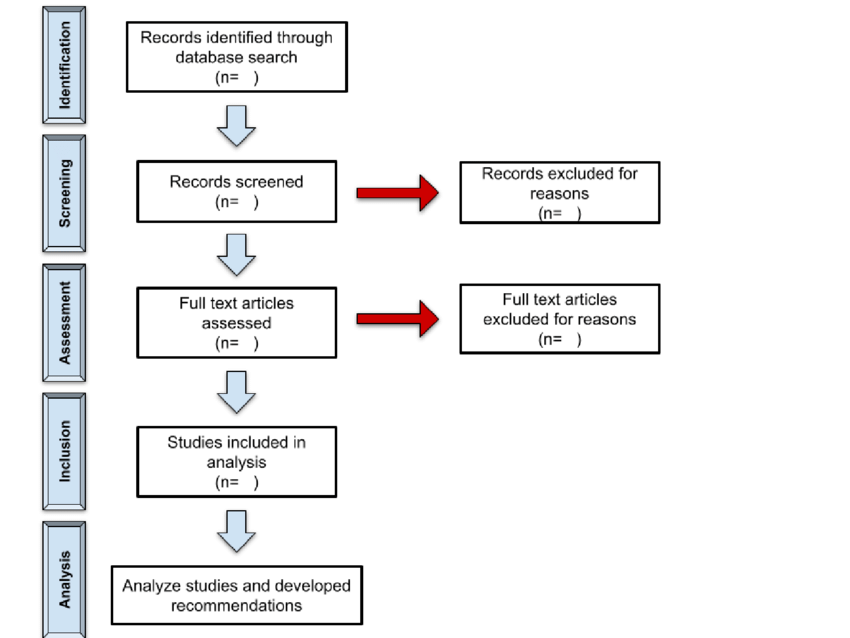
Petersen, B., Koshy-Chenthittayil, S., DeArmond, M., & Caromile, L. A. (2023). Assessment of diversity-based approaches used by American Universities to increase recruitment and retention of biomedical sciences research faculty members: A scoping review protocol. Plos one, 18(6), e0276089.
10. Discussion Section And Conclusion
The discussion relates the evidence back to the purpose of the review. It draws conclusions and notes any implications of the findings.
Summarize the main results (including an overview of concepts, themes, and types of evidence available), link to the review questions and objectives, and consider the relevance to key groups. PRISMA-ScR (item 19 & item 20)
It is also essential to remember that scoping reviews are not systematic reviews. They do not aim to make concrete recommendations.
Their primary function is to map the existing evidence, identify knowledge gaps and clarify concepts. They do not synthesize results for direct application in clinical or policy settings.
Summarizing the Evidence
- Summarize key findings in relation to your research questions
- Highlight main themes or patterns across studies
- Explain the nuances and complexities in the evidence
- Tailor overall findings of the scoping review to the relevant knowledge users such as policymakers, health care providers and patients or consumers
- Discuss the consistency of the evidence
- This provides a clear takeaway message for readers
Example: A Summary of Evidence
“In this scoping review we identified 88 primary studies addressing dissemination and implementation research across various settings of dementia care published between 1998 and 2015. Our findings indicate a paucity of research focusing specifically on dissemination of knowledge within dementia care and a limited number of studies on implementation in this area. We also found that training and educating professionals, developing stakeholder interrelationships, and using evaluative and iterative strategies are frequently employed to introduce and promote change in practice. However, although important and feasible, these strategies only partly address what is repeatedly highlighted in the evidence base: that organisational factors are reported as the main barrier to implementation of knowledge within dementia care. Moreover, included studies clearly support an increased effort to improve the quality of dementia care provided in residential settings in the last decade.”
Lourida, I., Abbott, R. A., Rogers, M., Lang, I. A., Stein, K., Kent, B., & Thompson Coon, J. (2017). Dissemination and implementation research in dementia care: a systematic scoping review and evidence map. BMC geriatrics, 17, 1-12.
Limitations
When considering the limitations of a review process, particularly scoping reviews, it’s essential to acknowledge that the goal is breadth, not depth, of information.
This means that unlike systematic reviews, scoping reviews generally don’t involve a formal appraisal of the methodological quality of included studies, unless specifically required by the review’s aim.
- Focus on limitations of the review process as well as the extent of information uncovered.
- One significant limitation frequently encountered in reviews is the restriction to English-language sources. This decision, often made for feasibility, can inadvertently introduce bias by excluding valuable research from non-English speaking communities and potentially limiting the generalizability of the findings.
- Make note of any deviations from guidelines or the protocol along with rationales and their potential effect on the results.
- For instance, if a scoping review protocol initially excludes gray literature but later incorporates it due to the emergence of relevant findings during the review process, this change needs to be explicitly stated and justified in the final report.
Example: Reported Limitations
“Our scoping review has some limitations. To make our review more feasible, we were only able to include a random sample of rapid reviews from websites of rapid review producers. Further adding to this issue is that many rapid reviews contain proprietary information and are not publicly available. As such, our results are only likely generalizable to rapid reviews that are publicly available. Furthermore, this scoping review was an enormous undertaking and our results are only up to date as of May 2013.”
Tricco, A. C., Antony, J., Zarin, W., Strifler, L., Ghassemi, M., Ivory, J., … & Straus, S. E. (2015). A scoping review of rapid review methods. BMC medicine, 13, 1-15.
Conclusions
Provide a general interpretation of the results with respect to the review questions and objectives, as well as potential implications or next steps. PRISMA-ScR (item 21)
Discuss implications:
- Note that recommendations for practice and policy will not be relevant for most scoping reviews as the goal is to provide a preliminary map of the evidence without appraising the quality and validity of the results.
- Consider both positive and negative implications.
- This helps translate your findings into real-world applications.
Identify gaps and future research:
- Point out areas where evidence is lacking or inconsistent.
- Suggest specific research questions or study designs to address these gaps.
- This helps guide future research efforts in the field.
- Recommendations for future research are often a key element, particularly suggestions for more focused systematic reviews based on the scoping review’s findings.
- For instance, a scoping review might reveal a need for research linking specific features of expertise to mental and physical health outcomes. Similarly, there might be methodological gaps regarding the validation of certain measures or understanding experiences across diverse contexts and populations.
Example: Reported Conclusions
“The lack of evidence to support physiotherapy interventions for this population appears to pose a challenge to physiotherapists. The aim of this scoping review was to identify gaps in the literature which may guide a future systematic review. However, the lack of evidence found means that undertaking a systematic review is not appropriate or necessary […]. This advocates high quality research being needed to determine what physiotherapy techniques may be of benefit for this population and to help guide physiotherapists as how to deliver this.”
Hall, A. J., Lang, I. A., Endacott, R., Hall, A., & Goodwin, V. A. (2017). Physiotherapy interventions for people with dementia and a hip fracture—a scoping review of the literature. Physiotherapy, 103(4), 361-368.
Key Takeaways
- Purpose: A scoping review maps the evidence on a broad topic. It shows what exists, how it is distributed and where the gaps lie.
- When to Use: Use it to map evidence, clarify concepts or test feasibility before a systematic review. Choose a systematic review to judge whether an intervention works.
- Protocol: Write the plan in advance and register it on OSF or Figshare, since PROSPERO does not accept scoping review protocols.
- Question Format: Frame the question with PCC (Population, Concept, Context), the scoping counterpart of PICO.
- No Appraisal: Scoping reviews usually skip critical appraisal and pooling. A study is included because it is relevant, not because it is good.
- Charting: Chart each source on a piloted form, ideally in duplicate, and screen with at least two reviewers.
- Reporting: Use the PRISMA-ScR checklist (20 essential items) and a flow diagram. Adherence to such standards still lags behind their availability.
Critical Evaluation of Scoping Reviews
Scoping reviews fill a distinct niche. They bring the protocol, documented search and duplicate screening of systematic reviews to broad mapping questions. Narrative reviews once handled those questions informally (Arksey & O’Malley, 2005; Munn et al., 2018).
Used to current standards, the method is rigorous and valuable. Its main risks are superficiality, over-interpretation and misuse as a lighter alternative to a systematic review (Munn et al., 2018).
Strengths of Scoping Reviews
Five features make the method valuable for exploratory questions:
- Breadth: A scoping review can cover a wide, varied literature, including grey literature, giving a panoramic overview that a narrowly focused systematic review cannot.
- Rigor: Unlike a narrative review, it uses a protocol, a documented search and duplicate screening, so the process is transparent and reproducible.
- Gap identification: Charting where evidence clusters and where it is absent helps set research priorities, which is why funders increasingly commission scoping reviews.
- Precursor role: It shows whether a full systematic review is feasible and worthwhile, and refines its question and criteria.
- Concept clarification: Where a term is used inconsistently, it can map the definitions in play before anyone synthesizes findings.
Each strength carries a matching cost. A wide net cannot weigh what it catches, so a comprehensive-looking map is easily mistaken for a graded evidence base.
Contemporary Research
Recent work on the method reads as one argument. The field measured its own inconsistency, built standards to fix it, and is now refining them.
How Consistent Were Scoping Reviews?
- Aim: Tricco et al. (2016) set out to describe how scoping reviews were conducted and reported, and whether any reporting guidance existed.
- Method: They searched nine databases for scoping reviews and methods papers. Two reviewers screened citations, and one charted data that a second verified.
- Results: Of 494 scoping reviews (1999 to 2014), 45% appeared after 2012. Only 13% reported a protocol, 36% used two reviewers to select citations and 43% used a predefined charting form.
- Conclusion: Use was rising steeply while conduct varied widely, and no reporting guideline existed. The call for one directly motivated the PRISMA-ScR.
As a duplicate-screened census of the whole method, this audit is strong methodological evidence. It turned a vague impression of inconsistency into documented fact.
Standards Built in Response
The PRISMA-ScR was the direct response. Reporting is more uniform where the checklist is applied.
In parallel, Peters et al. (2021b) updated the JBI conduct guidance after an extensive literature review and expert consultation. It clarifies when a scoping review is, and is not, appropriate, and aligns with the PRISMA-ScR so that conduct and reporting guidance now fit together.
Adherence still lags behind availability. Peters et al. (2021a) caution that the label “scoping review” is sometimes used without regard to the available guidance. They also name stakeholder engagement and consistent terminology as the next frontiers.
AI-Assisted Clustering
A very recent study extended the analysis stage. Hofmann et al. (2026) charted 684 distinct named therapeutic processes from 778 studies.
A large language model proposed candidate clusters from batches of process labels. Humans stayed in the loop. Raters corrected, merged, split and relabeled the clusters over repeated rounds until 32 stable clusters emerged.
The largest cluster, common factors such as therapeutic alliance, held 20.6% of processes. Search, screening and reporting stayed conventional and human-led. The model only organized data already extracted.
It is an early example of how such tools might make mapping hundreds of inconsistently labeled concepts manageable.
Potential Challenges
- Balancing breadth and depth: Scoping reviews necessitate a careful balance between covering a wide range of literature (breadth) and providing sufficient depth of analysis. A scope that is too broad can become unmanageable and result in superficial treatment of the topic. Conversely, excessive focus on depth might compromise the comprehensiveness of the review. This balance requires careful consideration during the planning stages, particularly when defining the review question and inclusion criteria.
- Lack of standardized terminology and methods: While frameworks for scoping reviews exist, there is still a lack of consensus on terminology and methods, potentially leading to inconsistencies in how they are conducted and reported. This variability can make it challenging to assess the quality and reliability of scoping review findings.
- Difficulty in analyzing and presenting findings: Scoping reviews often involve synthesizing information from a large and diverse body of literature. Analyzing and presenting this information in a meaningful and concise way can be demanding, requiring a high level of analytical skill and clarity of presentation. The absence of standardized analysis methods further exacerbates this challenge, leading to potential inconsistencies in how data is extracted, analyzed, and presented.
- Limited resources and time constraints: Scoping reviews, although sometimes perceived as a quicker alternative to systematic reviews, can still be resource-intensive. They require meticulous planning, comprehensive searching, and rigorous analysis.
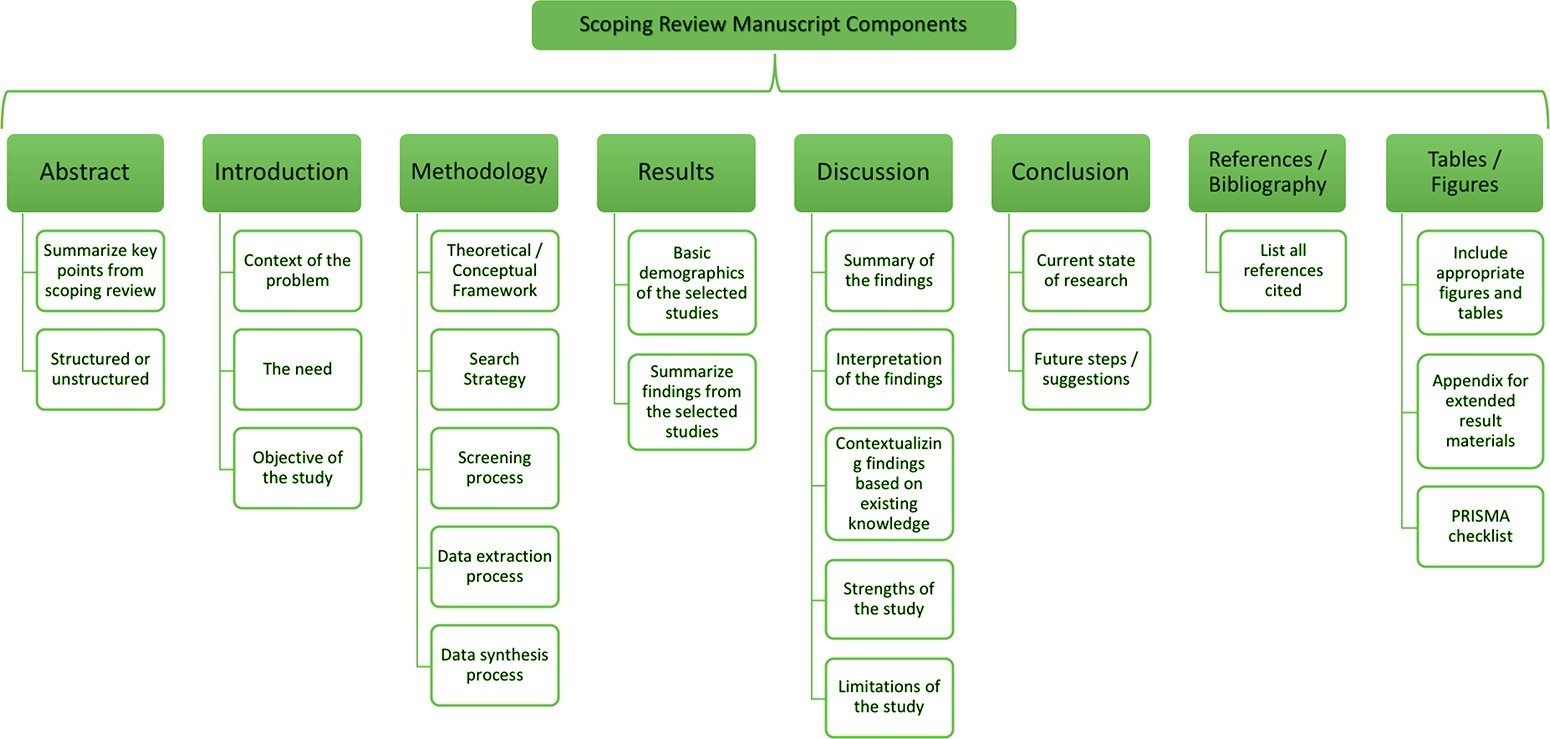
Reading List
- Arksey, H., & O’Malley, L. (2005). Scoping studies: towards a methodological framework. International journal of social research methodology, 8(1), 19-32.
- Aromataris, E., Fernandez, R., Godfrey, C. M., Holly, C., Khalil, H., & Tungpunkom, P. (2015). Summarizing systematic reviews: Methodological development, conduct and reporting of an umbrella review approach. International Journal of Evidence-Based Healthcare, 13(3), 132–140. https://doi.org/10.1097/XEB.0000000000000055
- Campbell, F., Tricco, A. C., Munn, Z., Pollock, D., Saran, A., Sutton, A., White, H., & Khalil, H. (2023). Mapping reviews, scoping reviews, and evidence and gap maps (EGMs): The same but different — the “Big Picture” review family. Systematic Reviews, 12, Article 45. https://doi.org/10.1186/s13643-023-02178-5
- David, D., & Werner, P. (2016). Stigma regarding hearing loss and hearing aids: A scoping review. Stigma and Health, 1(2), 59.
- Hofmann, S. G., Pahlen, L., Westhoff, M., Hossner, K., Quintarelli, H., Usée, F., Stenzel, K., & Stangier, U. (2026). Processes in psychotherapy: A scoping review with LLM-assisted clustering. Clinical Psychology Review, 128, Article 102782. https://doi.org/10.1016/j.cpr.2026.102782
- Levac, D., Colquhoun, H., & O’brien, K. K. (2010). Scoping studies: advancing the methodology. Implementation science, 5, 1-9.
- Munn, Z., Peters, M. D., Stern, C., Tufanaru, C., McArthur, A., & Aromataris, E. (2018). Systematic review or scoping review? Guidance for authors when choosing between a systematic or scoping review approach. BMC Medical Research Methodology, 18(1), 143. https://doi.org/10.1186/s12874-018-0611-x
- Pearson, A., Wiechula, R., & Lockwood, C. (2005). The JBI model of evidence-based healthcare. JBI Evidence Implementation, 3(8), 207-215.
- Peters, M. D., Godfrey, C., McInerney, P., Munn, Z., Tricco, A. C., & Khalil, H. (2020). Scoping reviews. JBI manual for evidence synthesis, 10.
- Peters, M., Godfrey, C., McInerney, P., Soares, C. B., Khalil, H., & Parker, D. (2015). Methodology for JBI scoping reviews. In The Joanna Briggs institute reviewers manual 2015 (pp. 3-24). Joanna Briggs Institute.
- Peters, M., Godfrey, C., Khalil, H., McInerney, P., Soares, C., & Parker, D. (2017). 2017 guidance for the conduct of JBI scoping reviews. Joanna Briggs Inst Rev Man, 13, 141-6.
- Peters, M. D. J., Marnie, C., Colquhoun, H., Garritty, C. M., Hempel, S., Horsley, T., Langlois, E. V., Lillie, E., O’Brien, K. K., Tunçalp, Ö., Wilson, M. G., Zarin, W., & Tricco, A. C. (2021a). Scoping reviews: Reinforcing and advancing the methodology and application. Systematic Reviews, 10(1), 263. https://doi.org/10.1186/s13643-021-01821-3
- Peters, M. D. J., Marnie, C., Tricco, A. C., Pollock, D., Munn, Z., Alexander, L., McInerney, P., Godfrey, C. M., & Khalil, H. (2021b). Updated methodological guidance for the conduct of scoping reviews. JBI Evidence Implementation, 19(1), 3–10. https://doi.org/10.1097/XEB.0000000000000277
- Pollock, D., Davies, E. L., Peters, M. D., Tricco, A. C., Alexander, L., McInerney, P., … & Munn, Z. (2021). Undertaking a scoping review: A practical guide for nursing and midwifery students, clinicians, researchers, and academics. Journal of advanced nursing, 77(4), 2102-2113.
- Pollock, D., Peters, M. D., Khalil, H., McInerney, P., Alexander, L., Tricco, A. C., … & Munn, Z. (2023). Recommendations for the extraction, analysis, and presentation of results in scoping reviews. JBI evidence synthesis, 21(3), 520-532.
- Scott, H., Sweet, L., Strauch, L., & Muller, A. (2019). Expressed breastmilk handling and storage guidelines available to mothers in the community: A scoping review. Women and Birth, 33(5), 426–432.
- Tricco, A. C., Antony, J., Zarin, W., Strifler, L., Ghassemi, M., Ivory, J., Perrier, L., Hutton, B., Moher, D., & Straus, S. E. (2015). A scoping review of rapid review methods. BMC Medicine, 13, 224. https://doi.org/10.1186/s12916-015-0465-6
- Tricco, A. C., Lillie, E., Zarin, W., O’Brien, K., Colquhoun, H., Kastner, M., Levac, D., Ng, C., Sharpe, J. P., Wilson, K., Kenny, M., Warren, R., Wilson, C., Stelfox, H. T., & Straus, S. E. (2016). A scoping review on the conduct and reporting of scoping reviews. BMC Medical Research Methodology, 16, 15. https://doi.org/10.1186/s12874-016-0116-4
- Tricco, A. C., Lillie, E., Zarin, W., O’Brien, K. K., Colquhoun, H., Levac, D., Moher, D., Peters, M. D. J., Horsley, T., Weeks, L., Hempel, S., Akl, E. A., Chang, C., McGowan, J., Stewart, L., Hartling, L., Aldcroft, A., Wilson, M. G., Garritty, C., … Straus, S. E. (2018a). PRISMA extension for scoping reviews (PRISMA-ScR): Checklist and explanation. Annals of Internal Medicine, 169(7), 467–473. https://doi.org/10.7326/M18-0850
- Tricco, A. C., Zarin, W., Ghassemi, M., Nincic, V., Lillie, E., Page, M. J., Shamseer, L., Antony, J., Rios, P., Hwee, J., Veroniki, A. A., Moher, D., Hartling, L., Pham, B., & Straus, S. E. (2018b). Same family, different species: Methodological conduct and quality varies according to purpose for five types of knowledge synthesis. Journal of Clinical Epidemiology, 96, 133–142. https://doi.org/10.1016/j.jclinepi.2017.10.014

