Autism Acceptance Month in April 2026 marks a critical shift from basic awareness toward the validation of autistic lived experiences.
Genuine support requires non-autistic peers to move beyond seeing autism as a medical deficit and instead see autism as a natural neurological variation that deserves equitable treatment and environmental adjustments.
This shift to the social model of disability posits that societal barriers, not personal impairments, disable individuals.
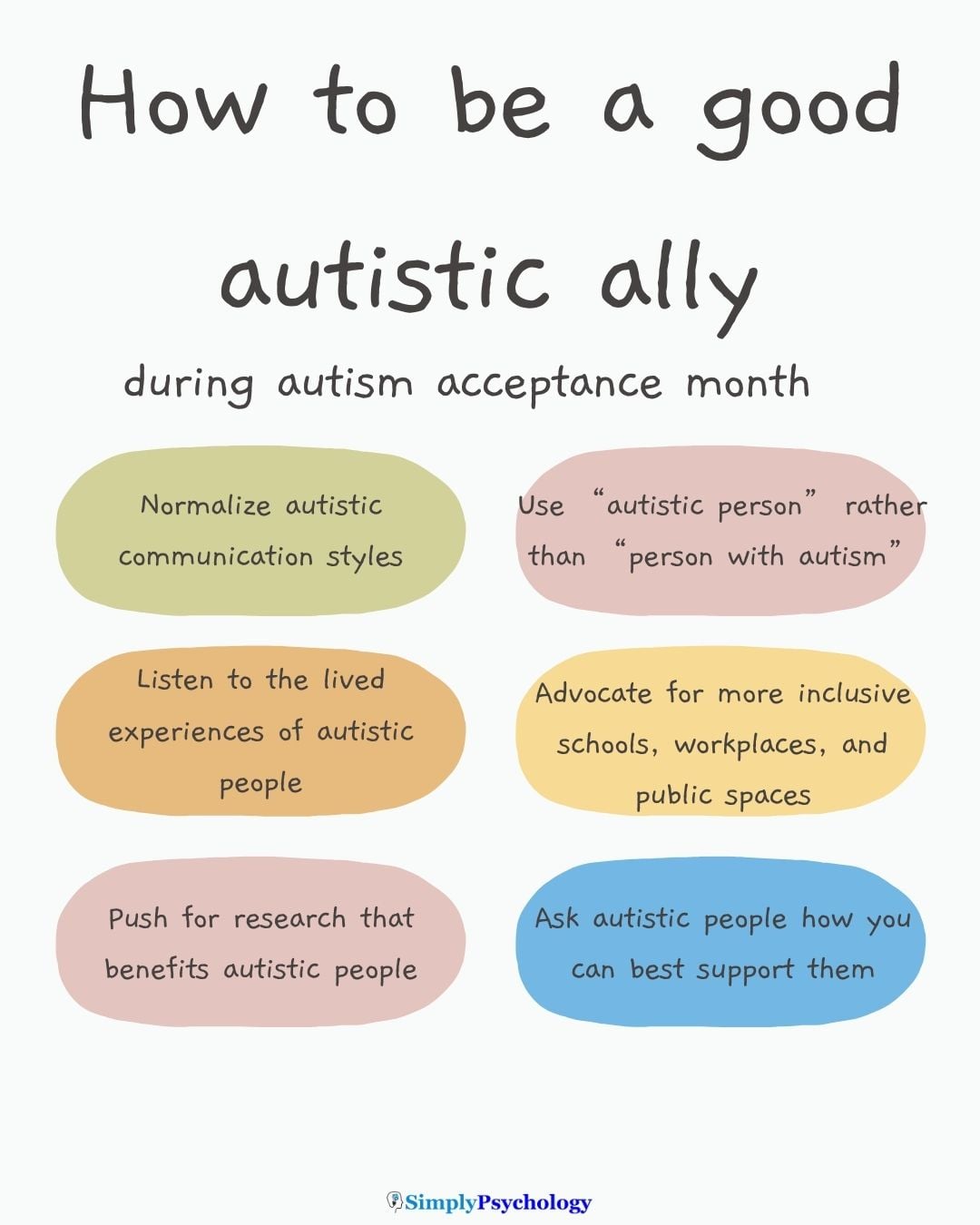
Below are some ways in which autistic allies can show support during autism acceptance month (and beyond!):
Bridging the Double Empathy Problem
Effective communication requires a mutual effort to bridge differing social perspectives. The “double empathy problem” identified by autistic researcher Damien Milton describes the breakdown in understanding that occurs between people with different neurological types.
Historically, researchers blamed these failures solely on autistic social deficits. Our new understanding suggests that non-autistic individuals struggle equally to interpret the intentions and emotions of autistic peers.
To be supportive, you must presume competence and recognize that direct communication styles are valid. You should avoid taking offense if social conventions, such as small talk or eye contact, are not followed.
Consider whether breakdowns in communication are as a result of communication differences on both parts, rather than automatically assuming the autistic person is in the wrong.
Validating Authentic Behaviors and Sensory Needs
Encouraging natural behaviors like stimming is essential for an autistic person’s emotional regulation.
Stimming refers to repetitive physical movements or vocalizations used to manage sensory input or express feelings.
When society accepts these behaviors, it reduces the pressure on autistic people to engage in “masking.” Masking involves the conscious or unconscious suppression of autistic traits to appear neurotypical.
This process is psychologically exhausting. Chronic masking leads to autistic burnout, a state of intense physical and mental exhaustion.
You can support others by creating safe spaces where sensory aids, such as noise-canceling headphones, are normalized.
Adapting Environments and Communication Styles
Changing the environment is often more effective than asking an individual to change their nature. Dr. Luke Beardon suggests a “golden equation” where the outcome depends on the interaction between the person and their surroundings.
Environmental adjustments can depend on the autistic person in question, so it’s best to ask what they want!
Some may prefer dimmer lighting and minimal unnecessary background noise. Predictability can also be a powerful tool for reducing anxiety. Try to make sure you provide clear routines and advance notice before any transitions or schedule changes.
Communication should also be flexible and transparent. Many autistic individuals prefer written or asynchronous communication, such as email, over real-time phone calls.
When speaking, provide “wait time” to allow for information processing. Using clear, unambiguous language prevents the confusion often caused by metaphors or sarcasm.
Actionable Advocacy and Language Choice
Language shapes the way society perceives and treats neurodivergent people. Most of the autistic community prefers identity-first language, such as “autistic person,” rather than “person with autism” (person-first language) because autism is intrinsic to their identity.
Avoid functioning labels like “high-functioning” or “low-functioning.” These terms are often inaccurate. “High-functioning” may be used to deny someone’s need for support. Conversely, “low-functioning” often serves to ignore a person’s individual strengths and agency.
Additionally, try to use neutral, strengths-based terms like “focused interests” instead of “obsessions.”
Principles of Inclusive Support
| Category | Supportive Action | Reason |
| Language | Use “Autistic person” | Validates autism as an identity. |
| Environment | Reduce sensory clutter | Lowers sensory overload. |
| Social | Normalize autistic social communication preferences | Minimizes autistic stigma and the need for autistic masking. |
| Policy | “Nothing about us without us” | Ensures autistic leadership in decisions. |
Centering Autistic Voices
Support must extend beyond the month of April and involve the active pursuit of anti-ableism. Anti-ableism involves dismantling the idea that being neurotypical is the only “correct” way to exist.
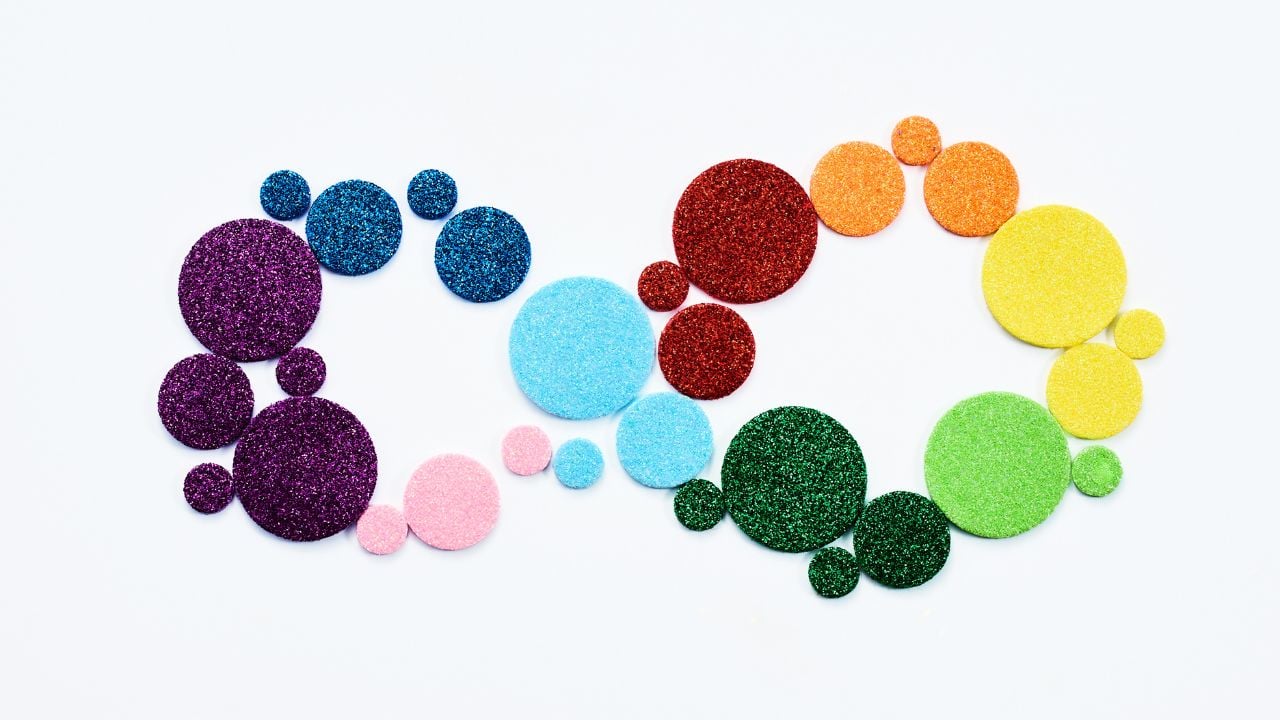
Allies should embrace the infinity symbol instead of the puzzle piece, which has historically been used as a logo for autism. The puzzle piece implies a person is missing a part or needs to be “solved” which can feel stigmatizing for autistic people.
Always listen directly to autistic advocates and fund autistic-led organizations to ensure that support strategies are grounded in actual needs rather than outdated stereotypes.
A great policy within the autistic community is the saying “nothing about us without us” which means that autistic voices must be listened to and taken seriously since they are the best experts about their experiences.
In the past (and still currently to some extent), non-autistic autism experts have spoken on behalf of autistic people and have studied areas of autism that often sees autism through a deficit lens or as something that needs to be “fixed” or “cured”.
Autistic people are now trying to reclaim the narrative and you can help with this. Push for research to focus on topics that are important for autistic people which also involves the lived experiences and co-participation of actual autistic people.
References
Beardon, L. (2021). Avoiding anxiety in autistic adults: A guide for autistic wellbeing. Hachette UK.
Milton, D. E. (2012). On the ontological status of autism: The ‘double empathy problem’. Disability & society, 27(6), 883-887.
Pearson, A., Rose, K., & Rees, J. (2021). “I felt like I deserved it because I was autistic”: Understanding the impact of interpersonal victimisation in the lives of autistic people. Autism in Adulthood, 3(1), 52–64.
Silverman, C. (2015). NeuroTribes: The legacy of autism and the future of neurodiversity by Steve Silberman. Anthropological Quarterly, 88(4), 1111-1121.

