Introverts tend to be quiet, reserved, and prefer solitary activities. They feel drained after social interaction and need alone time to recharge. Introverts often think before speaking, dislike small talk, and have a small group of close friends. They are internally focused and get absorbed in their own thoughts.
Key Takeaways
- Origins: Carl Jung introduced introversion and extraversion in 1910 as two ends of a single personality continuum.
- Core trait: Introverts are reserved and thoughtful, and recharge through solitude rather than socializing.
- Not shyness: Introversion is different from social anxiety and shyness; some introverts are highly sociable, just in their own way.
- Social preference: Introverts feel most comfortable in one-on-one or small-group settings, and are energized by time alone rather than time with people.
- A spectrum: Introversion is not all-or-nothing; introverts make up roughly twenty-five to forty percent of the population.

What is An Introvert?
Introversion is a personality trait distinguished by focusing on internal feelings rather than external sources of stimulation.
It is critical to note that introversion is not the same as social anxiety or shyness – an introvert is not necessarily socially anxious or shy.
Introverts aren’t just quiet people. In fact, many introverts are not subtle at all and could even be the most outgoing person you know.
Frankly, there are still many misconceptions about an introverted personality type, even though introverts make up about twenty-five to forty percent of the population.
While it is easy to spend many hours researching the topic, many clues can help determine if you fall into the introverted group.
Introverts come in all sorts of packages. In this next section, we are going to look at the eight different signs that indicate whether you might be an introvert.
If you find yourself saying, “This is super relatable!” to most of the signs we go over, you might just have your answer.
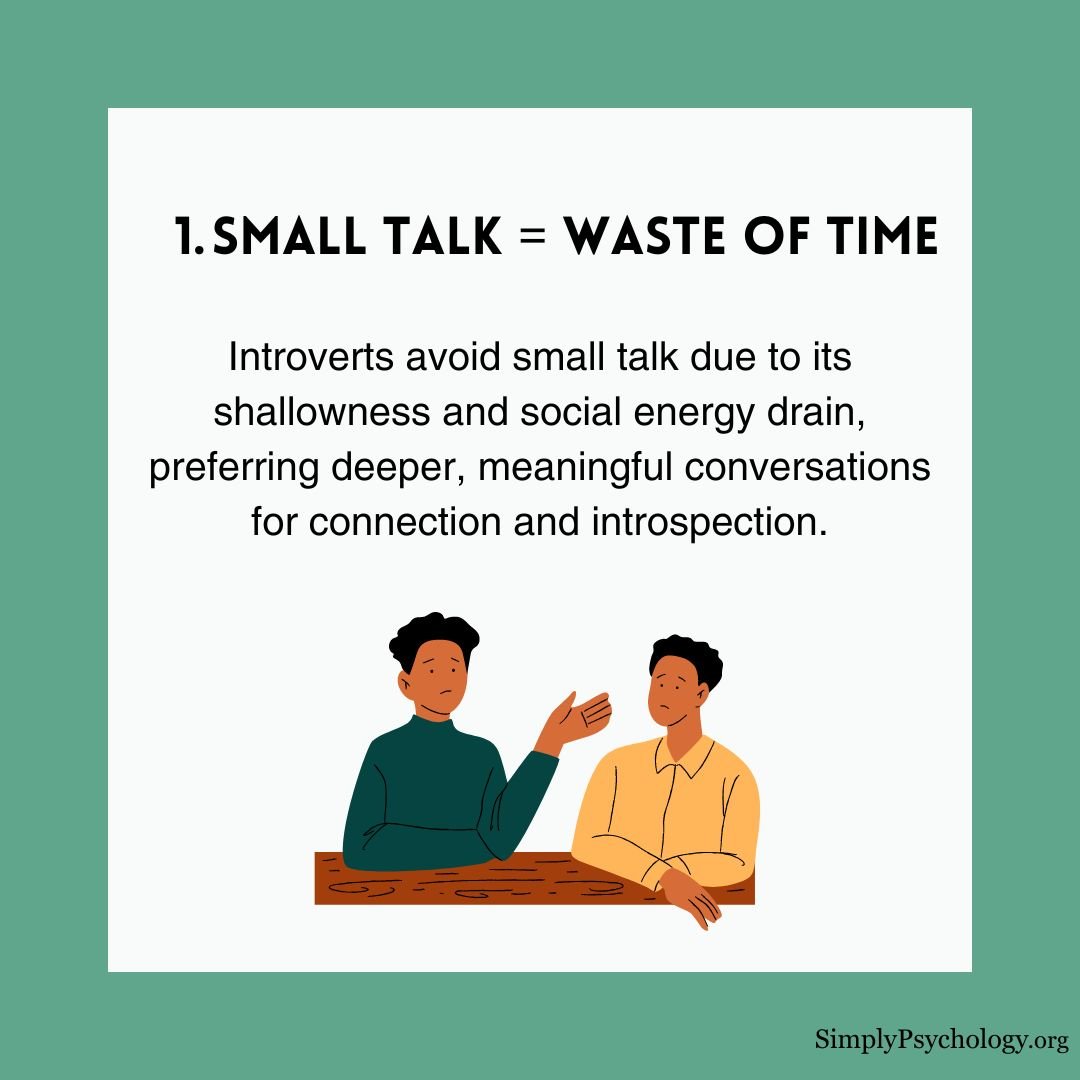
Small Talk = Waste of Time
Introverts are incredibly skilled at active listening. They process information internally, which lets them hear, understand, and respond with carefully considered insight.
They aren’t fans of conversations that bounce back and forth. That makes them the best people to go to for a good vent.
They are observers who enjoy letting people vent their feelings. They set aside their own thoughts to let someone else reflect and process, out loud, on their own terms.
This builds trust quickly. Where extroverts tend toward interactive, back-and-forth listening, introverts listen attentively and let the other person lead.
Small talk rarely captivates them. The standard “I watched ‘The Kardashians’ last night, and Kim was crazy!” or “The weather is terrible today, don’t you think?” does not hold an introvert’s attention.
They would much rather discuss politics, the cosmos, or someone’s emotional life. Light chitchat with an introvert often turns into something deeper.
A simple “Have you seen the new movie ‘Don’t Look Up?'” can turn into a conversation about climate change and politics. Introverts love going deeper than their extroverted counterparts.
This shows up in their language, too. Introverts tend to speak more literally and concretely, while extroverts favor more abstract, colorful language (Beukeboom et al., 2013).
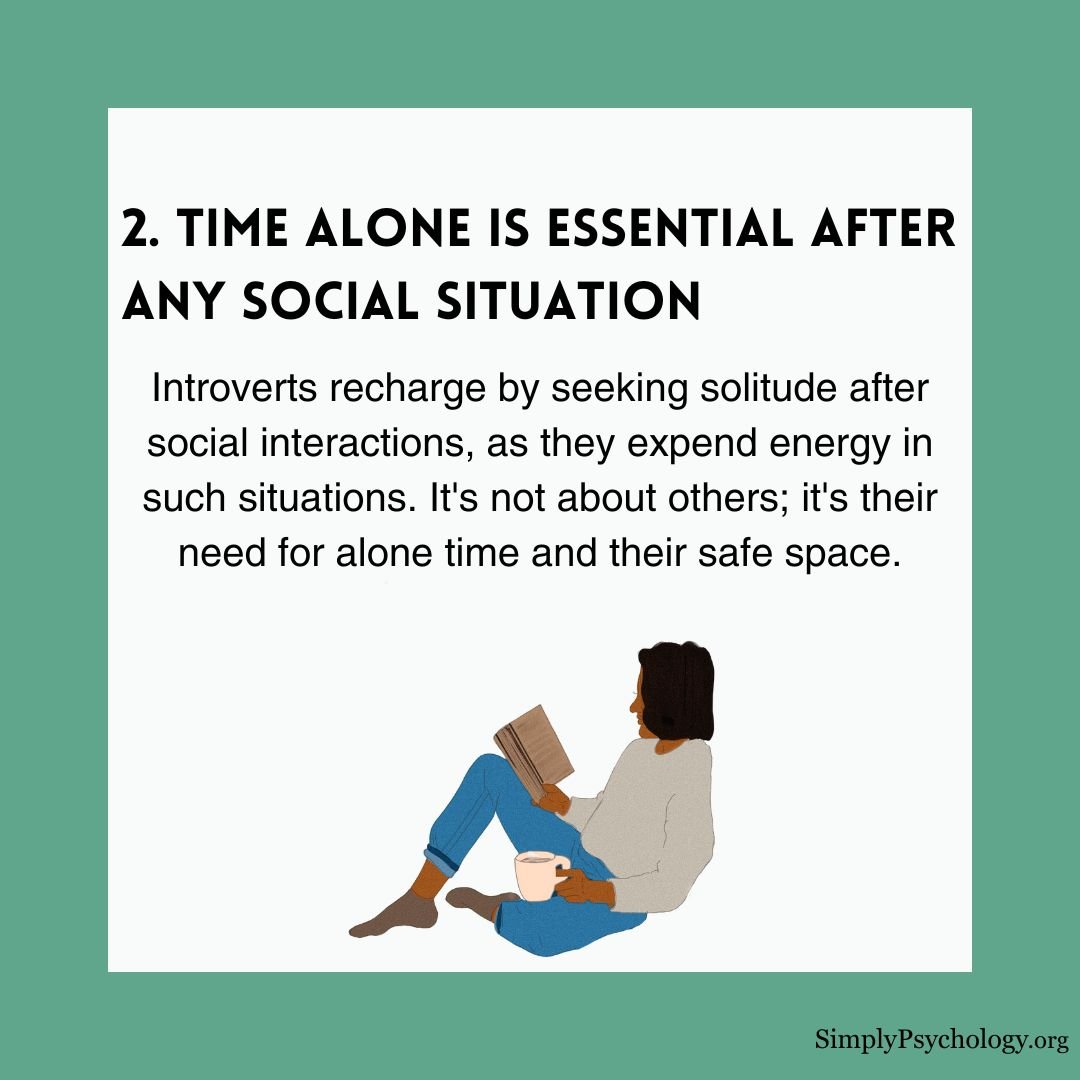
Time Alone is Essential After Any Social Situation
Introverts tend to feel exhausted after spending some time with many people. After a day of interacting with others, whether from work or pleasure, they often need to retreat into solitude and have some well-dedicated alone time.
It has nothing to do with the surrounding people, but it is necessary to recharge – where introverts can be isolated is usually their safe place.
One of the significant characteristics of this personality type is that introverts require expending energy in social situations.
Meanwhile, their extroverted counterparts actually gain energy from such interactions.
But that doesn’t mean that all introverts avoid social events altogether. We will get into that in the next point below.
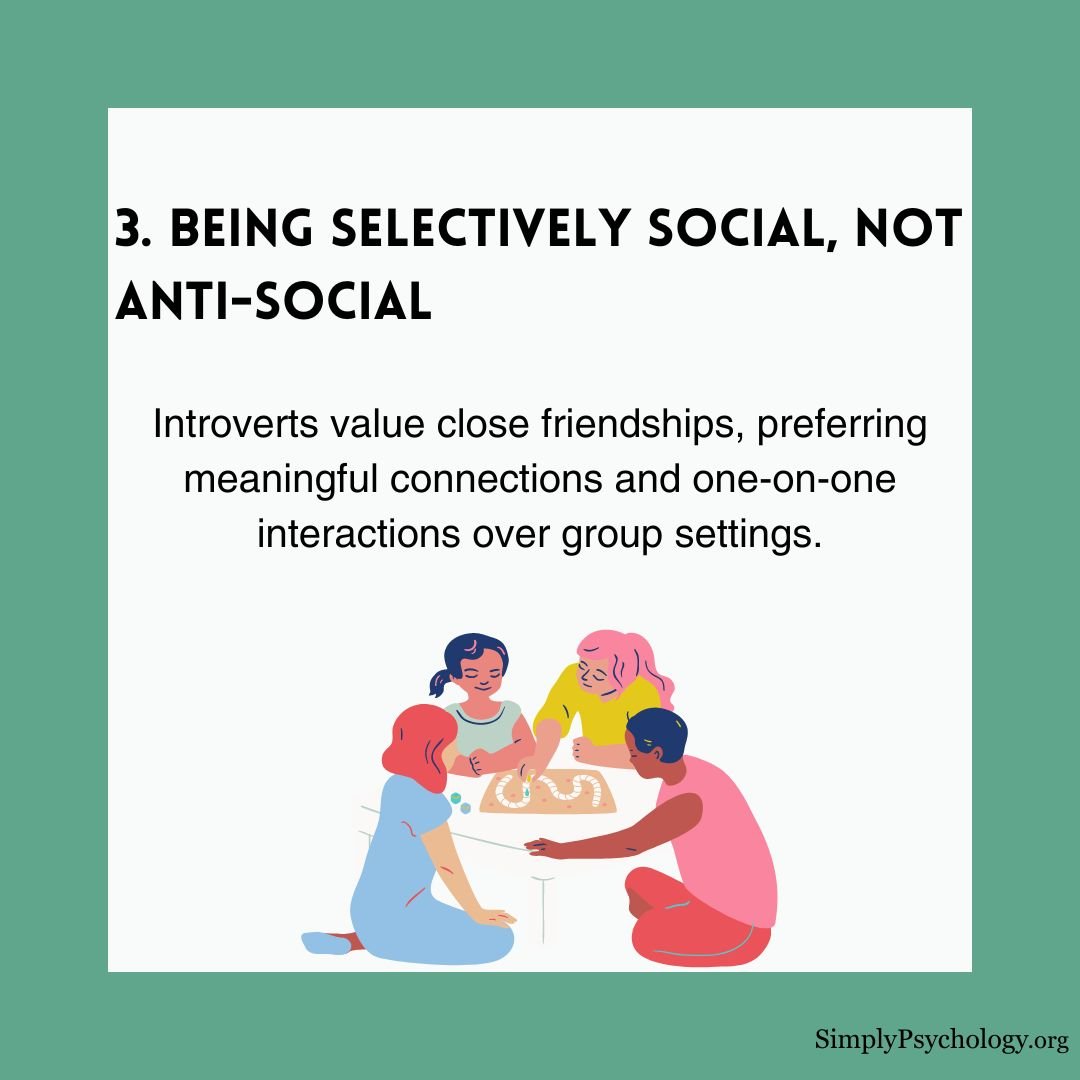
Being Selectively Social, Not Anti-Social
A widespread misconception is that introverts dislike people, or dislike spending time with them.
That’s not accurate. While introverts usually do not enjoy much socializing, they do enjoy spending time around others; they simply prefer the company of close friends.
An extrovert might go to a party to meet new people and have fun. An introvert, instead of chasing a large social circle they only know superficially, tends to prefer long-lasting relationships marked by closeness and intimacy.
Research backs this up. People classified as more introverted tend to have a smaller group of friends, while extroverts generally have a wider circle of acquaintances.
Introverts choose their friends carefully, and their closest relationships tend to be profound and significant. They also prefer one-on-one interaction to group settings.
Introverts are not anti-social. They enjoy social outings but are selective about the gatherings they choose. The idea that introverts are shy is also false: you can be an introvert without being shy. Introverts simply do better in small groups with people they trust.
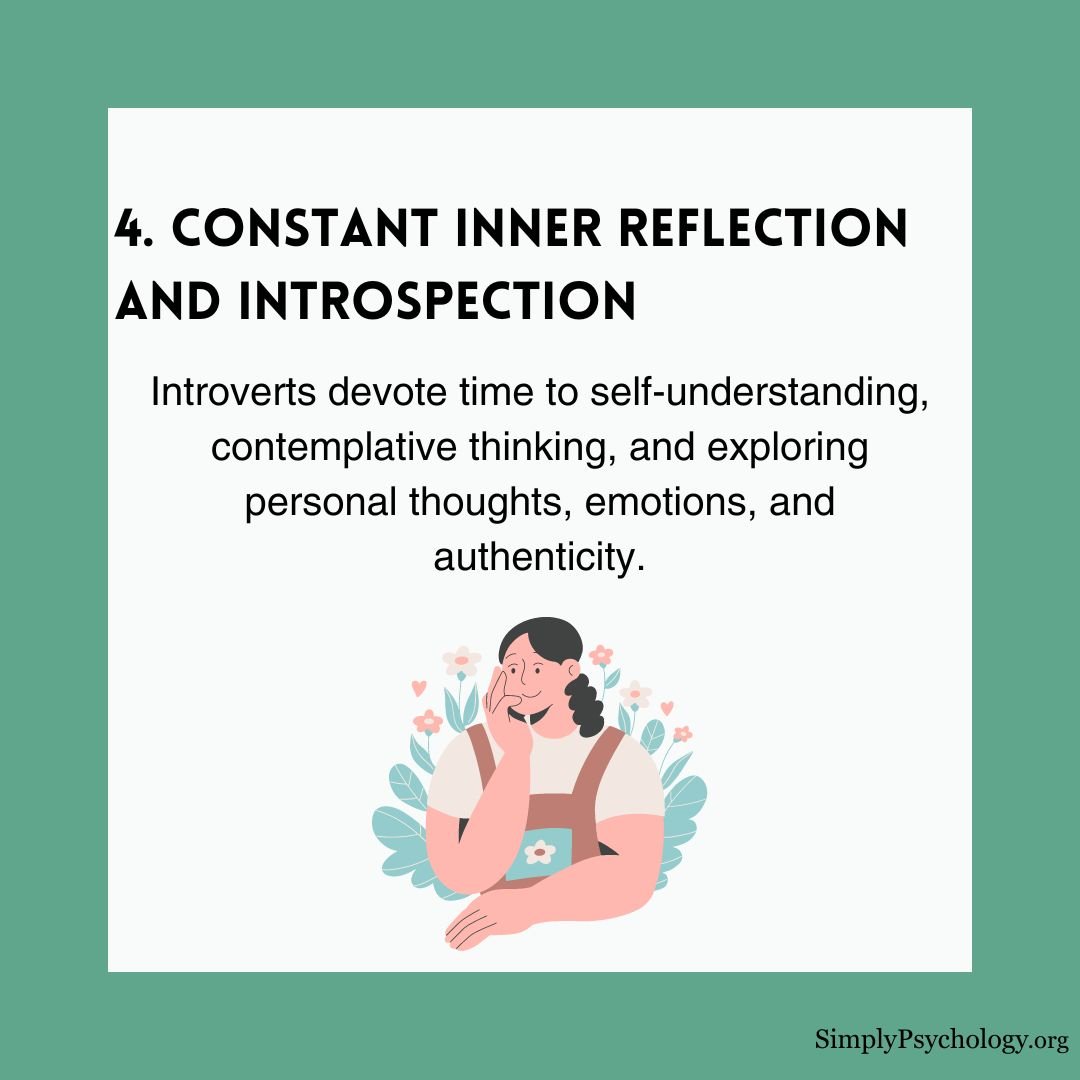
Constant Inner Reflection and Introspection
Because introverts turn inward, they spend a lot of time examining their own feelings and experiences. This is remarkable introspection.
Introverts have a very active inner voice. They are the true masters of reflective thinking.
Their reflective, curious attitude helps them strategically devise solutions and plans in their heads before acting. Self-awareness matters to them.
They devote real time to learning about themselves. Their contemplative thinking keeps them in touch with their own feelings, emotions, and thoughts.
They enjoy hobbies of their own choosing, too. Reading and reflecting on their lives are common ways they spend that time.
They can get lost in an internal monologue for hours. An extrovert would find this restless and draining. Introverts thrive on it.
They often notice details that extroverts overlook. Introverts simply pay more attention to smaller things.
A new haircut or shirt rarely escapes them. They may also blurt out an idea five steps ahead, when everyone else is still stuck on step one.
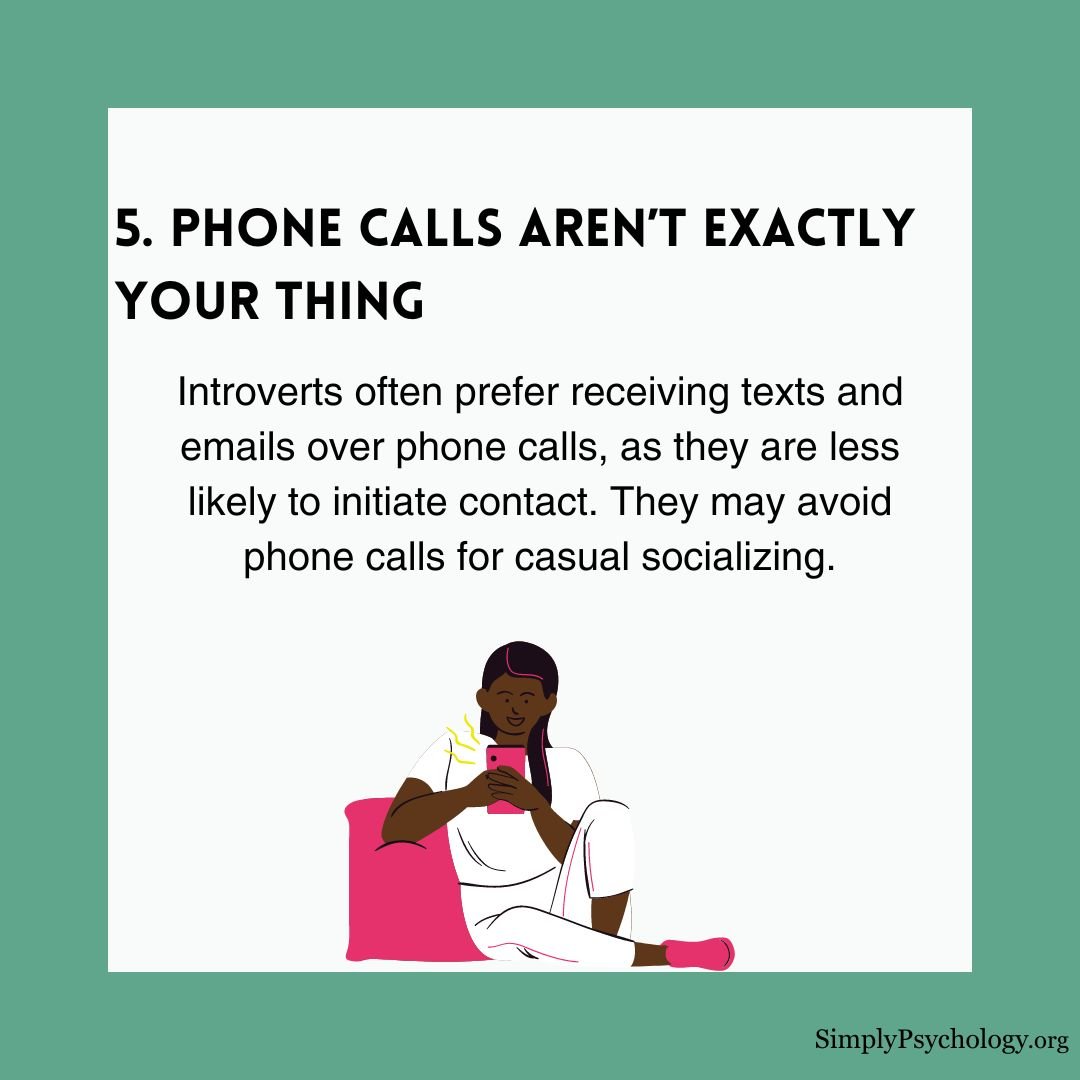
Phone Calls Aren’t Exactly Your Thing
Introverted people tend to receive more texts, emails, and phone calls than they make, unless there’s truly no other option. People high in introversion rarely reach out first.
Given a few spare minutes, the last thing an introvert wants to do is start a call just to socialize.
An extrovert, by contrast, might happily call a friend from the car while driving.
Their hands, eyes, and feet are busy, but their mouth is not. Silence with no one around feels dull to them.
Introverts feel differently. Alone in a quiet car, they have no urge to fill the silence with a phone call.
They are also likely to avoid careers built around outreach, such as telemarketing.
When introverts do need to reach out, say to invite someone to a gathering, they will usually text rather than call.
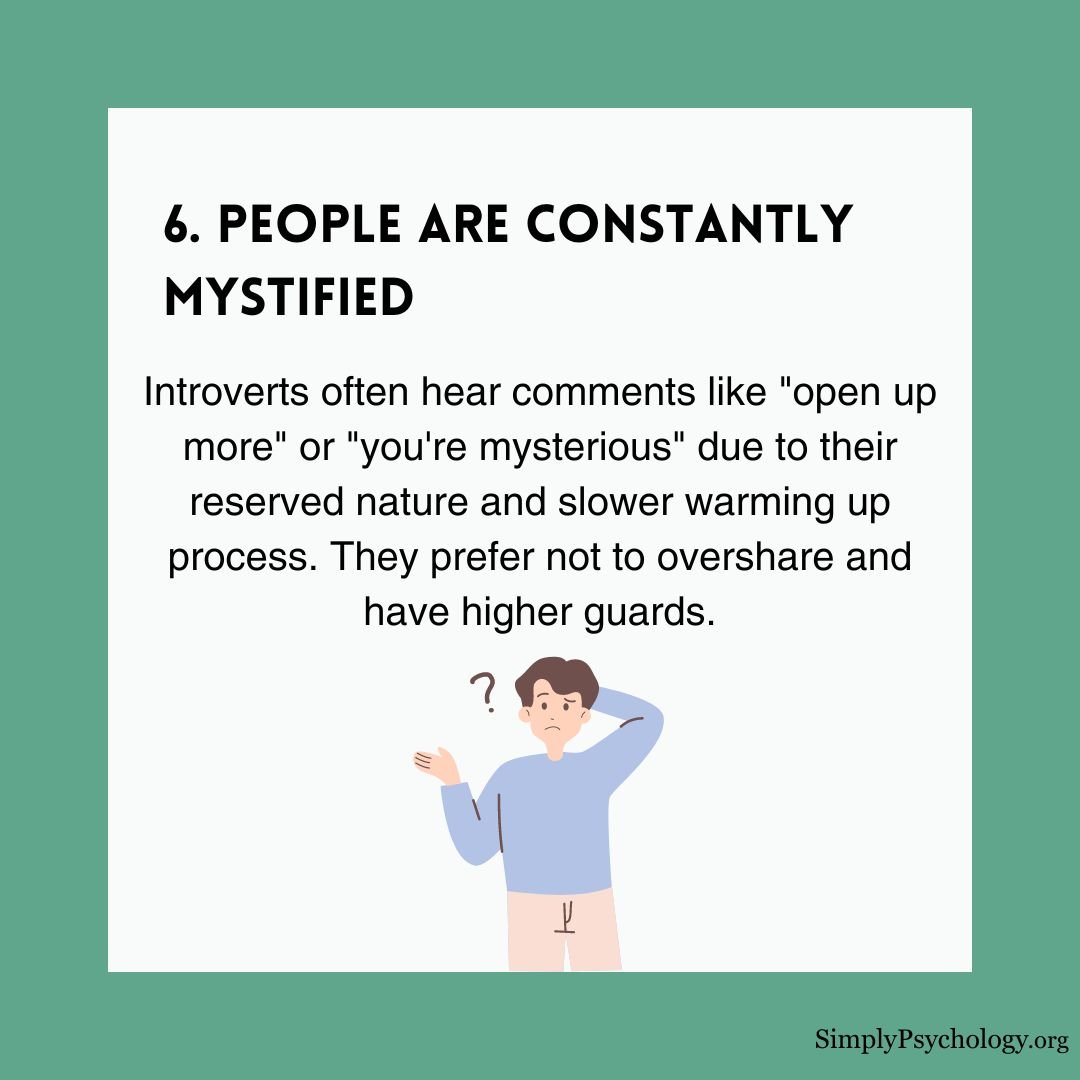
People are Constantly Mystified
Introverts often hear things like “You should try to open up more!”, “You’re so mysterious,” or “Why are you always so quiet?”
The truth is simpler. Introverts aren’t trying to draw attention to themselves, and they don’t feel a need to overshare.
They just take longer to warm up to people. Their guard is higher.
This is why introverts are described as reserved, quiet, and mellow. Some are shy, but reserve should not be mistaken for timidity.
Many simply prefer to choose their words and interactions carefully, rather than spend energy on needless chitchat.
That preference is also behind their dislike of small talk.
Given the choice, most would rather discuss real ideas than trade pleasantries: the meaning of life, or an honest exchange of thoughts, over mindless chitchat.
Meaningful interactions are what introverts are all about, and they are the cure to social burnout.
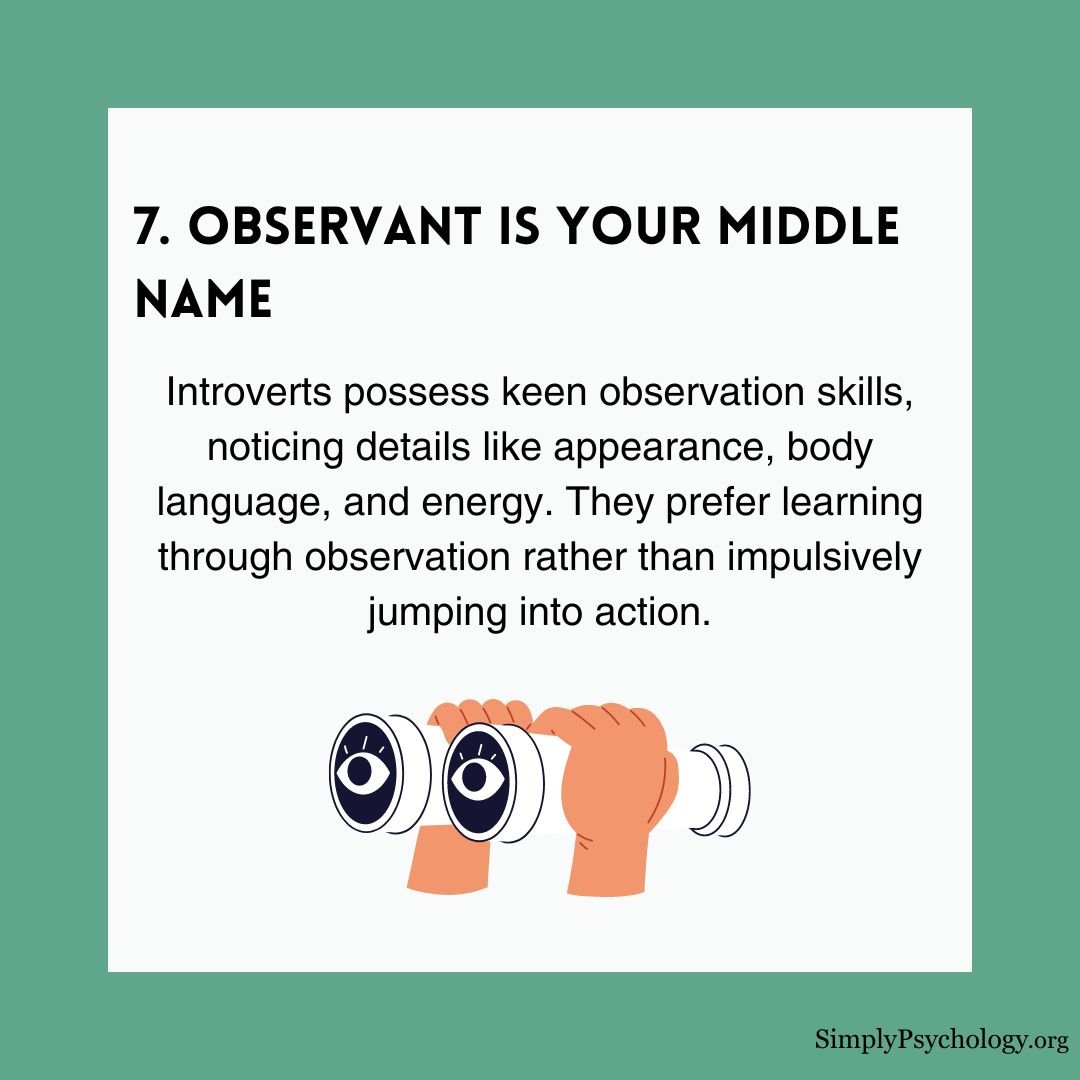
Observant is Your Middle Name
Introverts are great observers. They are often the first to notice a new haircut or outfit, a shift in body language, facial expression, or tone of voice.
They read and analyze a room well, picking up on the different energies people bring into a shared space.
This heightened awareness of surroundings comes naturally to them. They may look like the quietest people in the room, but they are quietly absorbing everything around them.
Unlike their extroverted colleagues, introverts tend to learn through careful observation rather than jumping straight in.
Extroverts prefer hands-on trial and error. Introverts prefer to watch first.
Introverted people like to watch others perform a task repeatedly until they feel ready to replicate it themselves.
Simply put, extroverts learn by doing, and introverts learn by watching.
Introverts also love to people-watch. They enjoy observing people, nature, or just about anything.
Creativity is Your Strong Suit
Last but not least, introverts are extraordinarily creative. They tap into abstract reasoning and unique perspectives. That’s real “out of the box” thinking.
Their reflective, curious minds keep them looking for solutions and creative approaches to problems.
When a social setting drains their energy, introverts often turn to a creative outlet to recharge.
Creativity is often how they unwind. After a long day at work or school, many introverts look forward to favorite hobbies like listening to music, writing, cooking, or self-care.
Introversion vs. Shyness
Shyness and introversion are often mistaken for the same thing. They are not.
Shyness involves fear of negative evaluation, a milder form of social anxiety. Introversion is different: a disposition toward becoming over-stimulated, and a need to be alone to regain energy.
Simply put, shyness indicates a fear of people or social situations. On the other hand, introverts simply do not like spending lots of time interacting with other people.
As covered above, introverts do appreciate being around people they feel close to.

Take-Aways
Introverts are often viewed as “extremely” independent, even distant. But as we’ve seen, they bring real, admirable strengths: self-awareness, thoughtful curiosity, and a reflective approach to life.
Being mindful matters. Taking a moment to pause, think, and reflect helps anyone play to their strengths.
No type is “better.” One personality type (extrovert and introvert) is not superior to the other. Each has its own benefits and drawbacks, depending on the situation.
Understanding your own character helps you use it well. As Susan Cain, author of Quiet, argues, a world that prizes constant talking can undervalue introverts’ real strengths. Recognising your own is worth doing on purpose.
One study of adult introverts ranging in age from 18 to 80 found a clear pattern (Cabello & Fernandez-Berrocal, 2015). People with healthy, strong social relationships and good emotional-regulation skills reported more contentment than those without those skills.
Make the most of your strengths. Nurture close relationships to build solid social connections, and use your tendency to look inward to develop real emotional understanding.
References
- Beukeboom, C. J., Tanis, M., & Vermeulen, I. (2013). The language of extraversion: Extraverted people talk more abstractly, introverts are more concrete. Journal of Language and Social Psychology, 32(2), 191-201.
- Cabello, R., & Fernandez-Berrocal, P. (2015). Under which conditions can introverts achieve happiness? Mediation and moderation effects of the quality of social relationships and emotion regulation ability on happiness. PeerJ, 3, e1300.
- Coplan, R. J., Bowker, J. C., & Nelson, L. J. (Eds.). (2021). The handbook of solitude: Psychological perspectives on social isolation, social withdrawal, and being alone. John Wiley & Sons.
- Dossey, L. (2016). Introverts: A defense . Explore: The Journal of Science and Healing, 12(3), 151-160.
- Grimes, J. O., Cheek, J. M., & Norem, J. K. (2011). Four meanings of introversion: Social, thinking, anxious, and inhibited introversion. In annual meeting of the Society for Personality and Social Psychology, San Antonio, TX.
- Lawn, R. B., Slemp, G. R., & Vella-Brodrick, D. A. (2019). Quiet flourishing: The authenticity and well-being of trait introverts living in the west depends on extraversion-deficit beliefs. Journal of Happiness Studies, 20(7), 2055-2075.