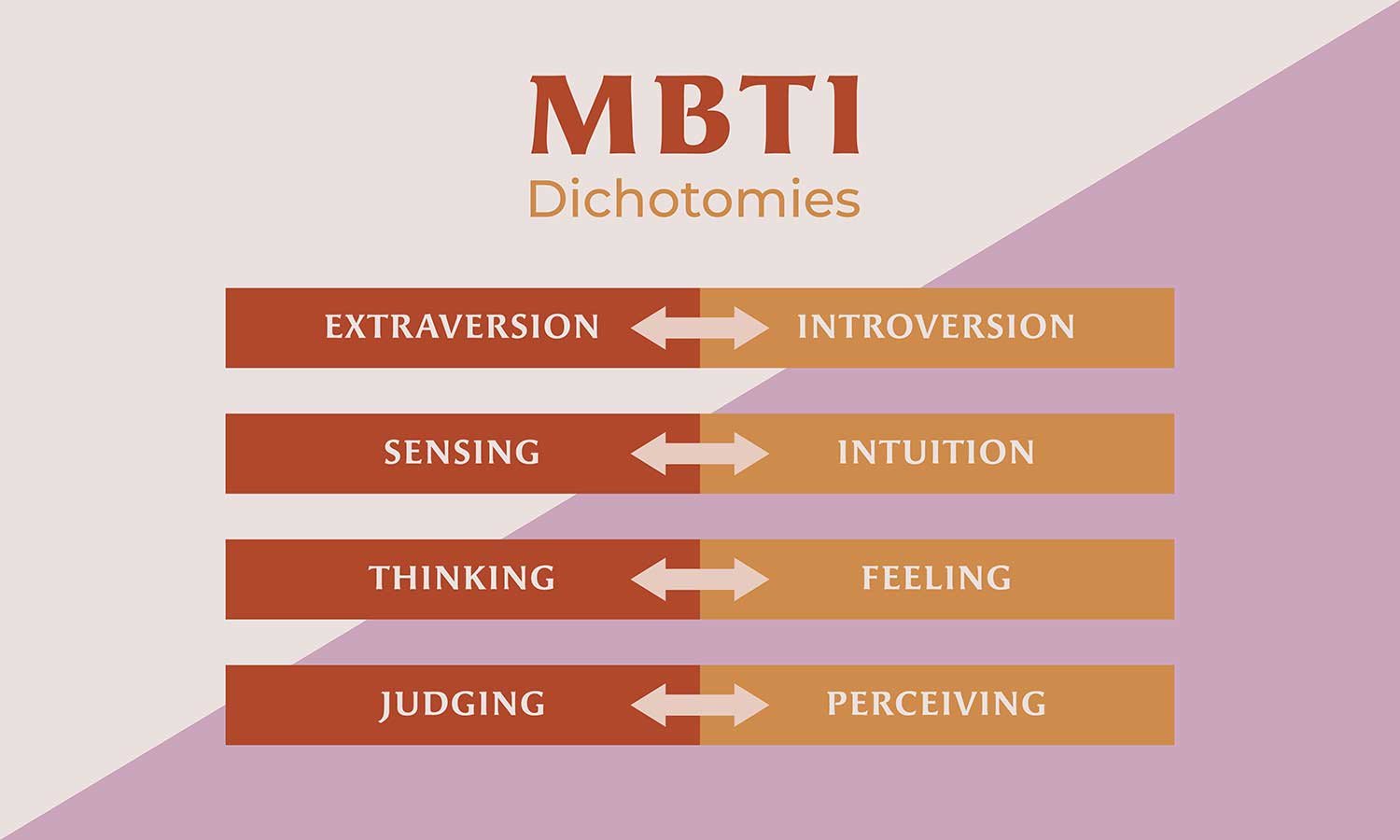
INFJ, as defined by the Myers-Briggs Type Indicator (MBTI), stands for Introversion, Intuition, Feeling, and Judging. INFJs are introspective, intuitive, empathetic, and organized, often known for their idealism, insightfulness, and strong desire to help others and contribute to the greater good.
Key Takeaways
- Meaning: INFJ stands for Introversion, Intuition, Feeling, and Judging: a preference for solitude, big-picture thinking, values-based decisions, and structure.
- Rarest Type: INFJs make up about 2% of the population, the least common of the 16 MBTI types.
- Diplomat Group: INFJ sits in the “Diplomats” (NF) group with INFPs, both prioritising empathy and personal growth.
- Core Values: INFJs are guided by strong personal values and a drive to help others, often working in counseling, healthcare, or education.
- Function Stack: the ordered set of mental functions INFJs use, leading with introverted intuition (Ni) and extraverted feeling (Fe) for sharp insight paired with genuine warmth.
- Close Relationships: INFJs favor a small circle of deep, authentic connections over many casual acquaintances.
INFJ Meaning
INFJs recharge through solitude (Introversion) and gravitate towards conceptual thinking and future possibilities rather than concrete facts (Intuition). They make decisions based on personal values and emotional implications rather than impersonal analysis (Feeling), and favor structured environments and planned outcomes over spontaneity (Judging).
People with this personality type are serious, logical, and hardworking.
They are also compassionate, conscientious, and reserved. They value close, deep connections and are sensitive to the needs of others, but also need time and space alone to recharge.
INFJs are sometimes referred to as “the Advocate,” “the Counselor,” or “the Idealist.”
INFJs belong to the Diplomats (NF) temperament group. This group also includes INFPs, both known for empathy, idealism, and a focus on personal growth.
Like all MBTI types, INFJ comes from a self-report test. That test has weak retest reliability and limited predictive validity (see the full MBTI evaluation).
The instability has a specific cause: because underlying traits like introversion are continuous, many people score close to the midpoint on a dichotomy. A few answers can then flip the letter. The same flip changes the whole four-letter type, explaining why retesting often gives a different result (Pittenger, 1993).
The theory itself has a weakness too. Jung’s types came from clinical observation, not controlled studies, and reviews still find little support for them (Stein & Swan, 2019).
Much of its apparent accuracy may reflect the Barnum (or Forer) effect: people rate vague, flattering personality descriptions as personally accurate. In a classic demonstration, Forer (1949) gave students an identical, generic sketch and found they rated it around 4.3 out of 5 for personal accuracy.
The effect is not unique to INFJ.
Once someone is told they are an INFJ, confirmation bias can also make the label feel more accurate than it is. People tend to notice information that fits the label. They discount what does not, so the type feels confirmed by experience, whatever its real accuracy.
Recent research finds the same pattern. MBTI dimensions still correlate with the Big Five at the facet level, but retest stability remains weak (Furnham, 2022; Pittenger, 2005).
McCrae and Costa (1989) first documented this overlap, matching MBTI Extraversion-Introversion to Big Five Extraversion and similar pairings for the other three letters. The MBTI still has no equivalent of Neuroticism. That gap is a real limitation, since Neuroticism is one of the Big Five’s most predictive traits.
A 2022 study built a separate measure, the Francis Psychological Type Scales, and tested it directly against the MBTI (Francis & Village, 2022). It reported similarly modest internal-consistency reliability for the type dichotomies.

INFJ is the rarest personality type. It is the least common type among men, and the third least common among women (after INTJ and ENTJ). INFJs make up:
- 2% of the general population
- 1% of men
- 2% of women
Famous INFJs include Mohandas Gandhi, Oprah Winfrey, Eleanor Roosevelt, Jimmy Carter, Martin Luther King Jr., and Taylor Swift.
| Strengths | Weaknesses |
|---|---|
| Sincere | Sensitive |
| Easygoing | Difficult to get to know |
| Practical | Conflict averse |
| Compassionate | Perfectionistic |
Key INFJ Characteristics
INFJs are considerate
- Empowers Others: They are dedicated to encouraging others to realize their potential and are always looking for ways to step in and fix society’s deeper problems.
- Reads Emotions: They have a unique ability to recognize others’ emotions and see helping others as their mission in life.
- Invests in Relationships: They pour a great deal of energy into their relationships and value deep, authentic connections.
- Active Listener: They are highly perceptive about people and are typically found listening attentively to someone else’s ideas or concerns.
INFJs are idealists
- Driven to Act: They are motivated and persistent in taking positive action to make the world a better place.
- Visionary: They can clearly imagine a happier future and are not afraid to put their dreams into action and stand up and make a difference.
- Meaningful Success: Success for them comes from fulfilling achievements and being a force of good in the world.
INFJs are conscientious
- Values-Driven: They are deeply guided by their set of personal values and are passionate about issues of ethics.
- Altruistic: They care more about altruism than personal gain and are determined to right the wrongs of the world.
- Authentic: They are fiercely loyal to their own system of morals and lead their lives authentically.
INFJs are private individuals
- Guarded: They have a tendency to close themselves off from others and can sometimes be difficult to get to know.
- Private: While they value honesty and authenticity, they are also private and struggle to be vulnerable.
- Conflict-Averse: They dislike conflict and can become dismissive during confrontations. INFJs value time and space alone to recharge and commonly will retreat from social contact without explanation.
Cognitive Functions of an INFJ
The MBTI arranges the four cognitive functions (thinking, feeling, intuition, and sensing) into a hierarchy. Each one points either outward (extraverted) or inward (introverted). The order shapes personality.
The J in INFJ fixes this order: it means the outward-facing function is a judging function (Feeling), not a perceiving one. That is why Introverted Intuition leads on the inside while Extraverted Feeling handles the outside world, producing the Ni-Fe-Ti-Se stack below.
This four-part hierarchy is often called the function stack. It comes from Carl Jung’s theory of psychological types (Jung, 1921/1971).
Jung paired two attitudes, extraversion and introversion, with two perceiving functions (sensing and intuition) and two judging functions (thinking and feeling). Isabel Briggs Myers later organized these into the dominant, auxiliary, tertiary, and inferior functions used for each MBTI type.
The dominant function is the primary aspect of personality, while the auxiliary and tertiary functions play supportive roles.
Dominant: Introverted Intuition
- Trusts Instinct: INFJs greatly depend on their own intuition. They can be single-minded in their focus and will firmly stick to their instincts.
- The “Driver”: Practitioners call this the type’s “driver”: the most conscious, trusted function a person uses, and the core of the personality (Myers & Myers, 1980/1995).
- Reads Internal Patterns: Because introverted intuition leads, INFJs read situations mainly through internal patterns rather than outside input, which is why their conclusions can feel non-negotiable.
Auxiliary: Extraverted Feeling
- Considerate: INFJs are considerate and selfless, constantly seeking to fulfill the wants and needs of others.
- Struggles to Say No: They sometimes struggle to say no to others, placing their own emotions and needs on the back burner.
- The “Co-Pilot”: This auxiliary function works as the “co-pilot,” supporting the dominant function by supplying whichever role or orientation it lacks (Myers & Myers, 1980/1995).
- Inner World, Outer Warmth: Because it faces outward while Ni faces inward, this pairing gives INFJs both a private inner world and real warmth toward others.
Tertiary: Introverted Thinking
- Rational: INFJs are rational and insightful.
- Logic Under Stress: They make decisions based on their own introspective ideas and theories and only rely on emotions when making decisions under stressful conditions.
- The “Backup”: This is the “backup” function: less developed than the top two, and one that typically emerges more fully in mid-life (Myers & Myers, 1980/1995).
- A Logical Check: Introverted thinking gives INFJs a private, logical check on their intuition and feeling, most visible when they step back to test an idea against their own reasoning.
Inferior: Extraverted Sensing
- Least Developed: This is a less developed and largely unconscious aspect of the INFJ personality.
- Present-Moment Awareness: However, this aspect of their personality helps INFJs to live in the present moment and remain aware of their surroundings.
- The “Blind Spot”: This is the “blind spot”: the least conscious and least controlled function, and a common source of stress for INFJs (Myers & Myers, 1980/1995).
- Stress Response: Under pressure, INFJs can overreact to sensory detail or the moment’s demands, the opposite of their usual big-picture style.
INFJ Hobbies, Interests, and Careers
Careers
INFJs appreciate work that is focused on humanitarian causes and improving the lives of others. They gain satisfaction from work that creates constructive and meaningful change in the world.
They do well in careers that let them use their creativity. The work must align with their personal values.
Often, INFJs are found working in health care, religion, counseling, or teaching. They appreciate careers that enable them to problem solve, specifically the problems of other people.
INFJs deeply care about others’ welfare and read people well. This makes them talented psychologists, social workers, spiritual leaders, and teachers.
These career matches describe common preferences, not guarantees. The underlying test has weak predictive validity for job performance, so it should not be used to screen or select candidates (McLeod, 2024).
In their free time, INFJs enjoy:
- Writing and reading
- Art and other creative pursuits
- Socializing in small, intimate settings
- Playing or listening to music
Their personal values include spirituality, learning, and community service.
INFJ Work Environments
INFJs are organized individuals who prefer harmonious, quiet settings. They like to work independently, implementing their own visions, or alongside co-workers who share their commitment to positive change. They thrive in environments that promote fairness, equality, and unity.
They are best suited to organizations that value hard work, attention to detail, and rule-following. Although introverted, INFJs appreciate a team-focused environment where everyone is treated equally.
Noisy, fast-paced settings are a poor fit.
Ambiguity or a lack of structure unsettles them.
Because they try to accommodate every point of view, INFJs can struggle in competitive workplaces. They avoid environments that fail to value the efforts of their people.
INFJ Personal Relationships
INFJs tend to develop the closest and most genuine relationships. These bonds form with people who share similar core values. They seek out deeper meanings in all areas of their lives, including relationships. INFJs crave deep connections and rarely will settle for superficial relationships.
They typically have a small circle of confidants rather than a huge circle of acquaintances, but these close friendships are highly treasured by INFJs.
INFJs sometimes feel misunderstood. So they open up only to people who make them feel understood, supported, and accepted for who they are.
They are excellent listeners and make loyal, caring, and devoted friends and partners.
Tips for Interacting With INFJs
Relationships
INFJs are reserved and private, so they can be difficult to get to know at first. However, they are more likely to be vulnerable with you if you take the time to understand their perspectives and appreciate their values.
They tend to form the closest romantic relationships with people who share their core beliefs and respect their deeply held morals.
Friendships
INFJs often need time to process and evaluate before they are ready to open up, so patience and authenticity are critical when befriending an INFJ.
INFJs seek validation from friends and partners. Offer steady support, acknowledge their strengths and creativity, and give them the intimacy they crave.
INFJs also need space to retreat and recharge, since they are introverted at heart. Understanding and supporting this need matters most.
Parenting
INFJs are deeply devoted to their role as a parent. They tend to form strong and connected bonds with their children and are very skilled at understanding their children’s emotional states.
INFJs will do whatever it takes to better their children’s lives. They want to create a nurturing, loving atmosphere.
They do have high expectations and can be firm disciplinarians when it comes to moral and ethical concerns. They want to raise their children to be compassionate, independent, and honorable.
INFJ Personality Test
Answer these questions to find out if INFJ might be your personality type:
- Do you prefer spending time alone or with a small group of close friends rather than in large social gatherings?
- Are you more drawn to abstract concepts and future possibilities than concrete facts and details?
- When making decisions, do you rely more on your personal values and the impact on others than on impersonal logic?
- Do you prefer having a structured plan rather than being spontaneous?
- Are you often described as empathetic, idealistic, or insightful by others?
- Do you have a strong desire to help others and make a positive impact on the world?
- Are you deeply committed to your personal values and ethics?
- Do you find yourself easily picking up on others’ emotions and needs?
- Are you drawn to creative pursuits or finding innovative solutions to complex problems?
- Do you sometimes struggle with being too private or having difficulty opening up to others?
If you answer “yes” to most of these questions, you may have INFJ personality traits. However, remember that personality is complex, and a professional assessment would be needed for a definitive personality type determination.
Take the MBTI (Paper Version)
Sources
Forer, B. R. (1949). The fallacy of personal validation: A classroom demonstration of gullibility. The Journal of Abnormal and Social Psychology, 44(1), 118–123. https://doi.org/10.1037/h0059240
Francis, L. J., & Village, A. (2022). The Francis Psychological Type Scales (FPTS): Factor structure, internal consistency reliability, and concurrent validity with the MBTI. Mental Health, Religion & Culture, 25(9), 931–951. https://doi.org/10.1080/13674676.2022.2041584
Furnham, A. (2022). The Big Five facets and the MBTI: The relationship between the 30 NEO-PI-R facets and the four Myers-Briggs Type Indicator (MBTI) scores. Psychology, 13(10), 1504–1516.
Jung, C. G. (1971). Psychological types (H. G. Baynes, Trans., revised by R. F. C. Hull). Princeton University Press. (Original work published 1921.)
King, S. P., & Mason, B. A. (2020). Myers-Briggs Type Indicator. The Wiley Encyclopedia of Personality and Individual Differences: Measurement and Assessment, 315–319.
McCrae, R. R., & Costa, P. T. (1989). Reinterpreting the Myers-Briggs Type Indicator from the perspective of the five-factor model of personality. Journal of Personality, 57(1), 17–40. https://doi.org/10.1111/j.1467-6494.1989.tb00759.x
McLeod, S. A. (2024). The Myers-Briggs Type Indicator (MBTI). Simply Psychology. https://www.simplypsychology.org/the-myers-briggs-type-indicator.html
Myers, I. B. (1962). The Myers-Briggs Type Indicator: Manual. Educational Testing Service.
Myers, K. D., & Kirby, L. D. (2015). Introduction to type: A guide to understanding your results on the MBTI assessment. CPP.
Myers, I. B., & Myers, P. B. (1995). Gifts differing: Understanding personality type (Original work published 1980). Davies-Black Publishing.
Pittenger, D. J. (1993). The utility of the Myers-Briggs Type Indicator. Review of Educational Research, 63(4), 467–488. https://doi.org/10.3102/00346543063004467
Pittenger, D. J. (2005). Cautionary comments regarding the Myers-Briggs Type Indicator. Consulting Psychology Journal: Practice and Research, 57(3), 210–221. https://doi.org/10.1037/1065-9293.57.3.210
Stein, R., & Swan, A. B. (2019). Evaluating the validity of Myers-Briggs Type Indicator theory: A teaching tool and window into intuitive psychology. Social and Personality Psychology Compass, 13(2), e12434. https://doi.org/10.1111/spc3.12434
The Myers & Briggs Foundation. (n.d.). MBTI basics: The purpose of the Myers-Briggs Type Indicator. https://www.myersbriggs.org/my-mbti-personality-type/mbti-basics/