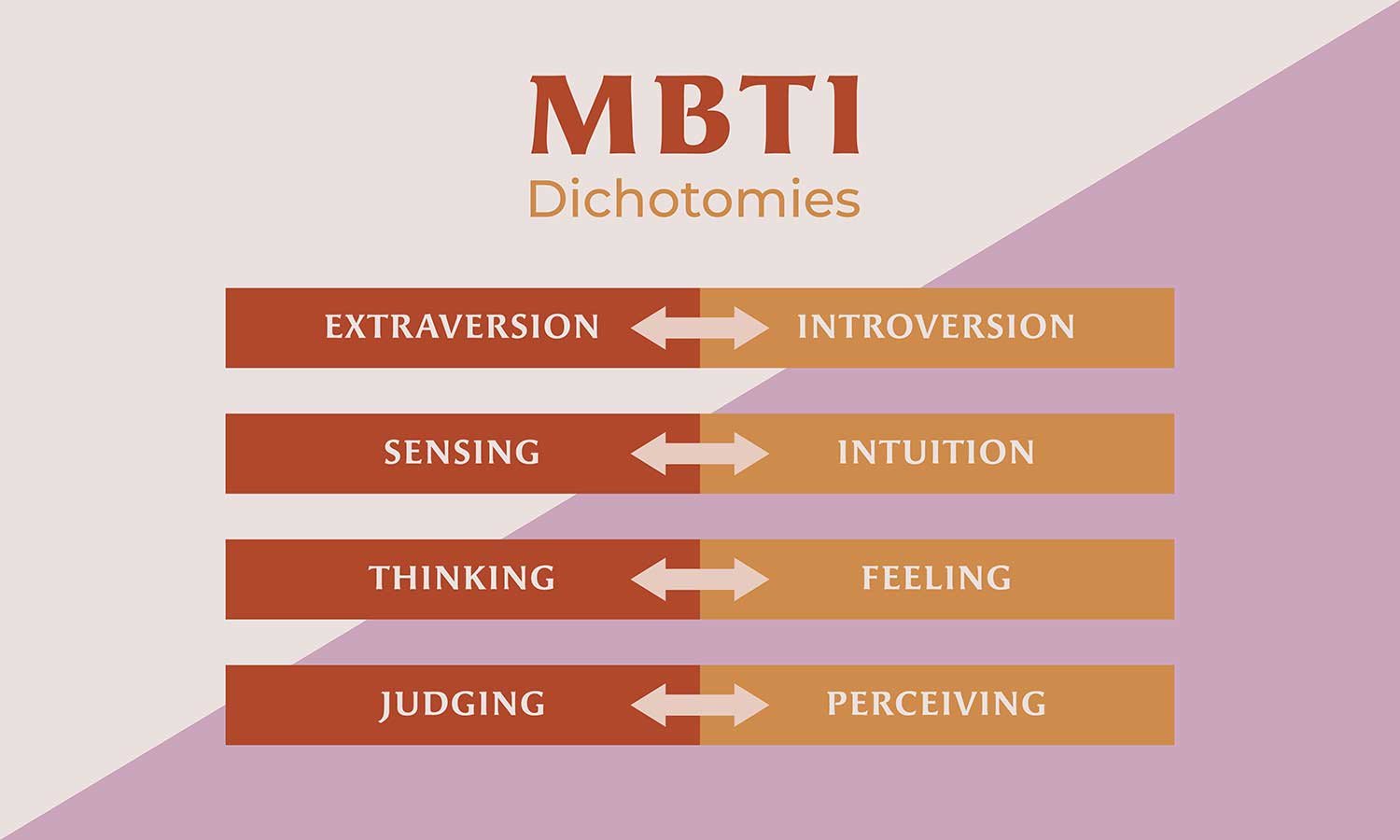
ENTJ, in the Myers-Briggs Type Indicator (MBTI), stands for Extraversion, Intuition, Thinking, and Judging. People with this personality type are typically assertive, driven, and strategically minded, making them natural leaders.

ENTJ Meaning
ENTJs are assertive, strategic, and charismatic, often thriving in leadership roles, making successful executives, captains, and administrators.
ENTJs thrive in social situations (Extraversion) and favor big-picture thinking over immediate details (Intuition).
They base decisions on logic, not personal feelings (Thinking). They prefer a structured, planned approach over spontaneity (Judging).
ENTJs are motivated by achieving goals and solving complex problems, preferring logical analysis and a big-picture outlook.
This outlook drives their long-term strategies.
Known for their decisiveness and organizational skills, ENTJs value efficiency and clear structures.
However, their assertive nature may sometimes be perceived as overly dominant or impatient.
They value organization and structure and appreciate long-term planning and goal setting.
Emotional insight is a different story.
They have strong people skills and enjoy interacting with others, but they are not necessarily attuned to their own emotions or the emotions of their loved ones.
ENTJ is one of the least common types in the population, and the rarest type among women. ENTJs comprise:
- 2% of the general population
- 3% of men
- 1% of women
Free personality tests such as 16Personalities add a fifth letter, A or T, to the classic four-letter type, so you may see “ENTJ-A” or “ENTJ-T” online.
This addition is not part of the official MBTI.
It measures something closer to emotional stability, standing in for the Neuroticism dimension that the official test leaves out entirely.
ENTJs are sometimes referred to as “the Commander” or “the CEO.” ISFP is the opposite personality type of ENTJ.
Famous ENTJs include Kamala Harris, Napoleon Bonaparte, Harrison Ford, Franklin D. Roosevelt, Bill Gates, and Carl Sagan.
| Strengths | Weaknesses |
|---|---|
| Confident | Stubborn |
| Ambitious | Arrogant |
| Optimistic | Insensitive |
| Strong leadership skills | Lack of empathy |
| Sociable | Egotistical |
ENTJ Characteristics
People with this personality type are highly extroverted and enjoy being in the company of others.
- Communication: Strong communicators who are well-spoken and quick-witted.
- Social Energy: Energized by people and outgoing, but can struggle to pick up on others’ emotional cues.
- Guarded Emotions: They tend to hide their own feelings, seeing sentimentality as a weakness.
ENTJs like to live an organized, structured life.
- Planning: Natural planners who value predictability and long-term goals.
- Efficiency: Highly productive, juggling multiple tasks and commitments without dropping the ball.
ENTJs are natural-born leaders.
- Problem-Solving: Rational and assertive, quick to design efficient solutions to obstacles.
- Taking Charge: They actively seek out leadership roles and positions of influence.
- Directness: Charismatic and inspiring, though their bluntness can come across as arrogant.
- Low Patience: Can seem critical of others who do not match their pace.
ENTJs are characteristically ambitious.
- Drive: Motivated by success and hard work, seeking power and influence.
- Conviction: Strong-willed and confident in their own beliefs and logic.
- Persistence: Rarely discouraged, and confident they can achieve any goal.
Cognitive Functions
The MBTI suggests that the four different cognitive functions (thinking, feeling, intuition, and sensing) form a hierarchy where each function is either directed outwardly (extroverted) or inwardly (introverted). The order of these functions determines one’s personality.
The dominant function is the primary aspect of personality, while the auxiliary and tertiary functions play supportive roles.
ENTJ’s own letters decide this order. Because ENTJs are Judging (J) types, their Thinking faces the outer world first, making Extraverted Thinking the dominant function, or “the driver.” Introverted Intuition backs it up as the auxiliary function, or “co-pilot,” supplying an inward-facing way of gathering information.
Extraverted Sensing comes third as the tertiary function, or “backup,” maturing later in life. It rarely leads. Introverted Feeling is the inferior function, or “blind spot,” ENTJs’ least conscious side and a common source of stress.
Dominant: Extraverted Thinking
- This function is concerned with the way ENTJs make decisions and judgments.
- ENTJs tend to place a greater emphasis on objective and logical information rather than personal feelings and emotions when making choices.
- They are focused on preserving order and control of the world around them and prioritize their goals above all else.
- This function faces outward, so ENTJs act on their judgments directly in the world. They organize people, tasks, and systems around clear, impersonal standards.
Auxiliary: Introverted Intuition
- People with the ENTJ personality type are future-focused. They play higher value on future possibilities than on the present moment and trust their gut instincts when approaching a decision.
- This function works inwardly, connecting scattered facts into one big-picture insight, which is why ENTJs often say they simply “know” where a plan is heading. It supports the dominant Extraverted Thinking by generating the possibilities and long-range strategies that Thinking then evaluates and turns into a plan.
Tertiary: Extraverted Sensing
- This function describes how ENTJs explore their surrounding environments.
- ENTJs enjoy novel, even thrill-seeking, experiences and have a unique appreciation for the beauty of life.
- As the tertiary function, it rarely leads and matures later in life. ENTJs use it mainly to support goals their dominant Thinking has already set.
- Because it sits third in the stack, ENTJs are less naturally attentive to hands-on, present-moment detail than to the big-picture plans their dominant and auxiliary functions already produce.
Inferior: Introverted Feeling
- ENTJs lack an understanding of internal feelings and emotions. This function tends to be weak in people with this personality type.
- Consequently, ENTJs often find themselves feeling uncomfortable or awkward in emotionally stimulating situations.
- As the inferior function, it is the least conscious part of an ENTJ’s personality. That is why deeply personal, value-based feelings are the hardest thing for them to access or express, especially under stress.
ENTJ Hobbies, Interests, and Careers
ENTJs are driven, ambitious individuals with an appetite for success.
They are often very engaged in their careers and have limitless energy for their work. ENTJs are particularly drawn to leadership positions where they can achieve tremendous efficiency and productivity in their workplace.
Career
With their strong communication skills, problem-solving capabilities, and organizational prowess, ENTJs naturally fall into these managerial roles, and they tend to make admirable authority figures.
They enjoy the challenge of solving difficult problems and finding opportunities to improve complex systems.
Strategy comes naturally to them.
They excel at supervising others and leading teams to carry out their visions with strategic planning and clear goal-setting.
Because of their excellent leadership skills, hard-working attitudes, and ability to plan for the future, ENTJs make successful leaders in many fields.
They often become CEOs, human resources managers, lawyers, entrepreneurs, university professors, corporate strategists, and judges.
Hobbies and Free Time
In their free time, ENTJs enjoy maintaining leadership positions in community groups, attending social gatherings or sporting events, and playing competitive sports.
Because ENTJs are often so career-focused, they may have few interests outside of work or participate in leisure activities that help to further their careers.
ENTJ Work Environments
ENTJs prefer a work environment with a clear set of guidelines and standards and one that values competence and logical thinking. They appreciate a workplace that is formal and businesslike, where the performance of their work is evaluated objectively.
Ambiguity frustrates them.
They also appreciate an environment where innovation is encouraged and there is plenty of room for variation. ENTJs want to be surrounded by a wide variety of coworkers who are equally as ambitious and hardworking.
Recognition matters just as much.
While ENTJs want to be evaluated objectively, they also want to be rewarded generously and recognized for their efforts with money, recognition, and power. An ENTJ’s primary goal is to simply get things done, so they struggle in workplaces that tolerate incompetence, laziness, or inefficiency.
ENTJ Personal Relationships
Friendships
Because ENTJs are extroverts, they gain energy from socializing with others. They love engaging in lively conversations and sharing their ideas with others.
They seek out friendships with those who share a similar passion for meaningful discussions and logical, critical debate.
Debate energizes them.
They get along best with individuals who can match their ability to brainstorm, theorize, and learn.
They value their friendships deeply and pay a great deal of attention to their friends. However, expressing and understanding emotions can be difficult for ENTJs, so they may struggle to get along with more sensitive individuals.
Romantic Relationships
Dating an ENTJ moves fast.
In romantic relationships, ENTJs can be commanding and dominating partners. They tend to take the leading role in any relationship from the start and assume personal responsibility for how smoothly things advance.
They put a lot of energy into their relationships and expect that their partner will do the same. ENTJs tend to be stubborn in their relationships as they have a clear idea of how things should be done and feel that their partner should follow.
Compromise takes practice.
They can have trouble attending to their partners’ feelings and listening patiently to them because of their strong desire to problem solve. But, ENTJs are growth-oriented and will seize any opportunity to improve themselves by acting on criticisms to ensure long-lasting relationships.
Tips for Interacting With ENTJs
Friendship Tips
As a friend of an ENTJ, expect their communication style to be argumentative and confrontational at times. Try not to take their criticism personally.
For more introverted, down-to-earth personality types, though, a friendship with an ENTJ might not always be a good fit.
Relationship Tips
ENTJs are typically ambitious and spend a lot of time at work or pursuing their goals. They need a partner who is independent and supportive and respects their competitiveness and ambition.
Comfort takes time. An ENTJ needs to feel completely secure in a relationship before they open up emotionally. They value honesty and communication, so if you are feeling insecure or have an issue with your partner, be upfront and tell them the truth.
Parenting Tips
As parents, ENTJs are in control of their children. They have clear sets of standards and expect that their rules are followed. Structure matters most. They set logical consequences for misbehavior and expect obedience from their children.
ENTJs tend to be more absent at home than other personality types because they have such a strong focus on their careers. However, when they are with their kids, they ensure that the time is well spent instilling values of hard work and achievement.
Critical Evaluation
Like all Myers-Briggs types, the ENTJ label rests on a personality test that is popular but scientifically contested. Several criticisms come up most often.
Limited Reliability and Validity
People often receive a different four-letter type when they retake the MBTI, sometimes within just a few weeks.
Studies find that a substantial share of test-takers change on one or more letters the second time around (Pittenger, 1993).
This instability is not random.
It follows directly from forcing continuous scores into either/or boxes.
A small shift in how someone answers can flip a near-midpoint score into the wrong category.
The test’s predictive validity, its ability to predict real-world outcomes, is similarly weak (Pittenger, 2005; Stein & Swan, 2019).
That matters in practice.
This is why researchers caution against using MBTI type for high-stakes decisions such as hiring, promotion, or career selection, even though it is often marketed for exactly those purposes.
A reliable psychometric test should return consistent results across retests; the MBTI often does not.
Forcing Traits Into Types
Psychologists generally agree that traits like extraversion are continuously distributed, with most people clustering near the middle rather than at either extreme.
The MBTI forces each person into one of two boxes on every dichotomy.
There is no middle option.
Someone who scores 51% Thinking gets the same T label as someone who scores 99% Thinking.
A near-identical person who scores 49% is instead labelled F, a different type altogether, despite barely differing from their neighbour.
The letters hide the truth.
Taking only the higher-scoring pole discards exactly the information that matters most: how close the person actually sits to the midpoint.
This is why a person’s ENTJ label can flip to ENTP or ENFJ on a retest despite barely changing.
Researchers prefer the Big Five instead.
Its factors correlate with the MBTI’s own dimensions, but measure personality on a continuous scale rather than sorting people into categories (McCrae & Costa, 1989).
Recent work keeps testing MBTI theory from new angles. Furnham (2022) mapped all four MBTI scores onto the 30 facets of the NEO-PI-R, a detailed Big Five measure, confirming the overlap at a finer grain.
Francis and Village (2022) developed and validated the Francis Psychological Type Scales (FPTS) against the MBTI, examining its factor structure and reliability. Even this newer research has not restored the type model to favour among personality researchers.
Weak Theoretical Foundation
The MBTI is built on Carl Jung‘s typology, which grew out of his clinical observation and self-analysis rather than any controlled studies.
Neither Katharine Briggs nor Isabel Myers, who developed the questionnaire, was a trained academic psychologist.
Reviews of the underlying theory reach a harsh verdict.
Its central claims include the discreteness of types and the reality of the function stack.
Neither is well supported by evidence, and both are difficult even to test (Stein & Swan, 2019).
Yet it fails both.
When a framework can be stretched to fit almost any observation, it becomes difficult to falsify, which is part of why critics call the MBTI a pseudoscience.
The theory therefore rests on a pre-empirical foundation that modern, factor-analytic personality research has not shaped and has not vindicated.
Little has changed since.
The Barnum Effect
Much of the ENTJ profile’s apparent accuracy may come from the Barnum, or Forer, effect: people rate vague, flattering personality descriptions as highly accurate for themselves personally.
- Aim: To test whether people would rate a generic, one-size-fits-all personality description as an accurate account of their own personality.
- Method: Forer (1949) gave students an identical, generic character sketch, assembled from a newspaper astrology column, and asked them to rate how well it described them personally.
- Results: Students rated the vague sketch as a highly accurate account of themselves, with ratings averaging 4.3 out of 5.
- Conclusion: People struggle to spot a generic description once it is framed as personally tailored, which is why flattering, broadly worded profiles like an MBTI type portrait feel so convincing.
MBTI type portraits work the same way.
Because they are written to flatter and to fit almost anyone, ENTJ readers are primed to see themselves in the description regardless of its accuracy.
Once someone is labelled ENTJ, confirmation bias can make the label feel even more accurate.
People tend to notice behaviour that fits the type and overlook behaviour that does not.
Commercial Interests
The MBTI is a commercial product. It is licensed and sold with paid certification for practitioners, built around a large training-and-materials industry.
Critics argue that the test’s continued promotion is tied to the financial interests of its publisher and certified practitioners rather than to independent, peer-reviewed validation. Very little supportive research for the MBTI appears in independent journals, despite how widely the test is used in workplaces.
Is ENTJ Your Personality Type? Quick Self-Check
Answer these questions below to find out if ENTJ is your personality type:
- Do you often find yourself naturally taking charge in group situations?
- Are you more energized by social interactions than by spending time alone?
- When making decisions, do you tend to rely more on logic and objective analysis than on personal feelings?
- Do you prefer focusing on the big picture and future possibilities rather than immediate details?
- Are you often described as ambitious, confident, or assertive by others?
- Do you enjoy creating and implementing structured plans to achieve your goals?
- Are you drawn to leadership positions in your career or personal life?
- Do you find it challenging to understand or express emotions, whether your own or others’?
If you answer “yes” to most of these questions, you may have ENTJ personality traits. However, remember that personality is complex, and a professional assessment would be needed for a definitive personality type determination.
Take the MBTI (Paper Version)
Key Takeaways
- Meaning: ENTJ stands for Extraversion, Intuition, Thinking, and Judging, a confident and decisive leadership type in the Myers-Briggs system.
- Dominant Function: ENTJs lead with Extraverted Thinking, so they organize the world around clear goals and logical plans.
- Rarity: ENTJ is one of the rarest types, making up roughly 2% of the population.
- Relationships: ENTJs are loyal, driven partners and friends but can struggle to notice or express emotion.
- Leadership: ENTJs gravitate toward organized, executive-style leadership, but there is no single “best” leadership type: every type can lead through its own strengths.
- Scientific Support: Like the rest of the MBTI, the ENTJ type has weak test-retest reliability and limited scientific backing.
References
Forer, B. R. (1949). The fallacy of personal validation: A classroom demonstration of gullibility. The Journal of Abnormal and Social Psychology, 44(1), 118–123. https://doi.org/10.1037/h0059240
Francis, L. J., & Village, A. (2022). The Francis Psychological Type Scales (FPTS): Factor structure, internal consistency reliability, and concurrent validity with the MBTI. Mental Health, Religion & Culture, 25(9), 931–951. https://doi.org/10.1080/13674676.2022.2041584
Furnham, A. (2022). The Big Five facets and the MBTI: The relationship between the 30 NEO-PI-R facets and the four Myers-Briggs Type Indicator (MBTI) scores. Psychology, 13(10), 1504–1516.
King, S. P., & Mason, B. A. (2020). Myers‐Briggs Type Indicator. The Wiley Encyclopedia of Personality and Individual Differences: Measurement and Assessment, 315-319.
McCrae, R. R., & Costa, P. T. (1989). Reinterpreting the Myers-Briggs Type Indicator from the perspective of the five-factor model of personality. Journal of Personality, 57(1), 17–40. https://doi.org/10.1111/j.1467-6494.1989.tb00759.x
Myers, I. B. (1962). The Myers-Briggs Type Indicator: Manual. Educational Testing Service.
Myers, I. B., & Myers, P. B. (1980). Gifts differing: Understanding personality type. Consulting Psychologists Press.
Myers, K. D., & Kirby, L. D. (2015). Introduction to type: A guide to understanding your results on the MBTI assessment. Sunnyvale, CA: CPP.
Pittenger, D. J. (1993). The utility of the Myers-Briggs Type Indicator. Review of Educational Research, 63(4), 467–488. https://doi.org/10.3102/00346543063004467
Pittenger, D. J. (2005). Cautionary comments regarding the Myers-Briggs Type Indicator. Consulting Psychology Journal: Practice and Research, 57(3), 210–221. https://doi.org/10.1037/1065-9293.57.3.210
Stein, R., & Swan, A. B. (2019). Evaluating the validity of Myers-Briggs Type Indicator theory: A teaching tool and window into intuitive psychology. Social and Personality Psychology Compass, 13(2), e12434. https://doi.org/10.1111/spc3.12434
The purpose of the Myers-Briggs Type Indicator®. The Myers & Briggs Foundation: MBTI Basics. (n.d.). Retrieved from https://www.myersbriggs.org/my-mbti-personality-type/mbti-basics/