INTP, as defined by the Myers-Briggs Type Indicator (MBTI), stands for Introversion, Intuition, Thinking, and Perceiving. INTPs are introspective, analytical, flexible, and often innovative, known for their curiosity, logical reasoning, and a desire for understanding complex concepts and theories.
Key Takeaways
- Type Basics: INTP stands for Introversion, Intuition, Thinking, and Perceiving, and it’s one of the rarer types, making up around 3% of the population.
- Core Traits: INTPs are analytical, imaginative, and independent thinkers who value logic and love exploring complex ideas and theories.
- Best-Fit Careers: They thrive in science and technology roles, such as research, engineering, and analysis, where they can think deeply and work with real autonomy.
- Relationships: INTPs form few but loyal, knowledge-based bonds, and can struggle to read or express emotion with people outside their trusted circle.
- Scientific Caveat: Like the rest of the MBTI, the INTP label has weak reliability and limited predictive validity: it doesn’t reliably forecast things like job performance. Best used for self-reflection, not a scientific diagnosis.
INTP Meaning
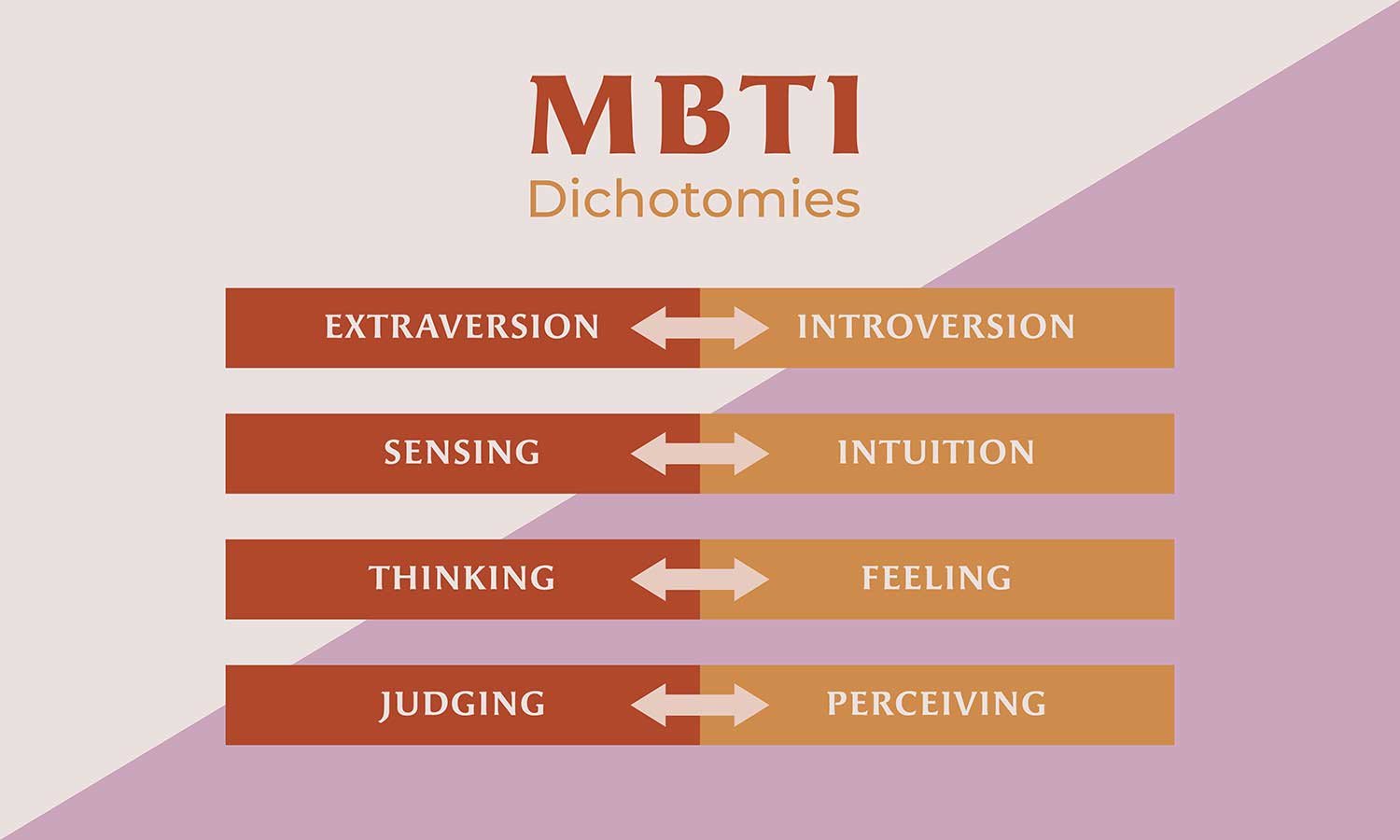
INTPs draw energy from solitude and introspection (Introversion) and favor theoretical concepts and future possibilities over tangible facts (Intuition).
They base decisions on logical, analytical reasoning rather than personal emotions (Thinking), and appreciate adaptability and spontaneous exploration over rigid plans (Perceiving).
People with this personality type are quiet, composed, and analytical. They enjoy time-solving problems and learning how things work. They are also good at logic and math.
INTPs are more interested in studying ideas and theoretical concepts than in participating in leisure activities or social interactions. They are loyal and affectionate to their closest friends and family, but tend to be difficult to get to know.
INTPs are sometimes referred to as “the Thinker,” “the Architect,” “the Engineer,” or “the Logician.” ESFJ is the opposite personality type of INTP.

INTP is one of the less common types in the population, especially for women. Among women, INTP is the fourth rarest type (after INTJ, ENTJ, and INFJ). INTPs make up:
- 3% of the general population
- 5% of men
- 2% of women
Famous INTPs include Albert Einstein, Thomas Jefferson, Kristen Stewart, Charles Darwin, Socrates, Abraham Lincoln, and Carl Jung.
INTPs belong to the “Analysts” (NT) temperament group.
This is one of four popular groupings of the sixteen MBTI types. Analysts are intellectual and objective, focusing on logic, systems, and strategic thinking.
| Strengths | Weaknesses |
|---|---|
| Inventive | Reserved |
| Analytical | Insensitive |
| Imaginative | Emotionally disconnected |
| Objective | Prone to self-doubt |
| Independent | Difficult to please |
INTP Characteristics
INTPs are quiet and reserved individuals
- True Introverts: They prefer socializing with small groups of close friends and focus on their internal thoughts rather than the external world.
- Selective Energy: INTPs struggle to express feelings and tire of extensive socializing, which makes them hard to know. They crave time alone with their own thoughts.
- Loyal Underneath: Despite their independence, INTPs are highly loyal and affectionate to those closest to them, and can come out of their shell in good company.
INTPs are deeply intellectual and analytical
- Logic-Driven: They are passionate about logic, reason, and sense, with a willingness to think outside the box and search for unifying themes in the world around them.
- Always Thinking: They hardly ever stop thinking, constantly exploring concepts, musing about possibilities, analyzing patterns, and observing how things work.
- Analyzes Everything: INTPs analyze essentially everything that they come across.
INTPs approach their thinking in creative, open-minded, and curious ways
- Endless Imagination: They have endless imaginations, coming up with unique thoughts and opinions that would not occur to most people.
- Open to New Ideas: They are receptive to original ideas and are always interested in pursuing new hobbies and areas of study.
- Big-Picture Thinkers: INTPs reflect on theories to explain difficult concepts, drawing on their preference for Intuition (patterns and future possibilities over concrete detail).
Cognitive Functions of an INTP
The MBTI suggests that the four different cognitive functions (thinking, feeling, intuition, and sensing) form a hierarchy where each function is either directed outwardly (extroverted) or inwardly (introverted).
The order of these functions determines one’s personality.
The dominant function is the primary aspect of personality, while the auxiliary and tertiary functions play supportive roles.
Dominant: Introverted Thinking
This is the INTP’s dominant function, the “driver” of the whole personality: the most conscious and most trusted way they operate.
- INTPs approach the world rationally and logically, breaking down larger ideas into individual units to see how things fit and function together.
- They make decisions based on logic and reason, and their actions and choices tend to be dependent on careful observation and thought.
Auxiliary: Extraverted Intuition
The auxiliary function is the “co-pilot,” the main support that balances the dominant function.
- INTPs are imaginative and insightful individuals who tend to spend a great deal of time thinking about patterns in life and pondering over the possibilities of the future.
Tertiary: Introverted Sensing
The tertiary function is the “backup”: less developed than the first two, and one that tends to emerge more fully in mid-life.
- This function of the INTP personality influences how they process information. INTPs tend to be detail-oriented, organizing their thoughts and experiences in their minds.
- They are constantly comparing new information with what they already know to recognize patterns and make predictions about the future.
Inferior: Extraverted Feeling
The inferior function is the “blind spot,” the least conscious and least controlled part of the stack, and a common source of stress.
- Since INTPs are introverts, this is the least developed element of their personality, surfacing only when they are around people with whom they are familiar and comfortable.
- In the presence of their close circle, INTPs can be quite outgoing and affectionate. Otherwise, they struggle to connect with others and tend to rely on logic rather than feelings.
INTP Hobbies, Interests, and Careers
INTPs have a unique and intuitive understanding of complex systems. INTPs can be found in a wide variety of fields as long as they can use their intellect, analyze concepts, and think deeply.
They typically thrive in science-related careers because of their reasoning skills, innovative spirit, and passion for ideas. They enjoy thinking creatively and experimenting with new processes.
INTPs often work in California’s Silicon Valley.
They also thrive at cutting-edge tech companies like Google or Apple.
Top careers for INTPs include: mathematicians, analysts, researchers, engineers, technicians, and scientists. INTPs are also more likely than the average to be self-employed. Independence matters here too.
In their free time, INTPs enjoy reading, art and cultural events, chess and other strategy games, writing, taking classes, working with computers, backpacking, hiking, and meditation. They also tend to enjoy studying foreign languages.
INTP Work Environments
INTPs do their best work in environments that give them room to pursue their own ideas.
- Independence: INTPs need the flexibility and independence to forge their own path and pursue their own ideas, rather than following someone else’s process.
- Small Teams: They prefer working alone but thrive alongside a small, capable team, often benefiting from colleagues more than they expect.
- Intellectual Freedom: An ideal environment is non-traditional and intellectually stimulating, giving them room to explore without rigid rules, protocols, or social obligations.
- Autonomy Over Micromanagement: INTPs dislike set tasks, deadlines, and close supervision, and need space to think freely and find their own ways to solve problems.
INTP Personal Relationships
INTPs are introverted, so they can be shy and detached with people they do not know well.
- Need for Solitude: As introverts, INTPs need time alone to recharge and process, and can seem shy or detached around people they do not know well.
- Selective Warmth: They open up once they trust someone, but are not highly attuned to others’ feelings and often stay lost in their own thoughts.
- Intellectual Match: INTPs form their strongest bonds with people who match their mental energy and share their love of logic.
- Practical Support: In close relationships, INTPs are faithful and loving. They offer sound advice and rational solutions, though not emotional support.
- Knowledge-Based Bonds: Their friendships are built on shared ideas, theories, and concepts. INTPs reserve their time for people who share their pursuit of learning and challenge their thinking.
Tips for Interacting With INTPs
Friendships
Having shared values, interests, and a general approach to life is one of the best means to forming a friendship with an INTP.
They value intellectual depth so many of their friendships are based on a similar passion for knowledge.
While INTPs appreciate commonalities, they also want a friend who will challenge their ideas and make them rethink their assumptions.
Relationships
In relationships, INTPs tend to hold back until they feel comfortable enough around the other person.
As the partner of an INTP, it is important to be patient and give them plenty of space to explore their own thoughts, ideas, and interests.
INTPs struggle to read others’ emotional cues.
So you need to be honest and forthright about how you are feeling and what you need in the relationship.
Parenting
INTP parents find great joy in teaching their children about the world. They encourage their children to think independently, solve their own problems, and form their own opinions.
They give their child freedom. Rather than forcing them into any particular field or lifestyle, INTP parents let their child decide on their own life path and figure out how to go after it.
INTP Personality Test
Answer these questions to find out if INTP might be your personality type:
- Do you prefer spending time alone to recharge rather than in large social gatherings?
- Are you more interested in abstract theories and concepts than concrete facts and details?
- When making decisions, do you rely more on logical analysis than on emotions or personal values?
- Do you enjoy flexibility and spontaneity over strict schedules and plans?
- Are you often described as analytical, imaginative, or independent by others?
- Do you have a strong desire to understand how things work and explore complex ideas?
- Are you comfortable challenging established ideas if you believe there’s a more logical approach?
- Do you enjoy problem-solving and finding innovative solutions?
- Are you more focused on the big picture and future possibilities than immediate practical concerns?
- Do you sometimes struggle with expressing emotions or understanding others’ emotional needs?
If you answer “yes” to most of these questions, you may have INTP personality traits. However, remember that personality is complex, and a professional assessment would be needed for a definitive personality type determination.
Take the MBTI (Paper Version)
FAQs
What is an INTP person like?
An INTP person is characterized by their Introverted (I), Intuitive (N), Thinking (T), and Perceiving (P) preferences within the Myers-Briggs Type Indicator. They are analytical, creative, and independent thinkers who enjoy exploring abstract ideas and theories.
INTPs often have an intense thirst for knowledge and can be seen as reserved or detached in social situations. They excel at problem-solving and value logical reasoning over emotions.
While they can be unconventional and may struggle with expressing feelings, their intellectual curiosity and open-mindedness make them engaging conversationalists and innovative thinkers.
What is the weakness of INTP?
INTP weaknesses include difficulty expressing emotions, being perceived as aloof or detached, and a tendency to overthink or overanalyze situations. They may struggle with maintaining relationships due to their reserved nature and prioritization of logic over feelings.
Are INTP and ENFP compatible?
INTP and ENFP can be compatible, as their differences can create a complementary and dynamic relationship. ENFPs, with their extroverted, intuitive, feeling, and perceiving preferences, bring warmth, enthusiasm, and emotional depth to the relationship. INTPs, on the other hand, contribute logical thinking, problem-solving skills, and intellectual curiosity.
Together, they can challenge and support each other’s growth. However, potential challenges may arise due to INTP’s reserved nature and difficulty expressing emotions, which can clash with ENFP’s need for emotional connection.
Effective communication and mutual understanding are key to maintaining balance and harmony in an INTP-ENFP relationship.
Critical Evaluation of the INTP Type
The MBTI, and by extension the INTP type, is popular but does not meet the standards psychologists expect of a scientific personality test.
Critics point to weak reliability, limited predictive power, and a theoretical basis that was never tested when the instrument was first built.
The evidence has not caught up with the hype.
Reliability and Predictive Validity
People often get a different type when they retake the MBTI, sometimes within a few weeks, a sign of weak test-retest reliability (Pittenger, 1993).
Much of this instability comes from forcing continuous traits into either/or boxes. Most people score close to the midpoint on each dichotomy. A small change in answers can flip their letter, and with it their whole type.
The MBTI also has limited predictive validity: knowing someone’s type does not reliably predict how well they will perform in a job or other important outcomes (Pittenger, 2005). This makes it unsuitable for hiring, promotion, or clinical decisions.
In a coaching conversation, that instability is a minor curiosity.
In a hiring or promotion decision, it undermines the very evidence the decision is supposed to rest on (Pittenger, 1993, 2005).
The Barnum Effect: Why Type Portraits Feel Accurate
Part of the MBTI’s appeal comes from a well-documented bias rather than accuracy.
In a classic study, psychologist Bertram Forer gave students an identical, generic personality sketch assembled from a newspaper astrology column (Forer, 1949). He then asked them to rate how well it described them.
Almost everyone said it fit. Students rated the sketch as an excellent description of themselves, scoring it about 4.3 out of 5 on average.
This is now known as the Barnum effect: vague, flattering statements feel personally accurate to almost everyone. That is not a coincidence.
INTP portraits, including this one, use confident, flattering language, calling the type “innovative,” “analytical,” or “the Logician.” That kind of description could fit many thoughtful, logical people, which makes it especially likely to trigger this reaction.
Confirmation bias can then take over: once someone identifies as an INTP, they tend to notice and remember information that fits the description and overlook what does not.
INTP-A vs INTP-T (Assertive vs Turbulent)
Many free tests report a fifth letter, A or T, after the four-letter type. This addition does not come from the official MBTI.
It comes from 16Personalities, a popular free online adaptation that borrows the MBTI’s letters but layers in elements of the empirically stronger Big Five model rather than Jungian theory.
The Assertive/Turbulent axis stands in for Neuroticism, the Big Five trait the MBTI otherwise leaves out entirely. The two aren’t opposites in ability, just in stress response.
An INTP-A tends to be calmer and more self-assured, while an INTP-T tends to be more self-critical and sensitive to stress, though both remain “INTP” at their theoretical core.
Free versions like this also lack the standardised validation of the official instrument. Treat the extra letter as a fun add-on, not a scientifically validated part of the Myers-Briggs system.
Comparison to the Big Five
Researchers increasingly compare the MBTI directly against the Big Five, the dimensional model most personality psychologists now prefer. That comparison is not flattering to the MBTI.
McCrae and Costa (1989) first showed that MBTI dimensions correlate strongly with four Big Five factors: Extraversion-Introversion with Extraversion, Sensing-Intuition with Openness, Thinking-Feeling with Agreeableness, and Judging-Perceiving with Conscientiousness.
Furnham (2022) confirmed and extended this at a finer level, mapping all four MBTI scores onto the 30 facets of the NEO-PI-R.
The overlap is real, but incomplete. Crucially, the MBTI has no dimension that corresponds to Neuroticism, one of the Big Five’s most predictively important traits, so it leaves out a large part of personality altogether.
Because the Big Five treats each trait as a continuous spectrum rather than an either/or category, most researchers now prefer it for any assessment where evidence matters.
Weak Theoretical Foundation
Carl Jung’s original psychological types were never put to controlled research. He built them on clinical observation and self-analysis, not experiment.
Core MBTI claims, like discrete types and a fixed function stack, are not well supported by evidence. They are also hard to test at all (Stein & Swan, 2019).
The type descriptions do not help. They are written loosely enough that almost any behaviour can seem to fit almost any type.
A theory that can absorb any observation is hard to prove wrong. That is one reason critics call it pseudoscience rather than science (Stein & Swan, 2019).
That is a shaky foundation for hiring decisions.
Contemporary Research
Francis and Village (2022) added a recent test of the underlying theory. They developed the Francis Psychological Type Scales and validated them against the MBTI, examining factor structure, internal-consistency reliability, and concurrent validity.
Work like this keeps probing the same questions from new angles, but none of it has restored the type model to favour among personality researchers. It has not caught up yet.
Sources
Forer, B. R. (1949). The fallacy of personal validation: A classroom demonstration of gullibility. The Journal of Abnormal and Social Psychology, 44(1), 118–123. https://doi.org/10.1037/h0059240
Francis, L. J., & Village, A. (2022). The Francis Psychological Type Scales (FPTS): Factor structure, internal consistency reliability, and concurrent validity with the MBTI. Mental Health, Religion & Culture, 25(9), 931–951. https://doi.org/10.1080/13674676.2022.2041584
Furnham, A. (2022). The Big Five facets and the MBTI: The relationship between the 30 NEO-PI-R facets and the four Myers-Briggs Type Indicator (MBTI) scores. Psychology, 13(10), 1504–1516.
King, S. P., & Mason, B. A. (2020). Myers‐Briggs Type Indicator. The Wiley Encyclopedia of Personality and Individual Differences: Measurement and Assessment, 315-319.
McCrae, R. R., & Costa, P. T. (1989). Reinterpreting the Myers-Briggs Type Indicator from the perspective of the five-factor model of personality. Journal of Personality, 57(1), 17–40. https://doi.org/10.1111/j.1467-6494.1989.tb00759.x
Myers, I. B. (1962). The Myers-Briggs Type Indicator: Manual. Educational Testing Service.
Myers, K. D., & Kirby, L. D. (2015). Introduction to type: A guide to understanding your results on the MBTI assessment. Sunnyvale, CA: CPP.
Myers-Briggs Type Indicator. (2019, May 28). New World Encyclopedia,. Retrieved from https://www.newworldencyclopedia.org/p/index.php?title=Myers-Briggs_Type_Indicator&oldid=1020015.
Myers, Isabel B.; Myers, Peter B. (1995) [1980]. Gifts Differing: Understanding Personality Type. Mountain View, CA: Davies-Black Publishing. ISBN 978-0-89106-074-1.
Pittenger, D. J. (1993). The utility of the Myers-Briggs Type Indicator. Review of Educational Research, 63(4), 467–488. https://doi.org/10.3102/00346543063004467
Pittenger, D. J. (2005). Cautionary Comments Regarding the Myers-Briggs Type Indicator. Consulting Psychology Journal: Practice and Research, 57(3), 210-221.
Stein, R., & Swan, A. B. (2019). Evaluating the validity of Myers-Briggs Type Indicator theory: A teaching tool and window into intuitive psychology. Social and Personality Psychology Compass, 13(2), e12434. https://doi.org/10.1111/spc3.12434
The purpose of the Myers-Briggs Type Indicator®. The Myers & Briggs Foundation: MBTI Basics. (n.d.). Retrieved from https://www.myersbriggs.org/my-mbti-personality-type/mbti-basics/



