ISTP, a term from the Myers-Briggs Type Indicator (MBTI), stands for Introversion, Sensing, Thinking, and Perceiving. ISTPs are practical, analytical, and flexible, often recognized for their mechanical skills, problem-solving abilities, adaptability, and preference for hands-on experience.
Key Takeaways
- Meaning: ISTPs are Introverted, Sensing, Thinking, and Perceiving: practical, logical, hands-on problem-solvers.
- Rarity: About 5% of the population is ISTP, more common among men (9%) than women (2%).
- Explorer Type: ISTPs belong to the MBTI’s Explorer (SP) group, known for spontaneity and quick, hands-on problem-solving.
- Careers: ISTPs gravitate toward hands-on, action-oriented work such as engineering, mechanics, or emergency response.
- Relationships: ISTPs show love through action rather than words, and need independence and freedom from routine.
- Caveat: MBTI type is a useful self-reflection tool, but it has weak test-retest reliability and should not be used to screen job candidates.
ISTP Meaning
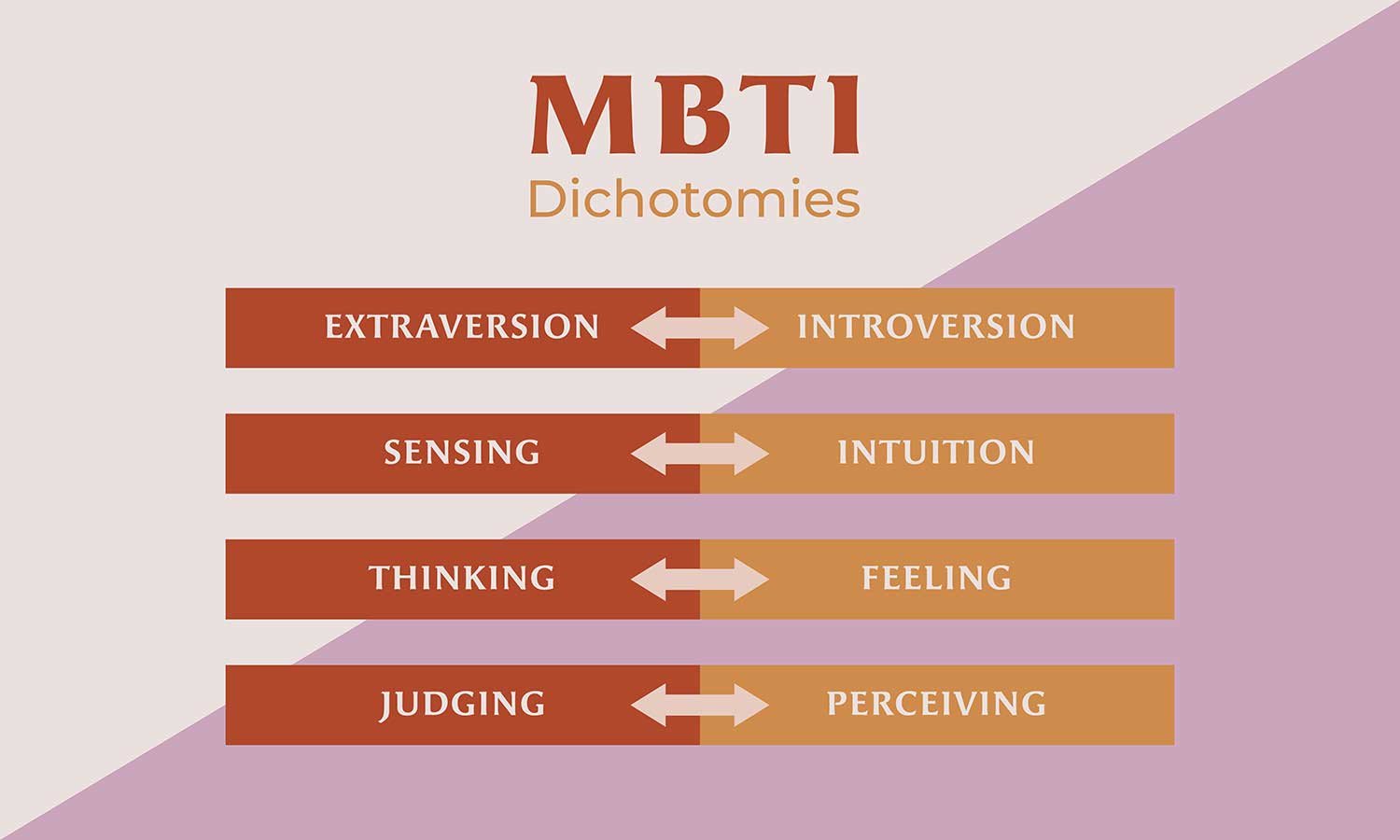
ISTPs find energy in solitary activities (Introversion) and favor practical details and present realities over abstract concepts (Sensing). They base decisions on logical analysis rather than personal emotions (Thinking) and appreciate adaptability and a spontaneous approach to life (Perceiving).
People with this personality type are fearless and independent.
They love adventure, new experiences, and risk-taking. They tend to be quiet observers and are not well attuned to the emotional states of others, sometimes coming across as insensitive or stoic.
They are results-oriented, acting quickly to find workable solutions and understand the underlying cause of practical problems. ISTPs are sometimes referred to as “the Craftsman,” “the Crafter,” or “the Virtuoso.” ENFJ is the opposite personality type of ISTP.
ISTPs belong to the Explorer (SP) temperament group, alongside ESTP, ESFP, and ISFP. They thrive on action. That earns ISTPs the “Virtuoso” nickname.

The ISTP personality type is much more common among men than women. Among men, it is the third most common type in the population. Among women, it is the fourth rarest.
- 5% of the general population
- 9% of men
- 2% of women
Famous ISTPs include Lance Armstrong, Tiger Woods, Clint Eastwood, Amelia Earhart, Bruce Lee, and Katharine Hepburn.
| Strengths | Weaknesses |
|---|---|
| Practical | Insensitive |
| Spontaneous | Reserved |
| Action-oriented | Easily bored |
| Easygoing | Risk takers |
ISTP-A vs. ISTP-T
The -A and -T suffixes do not come from the official MBTI. They come from the free online test 16Personalities, which uses the MBTI letters but adds a fifth axis, Assertive/Turbulent.
That axis stands in for neuroticism, the Big Five trait for emotional stability. The official MBTI has no such dimension. In effect, the test blends the MBTI with elements of the Big Five model (McLeod, 2024).
Free versions also lack the standardized validation of the official instrument. Treat an ISTP-A or ISTP-T result as a rough guide.
Key ISTP Characteristics
ISTPs are fiercely independent
- Self-Directed: They live in a self-directed manner, sticking to their own habits, ideas, and lifestyle choices.
- Resist Structure: They struggle with boundaries and guidelines, preferring to work at their own pace and explore life as they desire.
- True Introverts: They are private about their personal lives and prefer to spend time alone.
- Activity Over Talk: They dislike small talk and connect with others by sharing activities and working together on a project.
ISTPs are adventurous and ambitious
- Thrill-Seeking: They enjoy fast-paced hobbies such as motorcycling, bungee jumping, or surfing.
- Sensory Engagement: They love to get their hands dirty and use their senses to engage with the world around them.
- Trial and Error: They venture out of their comfort zone, exploring novel ideas through first-hand experience and learning new skills through trial and error.
- Hands-On Crafts: ISTPs are imaginative with mechanics and crafts, and are typically attracted to hands-on hobbies.
- Natural Troubleshooters: They approach each new project with an interest in troubleshooting and often have an intuitive ability to fix things.
ISTPs are practical, creative, and result-oriented
- Rational Solutions: They are more interested in finding rational solutions to problems than mulling over abstract ideas or concepts.
- Technical Skill: They have exceptional technical and mechanical skills and a unique ability to fix, repair, and tinker with tools, machines, and appliances.
- Crisis-Ready: They want to understand the causes behind problems so they can fix them quickly, and they excel in problem-solving, especially in a crisis.
ISTP individuals are actually quite enigmatic
- Reserved, Not Withdrawn: They are friendly and enjoy the presence of others, but are also very private and reserved.
- Quiet Adventurers: They are calm and often described as quiet, but they are also spontaneous adventure-seekers.
- Impulse Meets Logic: They combine impulsivity with logic, easily switching mindsets to adjust to new situations and environments.
- Live in the Present: They are versatile individuals who go with the flow and live in the present moment.
Cognitive Functions
The MBTI draws on Carl Jung’s theory of psychological types.
People take in information through two perceiving functions (Sensing and Intuition) and reach decisions through two judging functions (Thinking and Feeling). Each function can face outward (extraverted) or inward (introverted).
The MBTI ranks four of these into a hierarchy called the function stack, and the order shapes how personality shows up. Practitioners nickname the four positions the driver (dominant), the co-pilot (auxiliary), the backup (tertiary), and the blind spot (inferior).
The J/P letter fixes the order.
It marks the function a type shows to the outer world: a judging function for J types, a perceiving function for P types. ISTPs are P types, so their outward-facing function is Sensing. Their dominant Thinking turns inward.
Treat the stack as a model, not a measurement. Critics argue it adds theoretical claims with little empirical support, and reviewers regard parts of it as hard to test (Pittenger, 2005; Stein & Swan, 2019).
The dominant function is the primary aspect of personality, while the auxiliary and tertiary functions play supportive roles.
Dominant: Introverted Thinking
- ISTPs process most of their emotions and thoughts internally as opposed to expressing themselves verbally.
- ISTPs approach the world rationally and logically, making decisions based on practical and objective information rather than personal opinions or emotional factors.
- Their actions and choices are dependent on careful observation and thought.
- Introverted Thinking is the dominant function: the most conscious and habitually used, forming the core of the ISTP personality.
Auxiliary: Extraverted Sensing
- ISTPs are highly attuned to their surroundings and have a strong sense of their immediate environment.
- They prefer to focus on the present moment rather than think about future possibilities or make long-term commitments.
- They enjoy learning about how things work and operate and are interested in things that have practical applications.
- As the auxiliary function, Extraverted Sensing acts as a support, balancing the more inward-focused dominant function with real-world engagement.
Tertiary: Introverted Intuition
- This function of the ISTP personality is largely unconscious. It tends to operate behind the “gut feelings” that ISTPs occasionally experience when making a decision.
- Intuition picks up patterns, meanings, and possibilities beyond the immediate data. For ISTPs, it works quietly in the background.
- As ISTPs take in information from their dominant and auxiliary functions, they occasionally experience sudden epiphanies or revelations.
- As the tertiary function, Introverted Intuition is less developed than the dominant and auxiliary functions, and tends to emerge more fully in mid-life.
Inferior: Extraverted Feeling
- This is the least developed element of the ISTP personality, surfacing in times of stress.
- Here, “Feeling” means judging by personal values and their human impact, not simply being emotional. ISTPs rely on it least.
- When faced with pressure, ISTPs can erupt with emotion, displaying their feelings and concerns in inappropriate or unexpected ways.
- As the inferior function, Extraverted Feeling is the least conscious and least controlled part of the personality, which is why it often surfaces as a stress reaction.
ISTP Hobbies, Interests, and Careers
ISTPs enjoy hobbies and careers that require hands-on work and technical expertise. They prefer tasks that have practical, real-world applications where they can solve problems and find logical solutions.
They feel the most satisfaction from building something concrete where they can see tangible results. Risk excites them. Because of their adventurous nature, ISTPs enjoy careers that involve physical activity, even with a bit of thrill or risk.
ISTPs have a particular fascination with how things work and how tools can be used. They enjoy a job that is action-oriented and does not involve much planning, theorizing, or rule-following.
Many careers suit them. Popular ISTP careers include:
- Engineers
- Mechanics
- Carpenters
- Forensic scientists
- Firefighters
- Pilots
- Detectives
This isn’t a hiring test. MBTI type has weak predictive validity for job performance, so treat it as a starting point for self-reflection rather than a screening tool.
In their free time, ISTPs are drawn to thrilling activities and those that allow them to work with machinery or tools. Favorite pursuits include:
- Archery
- Weaponry
- Hunting
- Scuba diving
- Rappelling
- Aviation
- Skydiving
- Motorcycling
- Other extreme sports
ISTP Work Environments
ISTPs thrive in work environments that are unpredictable, fast-paced, and rewarding. They enjoy working alone, and engaging in a variety of tasks with minimal supervision.
They are problem solvers who want to have the space and freedom to utilize their skills and solve complex problems. Routine bores them fast.
They need room for risk-taking and the freedom to jump in and out of activities. They also appreciate challenges, and they thrive in difficult, pressured situations.
ISTPs appreciate the independence to create their own schedules, responsibilities, and solutions. Micromanagement drains them. They struggle in highly structured and regimented environments where they are required to adhere to strict rules and regulations.
ISTP Personal Relationships
Because ISTPs are introverts, they tend to be quiet and reserved and struggle to share their emotions with others. They are extremely private individuals, and for this reason, they tend to be difficult to get to know and understand.
Four traits shape how ISTPs relate to others:
- Independence: ISTPs value their own personal space, which can make others feel shut out at times. Solitude recharges them.
- Emotions: They are not highly adept at handling other people’s emotions, because they find the temporary nature of emotion difficult to understand.
- Commitment: ISTPs are not forward-thinking and do not want to be bound to any particular person or activity.
- Shared Activities: They put a lot of effort into the relationships that matter to them. They form their closest bonds with people who share their hobbies and interests.
They rarely say it aloud. Instead, ISTPs show their affection for friends, family, and partners through practical service, responding to their needs, and sharing in their interests.
Tips for Interacting With ISTPs
Friendships
ISTPs form the most stable and rich friendships with those who give them the freedom to be themselves. They want friends who are willing to pursue new activities and go on thrilling adventures with them.
As a friend of an ISTP, you must respect their need for space and allow them the independence to do their own thing. Shared hobbies help most. Hands-on or outdoor activities often become the glue that holds an ISTP friendship together.
Relationships
As the partner of an ISTP, I find it important to take things day by day, as jumping into commitment is challenging for them.
They want a partner who will appreciate their skills and hard work, while allowing them plenty of freedom to be themselves, both physically and mentally.
They are able to enjoy the comforts of a steady partner. That’s all they ask. They just need you to respect their need for independence and avoid making them feel constrained by obligations or expectations.
Parenting
As parents, ISTPs show love through action. They craft or build things for their children rather than being verbally affectionate.
ISTP parents struggle with emotional bonding. They connect best by teaching their children new skills and enjoying physical activities together.
They give their children plenty of freedom to explore on their own. They tend not to impart their own principles or interests.
Is ISTP Your Personality Type?
Answer these questions to find out if ISTP might be your personality type:
- Do you prefer hands-on experiences and practical problem-solving over abstract theories?
- Are you drawn to activities that involve physical skills or mechanical understanding?
- Do you tend to be reserved and enjoy spending time alone or in small groups?
- When making decisions, do you rely more on logical analysis than on emotions?
- Are you adaptable and flexible, easily adjusting to new situations?
- Do you enjoy taking risks and seeking out new, adventurous experiences?
- Are you more focused on the present moment than on long-term planning?
- Do you have a natural ability to understand how things work and fix mechanical issues?
- Are you sometimes described as independent or even rebellious by others?
- Do you prefer expressing affection through actions rather than words?
If you answer “yes” to most of these questions, you may have ISTP personality traits. This quiz is informal, not the MBTI.
The official test is longer. Step I (Form M) has about 93 questions and takes about 20 to 30 minutes. The advanced Step II (Form Q) takes about 35 to 45 minutes (McLeod, 2024). The publisher requires a certified professional. They administer, score, and interpret the test.
Scoring records the higher-scoring pole of each dichotomy, which produces the four-letter type. It also yields a Preference Clarity Index (PCI). The PCI shows how consistently you answered toward one pole, not how strong that preference is (McLeod, 2024). It does not measure skill.
Take the MBTI (Paper Version)
Is the ISTP Type Scientifically Valid?
The ISTP profile is a handy prompt for self-reflection. The instrument behind it, however, has well-documented weaknesses. Four criticisms stand out.
- Unstable Results: People often get a different type when they retake the test, sometimes within weeks.
- Weak Prediction: Type does not reliably predict job performance or other important outcomes.
- Flattering Descriptions: Vague, positive portraits feel personal, so they seem more accurate than they are.
- Big Five Overlap: The MBTI repeats much of what the better-supported Big Five already measures.
Unstable Results
People frequently get a different type when they retake the test, sometimes after only a few weeks (McLeod, 2024). Studies find that a substantial proportion of respondents change on at least one letter (Pittenger, 1993).
The cause is dichotomization.
The MBTI forces a continuous trait into two boxes, yet scores on traits such as extraversion are normally distributed, with most people clustering near the middle (McLeod, 2024).
Imagine an ISTP who scores 51% toward Thinking. They still receive a plain T. A person who scores 49% receives an F instead and becomes an ISFP, a different type, despite an almost identical profile.
Scoring keeps only the higher pole of each pair, so a small change in answers can flip a letter, and with it the whole type.
Weak Prediction
Reviews find that MBTI type does not reliably predict how well someone performs a job (Pittenger, 1993, 2005; Stein & Swan, 2019).
That matters. It undermines its use in selection, promotion, and development decisions, the high-stakes uses for which it is often marketed.
Isabel Briggs Myers designed the instrument partly to help people find suitable work. Career guidance remains one of its main uses (Myers, 1962).
The Big Five model, by contrast, consistently predicts real-world outcomes, from job performance to well-being, better than the MBTI does (McLeod, 2024).
The MBTI’s appeal rests less on predictive accuracy than on prompting reflection (McLeod, 2024). The practical advice follows. Use your type as a conversation starter in coaching, not as a hiring or promotion filter.
Flattering Descriptions
Type portraits owe much of their appeal to the Barnum (or Forer) effect: people rate vague, generic statements as highly accurate descriptions of themselves.
Because MBTI portraits are flattering and broadly worded, they readily prompt a “that’s so me” reaction (McLeod, 2024).
Forer (1949) demonstrated the effect in a classroom. Students took a personality test and then received what they believed was a personal result. In fact, every student received the same sketch, assembled from a newsstand astrology column.
The class rated the sketch an average of about 4.3 out of 5 for how well it described them.
Confirmation bias then does the rest. Once you carry the ISTP label, you notice and remember the moments that fit it and discount those that do not (McLeod, 2024).
Big Five Overlap
Each MBTI dimension maps onto a Big Five factor:
- Extraversion/Introversion maps onto Extraversion.
- Sensing/Intuition maps onto Openness.
- Thinking/Feeling maps onto Agreeableness.
- Judging/Perceiving maps onto Conscientiousness.
McCrae and Costa (1989) first documented the link. Furnham (2022) later confirmed it across 30 individual facets.
The Big Five treats each trait as a continuous spectrum. The MBTI reports only the higher pole of each pair (McLeod, 2024).
The MBTI has no dimension for neuroticism, so it omits a consequential part of personality (McCrae & Costa, 1989; Furnham, 2022). The Big Five grew out of factor-analytic research on how people describe personality, whereas Jung’s types came from clinical observation, not controlled studies (McLeod, 2024).
Critics therefore ask what unique value the MBTI adds. It captures real variance, just less efficiently and less completely than trait models.
Sources
Forer, B. R. (1949). The fallacy of personal validation: A classroom demonstration of gullibility. The Journal of Abnormal and Social Psychology, 44(1), 118–123. https://doi.org/10.1037/h0059240
Furnham, A. (2022). The Big Five facets and the MBTI: The relationship between the 30 NEO-PI(R) facets and the four Myers-Briggs Type Indicator (MBTI) scores. Psychology, 13(10), 1504–1516. https://doi.org/10.4236/psych.2022.1310095
King, S. P., & Mason, B. A. (2020). Myers‐Briggs Type Indicator. The Wiley Encyclopedia of Personality and Individual Differences: Measurement and Assessment, 315-319.
McCrae, R. R., & Costa, P. T. (1989). Reinterpreting the Myers-Briggs Type Indicator from the perspective of the five-factor model of personality. Journal of Personality, 57(1), 17–40. https://doi.org/10.1111/j.1467-6494.1989.tb00759.x
McLeod, S. A. (2024). The Myers-Briggs Type Indicator (MBTI). Simply Psychology. https://www.simplypsychology.org/the-myers-briggs-type-indicator.html
Myers, I. B. (1962). The Myers-Briggs Type Indicator: Manual (1962).
Myers, K. D., & Kirby, L. D. (2015). Introduction to type: A guide to understanding your results on the MBTI assessment. Sunnyvale, CA: CPP.
Myers-Briggs Type Indicator. (2019, May 28). New World Encyclopedia, . Retrieved from https://www.newworldencyclopedia.org/p/index.php?title=Myers-Briggs_Type_Indicator&oldid=1020015.
Myers, Isabel B.; Myers, Peter B. (1995) [1980]. Gifts Differing: Understanding Personality Type. Mountain View, CA: Davies-Black Publishing. ISBN 978-0-89106-074-1.
Pittenger, D. J. (1993). The utility of the Myers-Briggs Type Indicator. Review of Educational Research, 63(4), 467–488. https://doi.org/10.3102/00346543063004467
Pittenger, D. J. (2005). Cautionary comments regarding the Myers-Briggs Type Indicator. Consulting Psychology Journal: Practice and Research, 57(3), 210–221. https://doi.org/10.1037/1065-9293.57.3.210
Stein, R., & Swan, A. B. (2019). Evaluating the validity of Myers-Briggs Type Indicator theory: A teaching tool and window into intuitive psychology. Social and Personality Psychology Compass, 13(2), e12434. https://doi.org/10.1111/spc3.12434
The purpose of the Myers-Briggs Type Indicator®. The Myers & Briggs Foundation: MBTI Basics. (n.d.). Retrieved from https://www.myersbriggs.org/my-mbti-personality-type/mbti-basics/



