INFP, according to the Myers-Briggs Type Indicator (MBTI), stands for Introversion, Intuition, Feeling, and Perceiving. INFPs are introspective, intuitive, empathetic, and flexible, often characterized by their idealism, creativity, open-mindedness, and strong personal value systems.
Key Takeaways
- Type Basics: INFP stands for Introversion, Intuition, Feeling, and Perceiving, and it’s one of the rarer types, making up around 4-5% of the population.
- Core Traits: INFPs are idealistic, empathetic, and creative, guided by strong personal values rather than logic or convention.
- Best-Fit Careers: They thrive in service-driven, meaning-focused roles such as counseling, writing, and the arts, and need autonomy rather than rigid rules.
- Relationships: INFPs form few but deep bonds, valuing loyalty and shared values over a wide social circle.
- INFP-A vs INFP-T: The fifth letter some tests add comes from 16Personalities, not the official MBTI. Assertive INFPs stay calmer under pressure; Turbulent INFPs feel stress more keenly.
- Scientific Caveat: Like the rest of the MBTI, the INFP label has weak reliability and limited predictive validity. Use it for self-reflection, not as a scientific diagnosis.
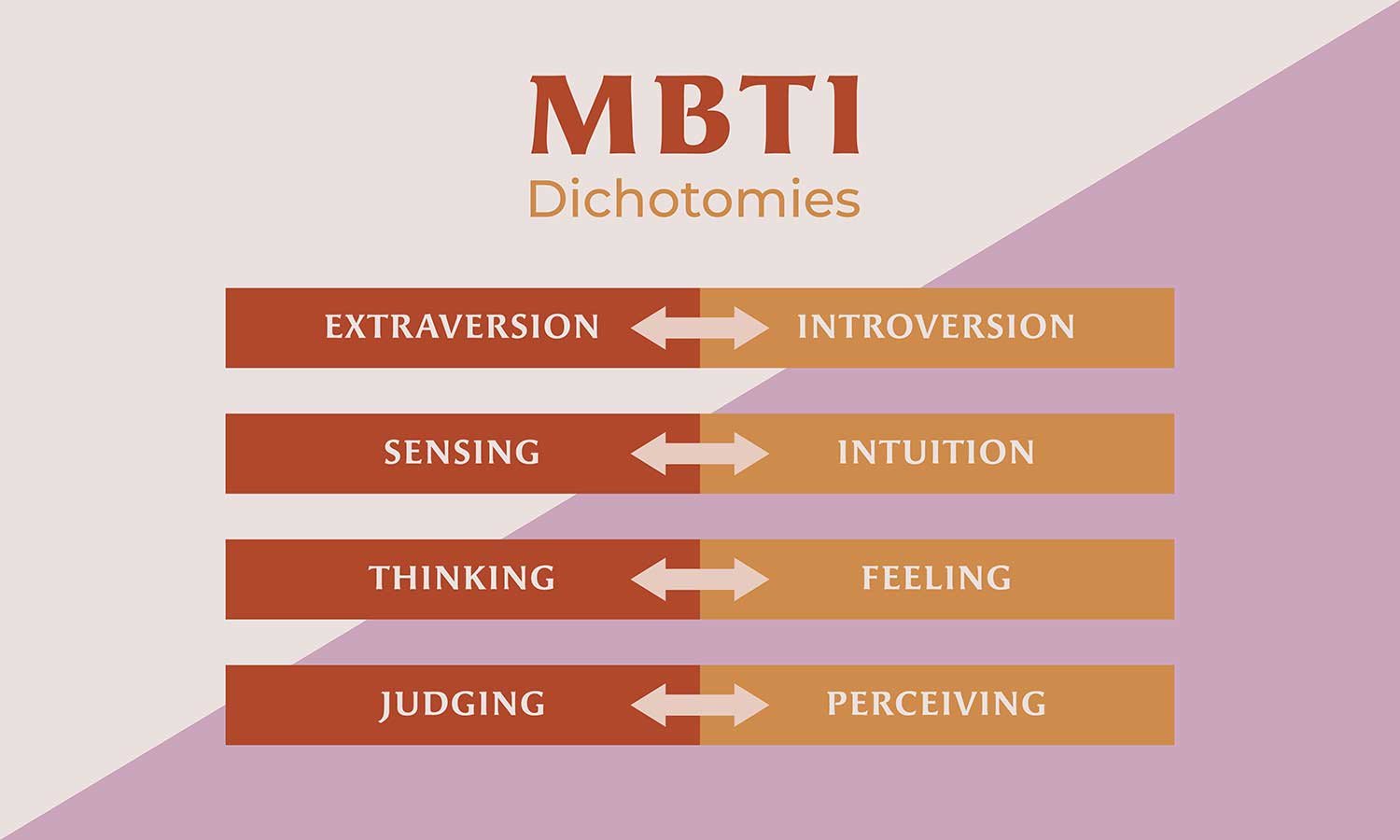
INFPs gain energy from solitude (Introversion) and favor conceptual thinking over concrete facts (Intuition). They decide with personal values and feelings, not detached analysis (Feeling), and prefer flexibility over fixed plans (Perceiving). Together, these four traits define the INFP style.
INFPs tend to be creative, idealistic, caring, and loyal. They have high values and morals, and constantly seek ways to understand people and best serve humanity.
They are family and home-oriented and prefer to interact with a select group of close friends. INFPs are sometimes referred to as “the Mediator,” “the Idealist,” “the Healer,” or “the Dreamer.” ESTJ is the opposite personality type of INFP.
INFPs belong to the “Diplomats” (NF) temperament group.
This is one of four popular groupings of the sixteen MBTI types. Diplomats are empathic and idealistic, prioritizing deep connections, harmony, and personal growth.

INFP is the ninth most common type in the population. INFPs make up:
- 4% of the general population
- 4% of men
- 5% of women
Famous INFPs include Princess Diana, William Shakespeare, Helen Keller, Audrey Hepburn, and Isabel Briggs Myers (who developed the Myers-Briggs Type Indicator with her mother, Katharine Cook Briggs).
| Strengths | Weaknesses |
|---|---|
| Value close relationships | Difficult to get to know |
| Compassionate | Self-critical |
| Open-Minded | Unfocused |
| Non-judgmental | Desperate to please others |
INFP Characteristics
Values and Integrity
INFPs are driven by high values and moral integrity.
- They tend to make choices based on personal feelings and their conscience rather than logic and objective information.
- They will not compromise their ethical standards for personal benefit and have a strong commitment to authenticity and sincerity.
- INFPs are deeply reflective and hold a desire to live a meaningful, purpose-filled life.
Idealism
INFPs are idealists.
- They care deeply about the personal growth and development of others and strive to make a positive impact on the lives of other people in any way they can.
- They are constantly encouraging each person to find their own path and expand their horizons, and they strongly believe in the unlimited potential of others.
- They enjoy exploring their purpose in life and utilizing their skills and knowledge to serve humanity.
Introversion
INFPs are introverted individuals.
- They tend to be quiet and reserved, generating energy from time spent alone. Social situations can be draining for INFPs so they prefer to socialize with small and select groups of friends.
- They long for close, meaningful relationships where they can provide comfort and support.
In MBTI terms, introversion describes where attention flows, not how skilled someone is socially. An INFP directs energy inward, toward an inner world of thoughts, ideas, and reflection.
This is a preference, not shyness or anxiety. A confident, articulate INFP can hold a room and still leave it exhausted, because sustained interaction spends energy that solitude restores.
Empathy
Empathy is another central feature of the INFP personality.
- INFPs care deeply for others and are highly sensitive to other people’s emotions. They are perceptive, thoughtful, and kind-hearted individuals who acquire joy from seeing the successes of others.
- Because they are so accepting, INFPs are often the confidants of their friends and loved ones, and they can always be counted on for positive encouragement or a shoulder to cry on.
- They are capable of great self-sacrifice, occasionally feeling empathy even for those who have done wrong.
This traces back to the Feeling preference. A feeling type weighs a decision by its impact on people, not by cold logic. Logic comes second. Empathy comes first, in nearly every judgment an INFP makes.
Creativity
INFPs are creative and have a unique talent for self-expression.
- They are highly imaginative and love to see things from unconventional perspectives.
- They are visionaries, allowing their minds to run freely and fantasize about the meaning and purpose of life.
- They are drawn to creative, emotional pursuits such as music, art, literature, and poetry.
The Intuition preference is what feeds this. Where a sensing type trusts concrete, present-tense detail, an intuitive type reads patterns, meanings, and possibilities behind the detail.
That orientation to the potential rather than the actual is why an INFP’s imagination runs to what could be. It also explains the pull toward art, writing, and music, which reward exploring possibilities rather than nailing down facts.
Openness and Flexibility
The Perceiving (P) preference explains why INFPs resist locking in a plan too early. They like to keep options open and gather more information before committing to a decision.
This is not indecisiveness for its own sake. Staying adaptable lets an INFP respond to new information or a better-fitting possibility. It avoids being bound early to a choice that turns out wrong.
Cognitive Functions of an INFP
The MBTI suggests that the four different cognitive functions (thinking, feeling, intuition, and sensing) form a hierarchy where each function is either directed outwardly (extraverted) or inwardly (introverted). The order of these functions determines one’s personality.
This idea comes from Carl Jung’s theory of psychological types. Jung grouped sensing and intuition together as ways of gathering information, and thinking and feeling together as ways of reaching decisions. Feeling, in this scheme, means deciding by personal values, not becoming emotional.
The dominant function is the primary aspect of personality, while the auxiliary and tertiary functions play supportive roles.
Dominant: Introverted Feeling
- INFPs process most of their emotions and thoughts internally.
- They feel strongly and possess great compassion and empathy for others, but, as introverts, they tend not to express these sentiments outwardly.
Introverted Feeling is the INFP’s driver. It is the function they trust first and use most, and it sits at the core of the personality.
In practice it works as a private value test. An INFP weighs a decision against an internal standard of what matters, rather than against outside logic or group opinion. That is also why an INFP takes a clash of values more personally than a clash of opinions.
Auxiliary: Extraverted Intuition
- INFPs have creative imaginations, exploring the “what if” scenarios and dreaming up all sorts of ideas and possibilities before making decisions.
- They engage with the world around them using their strong sense of intuition and following their moral conscience.
- They focus on the bigger picture to live a purpose-filled life and make meaningful changes in their surrounding environment.
Extraverted Intuition is the co-pilot. Its job is to balance the dominant function, and it does that by facing outward while Introverted Feeling faces in.
So the values stay private, but the search for possibilities is public. An INFP gathers options from the outside world, then hands them to Introverted Feeling to judge against what matters.
Tertiary: Introverted Sensing
- When taking in information from the world around them, INFPs are able to form vivid memories of these events.
- They can then analyze these experiences and relive them when they are in quieter, relaxed settings.
The tertiary function is the backup. It is genuinely present but underdeveloped, and type theory expects it to emerge more fully in mid-life.
For an INFP that means the sensory record builds quietly in the background. A remembered room or conversation still carries its feeling. With age, those stored impressions become a steadier reference point for what the person values.
Inferior: Extraverted Thinking
- This function of the INFP personality is largely unconscious, but still exerts some influence when faced with pressure.
- This cognitive function involves making sense of the world in an organized and logical way.
- In times of stress, INFPs can be detail-oriented and structured with a focus on objective information rather than emotional.
Type theory calls the inferior function the blind spot. It is the least conscious and least controlled of the four, and it is where stress reactions and personal difficulty tend to surface.
Under pressure, that shows up as uncharacteristic behavior. Warmth gives way to blunt logic, harsh criticism, or a sudden demand that everything be organized. The theory reads this as the blind spot taking over, not as the person’s ordinary style.
One caution belongs with this section. The function stack is the most elaborate part of type theory, and the part critics find hardest to test.
Stein and Swan (2019) judged MBTI theory against standard criteria for a scientific theory. It failed on three. The theory disagrees with known data, resists testing, and contains internal contradictions.
So read the four functions above as a way to organize a self-portrait. They are not verified mechanisms.
INFP Hobbies, Interests, and Careers
As artistic and spiritual individuals, INFPs are typically found in careers that allow them to express their creativity and pursue their own visions. Many INFPs dream of becoming writers, composers, artists, or designers.
INFPs also have strong personal values and a sincere desire to connect with and help other people. They enjoy working in professions where they can bring their kindness and empathy to others.
This pulls many INFPs toward service work. Common choices include counseling, nursing, psychology, social work, and therapy.
In their free time, INFPs enjoy creative and reflective hobbies, and they often pick up foreign languages with real success:
- Poetry and creative writing
- Music
- Photography
- Theater
- Visual art
Treat these career lists as suggestions, not a verdict. As Pittenger (2005) cautions, MBTI type has weak predictive validity: it does not reliably forecast how well someone will perform in a job.
A type result is a reasonable prompt for a conversation about what you enjoy. It is not a reason to rule out medicine, engineering, or law because the letters say “artist”.
INFP Work Environments
INFPs do their best work in harmonious, supportive environments that give them room to pursue what matters to them.
- Autonomy: They want the independence and flexibility to work on personally meaningful tasks, unconstrained by rigid rules or micromanagement.
- Motivation: INFPs are hard workers, but they can become demotivated if they are pressured, micromanaged, or criticized.
- Collaboration: They want co-workers who are cooperative, supportive, and share their values. INFPs prefer caring for and supporting others over simply working alongside them.
- Purpose: They are most devoted to tasks with a clear meaning, which is why many INFPs make excellent nurses, psychologists, or counselors.
- Impact: INFPs want a workplace where they can contribute to making a real difference and changing someone’s life for the better.
INFP Personal Relationships
INFPs are introverted, so they can be difficult to get to know at first. They do not take pleasure in superficial, casual relationships, and instead crave deep, meaningful connections.
- Trusted Circle: They shed their insecurities and reveal their true selves with close friends and family, feeling most fulfilled when they can be there for someone they care about.
- Loyalty: INFPs are deeply committed to their intimate circle. They are faithful and attentive, and enjoy helping the people they love pursue their goals.
- Idealism: INFPs are dreamers and idealists about relationships, especially romantic ones, so making friends or finding true love does not always come easily.
- High Standards: They hold high expectations for an ideal partner and are usually only drawn to people who share their values.
- Lasting Bonds: Once an INFP finds someone who fits this idealized image, they hope to stay close to that person for life.
Tips for Interacting With INFPs
Friendships
Because INFPs only forge deep friendships with a select number of people, they place a lot of value on these relationships. INFPs crave personal and emotional intimacy, but social contact can be difficult and they often struggle to share their own feelings with others.
It can be challenging to get to know an INFP, but the rewards of these friendships are worth the patience and time.
Relationships
Similarly, INFPs can struggle to become close romantic partners, but they will also approach these relationships with a strong sense of loyalty and commitment.
They tend to hold overly romanticized views of their relationships, carrying with them a vision of their ideal soulmate.
When they fall in love, INFPs are devoted. They give great effort and put their partner’s happiness first.
As the partner of an INFP, be patient and understanding. They may struggle to open up. INFPs also need plenty of freedom and independence to explore life and pursue greater self-awareness.
INFPs can be overly sensitive to criticism, but they will always promote harmony over conflict.
Parenting
As parents, INFPs are caring, supportive, and warm. They do not tend to establish strict rules. Instead, they give their children the independence to make their own decisions, form their own opinions, discover their own interests, and grow as individuals.
They care about helping their children develop strong values and about guiding them towards fulfillment and happiness.
INFP parents are good at creating harmonious and accepting home environments where their children feel loved and supported.
Critical Evaluation of the INFP Type
The MBTI, and by extension the INFP type, is popular but does not meet the standards psychologists expect of a scientific personality test.
Critics point to weak reliability, limited predictive power, and a theoretical basis that was never tested when the instrument was first built.
The evidence has not caught up with the hype.
Reliability and Predictive Validity
People often get a different type when they retake the MBTI, sometimes within a few weeks, so an individual’s “type” is not especially stable (Pittenger, 1993).
Much of this instability comes from forcing continuous traits into either/or boxes.
Most people score close to the midpoint on each dichotomy.
A small change in answers can flip their letter, and with it their whole type.
The MBTI also has limited predictive validity. Knowing someone’s type does not reliably predict job performance or other important outcomes (Pittenger, 2005).
This makes it unsuitable for hiring, promotion, or clinical decisions.
In a coaching conversation, that instability is a minor curiosity.
In a hiring or promotion decision, it undermines the very evidence the decision is supposed to rest on (Pittenger, 1993, 2005).
The Barnum Effect: Why Type Portraits Feel Accurate
Part of the MBTI’s appeal comes from a well-documented bias rather than accuracy.
In a classic study, psychologist Bertram Forer gave students an identical, generic personality sketch assembled from a newspaper astrology column.
He then asked them to rate how well it described them (Forer, 1949).
Almost everyone said it fit.
Students rated the sketch as an excellent description of themselves, scoring it about 4.3 out of 5 on average.
This is now known as the Barnum effect: vague, flattering statements feel personally accurate to almost everyone.
INFP portraits, including this one, use warm, non-judgemental language that could describe many people, which makes them especially likely to trigger this reaction.
Confirmation bias can then take over.
Once someone identifies as an INFP, they tend to notice and remember information that fits the description and overlook what does not (see confirmation bias).
INFP-A vs INFP-T (Assertive vs Turbulent)
Many free tests report a fifth letter, A or T, after the four-letter type.
This addition does not come from the official MBTI.
It comes from 16Personalities, a popular free adaptation that layers in elements of the Big Five rather than pure Jungian theory.
This add-on is a marketing layer, not new science.
The Assertive/Turbulent axis stands in for Neuroticism, the Big Five trait the MBTI otherwise leaves out entirely.
An INFP-A tends to be calmer and more self-assured under pressure, while an INFP-T is more sensitive to stress and self-doubt.
Take it with a grain of salt.
Free adaptations like this are not standardised or professionally validated the way the official instrument is. Treat the result as a rough guide, not a scientific measurement.
Contemporary Research
Recent studies have kept testing the MBTI’s scientific standing rather than restoring it.
The gap has not closed.
Furnham (2022) mapped the four MBTI scores onto the 30 facets of the NEO-PI-R, the standard Big Five measure.
He found that the MBTI’s four dimensions line up with four of the Big Five factors: extraversion, openness, agreeableness, and conscientiousness. They capture none of Neuroticism, one of the most predictively useful traits.
Francis and Village (2022) took a different approach. They built and validated the Francis Psychological Type Scales (FPTS) against the MBTI, reporting its factor structure, internal consistency, and concurrent validity.
Because of this overlap, most researchers now prefer dimensional models like the Big Five, which measure people along continuous scales instead of fixed categories.
INFP Personality Test
Answer these questions to find out if INFP might be your personality type:
- Do you prefer spending time alone or with a small group of close friends rather than in large social gatherings?
- Are you more drawn to abstract ideas and possibilities than concrete facts and details?
- When making decisions, do you rely more on your personal values and feelings than on logical analysis?
- Do you prefer flexibility and spontaneity over strict schedules and plans?
- Are you often described as idealistic, creative, or empathetic by others?
- Do you have a strong desire to help others and make a positive impact on the world?
- Are you deeply in touch with your emotions and those of others?
- Do you enjoy exploring your inner world of thoughts and feelings?
- Are you drawn to creative pursuits such as writing, art, or music?
- Do you value authenticity and strive to stay true to your beliefs and values?
If you answer “yes” to most of these questions, you may have INFP personality traits. But personality is complex. Only a trained professional can confirm your type.
Take the MBTI (Paper Version)
FAQs
What is an INFP person like?
An INFP person, characterized by Introverted (I), Intuitive (N), Feeling (F), and Perceiving (P) preferences within the Myers-Briggs Type Indicator, is empathetic, idealistic, and introspective.
They are deeply in tune with their emotions and values. A strong sense of purpose drives them, along with a desire to make a positive impact on the world.
INFPs are creative and imaginative. They enjoy exploring abstract ideas and concepts.
They may appear reserved in social situations but are passionate and caring with those they trust. INFPs can struggle with practical tasks and decision-making, as they tend to prioritize emotions and personal values over logic.
Do INFP and INFJ get along?
INFP and INFJ generally get along well, as they share many similarities in terms of their introverted, intuitive, and feeling preferences.
Both types are empathetic, introspective, and driven by a strong sense of purpose, which can create a deep understanding and connection between them. They tend to value meaningful conversations and share a desire to make a positive impact on the world.
They just get each other. However, differences in their judging (J) and perceiving (P) preferences can lead to potential challenges. INFJs are more structured and organized, while INFPs prefer flexibility and spontaneity.
Understanding and respecting each other’s preferences can help maintain harmony and foster a supportive and enriching relationship.
Is INFP a rare personality?
Yes, the INFP personality type is considered rare, as it makes up only around 4-5% of the general population. This introverted, intuitive, feeling, and perceiving type is known for its empathetic nature, strong values, and creative approach to life.
Despite being a minority, INFPs can have a significant impact on the world around them due to their idealism, passion, and strong sense of purpose.
Sources
Forer, B. R. (1949). The fallacy of personal validation: A classroom demonstration of gullibility. The Journal of Abnormal and Social Psychology, 44(1), 118–123. https://doi.org/10.1037/h0059240
Francis, L. J., & Village, A. (2022). The Francis Psychological Type Scales (FPTS): Factor structure, internal consistency reliability, and concurrent validity with the MBTI. Mental Health, Religion & Culture, 25(9), 931–951. https://doi.org/10.1080/13674676.2022.2041584
Furnham, A. (2022). The Big Five facets and the MBTI: The relationship between the 30 NEO-PI-R facets and the four Myers-Briggs Type Indicator (MBTI) scores. Psychology, 13(10), 1504–1516.
King, S. P., & Mason, B. A. (2020). Myers-Briggs Type Indicator. In The Wiley encyclopedia of personality and individual differences: Measurement and assessment (pp. 315–319). Wiley. https://doi.org/10.1002/9781119547167.ch123
Myers, I. B. (1962). The Myers-Briggs Type Indicator: Manual. Educational Testing Service.
Myers, I. B., & Myers, P. B. (1980). Gifts differing: Understanding personality type. Consulting Psychologists Press.
Myers, K. D., & Kirby, L. D. (2015). Introduction to type: A guide to understanding your results on the MBTI assessment. CPP.
Myers-Briggs Type Indicator. (2019, May 28). New World Encyclopedia, Retrieved from https://www.newworldencyclopedia.org/p/index.php?title=Myers-Briggs_Type_Indicator&oldid=1020015.
Pittenger, D. J. (1993). The utility of the Myers-Briggs Type Indicator. Review of Educational Research, 63(4), 467–488. https://doi.org/10.3102/00346543063004467
Pittenger, D. J. (2005). Cautionary comments regarding the Myers-Briggs Type Indicator. Consulting Psychology Journal: Practice and Research, 57(3), 210–221. https://doi.org/10.1037/1065-9293.57.3.210
Stein, R., & Swan, A. B. (2019). Evaluating the validity of Myers-Briggs Type Indicator theory: A teaching tool and window into intuitive psychology. Social and Personality Psychology Compass, 13(2), e12434. https://doi.org/10.1111/spc3.12434
The purpose of the Myers-Briggs Type Indicator®. The Myers & Briggs Foundation: MBTI Basics. (n.d.). Retrieved from https://www.myersbriggs.org/my-mbti-personality-type/mbti-basics/