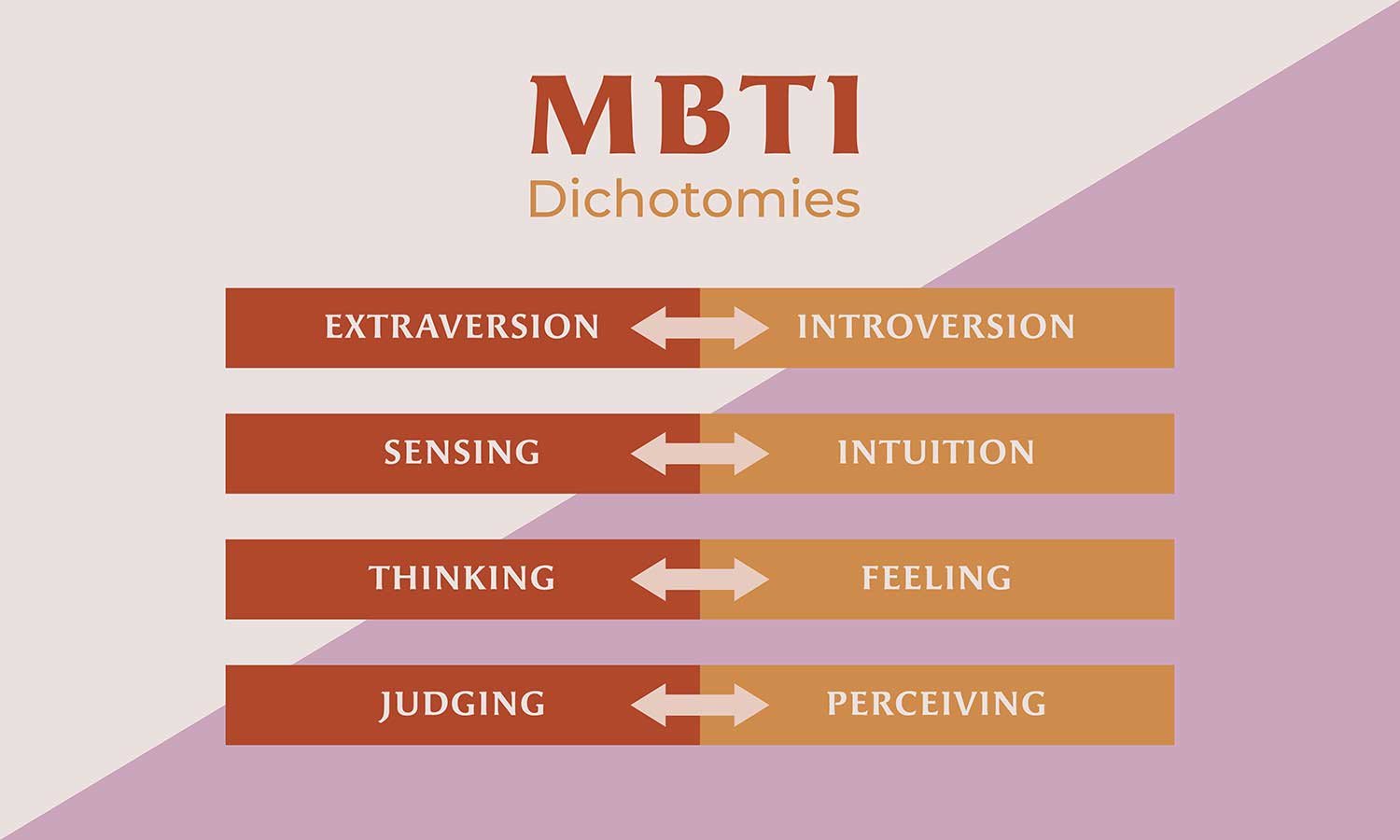
ISFP, as defined by the Myers-Briggs Type Indicator (MBTI), stands for Introversion, Sensing, Feeling, and Perceiving. ISFPs are quiet, sensitive, and flexible, often characterized by their appreciation for beauty, practical skills, kindness, and a strong desire to live in harmony with their environment.
Key Takeaways
- Core Traits: ISFPs are quiet, sensitive, and adaptable, guided by personal values (Feeling) and a preference for concrete, present-moment experience (Sensing) over abstract theory.
- Type, Not Trait: ISFP is one of 16 discrete types, not a score on a continuous scale, so nearby types can look similar.
- Function Stack: the ordered sequence of mental processes behind a type; for ISFPs, Introverted Feeling (dominant) sets their values, while Extraverted Sensing (auxiliary) keeps them alert to their surroundings.
- ISFP-A vs ISFP-T: free tests such as 16Personalities add an ‘Assertive’ or ‘Turbulent’ label describing emotional stability, borrowed from the Big Five and not part of the official MBTI.
- Careers and Hobbies: ISFPs favour hands-on, creative, and nature-based work and leisure that let them express themselves and see tangible results.
- Validity Caveat: The MBTI has weak test-retest reliability and predictive validity, so the ISFP label works best as a reflection tool, not a scientific diagnosis.
ISFP Meaning
ISFPs find rejuvenation in solitude (Introversion) and lean towards tangible experiences and present realities over abstract possibilities (Sensing). They base decisions on personal values and emotional implications rather than logical analysis (Feeling), valuing adaptability and live-in-the-moment experiences over strict plans (Perceiving).
They tend to be peaceful, easy-going, and down-to-earth.
They have a strong need for personal space and value time alone to recharge. They appreciate deep connections and enjoy spending time with their small circle of close friends and family.
They are highly considerate and accepting. They stay committed to their values and to the people who matter to them.
ISFPs are sometimes referred to as “the Artist,” “the Composer,” or “the Adventurer.” ISFP is the opposite personality type of ENTJ.
ISFP is the fourth most common type in the population. ISFPs make up:
- 9% of the general population
- 8% of men
- 10% of women
Many online tests, including 16Personalities, add an extra ‘A’ (Assertive) or ‘T’ (Turbulent) label after the four letters, giving results like ISFP-T or ISFP-A.
This fifth trait sits outside the official MBTI. It borrows from the Big Five trait of Neuroticism: ‘Turbulent’ types report more self-doubt and stress reactivity, while ‘Assertive’ types stay more even-keeled.
Famous ISFPs include Rihanna, Cher, Michael Jackson, Marilyn Monroe, David Beckham, and Harry Potter.
| Strengths | Weaknesses |
|---|---|
| Passionate | Reserved and quiet |
| Open-minded | Unpredictable |
| Charming | Overly sensitive |
| Creative | Strong need for personal space |
ISFP Characteristics
ISFPs are true optimists.
- They have a unique ability to find joy in each day and embrace an easygoing and carefree lifestyle.
- They like to live in the present moment, welcoming spontaneity and adventure. ISFPs are open-minded, free-spirited individuals who enjoy and appreciate all that life has to offer.
ISFPs are pragmatic.
- They like to keep their options open so that they can make the most rational decisions before committing to something.
- They spend their time immersed in the present moment and are thus very aware of their surrounding environment.
- ISFPs dislike abstract theories and prefer learning situations that focus on practical information and hands-on experience.
ISFPs are loyal, not only to their values and beliefs, but also to their friends and family.
- They have big hearts and are highly accepting of others, looking for ways to be accommodating and establish harmony.
- They enjoy helping others and are carefully observant of the needs of the people around them.
ISFPs are introverts at heart.
- They are friendly and loving individuals who enjoy the company of their closest friends and family. But they need time alone to recharge after socializing with others.
- They can be quiet and reserved, but their charming attitude makes them highly likable and popular.
ISFPs are creative.
- They have a vast array of passions and interests and are always interested in exploring new ideas. Vivid imaginations, strong aesthetic sensibilities, and curious spirits help them find beauty in their surroundings.
- When ISFPs are referred to as “the Artist,” this does not necessarily mean in the conventional sense, although many do have a natural talent for the arts.
- They are referred to as “the Artist” because they treat life as a canvas for self-expression, acting in ways that reflect their own unique traits and creative talents.
ISFP Cognitive Functions
The MBTI suggests that the four different cognitive functions (thinking, feeling, intuition, and sensing) form a hierarchy where each function is either directed outwardly (extroverted) or inwardly (introverted). The order of these functions determines one’s personality.
The dominant function is the primary aspect of personality, while the auxiliary and tertiary functions play supportive roles.
Dominant: Introverted Feeling
- ISFPs have their own system of values and beliefs that drive their judgments and decisions.
- They approach experiences based upon how they feel about them in the moment and are more interested in personal concerns than objective information.
- As the dominant function, Introverted Feeling is the most trusted and most-used part of an ISFP’s personality, the core the other three functions support.
Auxiliary: Extraverted Sensing
- People with the ISFP personality type are well attuned to their surroundings and have a strong sense of their immediate environment.
- They stay focused on the present moment, taking in new information and noticing the sights, smells, and sounds around them.
- As the auxiliary function, Extraverted Sensing acts as a co-pilot to Introverted Feeling, supplying the outward-facing awareness that the dominant function does not provide on its own.
Tertiary: Introverted Intuition
- This function of the ISFP personality tends to operate in accordance with their extraverted sensing function.
- As ISFPs take in information from their surroundings, they can develop “gut feelings,” prompting them to experience epiphanies or revelations about themselves or others.
- Tertiary functions are typically less developed than the dominant and auxiliary, and tend to become more prominent as an ISFP matures into mid-life.
Inferior: Extraverted Thinking
- Organization and planning is the weakest element of the ISFP personality.
- This function is used in certain situations when ISFPs become focused on precise details and want to find the most effective way to do something or express an idea.
- The inferior function is the least conscious and least controlled of the four, which is why it often surfaces as a source of stress rather than a reliable strength.
ISFP Hobbies, Interests, and Careers
ISFPs enjoy the outdoors and often seek jobs that put them in contact with animals and nature. A pleasant, hands-on physical environment matters to them.
They like to see the tangible results of their work, which makes gardening, botany, and forestry natural fits.
Creative, hands-on careers appeal too. Many ISFPs become artists, cosmetologists, musicians, designers, chefs, or photographers. They use the work itself as self-expression.
Other popular careers include teaching, social work, veterinary medicine, and nursing.
In their free time, ISFPs turn to activities that use their physical or artistic skills, such as skiing, swimming, dancing, and crafting.
They also enjoy entertaining in small groups and exploring art and nature.
ISFP Work Environments
ISFPs prefer harmonious, relaxed environments where they can have the personal freedom to express their creativity and do things their own way.
They do not like to be controlled or micromanaged. A strict environment with rigid rules and regulations does not suit an ISFP.
ISFPs are introverted, so they tend to prefer to work independently. But, when working with others, they get along best with colleagues who are flexible, easygoing, and supportive.
ISFPs are hard workers. They work best in casual, steady environments, not high-pressure, performance-led workplaces.
They have strong values, so it is important they work in an environment that reflects these. ISFPs prefer to work behind the scenes and keep a low profile, so they are typically not found in leadership or managerial roles.
ISFP Personal Relationships
ISFPs are introverted, so they tend to be reserved and quiet around new people. They are private. Often they keep their true feelings to themselves, which can make them hard to get to know.
They sometimes avoid sharing their thoughts and feelings even with romantic partners. But they care deeply. ISFPs can prove to be warm, caring, and loyal partners.
With a partner or friend they trust, ISFPs relax and open up. If they feel appreciated, they reciprocate in any way they can. They are easy-going and uncritical.
ISFPs take real enjoyment in the company of close friends, companions, and relatives. They are laid-back and spontaneous, and love spending time with loved ones in fun, casual settings.
ISFPs show care through action, not words. Simple gestures matter more than long talks about feelings. They avoid conflict and criticism, preferring harmonious, carefree interactions where they can go with the flow.
Tips for Interacting With ISFPs
Relationships
Make an effort to understand your ISFP partner. Ensure their voice is heard. When accepted for who they are, ISFPs are more likely to reveal themselves.
ISFPs value actions over words so take the time to show gestures of affection and to appreciate the ISFP’s considerate nature.
ISFPs are vulnerable to criticism so it is necessary to provide them with positive affirmations and emotional support.
The same applies with new friends. ISFPs need to build trust before they open up and feel natural. You can help by supporting and accepting them for who they are.
They also value their personal space and freedom, so respecting that is important too.
Parenting
As parents, ISFPs are warm, devoted, and affectionate. They take joy in providing for their children and creating comforting, stable home environments. Family comes first. They stay attentive to their children’s practical needs and dedicated to the care of their loved ones.
They emphasize quality time with their families and value these intimate familial connections.
ISFPs are one of the most relaxed personality types, giving their children the freedom to explore and experience new things.
Take the MBTI (Paper Version)
Limitations of the MBTI
The MBTI, and by extension the ISFP type, faces sustained criticism from academic psychologists.
- Weak Reliability and Validity: people often receive a different type when they retake the test, and the instrument has limited power to predict real-world outcomes such as job performance.
- Forcing Traits into Categories: the MBTI sorts people into either/or types, even though traits like extraversion are normally distributed, so the cut-off can separate near-identical people.
- The Barnum Effect: flattering, general type portraits feel personally accurate to almost anyone, a bias confirmed by classic research and reinforced once a person adopts the label.
Weak Reliability and Validity
Retaking the MBTI often produces a different four-letter type, sometimes after only a few weeks. A reliable test should give the same result each time.
But studies find that a substantial share of people change on one or more letters when they retest (Pittenger, 1993).
This instability follows directly from dichotomising scores near the midpoint. A small shift in how someone answers can flip a single letter, changing the whole reported type.
That could mean the difference between ISFP and a neighbouring type such as ISTP or ISFJ.
The instrument also shows limited predictive validity. Review evidence finds that type does not reliably predict job performance or other important outcomes, which undermines its use in hiring and promotion decisions (Pittenger, 2005).
More recent appraisals of the underlying theory reach the same conclusion (Stein & Swan, 2019).
Forcing Traits into Categories
The MBTI’s deepest problem may be dichotomisation.
It sorts everyone into either/or categories, even though traits such as extraversion are normally distributed, with most people clustering near the middle (Stein & Swan, 2019).
Carving that continuum at the midpoint creates an artificial boundary.
Two people who score almost identically can end up sorted into different types simply because they fall on opposite sides of that line.
Researchers generally prefer dimensional models for this reason.
The Big Five treats each trait as a continuous spectrum instead of a category, and it consistently predicts real-world outcomes better than the MBTI.
For ISFP specifically, someone scoring just barely toward Feeling over Thinking receives the same clean label as someone scoring at the extreme.
Two very different people can end up sharing the same four letters.
The Barnum Effect
Forer proved this in 1949. In his classic study, students received an identical, generic personality sketch pulled from a newspaper astrology column.
They rated it an excellent description of themselves, averaging 4.3 out of 5 in accuracy. MBTI portraits work the same way.
Because they are flattering and broadly worded, almost anyone finds their own type description accurate, a bias known as the Barnum or Forer effect.
Once a person adopts a label, confirmation bias takes over: they notice the details that fit and discount the ones that do not.
Critics also point out that the MBTI is a commercial product, sold with paid certification, which creates a financial incentive to keep promoting it regardless of the evidence.
Very little of that promotion appears in independent, peer-reviewed research.
Sources
Forer, B. R. (1949). The fallacy of personal validation: A classroom demonstration of gullibility. The Journal of Abnormal and Social Psychology, 44(1), 118–123. https://doi.org/10.1037/h0059240
King, S. P., & Mason, B. A. (2020). Myers‐Briggs Type Indicator. The Wiley Encyclopedia of Personality and Individual Differences: Measurement and Assessment, 315-319.
Myers, I. B. (1962). The Myers-Briggs Type Indicator: Manual. Educational Testing Service.
Myers, K. D., & Kirby, L. D. (2015). Introduction to type: A guide to understanding your results on the MBTI assessment. Sunnyvale, CA: CPP.
Myers-Briggs Type Indicator. (2019, May 28). New World Encyclopedia, Retrieved from https://www.newworldencyclopedia.org/p/index.php?title=Myers-Briggs_Type_Indicator&oldid=1020015.
Myers, I. B., & Myers, P. B. (1980). Gifts differing: Understanding personality type. Consulting Psychologists Press.
Pittenger, D. J. (1993). The utility of the Myers-Briggs Type Indicator. Review of Educational Research, 63(4), 467–488. https://doi.org/10.3102/00346543063004467
Pittenger, D. J. (2005). Cautionary comments regarding the Myers-Briggs Type Indicator. Consulting Psychology Journal: Practice and Research, 57(3), 210–221. https://doi.org/10.1037/1065-9293.57.3.210
Stein, R., & Swan, A. B. (2019). Evaluating the validity of Myers-Briggs Type Indicator theory: A teaching tool and window into intuitive psychology. Social and Personality Psychology Compass, 13(2), e12434. https://doi.org/10.1111/spc3.12434
The purpose of the Myers-Briggs Type Indicator®. The Myers & Briggs Foundation: MBTI Basics. (n.d.). Retrieved from https://www.myersbriggs.org/my-mbti-personality-type/mbti-basics/



