ESFJ, from the Myers-Briggs Type Indicator (MBTI), stands for Extraversion, Sensing, Feeling, and Judging. ESFJs are sociable, detail-oriented, and caring individuals, known for their strong sense of duty, practicality, and focus on harmony and cooperation in their environments.
Key Takeaways
- ESFJ Type: Extraverted, Sensing, Feeling, Judging — warm, sociable, detail-oriented, and driven by a strong sense of duty and harmony.
- Common Type: ESFJs make up around 9–13% of the population, one of the more common MBTI types.
- Cognitive Functions: A dominant Extraverted Feeling function paired with auxiliary Introverted Sensing drives ESFJs’ practical, people-focused decisions.
- Strengths & Challenges: Loyal, organized, and outgoing, but can be approval-seeking and sensitive to criticism.
- Evidence Caveat: The MBTI has weak test–retest reliability (a different result if you retake it) and predictive validity, so treat an ESFJ label as a prompt for self-reflection, not a scientific diagnosis.

ESFJ Meaning
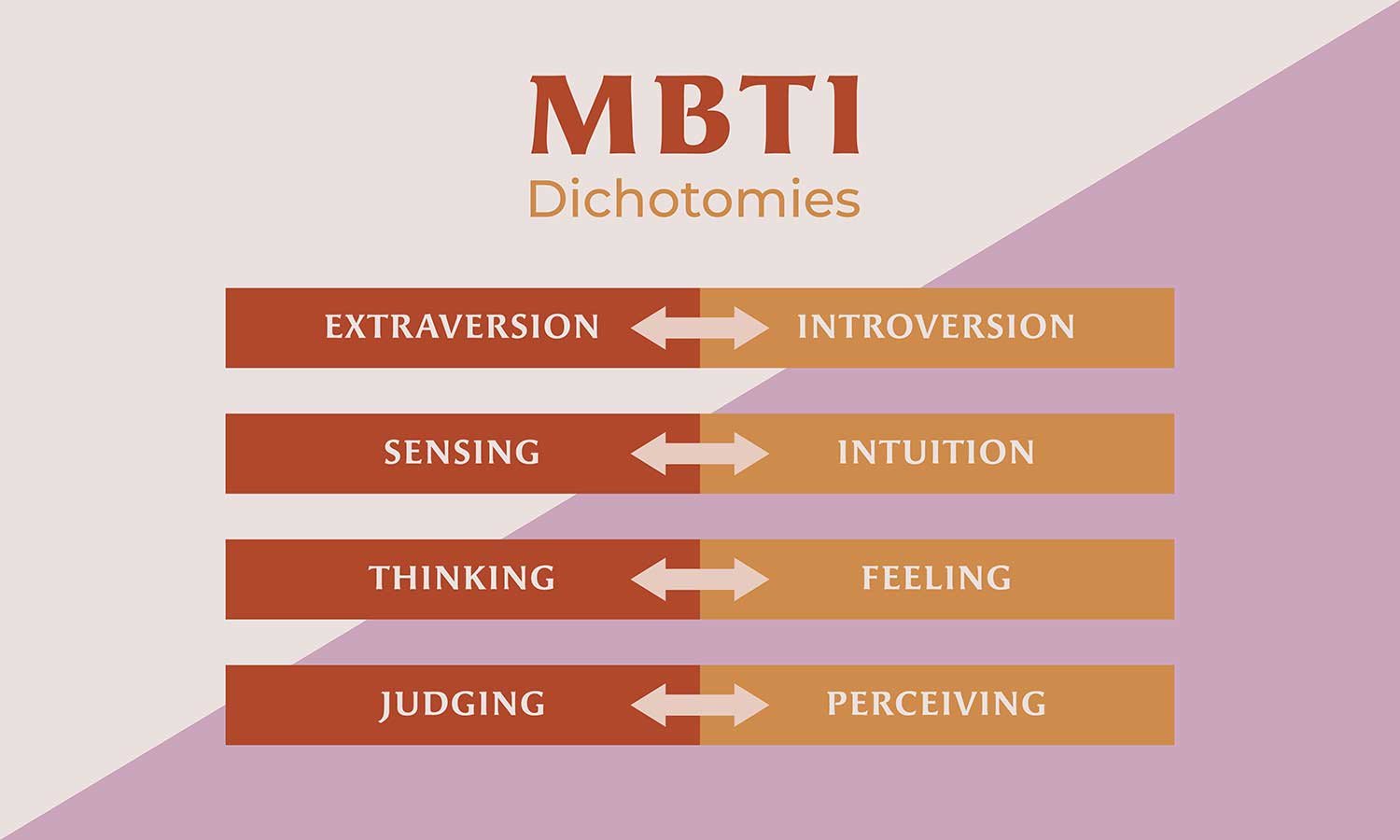
ESFJs gain energy from social encounters (Extraversion) and lean towards practical, present-moment details over abstract ideas (Sensing). They decide with the heart, not just the head. They also value a structured, organized approach to life over spontaneity (Judging).
They wear their hearts on their sleeves and tend to see the best in others. Helping people comes naturally to them.
They want to be noticed and appreciated for the care they provide, not taken for granted. They watch people closely and read social cues fast.
People with this personality type tend to be warmhearted, conscientious, and harmonious. ESFJs are sometimes referred to as “the Caregiver,” “the Consul,” or “the Provider.” INTP is the opposite personality type of ESFJ.
ESFJ is the second most common type in the population. Around 9% to 13% of the general population has an ESFJ personality type.
- 9-13% of the general population
- 8% of men
- 17% of women
Famous ESFJs include Martha Stewart, Sam Walton, Barbara Walters, Ariana Grande, William Howard Taft, and Sally Field.
| Strengths | Weaknesses |
|---|---|
| Loyal | Needy |
| Outgoing and personable | Approval-seeking |
| Organized | Sensitive to criticism |
| Conscientious | Reluctant to change |
| Strong practical skills | Controlling |
| Moral | Judgmental |
ESFJ Characteristics
Outgoing and Social
- They connect easily with others and are energized by interacting with those around them.
- They take an active role in their communities and open their hearts to friends, family, and neighbors.
- They are sociable and admired, and well-versed in small talk and social cues.
True Altruists
- They care deeply about other people’s feelings and enjoy supporting their friends and loved ones.
- They are highly attuned to the needs and emotions of those around them.
- They take their responsibilities to serve others seriously and can be counted on to show up when needed.
- ESFJs are often called “the Caregiver” or “the Provider” for their devotion to caring for others before themselves.
Generous and Thoughtful
- They do not expect their selflessness to be noticed, though they are eager to please and care about others’ perceptions of them.
- ESFJs are people pleasers who seek approval and want to be liked by everyone.
- They are highly sensitive to criticism and take rejection personally.
Practical and Organized
- They appreciate order, detail, and structure, and want a harmonious, well-structured environment.
- They are routined and productive, and like to feel in command of their surroundings.
- They work to preserve the status quo and make sure people close to them are well cared for.
- Their outgoing, methodical nature and desire to make people feel special leads ESFJs to host parties and organize community events.
ESFJ Cognitive Functions
The MBTI suggests that the four different cognitive functions (thinking, feeling, intuition, and sensing) form a hierarchy where each function is either directed outwardly (extroverted) or inwardly (introverted). The order of these functions determines one’s personality.
The dominant function is the primary aspect of personality, while the auxiliary and tertiary functions play supportive roles.
Dominant: Extroverted Feeling
- ESFJs have their own system of values and beliefs that drive their judgments and decisions.
- They approach experiences based upon how they feel about them in the moment and are more interested in personal concerns than objective information.
- Despite the name, Feeling is a rational way of deciding, not an emotional impulse. ESFJs weigh values and human impact deliberately, aiming for choices that protect relationships and group harmony.
Auxiliary: Introverted Sensing
- ESFJs are more focused on the present moment than on any future commitments.
- They prefer concrete, factual information rather than abstract or theoretical details.
- They are careful observers of others and are highly attuned to their surrounding environments.
- Sensing means trusting facts, details, and direct experience over abstract theories or future possibilities. This grounds ESFJs’ decisions in what is real and verifiable right now, rather than speculation.
Tertiary: Extroverted Intuition
- This aspect of the ESFJ personality is less prominent but still helps people with this personality type to notice patterns and find creative solutions to problems.
- It enables ESFJs to explore a wide range of possibilities when looking at a novel situation and make connections to gain insights into people and experiences.
- Intuition works by spotting patterns and possibilities beyond the immediate facts, the opposite instinct to Sensing. It only surfaces occasionally for ESFJs, briefly balancing their usual focus on concrete detail.
Inferior: Introverted Thinking
- While this aspect of the ESFJ personality tends to be weaker, it helps ESFJs analyze complex information, specifically concepts that are abstract or theoretical.
- Thinking types decide through objective logic, not personal values, weighing evidence over impact on people. It’s the style ESFJs, who lead with Feeling, use least naturally.
- ESFJs are planners and like to feel in control of their environment, but making sense of concepts that are not factual or concrete is often a point of weakness for ESFJs.
ESFJ Hobbies, Interests, and Careers
ESFJs are conscientious helpers. They thrive in careers that let them care for people in practical, hands-on ways.
Social service and healthcare careers are common fits, since ESFJs value knowing they have done something valuable for another person. They also succeed in administrative or managerial roles, thanks to their strong practical and organizational skills.
Popular ESFJ careers include the following roles.
- Childcare provider
- Nurse
- Teacher
- Social worker
- Counselor
- Physician
- Religious worker
ESFJs are comfortable with authority. They want the power to organize people and processes at work, paying close attention to order and detail to create structure for others.
In their free time, ESFJs enjoy the following activities.
- Volunteering in community, charity, or religious organizations
- Celebrating holidays and family traditions
- Cooking and entertaining
- Playing social sports
ESFJ Work Environments
ESFJs like structure at work. They prefer workplaces with a high degree of organization, built on distinct hierarchies and roles.
They work best in environments with clear expectations and little ambiguity. They thrive on social order and harmony. They feel most comfortable in environments free of conflict or criticism.
Whether in a managerial role or subordinate position, ESFJs expect that authority figures are well respected and appreciated.
As extroverts, ESFJs are energized by participating in a team. They value human interaction and group collaboration and make good listeners and enthusiastic team members.
They enjoy working with others as long as their co-workers are just as motivated, cooperative, and action-oriented as they are. They can provide the ESFJ with positive, supportive feedback.
ESFJ Personal Relationships
Building Relationships
ESFJs enjoy spending time with people and tend to build strong relationships with others.
They are friendly and empathetic. They often put the needs of others ahead of their own.
They make supportive, loyal friends and partners. They stand by their loved ones no matter what.
ESFJs surround themselves with a large circle of friends. They typically get along with just about anybody.
They put real time and effort into their friendships, and want their friends to be happy.
ESFJs are prone to feeling insecure when things feel uncertain, though. Because of these insecurities, they expect their efforts to be appreciated and reciprocated by close friends.
That insecurity fades fast once they feel valued. A little consistent appreciation goes a long way with an ESFJ.
Romantic Relationships
In relationships, ESFJs make loving and devoted partners. They tend to show it in small, steady, everyday ways.
They take their relationships very seriously, typically avoiding casual flings and non-committed dating.
They want to follow traditional dating standards, like the idea that the man should call first or that couples wait until the third date to kiss.
They also want to give their partners practical support based on whatever those traditional ideals look like.
ESFJs dislike conflict. They want to resolve disagreements quickly and calmly, and avoid criticism where they can.
They prefer stable, harmonious relationships with mutual appreciation and unwavering support. They are happiest when they feel trusted and valued, admiring those who notice their efforts to provide for others.
Tips for Interacting With ESFJs
Friendships
ESFJs are conflict-averse. They tend to avoid relationships where they might face a lot of criticism.
As the friend or partner of an ESFJ, express your appreciation and gratitude for their selflessness and giving nature. ESFJs want to feel valued and acknowledged. They get along best with people who understand that.
They take their relationships seriously and tend to maintain lasting friendships, focused on long-term commitments with both friends and partners.
Show ESFJs how much you love and appreciate them. Reciprocating their kindness and returning gestures of love goes a long way.
Parenting
ESFJ parents want a safe, loving home for their family. They instill strong moral values and work ethics in their children, and can be critical when children don’t meet expectations.
Still, they set rules and authority without being overbearing or harsh. They are devoted to their children and like feeling needed.
That devotion can turn into overprotectiveness as their children grow.
Critical Evaluation of the MBTI
The MBTI is hugely popular in coaching, career guidance, and team-building, but psychologists have raised serious concerns about how well it holds up as a scientific measure.
As Simply Psychology’s McLeod (2024) explains, the instrument is “often described as a pseudoscience” that is “not widely endorsed by psychologists or other researchers in the field.”
Reliability and Validity Concerns
People often get a different type when they retake the MBTI, sometimes within a few weeks. The label is not stable over time (Pittenger, 1993).
Predictive validity is weak too. The instrument does not reliably predict job performance or other real-world outcomes (Pittenger, 2005). That undermines its use in selection, promotion, and hiring decisions, precisely where it is often marketed (Pittenger, 2005).
Dichotomization is the deeper problem. The MBTI forces people into either/or categories, even though traits like extraversion are normally distributed near the middle.
Carving that continuum at the midpoint creates artificial boundaries and can place near-identical people in different types.
A small change in someone’s answers can flip a near-midpoint score to the other letter, changing their whole reported type.
Why the MBTI Still Attracts Criticism
The theory behind the MBTI rests on Carl Jung’s clinical observations, which “were not based on any controlled studies” (McLeod, 2024). Much of the supporting research since has been methodologically weak.
Its popularity also owes something to a cognitive bias. In a classic 1949 study, psychologist Bertram Forer gave students an identical, generic personality sketch and found they rated it as an excellent description of themselves (Forer, 1949).
MBTI portraits work the same way: flattering and vague enough that almost anyone recognizes themselves in one.
Confirmation bias reinforces the effect once someone has a label. After being told they are an ESFJ, a person tends to notice and remember moments that fit the description. They discount moments that don’t, so the confirmation bias makes the label feel accurate whether or not it really is.
The language is loose enough to fit almost anyone. That looseness makes the whole framework hard to falsify (McLeod, 2024).
The instrument is also a commercial product, sold with paid practitioner certification, which critics say outpaces its independent, peer-reviewed evidence (Pittenger, 2005).
Comparison to the Big Five and HEXACO
Researchers who study personality scientifically mostly prefer the Big Five over the MBTI. The Big Five comes from factor-analytic research on how people naturally describe personality in language. The MBTI instead rests on Jungian theory that came first and was never tested that way.
The two models also measure differently.
The Big Five places a person somewhere along a continuous spectrum for each trait. The MBTI instead reports only which pole a person leans toward, discarding how strongly.
The dimensions do line up to some degree. MBTI Extraversion–Introversion tracks Big Five Extraversion, Sensing–Intuition tracks Openness, Thinking–Feeling tracks Agreeableness, and Judging–Perceiving tracks Conscientiousness (McCrae & Costa, 1989). One Big Five trait, Neuroticism, has no MBTI match at all, despite predicting real-world outcomes well.
HEXACO adds a sixth factor, Honesty-Humility, covering moral character. Both models use continuous scales, validated across cultures. The MBTI does neither.
Contemporary Research
Personality researchers today mostly favor dimensional models like the Big Five over type-based instruments like the MBTI.
The MBTI’s four dimensions do correlate substantially with Big Five traits (McCrae & Costa, 1989), which suggests it captures some real personality variance, just less precisely than a continuous model.
As McLeod (2024) explains, this makes the MBTI better suited to self-reflection and conversation than to hiring decisions or clinical assessment.
More recent work has kept testing the MBTI–Big Five link. Furnham (2022) re-examined the relationship at a finer level, mapping all four MBTI scores onto the 30 facets of the NEO-PI-R, a detailed Big Five measure.
Francis and Village (2022) took a different approach, developing and validating the Francis Psychological Type Scales against the MBTI and reporting on its factor structure, internal consistency, and concurrent validity.
Neither study restored the type model to mainstream research favor.
Free online tests add a fifth letter too: 16Personalities produces ESFJ-A or ESFJ-T, a distinction many searchers look up by name. The site borrows the MBTI’s four-letter system but blends in Big Five ideas. Its “Assertive/Turbulent” axis stands in for Neuroticism, the emotional-stability trait the official MBTI never measures.
These free adaptations skip the official instrument’s standardized validation. They share, or exceed, its reliability problems.
Take the MBTI (Paper Version)
What kind of person is ESFJ?
They are naturally attuned to others. They often go out of their way to help and support those around them.
ESFJs are well-organized, responsible, and practical, with a strong sense of duty. They excel in roles that involve teamwork, communication, and caregiving. However, they may struggle with change or criticism, as they are highly invested in maintaining harmony and meeting others’ expectations.
Is ESFJ a rare personality?
As extroverted, sensing, feeling, and judging individuals, they are known for their warm, caring nature and strong sense of responsibility. ESFJs often excel in roles that involve teamwork, communication, and caregiving, making them valuable members of various social and professional groups.
What annoys ESFJ the most?
- Disrespect or rudeness: ESFJs value politeness and respect, and they may be irritated by people who are inconsiderate or dismissive of others.
- Disorganization and unreliability: ESFJs are organized and responsible, so they can become frustrated with those who fail to meet commitments or follow through on tasks.
- Lack of appreciation or acknowledgement: ESFJs invest time and effort in helping others, and they may feel undervalued if their contributions go unnoticed.
- Inflexibility or unwillingness to cooperate: ESFJs strive for harmony and teamwork, and they can be annoyed by people who refuse to compromise or collaborate.
- Emotional insensitivity or indifference: As empathetic individuals, ESFJs may be upset by those who disregard others’ emotions or seem uncaring.
References
Forer, B. R. (1949). The fallacy of personal validation: A classroom demonstration of gullibility. The Journal of Abnormal and Social Psychology, 44(1), 118–123. https://doi.org/10.1037/h0059240
Francis, L. J., & Village, A. (2022). The Francis Psychological Type Scales (FPTS): Factor structure, internal consistency reliability, and concurrent validity with the MBTI. Mental Health, Religion & Culture, 25(9), 931–951. https://doi.org/10.1080/13674676.2022.2041584
Furnham, A. (2022). The Big Five facets and the MBTI: The relationship between the 30 NEO-PI-R facets and the four Myers-Briggs Type Indicator (MBTI) scores. Psychology, 13(10), 1504–1516.
King, S. P., & Mason, B. A. (2020). Myers‐Briggs Type Indicator. The Wiley Encyclopedia of Personality and Individual Differences: Measurement and Assessment, 315-319.
McCrae, R. R., & Costa, P. T. (1989). Reinterpreting the Myers-Briggs Type Indicator from the perspective of the five-factor model of personality. Journal of Personality, 57(1), 17–40. https://doi.org/10.1111/j.1467-6494.1989.tb00759.x
McLeod, S. A. (2024). The Myers-Briggs Type Indicator (MBTI). Simply Psychology. https://www.simplypsychology.org/the-myers-briggs-type-indicator.html
Myers, I. B. (1962). The Myers-Briggs Type Indicator: Manual (1962).
Myers, K. D., & Kirby, L. D. (2015). Introduction to type: A guide to understanding your results on the MBTI assessment . Sunnyvale, CA: CPP.
Myers-Briggs Type Indicator. (2019, May 28). New World Encyclopedia, . Retrieved from https://www.newworldencyclopedia.org/p/index.php?title=Myers-Briggs_Type_Indicator&oldid=1020015.
Myers, Isabel B.; Myers, Peter B. (1995) [1980]. Gifts Differing: Understanding Personality Type. Mountain View, CA: Davies-Black Publishing. ISBN 978-0-89106-074-1.
Pittenger, D. J. (1993). The utility of the Myers-Briggs Type Indicator. Review of Educational Research, 63(4), 467–488. https://doi.org/10.3102/00346543063004467
Pittenger, D. J. (2005). Cautionary Comments Regarding the Myers-Briggs Type Indicator. Consulting Psychology Journal: Practice and Research, 57(3), 210-221.
The purpose of the Myers-Briggs Type Indicator®. The Myers & Briggs Foundation: MBTI Basics. (n.d.). Retrieved from https://www.myersbriggs.org/my-mbti-personality-type/mbti-basics/