Words of affirmation are traditionally thought to be the most common of the five love languages (Chapman & Chapman, 2010). This love language reflects people who feel fulfilled and loved when a partner expresses positive emotions.
However, more recent data from the dating app “Hinge” ranked quality time as the most common love language among its users (Emery, 2018). Quality time means undivided, present attention and shared activity. Words of affirmation came second. The two trade places depending on the source.
Treat any ranking with caution. In a preregistered study (the analysis plan was fixed before data collection), Flicker et al. (2025) surveyed 499 people in long-term, cohabiting relationships. Fewer than half had an identifiable primary love language.
So rankings describe tendencies among people who do have a clear top choice. They are not proof that everyone fits neatly into one of five slots.
Key Takeaways
- Most Common: Quality time tops recent data from the dating app Hinge and a study of 100 couples, with words of affirmation second (Bland & McQueen, 2018; Emery, 2018).
- Traditional View: Words of affirmation is traditionally thought to be the most common (Chapman & Chapman, 2010), so the answer depends on the source.
- Least Common: Receiving gifts is thought to be the least common, and it was the least Google-searched language in the USA (Gionet, 2023).
- Gender: No love language belongs to one gender, and quality time ranks first for both women and men in couples data.
- Teens: Teen preferences can shift, usually between their first and second choice, so parents can tailor actions to each language.
- Evidence Caveat: Fewer than half of people have an identifiable primary love language, so rankings describe tendencies, not fixed types (Flicker et al., 2025).
What is the most uncommon love language?
Receiving gifts is thought to be the most uncommon among the five love languages and reflects people who feel fulfilled and loved through receiving presents (Chapman & Chapman, 2010).
Recent data seems to generally agree with this notion, as receiving gifts was the least Google-searched love language, amongst the five, in the USA (Gionet, 2023).
Are there gender differences?
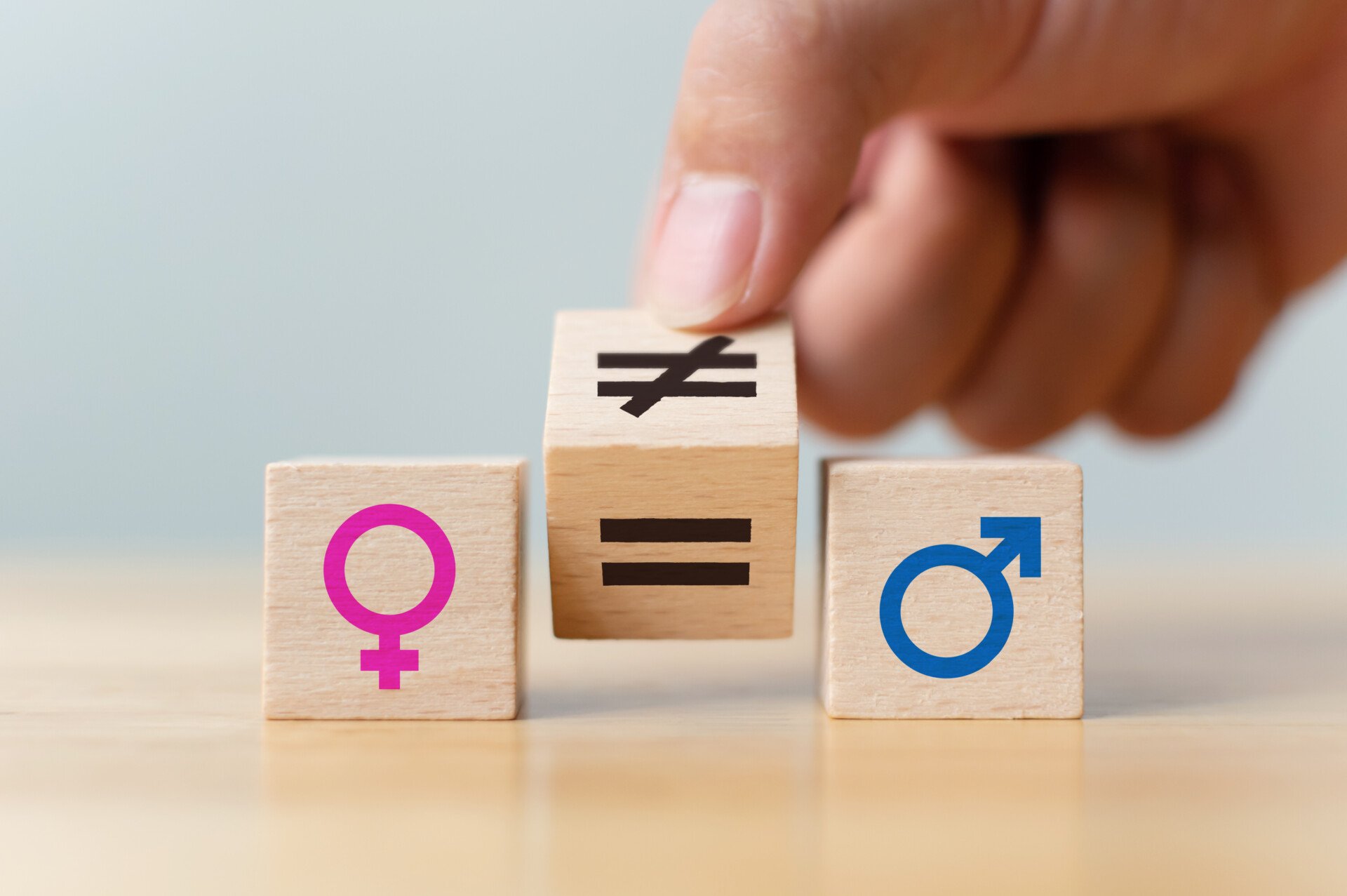
Love languages as a concept and framework are not gender-specific (Chapman & Campbell, 2008). No love language is exclusively for women or for men.
Any gender can have any out of the five as their preferred way of showing and receiving love.
For the most part, men and women seem to share similar views about their most popular love languages.
Overall, quality time seems to be the most important love language across the board for both women and men, as seen in the research conducted by Bland and McQueen (2018).
Bland and McQueen (2018) asked 100 couples to complete Chapman’s own Love Languages Personal Profile for Couples. Quality time was the language most often ranked first, by both men and women. Words of affirmation was a consistent second.
The couples fell into four distinct profiles of love-language combinations. Even so, the profiles did not differ significantly in relationship distress, and most couples in the sample were not distressed.
These findings seem to be in alignment with the study conducted by the dating app “Hinge” that we referenced previously as well.
Thus, an emotional connection seems to matter to the majority. It comes from being together and focusing on each other.
Similarly, from the same resources, the second most popular love language, when breaking it down by gender, was typically words of affirmation for both women and men.
Hearing a partner’s positive thoughts and emotions towards you seems to be of high importance for most people in romantic relationships. Thus, consistent and genuine communication may be key to feeling secure and validated.
Where Gender Differences Do Appear
Which language people prefer differs little by gender. How partners respond to those preferences may differ more. Two studies point this way:
- Mostova et al. (2022): In 100 heterosexual couples, matching predicted higher relationship and sexual satisfaction, more strongly among men. Empathy predicted responsiveness for men, not women.
- Bunt and Hazelwood (2017): In 67 heterosexual couples, women’s self-regulation, meaning effort to express love the way a partner prefers, predicted both partners’ satisfaction, especially when primary languages differed.
Both studies are small and correlational. Mostova and colleagues also measured matching across all five languages, so their study does not test Chapman’s specific claim about one primary language. Treat these gender differences as hints, not established facts.
Are there any love language differences between hetero and homosexual relationships?
Inherently, the concept of love languages is person-specific regardless of someone’s sexual orientation. Everyone can have any of the five love languages as their preferred way of showing and receiving love.
However, the central framework was largely based on heterosexual relationships. Chapman’s book centres married heterosexual couples. It offers less guidance on how queer relationships can adapt the idea.
Certain love languages, such as physical touch for homosexual relationships, may be restricted in certain societies, for example. This could be due to censorship, lack of openness, and overall oppression over queer ideologies.
Thus, safety is a concern. Couples may not feel able to express physical affection openly in public, which can suppress their need for love this way.
Therefore, available data trends allow some generalized assumptions. Firm conclusions for either hetero or homosexual relationships, however, would need far more research.
Two studies that tested whether matching predicts satisfaction used heterosexual couples only. Bunt and Hazelwood (2017) studied 67 couples, and Mostova et al. (2022) studied 100. Their findings may not carry over to same-sex couples.
This is further exacerbated when looking at the global stage. Cultural, religious, and societal norm differences exist across the continents, offering several significant variables that need to be accounted for.
What is the most common love language for teens?
The teenage years are some of the most defining of one’s life. Love languages can apply here too. They can help teens build more meaningful connections.
The most common love language for teens, based on Dr. Chapman, is quality time, followed closely by words of affirmation and physical touch. Gift-giving and acts of service are the two most uncommon love languages for teens.

On the macroscale, these results are not too dissimilar to adults’ results. However, the microscale matters too.
Look beneath the surface at the “why” behind these needs. Doing so gives a better understanding of how teens show, and prefer to receive, love.
Why Teen Preferences Shift
During the teenage years, self-awareness is a big concept being developed, alongside the quest of finding independence and figuring out one’s identity.
Several physical and mental changes are happening, with bodily, hormonal, and emotional fluctuations often transpiring simultaneously.
Sexuality emerges. How the opposite sex perceives them begins to matter more. Questions about the future also become more present, as do questions about how their values and morals align with their beliefs.
Due to all of these changes, someone’s love language during their teenage years can be different than their preferred love language as an adult.
Extreme changes are more unlikely, e.g., if gift-giving is very low on their preferred list, it is rather uncommon for it to become their primary one. Typically, fluctuations happen between their first and second most important love language.
However, with age, experience, and new people coming into their lives as they age, some changes may be noticed.
How can you show love to your teenager as a parent?
As a parent, it is important to display your love and affection towards your teenager in a manner they will best receive and understand.
Here are a few lists of example actions you can incorporate in your relationship with your teen, broken down by love language.
Quality Time
- Make time for regular catch-ups and meaningful conversations
- When they come to you for advice or if they need to talk to you, actively listen and limit distractions
- Organize fun family activities
Words of Affirmation
- Remember to praise them for any accomplishments, achievements and reward their efforts
- Use encouraging words and gently support them in their journey of self-discovery
- Compliment their character and remind them frequently of your love and affection
Physical Touch
- Frequently provide them with hugs and gentle, affectionate kisses, e.g., on their head or cheek
- Be there for them and offer a warm embrace when they are going through difficult moments
- Maintain close physical proximity when doing activities together and avoid being too distant and detached
- It is important with physical touch to ensure boundaries are communicated and consent is obtained before enforcing this love language.
Acts of Service
- Offer to assist them with any schoolwork
- Remember what their favorite meals or desserts are and cook/bake them for them
- Help maintain tidiness and cleanliness around the house, especially around peak stress periods like exam season
Gift Giving
- Go the extra mile and pick a personalized gift around holidays or birthdays instead of something more generic like a gift card
- Surprise them with small presents here and there that showcase you were thinking of them, e.g., buying them their favorite snack when you are running errands
- Leave cute or heartfelt letters/post-it notes for them to find
Can someone have all five love languages?

Yes, someone can show and receive love using all five love languages. Some will resonate more than others, though, so people prioritize them differently.
Specifically, Dr. Chapman has argued that each person has a primary love language, which is the main way they prefer to show and receive love. It is rather common, though, for people to have at least two main love languages that make up their portfolio of desired actions.
Love languages are a fluid concept, so some fluctuation in preferences is not unusual. That said, having all five as a primary preference and “an absolute must” would be rather unusual and unlikely.
Think of actual languages. Everyone has a native language, and oftentimes a second one, but they can still know and appreciate a few words from other languages as well.
Similarly then, many can be “fluent” in all five love languages but still have a preference and feel the most comfortable expressing themselves in one or two.
Relationship scientists now question the language metaphor itself. Impett, Park, and Muise (2024) reviewed the research and found little strong support for the claim that couples are happier when partners speak each other’s preferred language.
They propose a better metaphor. Love works like a balanced diet, in which people need a full range of nutrients, not one food group.
Relationship coach Matthew Hussey discussed this critique with his wife, Audrey, on their Love Life podcast. He did not think it made the model worthless.
As Hussey explains, he still finds it “quite useful when identifying — is there something in your relationship that you’re not getting” (Hussey & Hussey, n.d.).
Hussey describes his own preferences as words of affirmation and touch, and says he is “not bothered about gifts.” He also suggests an extra language: “pre-empting someone’s needs is a bit of a love language” (Hussey & Hussey, n.d.).
Preferences also change with context. Here are three common patterns:
- Relationship type: In romantic relationships, someone may value physical affection most. With family, quality time may be their go-to.
- Setting: Even within one language, the form varies with comfort and familiarity. Kisses and caresses may suit a partner; hugs and shoulder pats suit friends.
- Life stage: The ways you want to connect with people can fluctuate as your life changes.
Open communication helps. By discussing your needs and theirs, you can both meet in the middle and build a stronger, healthier, and more fulfilling relationship bond.
Frequently asked questions
How can you find out what your love language is?
The quickest way to find your primary love language is Dr. Chapman’s own free quiz (available on the five love language website). It will ask you a series of questions to help you reflect on your preferences and what is most meaningful to you.
Additionally, many people unconsciously use their preferred love language to showcase their emotions, as that is how expressing care comes the most naturally to them.
Your own habits offer a clue. It may be worth reflecting on how you act towards others.
To read more about each love language, see our guide to the five love languages.
Which is the easiest love language to express?
The easiest love language to express varies between people and population groups.
An argument could be made that words of affirmation and quality time are more accessible for most people than gift-giving. However, there is no “one size fits all” when it comes to accepting and sharing love.
Everyone has their own likes and dislikes. What is more natural for one person can be rather difficult for another.
For example, one person may be naturally physically affectionate. Someone else may have grown up in an environment or culture where physical contact is not a common way to display affection.
Is it possible to change your love language?
It is indeed possible to change your love language. None of the love languages is specific to one gender or age, so anyone can prefer or dislike any of them. Preferences can also change over time, because the concept is not rigid (Chapman & Campbell, 2008).
That said, most people stay constant in their preferred ways of receiving love and affection throughout life, especially their primary love language.
Through varied experiences, though, shifts can happen. For example, having a more physically affectionate partner might make you appreciate acts of physical care more than before.
References
Bland, A. M., & McQueen, K. S. (2018). The distribution of Chapman’s love languages in couples: An exploratory cluster analysis. Couple and Family Psychology: Research and Practice, 7(2), 103–126. https://doi.org/10.1037/cfp0000102
Bunt, S., & Hazelwood, Z. J. (2017). Walking the walk, talking the talk: Love languages, self-regulation, and relationship satisfaction. Personal Relationships, 24(2), 280–290. https://doi.org/10.1111/pere.12182
Chapman, G. (1992). The five love languages: How to express heartfelt commitment to your mate. Northfield Publishing.
Chapman, G. D., & Fabry, C. (2000). The five love languages of teenagers. Northfield Pub.
Chapman, G.D., & Campbell, R. (2008). The five love languages of children. Moody Pub.
Chapman, G. D., & Chapman, G. (2010). The five love languages: The secret to love that lasts. Northfield Pub.
Emery, L. R. (2018, November 15). This Is The Most Popular Love Language On Hinge. Bustle.
Flicker, S. M., Sancier-Barbosa, F., & Impett, E. A. (2025). Revisiting the five love languages framework: Toward a more flexible model of love expression. Journal of Marital and Family Therapy, 51(4), Article e70078. https://doi.org/10.1111/jmft.70078
Gionet, A. (2023, March 21). The Most Popular Love Languages Across the United States. The Loupe.
Hussey, M., & Hussey, A. (n.d.). Are they right for you? (Love languages explained) [Audio podcast episode]. In The Love Life Podcast. YouTube. https://www.youtube.com/watch?v=p5ivP61s-6Y
Impett, E. A., Park, H. G., & Muise, A. (2024). Popular psychology through a scientific lens: Evaluating love languages from a relationship science perspective. Current Directions in Psychological Science, 33(2), 87–92. https://doi.org/10.1177/09637214231217663
Mostova, O., Stolarski, M., & Matthews, G. (2022). I love the way you love me: Responding to partner’s love language preferences boosts satisfaction in romantic heterosexual couples. PLOS ONE, 17(6), Article e0269429. https://doi.org/10.1371/journal.pone.0269429