Emotional dysregulation (ED), common in ADHD, describes a consistent difficulty in managing the intensity and duration of emotional states.
Within relationships, this appears as a diminished ability to modulate responses to stress or frustration. It is not a character flaw; rather, it is a neurological difference in how the brain processes emotional data.
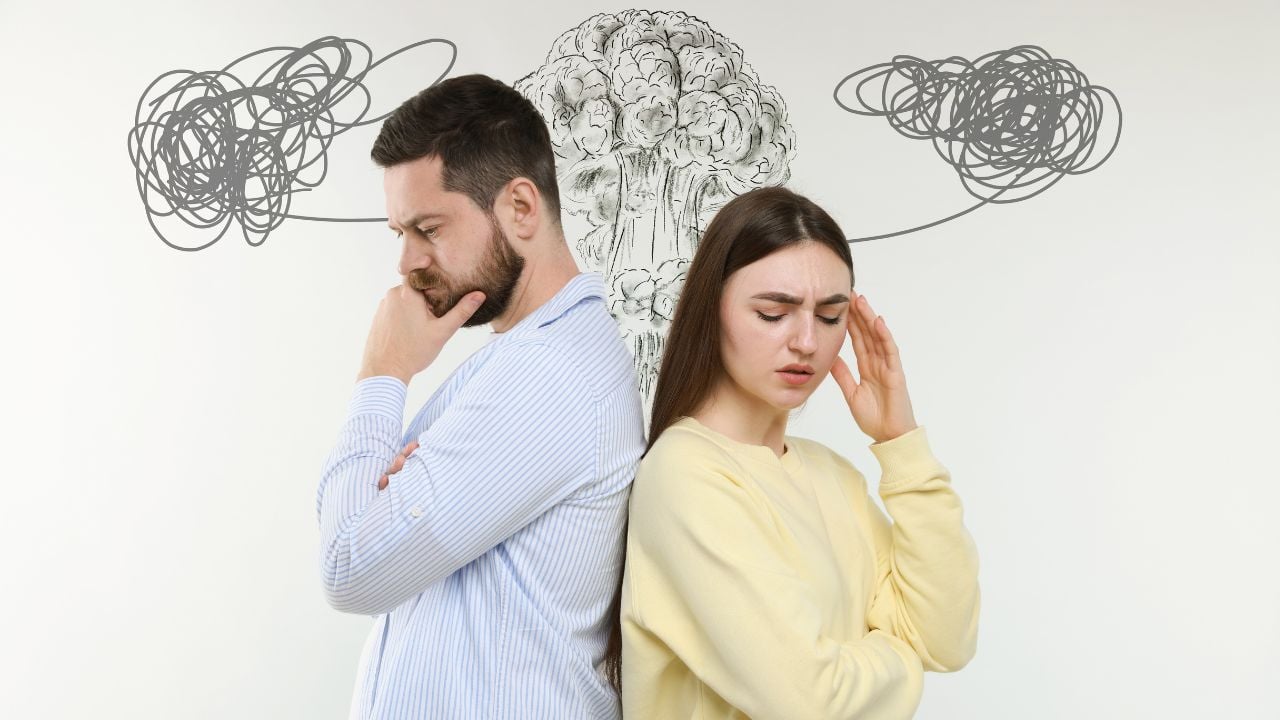
Researchers argue that this deficient self-regulation in adults makes a unique and significant contribution to impairments in major life activities, specifically citing lowered marital satisfaction and social functioning.
Signs of Emotional Dysregulation in Relationships
Dysregulation often manifests as a “volume knob” stuck on high. These behaviors can feel overwhelming for both the individual and their loved ones.
According to Knies et al. (2021), higher ADHD symptoms are negatively associated with relationship satisfaction and positively associated with perceived partner neglect and threat.
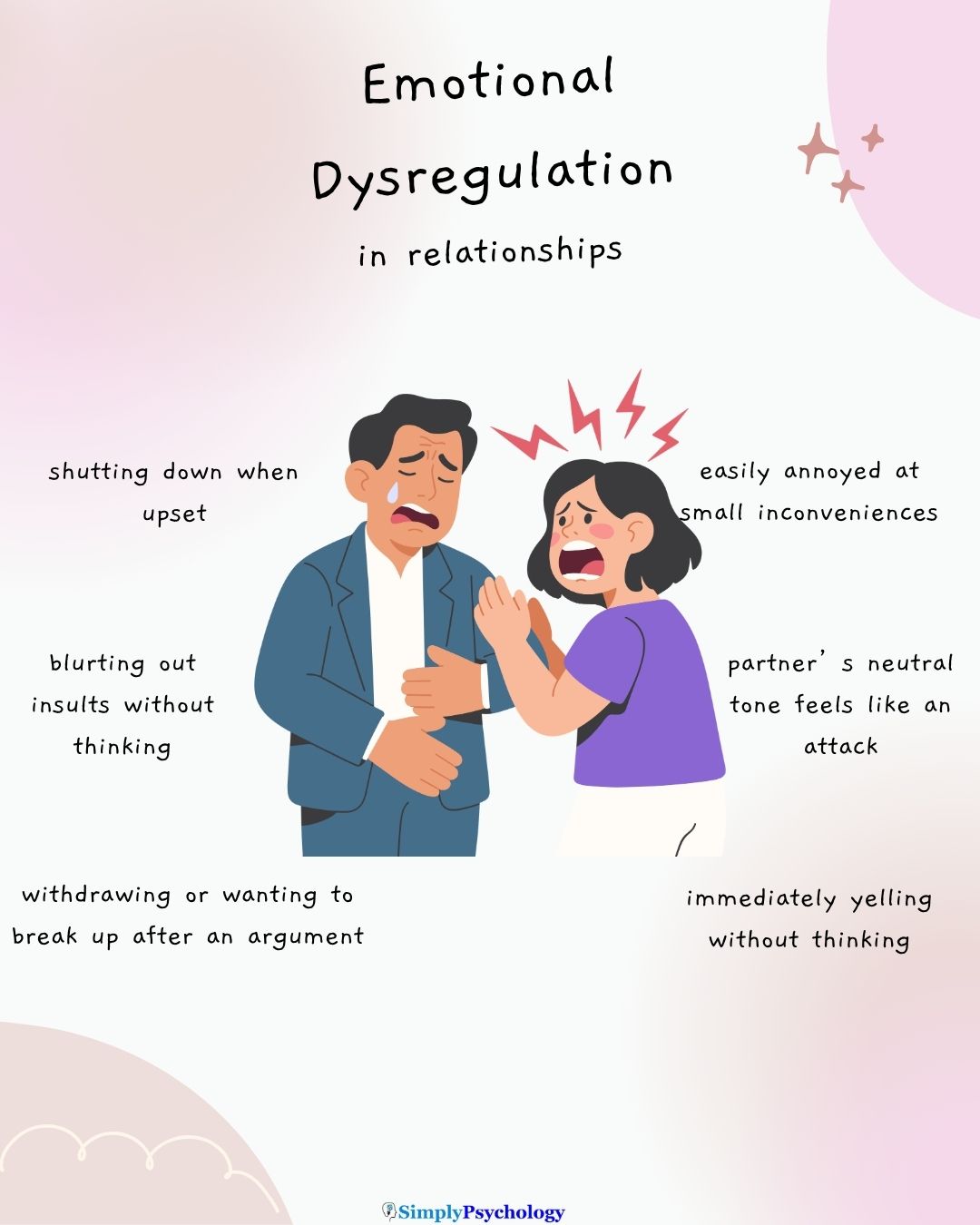
- Low Frustration Tolerance: This refers to becoming easily annoyed or impatient with daily stresses. A small inconvenience may trigger a sudden, short-lived outburst of anger.
- Rejection Sensitive Dysphoria (RSD): RSD is an extreme emotional sensitivity to perceived or actual criticism or rejection. It can make a partner’s neutral feedback feel like a devastating personal attack.
- Impulsive Communication: This involves blurting out thoughts or dominating conversations without realizing the social impact. It is often driven by a “fast brain” that struggles to pause before speaking.
- Social Withdrawal and “Ghosting”: Individuals may withdraw following a period of sensory or social overload. This is a coping mechanism to manage internal burnout, not a sign of disinterest.
- Meltdowns and Shutdowns: An emotional overflow can lead to yelling or, conversely, a complete “shutdown” where the person goes non-verbal.
“I lose myself really massively, say things that I don’t mean. I think a lot of that comes from my fast brain… I can’t get out what I’m trying to say to somebody.” — ‘Simon’
The Impact on Interpersonal Connections
The inability to regulate intense emotions often leads to a cycle of misunderstanding and guilt. Bruner et al. (2015) demonstrated that adults with clinically significant symptoms experienced markedly poorer relationship quality than those without the condition.
Romantic and Marital Strain
Partners often describe a feeling of “walking on eggshells” to avoid triggering a spike in emotion.
If one partner constantly assumes a parental role to manage the other’s emotions, romantic intimacy usually suffers.
Zeides Taubin and Maeir (2023) conducted a qualitative study highlighting that women partnered with men diagnosed with ADHD often experience the burden of their partner’s functional impairments as being “like another child,” which is associated with higher depressive symptoms for the partner.
Social and Peer Rejection
While peers might tolerate distractibility, they are often less forgiving of hostility or explosive temper.
This can lead to a history of “burning bridges” where relationships are cut off abruptly to avoid the pain of perceived rejection.
Moukhtarian et al. (2021) highlighted that emotional dysregulation in women can be so severe (featuring intense highs and lows) that it is sometimes misdiagnosed as borderline personality disorder.
How Emotional Dysregulation Can Be Managed
Management focuses on creating a “buffer” between the emotional trigger and the behavioral reaction. These strategies help move the brain from a reactive state to a reflective one.
Psychological and Somatic Strategies
The “Never Respond in the Moment” Rule:
Expert Caren Magill advises never responding to a trigger in the heat of the moment. Allow your emotions to cycle through, take a deep breath, and create physical space (like taking a walk) to get out of your head and into your body.
Naming the Feeling:
Simply saying, “This feels like rejection sensitivity,” provides immediate psychological distance.
It reminds the individual that the feeling is a neurological event rather than an objective truth.
Neurodiversity-Affirming DBT (NDA-DBT):
This version of Dialectical Behavior Therapy focuses on sensory regulation and self-compassion. It avoids “masking“—the exhausting act of suppressing traits to appear neurotypical—which causes chronic exhaustion and burnout.
Relationship and Communication Tools
Direct Communication:
Establishing relationships built on clear, literal communication helps remove the ambiguity that often triggers RSD.
As one individual noted, “direct communication has to be baked into my relationship, or it won’t work.”
Weekly Check-ins:
Setting a dedicated time for calm discussion allows partners to share what is going on in their worlds and address challenges before they become explosive.
Expectation Management:
Actively managing what others expect by communicating struggles early (such as admitting you might run late) can prevent misinterpretations and resentment.
Task Delegation:
Dividing household chores based on natural strengths (e.g., the non-ADHD partner managing finances if the ADHD partner struggles with deadlines) prevents the build-up of friction.
In-the-Moment Regulation
- Practice Heart Coherence: In heated situations, actively slow your breathing and direct your focus to your heart center. Doing this while the other person speaks helps calm the nervous system and keeps you from impulsively snapping.
- Sensory Tools and Stimming: Utilizing fidgets or engaging in enjoyable “stimming” (repetitive movements) can help self-regulate the nervous system during moments of extreme sensory overwhelm.
- Stop Accommodating at Your Own Expense: Recognize that constantly changing yourself to please others is unsustainable. Prioritize foundational routines, like sleep and morning structures, and communicate those boundaries clearly to your partner.
References
Barkley, Russell A., Kevin R. Murphy, Reid J. Robison, Fred W. Reimherr, Barrie K. Marchant, Doug Kondo, Gholson J. Lyon et al. “Journal of ADHD.” (2010).
Bruner, M. R., Kuryluk, A. D., & Whitton, S. W. (2015). Attention-deficit/hyperactivity disorder symptom levels and romantic relationship quality in college students. Journal of American College Health, 63(2), 98-108. https://doi.org/10.1080/07448481.2014.975717
Knies, K., Bodalski, E. A., & Flory, K. (2021). Romantic relationships in adults with ADHD: The effect of partner attachment style on relationship quality. Journal of Social and Personal Relationships, 38(1), 42-64. https://doi.org/10.1177/0265407520953898
Moukhtarian, T. R., Reinhard, I., Moran, P., Ryckaert, C., Skirrow, C., Ebner-Priemer, U., & Asherson, P. (2021). Comparable emotional dynamics in women with ADHD and borderline personality disorder. Borderline personality disorder and emotion dysregulation, 8(1), 6. https://doi.org/10.1186/s40479-021-00144-y
Zeides Taubin, D., Fogel-Grinvald, H., & Maeir, A. (2024). Depressive symptoms and quality of life among women living with a partner diagnosed with ADHD. Journal of Attention Disorders, 28(14), 1734-1745. https://doi.org/10.1177/10870547241280607