Qualitative research deals with words, meanings, and experiences, while quantitative research deals with numbers and statistics.
Quantitative data involves measurable numerical information used to test hypotheses and identify patterns, while qualitative data is descriptive, capturing phenomena like language, feelings, and experiences that can’t be quantified.
- Quantitative research collects numerical data and analyzes it using statistical methods. The aim is to produce objective, empirical data that can be measured and expressed numerically. Quantitative research is often used to test hypotheses, identify patterns, and make predictions.
- Qualitative research gathers non-numerical data (words, images, sounds) to explore subjective experiences and attitudes, often via observation and interviews. It aims to produce detailed descriptions and uncover new insights about the studied phenomenon.
| Qualitative | Quantitative |
|---|---|
| Data in words/images (descriptive) | Data in numbers (measurable) |
| Answers “Why? How?” (explores ideas) | Answers “How many? How much?” (tests predictions) |
| Methods: Interviews, focus groups, observations | Methods: Surveys (closed questions), experiments |
| Small, in-depth samples (not generalizable) | Large samples (aims to generalize) |
| Open-ended, flexible process | Structured, controlled process |
| Insights and themes (subjective analysis) | Statistics and figures (objective analysis) |
| Theory emerges from the data (induction) | Theory tested against the data (deduction) |
| Judged by trustworthiness (credibility: how believable the findings are; transferability: how well they apply to similar settings) | Judged by reliability and validity |
Key Differences Between Qualitative and Quantitative Research
The contrast operates at three levels: the data collected, the methods used, and the philosophy of science behind them.
Data: Words Versus Numbers
Quantitative data are measurable numbers, such as test scores, frequency counts and ratings.
Qualitative data are descriptive, capturing language, feelings and experiences that cannot be reduced to a number. Typical examples are interview transcripts, open-ended written feedback, observational notes, diaries and photographs.
The same method can produce either kind. An observation can count pre-defined behaviors, which gives quantitative data. It can also record field notes on what an interaction meant, which gives qualitative data.
A questionnaire can likewise mix closed rating scales with open-ended questions.
Qualitative data is often called rich. It records more than words: humor, sarcasm, pauses, tone of voice, eye contact and mannerisms all carry meaning. A participant playing with their glasses, for example, may be read as nervous.
Methods: Where the Line Blurs
Methods are the techniques used to collect and analyze data. They sort roughly like this:
- Quantitative: Experiments, surveys and psychometric tests, often run in controlled laboratory settings.
- Qualitative: Interviews, focus groups, ethnography and case studies, usually in people’s natural environments.
Many methods straddle the line. Observation, questionnaires and content analysis can be run either way. Content analysis, for instance, can count how often particular words appear.
The researcher’s role differs too. Quantitative researchers keep their distance from the data to limit bias and achieve consistent results. Qualitative researchers are the main instrument.
Rather than performing neutrality, many name their own biases openly. They then put those biases to work as a resource that sharpens the description. Because the biases are named, readers can see where interpretation enters.
Paradigms: Positivism, Interpretivism and Beyond
Beneath the methods sit competing philosophies of science. Four positions cover most of the ground in psychological research:
- Positivism: Reality is objective and can be measured. Rooted in Auguste Comte’s “social physics”, it underpins experiments, standardized tests and inferential statistics.
- Interpretivism: Social reality is constructed through meaning-making, so the aim is understanding rather than measurement. Weber’s Verstehen and Husserl’s phenomenology belong here.
- Critical realism: A reality exists independently of our beliefs, but our access to it is always partial and theory-laden (Bhaskar, 1975). Research should seek the underlying causal mechanisms, using whichever data illuminate them.
- Pragmatism: Skip the dispute over what is knowable and ask what helps answer the research question. Mixed-methods research is its practical form (Johnson & Onwuegbuzie, 2004; Morgan, 2007).
Researchers disagree over the exact definitions, and some doubt that the two camps differ clearly at all.
These positions shape the design. Quantitative researchers settle a great deal in advance, so one reading of reality is fixed before any data arrive. Qualitative analysis runs the other way. The account is built up out of the observations as the study proceeds.
Denzin and Lincoln (1994) capture the contrast in the field’s landmark handbook. They cast the qualitative researcher as a bricoleur. A bricoleur assembles situated interpretations from whatever materials the setting offers, rather than detecting context-free laws.
Choosing Qualitative vs Quantitative Methods for Your Research
In many cases, researchers benefit from employing a mixed-method approach, integrating both qualitative and quantitative methods to gain comprehensive insights into their research questions.
This approach is particularly effective when one method alone is insufficient to address all aspects of the research question, providing both depth and breadth to the analysis.
Research Goals:
Choose qualitative methods if your aim is to explore perceptions, motivations, or underlying reasons behind human behavior.
Opt for quantitative methods if your objective is to measure variables, test hypotheses, or make generalizations about populations.
Nature of the Research Question:
Qualitative methods are well-suited for research questions starting with “how” or “why,” focusing on depth and detailed understanding.
Quantitative methods align better with research questions like “how many,” “how often,” or “what is the relationship between variables,” where precise measurement and statistical analysis are required.
Type of Data Needed:
If detailed, rich, and descriptive data (e.g., personal experiences, emotions, behaviors) is needed, qualitative research is preferable.
If numerical data that can be quantified, statistically analyzed, and generalized to larger populations is necessary, quantitative research is ideal.
Research Environment:
Use qualitative methods for naturalistic, real-world settings where context and interaction are essential.
Employ quantitative methods in controlled or laboratory settings, where variables can be isolated, manipulated, and precisely measured.
Resources and Time:
Qualitative research typically requires more time-intensive methods, such as interviews and thematic analysis (identifying recurring themes in written or spoken data).
Quantitative research often allows quicker data collection and analysis, especially with standardized tools and statistical software.

What Is Qualitative Research?
Qualitative research involves collecting and analyzing non-numerical data, such as text, audio, or visual materials, to understand people’s experiences, perceptions, and meanings.
It focuses on subjective experiences, capturing how individuals interpret their social world and give meaning to events and situations.
Common methods include interviews, focus groups, observations, and diary accounts.
The collected data is usually analyzed through approaches such as thematic analysis or grounded theory, which builds new theory directly from the data instead of testing an existing one.
Qualitative researchers study people in their natural environments, aiming to understand experiences exactly as people live and perceive them.
It is exploratory. It helps researchers discover how and why things occur, rather than simply measuring what happens.
Typical qualitative research questions might ask how individuals experience a particular event, why they hold certain beliefs, or how they describe and interpret their own behaviors and interactions.
Qualitative research is valuable for generating new insights, theories, and hypotheses, especially when little is known about a topic or when researchers seek deep, detailed understanding.
Key Features of Qualitative Research
-
Natural Context: Qualitative research takes place in real-life settings rather than artificial environments. Studying people within their natural surroundings provides genuine insights into their behaviors and experiences.
-
Participant Perspectives: Participants actively share their viewpoints and experiences in their own words. This interactive process allows researchers to deeply understand participants’ realities and meanings.
-
Researcher as Participant: Researchers engage directly with participants; their presence and interactions are essential, because qualitative data is created through this active participation.
-
Flexible Design: Qualitative studies adapt and evolve during the research process. Researchers adjust their methods or focus areas as new findings emerge, making the study responsive to discoveries.
-
Data-Driven Theories: Theories and conclusions are developed directly from patterns found in the collected data, rather than testing existing theories. Insights naturally arise from participants’ responses, shaping the study’s outcomes.
Qualitative Methods
Qualitative research methods collect descriptive, narrative data to deeply understand people’s experiences and social realities.
They allow researchers to identify common themes and patterns, and draw conclusions based on the data.
Common qualitative methods include:
-
In-depth Interviews: Open-ended conversations allowing participants to freely share their thoughts, feelings, and experiences in their own words (Minichiello, 1990).
-
Focus Groups: Group discussions that explore shared views and interactions on specific topics or experiences.
-
Observations: Researchers carefully observe and record behaviors, interactions, and social practices within natural environments.
-
Diaries or Journals: Participants keep written reflections on personal experiences, emotions, or events over time.
-
Case Studies: In-depth exploration of an individual, group, or situation to understand complex phenomena within their real-life context.
-
Ethnography: Detailed observation and analysis of cultures, communities, or groups over extended periods, capturing their daily life and customs.
Qualitative Data
Qualitative data describes experiences, feelings, or behaviors using words, stories, or visuals instead of numbers.
-
Interview transcripts: Exact records of what participants say, useful for identifying themes, patterns, and illustrative quotes.
- Open-ended customer feedback: Responses customers write describing their feelings, suggestions, or experiences about products or services.
-
Observational notes: Detailed notes of behaviors, social interactions, nonverbal cues, and context recorded by researchers during observation.
-
Personal diaries: Written reflections capturing someone’s thoughts, emotions, and personal experiences over time.
-
Visual and audio data: Photographs, videos, and audio recordings used to understand behaviors, social interactions, and environments from multiple perspectives.
Qualitative Data Analysis
Analyzing qualitative data involves creativity and interpretation. Researchers use various techniques to make sense of the rich, detailed information they’ve collected, such as:
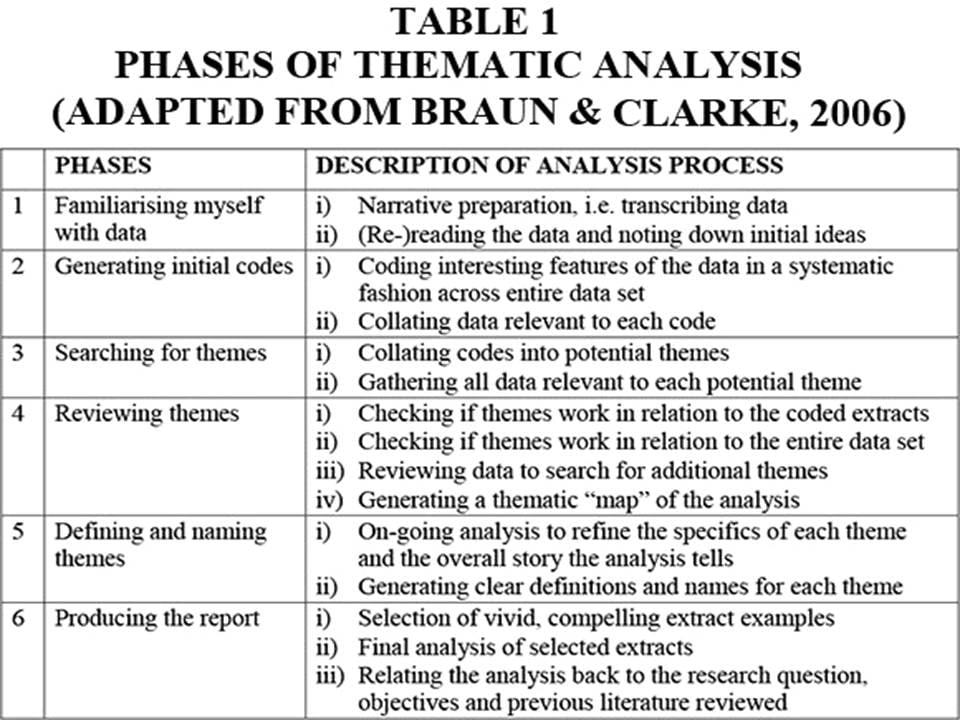
- Thematic Analysis: Researchers examine data for repeating ideas or patterns called themes, which summarize participants’ experiences or views (Braun & Clarke, 2006).
- Content Analysis: This method involves systematically organizing and categorizing text or speech data into meaningful groups. It allows researchers to quantify and interpret the presence of specific words, ideas, or concepts.
- Grounded Theory: Theory is built directly from the data through constant comparison, rather than tested against it (Glaser & Strauss, 1967). Coding continues until new data add nothing new.
- Discourse Analysis: Language is treated as action, something people do with talk, not just a window into their thoughts. This shapes and reflects relationships, identities, and power.
- Interpretative Phenomenological Analysis (IPA): A case-by-case look at how someone makes sense of a major life experience. It involves a “double hermeneutic”: the researcher interpreting the participant’s own interpretation.
For example, thematic analysis is a qualitative approach that involves identifying implicit or explicit ideas within the data. Themes will often emerge once the data has been coded.
Data collection often continues until data saturation is reached. This is the point where new participants stop adding new information. Guest, Bunce, and Johnson (2006) found this typically occurred within the first twelve interviews.

Sampling and Generalization in Qualitative Research
Qualitative sampling is non-probabilistic. The aim is not a representative sample but one that provides rich data.
Sampling Strategies
Five strategies are common:
- Purposive: Researchers approach people expected to offer the most detailed or appropriate information. Critics point to the subjectivity, but this does not always invalidate the research if the choice is justified.
- Snowball: Participants invite people they know, so the sample grows like a rolling snowball. It suits hard-to-reach groups, such as people involved in illegal drug use, but can be biased.
- Quota: The number of people and their required characteristics are set before the research starts. Recruitment continues until the quotas are met.
- Theoretical: A special type of purposive sampling introduced by grounded theory (Glaser & Strauss, 1967). Recruitment stops at data saturation, when new participants add no new information.
- Convenience: Researchers use whoever is easily available, such as professors studying their own university students. It is efficient but the most superficial approach.
The Saturation Debate
Saturation is the reason researchers most often give for stopping recruitment. The twelve-interview figure from Guest et al. (2006) is its best-known benchmark. Braun and Clarke (2021) questioned whether any such number can work.
- Aim: Braun and Clarke (2021) asked whether data saturation, where no new codes or themes appear, is a sound stopping rule for thematic analysis.
- Method: This is a critical commentary, not an empirical study. They read published saturation experiments and the papers citing them, then tested the assumptions against different thematic analysis approaches.
- Results: Guest et al.’s own cautions are often dropped when their study is cited. Saturation fits coding-reliability analysis, where themes are discoverable, but not reflexive analysis, where the researcher generates them.
- Conclusion: Sample size is a situated judgement, justified in the report. They point to “information power”: the more relevant information a sample holds, the fewer participants it needs.
The commentary persuades on one narrow point: no single saturation figure travels across designs. It cannot show how many participants a given study needs.
Its case also rests on the premise that meaning is made rather than found. Researchers in a codebook tradition can reasonably keep a saturation criterion, provided they define and report it.
Generalizing From Small Samples
Generalizing means applying results to situations outside the study itself. Qualitative samples are small, so representational generalization is limited. Theoretical generalization is high, because findings often generate new ideas, research directions and theories.
Firestone (1993) distinguishes three types:
- Sample-to-population: Researchers select a representative sample of a target population, ideally at random. This is difficult in qualitative research because samples are non-probabilistic.
- Theoretical: Researchers generalize from particular observations to a broader theory. In qualitative work this rests on rigorous analysis, thick description and data saturation.
- Case-to-case: Findings carry over to another specific situation. Lincoln and Guba (1985) call this transferability, explained below.
Judging the Quality of Qualitative Research
Qualitative research is not judged by the same reliability and validity standards used in quantitative work. Lincoln and Guba (1985) proposed four trustworthiness criteria that serve a parallel role instead.
| Quantitative criterion | Qualitative equivalent |
|---|---|
| Internal validity | Credibility |
| External validity | Transferability |
| Reliability | Dependability |
| Objectivity | Confirmability |
In practice, credibility asks how believable the conclusions are, given the depth of description and the researcher’s honesty about their own bias. Transferability asks how far the context resembles a situation the reader has in mind.
Two more criteria remain. Dependability asks whether the same contextual factors are described clearly enough for another researcher to follow. Confirmability asks whether enough procedural detail is given for someone else to check the findings.
Researchers build trustworthiness through triangulation, using more than one method or data source, and reflexivity, tracking how their own assumptions might shape the findings.
Denzin (1978) distinguishes four types of triangulation.
- Data triangulation: Different sources, such as two schools or two time points, so conclusions do not rest on a single site or moment.
- Researcher triangulation: Two or more analysts check that a theme is credible, not just one person’s reading.
- Theoretical triangulation: The same situation examined through different theoretical lenses.
- Methodological triangulation: Different methods on one topic, such as a questionnaire followed by interviews.
Triangulation does not guarantee credibility: a systematic bias can affect every method at once, producing only the appearance of trustworthiness rather than the real thing.
A common technique is member checking: returning transcripts or findings to participants so they can confirm the researcher captured their meaning accurately. It has a catch. Participants may object to the tone, forget what they said, or hold different views by the time they read it.
Lincoln and Guba (1985) describe several other techniques for building trustworthiness into a study as it happens, rather than asserting it afterwards:
- Prolonged engagement: Spending an extended period in the setting reduces the risk of superficial conclusions.
- Peer debriefing: A colleague who was not involved in the study questions the analysis and its assumptions.
- Negative-case analysis: The researcher actively searches for data that contradict the emerging account and revises it accordingly.
- Thick description: Detailed, context-rich accounts let readers judge whether the findings transfer to their own setting.
- Audit trail: A documented record of the raw data, coding decisions, and reasoning lets an outside researcher follow how the conclusions were reached.
Limitations of Qualitative Research
-
Small Sample Sizes: Qualitative research usually involves smaller groups due to high time and resource requirements. This limits the ability to generalize findings to larger populations.
-
Subjectivity and Bias: The personal involvement of the researcher can introduce bias, making it difficult to achieve consistent results. The subjective interpretation also means traditional measures of reliability and validity are hard to apply.
-
Limited Replicability: Qualitative studies are context-specific, and exact conditions, interactions, or events can’t be reproduced. This means findings may not easily transfer to different contexts or groups.
-
Time-Intensive Analysis: Collecting, analyzing, and interpreting qualitative data is time-consuming. It requires considerable expertise to identify accurate patterns, themes, and insights, especially in complex or sensitive topics.
- Variable Quality: Qualitative research is a broad set of ideas with no single agreed definition or approach, so the quality of studies varies widely.
Advantages of Qualitative Research
-
In-depth Understanding: Close researcher involvement allows for deep insights and understanding from an insider’s perspective. Researchers can uncover subtleties and complexities often overlooked by quantitative methods.
-
Identifies New Relationships: Qualitative descriptions help reveal new ideas, connections, causes, and effects. This exploratory approach often leads to discovering previously unknown dynamics and processes.
-
Captures Complexity: Qualitative analysis embraces ambiguity and contradictions within data, accurately reflecting the complexity of social realities. This flexibility allows researchers to capture genuine human experiences.
-
Practical Insights for Practitioners: Using rich narrative descriptions, qualitative research provides practical insights valuable to professionals. Practitioners can access unique, detailed knowledge through qualitative studies that might otherwise remain hidden.
What Is Quantitative Research?
Quantitative research involves the process of objectively collecting and analyzing numerical data to describe, predict, or control variables of interest.
The goals of quantitative research are to test causal relationships between variables, make predictions, and generalize results to wider populations.
Quantitative researchers aim to establish general laws of behavior and phenomenon across different settings/contexts.
Researchers then test a theory using this data. The results either support it or reject it.
Key Features of Quantitative Research
-
Controlled Environment: Quantitative researchers often conduct studies in laboratory or controlled settings to minimize outside influences. This approach ensures more precise measurement and reduces interference from external variables.
-
Objective and Detached: Researchers aim for objectivity by maintaining distance from their data. By avoiding personal involvement, they strive to minimize bias and achieve consistent results.
-
Predefined Research Design: The structure and methods of a quantitative study are clearly defined and established beforehand. Researchers follow this fixed approach, making results replicable and comparable.
-
Independent Reality: Quantitative research assumes reality exists independently and objectively, separate from the researcher’s perspective. Anyone observing the same phenomena should theoretically reach similar conclusions.
-
Hypothesis Testing: Quantitative methods focus on testing specific theories or hypotheses. The results either support or reject these hypotheses, providing clear, measurable conclusions.
Quantitative Methods
Quantitative research typically involves collecting measurable data through experiments, surveys, or rating scales.
Experiments are the classic case. They rely on precise measurement and statistical analysis.
Other methods, such as structured observations and questionnaires, may also yield quantitative data, particularly when using rating scales or closed-ended questions (e.g., “yes/no” responses).
These methods are widely used in fields like clinical psychology to measure treatment outcomes and generalize findings across populations.
Quantitative methods rest on the premise that variables can be pinned down and the links between them measured statistically. From those links, researchers infer cause and effect.
This requires operational definitions, precise and measurable statements of what each variable means. Measurement of the dependent variable, the outcome being measured, must be reliable and objective, with as few extraneous variables as possible. That is why a laboratory is often the best setting.
The usual route is hypothetico-deductive. A theory generates hypotheses, which are testable predictions, and these are tested against numerical data using tests of statistical significance. On Popper’s (1959) account, science advances by trying to falsify such conjectures.
Levels of Measurement
What statistics researchers can legitimately run depends on the data’s scale of measurement (Stevens, 1946).
| Level | Property | Examples |
|---|---|---|
| Nominal | Categories only, no order | Diagnostic category, condition labels |
| Ordinal | Ranked order, unequal intervals | Rating-scale points, class rank |
| Interval | Equal intervals, arbitrary zero | Temperature in °C, standardized test scores |
| Ratio | Equal intervals, true zero | Reaction time, number of words recalled |
Stevens (1946) defined measurement as assigning numbers to events according to rules. Each scale allows different statistical tests, so identifying the correct level comes before choosing an analysis.
Examples of Quantitative Data
There are numerous examples of quantitative data in psychological research, including mental health. Here are a few examples:
-
Standardized Psychological Assessments: IQ Tests: The Wechsler Adult Intelligence Scale (WAIS) measures intelligence numerically. Attachment Styles: The Experience in Close Relationships Scale (ECR) uses numerical ratings to assess attachment styles and predict relationship patterns.
-
Neuroimaging Data: Techniques like MRI and fMRI produce numerical data on brain activity and structure. Researchers analyze this data to identify regions involved in mental processes or disorders.
-
Clinical Outcome Measures: Clinical questionnaires provide standardized, numerical data on patient symptoms, informing treatment decisions. For instance, the Beck Depression Inventory (BDI) rates depressive symptoms numerically, with higher scores indicating greater severity.
- Survey rating scales: Numerical ratings (e.g., 1–5 stars) used to quantify customer satisfaction or opinions in surveys or product reviews.
Quantitative Data Analysis
Quantitative research involves collecting numerical data such as test scores, frequency counts, survey ratings, or other measurable information.
Researchers use statistics to convert numerical data into meaningful information, aiding decision-making by revealing patterns, relationships, or trends.
There are two main types of statistical analysis:
-
Descriptive Statistics: Summarize and simplify data, providing an overview of the main characteristics (e.g., averages, percentages, or frequency distributions).
-
Inferential Statistics: Analyze data to determine if findings are statistically significant, allowing researchers to draw conclusions or generalize results from a sample to a larger population (e.g., comparing treatment and control groups in experiments).
Judging the Quality of Quantitative Research
Quantitative research is judged on three things: the reliability and validity of its design and conclusions, and how far its findings generalize beyond the sample.
- Reliability: Is measurement consistent and stable? Repeated use of the same instruments should yield the same results.
- Validity: Is the interpretation accurate? Variables must be accurately defined, manipulated and measured in a representative sample.
- Generalization: How far do the findings apply beyond the people studied? Large, representative samples make this more likely.
These criteria correspond one-to-one with the trustworthiness criteria for qualitative research in the table above. Reliability maps onto dependability, and validity onto credibility and transferability.
Limitations of Quantitative Research
- Context: Experiments do not take place in natural settings. They also give participants no chance to explain their choices or say what the questions meant to them (Carr, 1994).
- Researcher expertise: Poor knowledge of the application of statistical analysis may negatively affect analysis and subsequent interpretation (Black, 1999).
- Variability of data quantity: Large sample sizes improve accuracy, and small-scale studies with too little data can be less reliable (Denscombe, 2010). This also limits how far the findings generalize.
- Confirmation bias: The researcher might miss observing phenomena because of a focus on testing theories and hypotheses rather than generating new ones.
Advantages of Quantitative Research
-
Scientific Objectivity: Quantitative research uses statistical methods, providing objective and mathematically grounded interpretations. This scientific approach reduces researcher bias, making findings more credible.
-
Theory Testing and Validation: Ideal for testing existing theories, quantitative research clearly supports or rejects hypotheses through measurable evidence. This clarity helps build reliable knowledge by confirming or challenging established theories.
-
Efficient Analysis: Advanced statistical software enables fast and efficient analysis of large datasets. Researchers can quickly interpret results, saving time and resources.
-
Easy Replication: Quantitative studies rely on numerical measurements, allowing others to easily replicate the research. This enhances reliability, as findings can be consistently verified or challenged.
-
Precise Hypothesis Testing: Statistical analysis provides a clear framework for testing hypotheses, offering precise and definitive conclusions. This strength makes quantitative research particularly effective for exploring cause-and-effect relationships.
Mixed Methods Research
Mixed-methods research combines qualitative and quantitative methods within one study.
By integrating detailed, narrative insights from qualitative data with measurable, statistical results from quantitative data, mixed-methods research provides a richer and more complete understanding of complex research questions.
When to Use Mixed Methods:
- Exploration followed by Validation (exploratory sequential): Start qualitatively to discover new insights or ideas, then validate them quantitatively to see whether the findings apply more broadly.
- Quantitative Results Needing Explanation (explanatory sequential): Begin quantitatively by identifying significant patterns in large datasets, then use qualitative methods to explore why those patterns occur.
Either way, the design pairs narrative insight with statistical breadth (Tashakkori & Teddlie, 1998). The first order suits topics where little is known. The second suits a significant pattern that needs explaining.
Detailed Example of Mixed Methods:
Imagine researching student stress at a university:
-
Quantitative Phase: First, conduct a large-scale survey using rating scales to measure stress levels numerically. This survey identifies which student groups experience higher stress and how widespread the issue is.
-
Qualitative Phase: Next, interview smaller groups of students to explore personal experiences, opinions, and feelings about the stress. Interviews reveal reasons behind survey results, such as workload pressures, social challenges, or financial concerns.
By combining both sets of data, the researcher achieves both breadth (how widespread stress is) and depth (why stress occurs).
Mixed-methods research is particularly effective for understanding complex topics.
It’s widely used in psychology, education, healthcare, and business to provide detailed explanations alongside measurable evidence.
Key Takeaways
- Core Difference: Qualitative research explores words, meanings, and experiences; quantitative research measures variables using numbers and statistics.
- Trustworthiness: Qualitative studies are judged by credibility, transferability, dependability, and confirmability rather than by traditional reliability and validity.
- Measurement Level: Quantitative data fall into nominal, ordinal, interval, or ratio scales, which determine which statistical tests apply.
- Neither Is Superior: Each tradition answers a different kind of question, and mixed-methods designs combine both for breadth and depth.
- Modern Evidence: Failed replications (Open Science Collaboration, 2015) showed quantitative findings are not automatically objective. Quantitative reform centers on preregistration, publicly time-stamping hypotheses and analysis plans before data collection.
Critical Evaluation
Qualitative and quantitative research are often framed as rivals. In practice, the strongest work treats them as answering different questions.
Strengths
The two traditions are strongest in different places:
- Complementarity: Qualitative work supplies meaning and context; quantitative work supplies pattern and magnitude. Mixed-methods designs combine them for breadth and depth.
- Quality Framework: Qualitative research has explicit, teachable standards. The Lincoln and Guba (1985) trustworthiness criteria, triangulation and reflexivity parallel reliability and validity rather than failing to meet them.
- Codified Methods: Thematic analysis, grounded theory and interpretative phenomenological analysis are documented and repeatable in procedure. This answers the charge that qualitative work is unsystematic.
- Causal Warrant: Quantitative methods carry the strongest warrant for causal, generalizable claims. Operationalization, experimental control, statistical inference and replication keep them the backbone of theory testing.
Limitations
The split is not as clean as textbooks suggest. Data, method, and paradigm cross-cut: a structured observation quantifies behaviour, and content analysis counts words in text.
Methodologists once treated the split as a war of worldviews. Following Kuhn’s (1962) account of science as organized around paradigms, Gage (1989) called this period the paradigm wars. He argued the divide had been overstated: a method is not permanently welded to one philosophy.
Judging methods by how well they answer the question, not by paradigm loyalty, became the founding idea of the mixed-methods movement.
Each tradition also has real limitations:
- Qualitative: Small, non-probabilistic samples limit how far findings generalize (Firestone, 1993). Another researcher reading the same transcripts may reach different conclusions.
- Quantitative: Stripping away context can give precise answers to impoverished questions. Participants cannot explain what the measured variables meant to them (Carr, 1994).
Contemporary Research
The Replication Crisis and Preregistration
The replication crisis tested quantitative research’s own objectivity. The Open Science Collaboration (2015) attempted to replicate 100 published psychology studies. The result was sobering.
Only around a third to a half of the original findings held up. That is a striking gap. Just 36% of the replications reached statistical significance, and effect sizes were on average about half the original size.
The crisis fell mainly on the quantitative side, since significance testing sits at its centre. It forced researchers to confront a weakness they had long pinned on qualitative work: undisclosed choices during data collection can shape the results.
None of this was exotic.
Surveys suggest these questionable research practices were widespread (John et al., 2012). They include selective reporting of results, stopping data collection once a result looks significant, and p-hacking: trying different analyses until one reaches significance.
The main reform is preregistration (Nosek et al., 2018). Researchers publicly time-stamp their hypotheses and analysis plan before collecting data, separating confirmatory analysis from exploratory tinkering.
Consequences for Qualitative Research
The transparency movement reached qualitative research too, on its own terms. The American Psychological Association adopted reporting standards specifically for qualitative and mixed-methods studies (Levitt et al., 2018).
These standards ask researchers to state their own perspective and analytic process, and to ground each claim in the data, rather than import quantitative-style checklists wholesale.
Braun and Clarke (2019) push further.
They argue that rigor in reflexive thematic analysis comes from deliberate, documented reflexivity, not from borrowing quantitative rituals like inter-coder agreement statistics.
Big Qual and Computational Text Analysis
Digitized archives, social-media posts, and pooled interview datasets have produced “big qual”: qualitative analysis at a scale that was previously impossible.
Computational tools now assist this work, including topic modelling, automated coding, and large language models. The boundary between the two traditions blurs further here: huge collections of words, analyzed partly by counting, with the interpretive work moved rather than removed.
Applied Clinical Psychology: Qualitative ADHD Research
The paradigm debate has resolved into practice most visibly in applied clinical psychology. Adult ADHD research shows the pattern clearly.
- Aim: Rosenthal et al. (2025) set out to map qualitative research on adults with ADHD. They argued qualitative methods complement a quantitative literature that struggles to capture a heterogeneous population’s self-perceptions.
- Method: Searching four databases, they identified 41 qualitative and mixed-methods studies and sorted their findings into four subgroups, including adults diagnosed in childhood versus adulthood.
- Results: Recurring themes, such as substance use, medication decisions and identity, varied systematically by subgroup. Adults diagnosed in childhood emphasized treatment desistance; those diagnosed later focused on renegotiating their identity.
- Conclusion: The authors argue qualitative approaches are needed alongside quantitative work, since they capture beliefs standardized instruments were never designed to detect. They call for more research on under-studied groups.
A related mixed-methods study paired symptom ratings with an interpretative phenomenological analysis of two focus groups of women diagnosed in adulthood. Their accounts supplied the human explanation behind a rise in adult-women stimulant prescribing that the authors cite separately (Babinski & Libsack, 2025).
Two further reviews show the same pattern from different angles:
- Undiagnosed Adults: A mixed-method systematic review (French et al., 2023) found only 17 eligible studies, three on autism. Its authors judged the undiagnosed population too thinly studied, by either method, to generalize with confidence.
- Strengths: A scoping review (Rafael et al., 2026) mapped 125 studies of ADHD-related strengths: 61 qualitative, 59 quantitative and 5 mixed. Creativity and hyperfocus appear mainly in qualitative accounts, and rigorous quantitative confirmation remains rare.
The two traditions are not competing for the same ground. Qualitative and mixed-methods work establishes what needs explaining and for whom. Quantitative research is gradually catching up, testing whether the patterns replicate at scale.
The strongest warrant is Rosenthal et al.’s (2025) review. A synthesis of 41 independent studies sits higher in the evidence hierarchy than any single mixed-methods study.
Real-World Applications
Choosing between qualitative and quantitative methods, or combining them, is rarely an abstract decision. It usually follows directly from what the research question needs to establish in a given field. The traditions rarely compete for the same evidence; they usually answer different halves of one question.
| Field | Quantitative methods establish | Qualitative methods add |
|---|---|---|
| Clinical and health | How common a symptom or disorder is, and whether a treatment shifts a group average | How people experience a condition, what stops them seeking help, and how a diagnosis changes their sense of self |
| Education | That an attainment gap or curriculum effect exists | Why it plays out as it does inside real classrooms |
| Market and user experience | How many users are affected, and how much a design change moves a metric | Why users struggle with a product, and how they describe a brand |
| Policy and program evaluation | Whether an intervention works in a trial | For whom it works, in what circumstances, and why |
Clinical and Health Research
Standardized rating scales and diagnostic instruments can show how common a symptom or disorder is, and whether a treatment shifts a group average.
They were never designed to explain why a person experiences their condition the way they do. Nor do they capture what stops someone seeking help, or how a diagnosis changes their sense of self.
A symptom count captures none of these three things.
Qualitative and mixed-methods designs increasingly fill that gap. Rosenthal et al. (2025) argue that qualitative methods are a valuable complement to quantitative work on adult ADHD.
They capture beliefs a checklist cannot detect: identity renegotiation after a late diagnosis, decisions about disclosing a diagnosis at work, and ambivalence about starting medication (see Contemporary Research below).
Education Research
School- and classroom-based research usually needs both traditions together. National attainment statistics can show that a gap exists, but rarely explain why it plays out the way it does in a real classroom.
Curriculum changes and demographic gaps show the same pattern.
A test-score trend shows that something changed, without explaining what happened inside the classrooms where the change played out.
Firestone’s (1993) generalizability framework was developed to help education researchers judge how far a single classroom case study can be expected to generalize to others. It remains a standard reference point in educational psychology. It supports combining classroom observation with quantitative outcome data.
Detailed ethnographic observation supplies the texture that a single test score cannot, recording how a policy actually unfolds in daily classroom practice.
Market and User-Experience Research
Commercial research teams borrow both traditions without necessarily naming the underlying debate. Usability interviews and open-ended feedback establish why users struggle with a product, or how they describe a brand in their own words.
Both angles matter equally in commercial work. Together, they answer different halves of the same design question.
Behavioral analytics, A/B testing and satisfaction ratings establish how many users are affected, and how much a design change moves a metric. The logic is the same throughout this article. It is depth versus breadth.
Commercial research rarely has the time, or the academic incentive, to document its qualitative rigor as formally as published research is expected to. The underlying method is the same; the standard of evidence applied to it is not.
Policy and Program Evaluation
The same complementarity applies here.
Evaluating whether a public-health, social-policy, or workplace intervention “works” has moved decisively toward mixed designs in recent years. A trial’s numbers alone rarely explain why an intervention succeeded, failed, or worked for some groups and not others.
Context matters too. It shapes whether an intervention succeeds.
Moore et al.’s (2015) UK Medical Research Council guidance recommends pairing outcome-trial data with a qualitative process evaluation of implementation and context. That way, evaluation asks more than whether it works. It also asks for whom, and why.
The same guidance also asks evaluators to examine the mechanisms through which an intervention is thought to produce change, not only whether implementation went to plan. A trial can confirm an effect exists. It cannot explain how that effect was produced.
References
Babinski, D. E., & Libsack, E. J. (2025). Adult diagnosis of ADHD in women: A mixed methods investigation. Journal of Attention Disorders, 29(3), 207–219. https://doi.org/10.1177/10870547241297897
Bhaskar, R. (1975). A realist theory of science. Leeds Books.
Black, T. R. (1999). Doing quantitative research in the social sciences: An integrated approach to research design, measurement and statistics. Sage.
Braun, V., & Clarke, V. (2006). Using thematic analysis in psychology. Qualitative Research in Psychology, 3(2), 77–101.
Braun, V., & Clarke, V. (2019). Reflecting on reflexive thematic analysis. Qualitative Research in Sport, Exercise and Health, 11(4), 589–597. https://doi.org/10.1080/2159676X.2019.1628806
Braun, V., & Clarke, V. (2021). To saturate or not to saturate? Questioning data saturation as a useful concept for thematic analysis and sample-size rationales. Qualitative Research in Sport, Exercise and Health, 13(2), 201–216. https://doi.org/10.1080/2159676X.2019.1704846
Carr, L. T. (1994). The strengths and weaknesses of quantitative and qualitative research: What method for nursing? Journal of Advanced Nursing, 20(4), 716–721.
Denscombe, M. (2010). The good research guide: For small-scale social research. McGraw Hill.
Denzin, N. K. (1978). The research act: A theoretical introduction to sociological methods (2nd ed.). McGraw-Hill.
Denzin, N. K., & Lincoln, Y. S. (Eds.). (1994). Handbook of qualitative research. Sage.
Firestone, W. A. (1993). Alternative arguments for generalizing from data as applied to qualitative research. Educational Researcher, 22(4), 16–23.
French, B., Daley, D., Groom, M., & Cassidy, S. (2023). Risks associated with undiagnosed ADHD and/or autism: A mixed-method systematic review. Journal of Attention Disorders, 27(12), 1393–1410. https://doi.org/10.1177/10870547231176862
Gage, N. L. (1989). The paradigm wars and their aftermath: A “historical” sketch of research on teaching since 1989. Educational Researcher, 18(7), 4–10.
Glaser, B. G., & Strauss, A. L. (1967). The discovery of grounded theory: Strategies for qualitative research. Aldine.
Guest, G., Bunce, A., & Johnson, L. (2006). How many interviews are enough? An experiment with data saturation and variability. Field Methods, 18(1), 59–82.
John, L. K., Loewenstein, G., & Prelec, D. (2012). Measuring the prevalence of questionable research practices with incentives for truth telling. Psychological Science, 23(5), 524–532.
Johnson, R. B., & Onwuegbuzie, A. J. (2004). Mixed methods research: A research paradigm whose time has come. Educational Researcher, 33(7), 14–26. https://doi.org/10.3102/0013189X033007014
Kuhn, T. S. (1962). The structure of scientific revolutions. University of Chicago Press.
Levitt, H. M., Bamberg, M., Creswell, J. W., Frost, D. M., Josselson, R., & Suárez-Orozco, C. (2018). Journal article reporting standards for qualitative primary, qualitative meta-analytic, and mixed methods research in psychology. American Psychologist, 73(1), 26–46.
Lincoln, Y. S., & Guba, E. G. (1985). Naturalistic inquiry. Sage.
Minichiello, V. (1990). In-depth interviewing: Researching people. Longman Cheshire.
Moore, G. F., Audrey, S., Barker, M., Bond, L., Bonell, C., Hardeman, W., Moore, L., O’Cathain, A., Tinati, T., Wight, D., & Baird, J. (2015). Process evaluation of complex interventions: Medical Research Council guidance. BMJ, 350, Article h1258. https://doi.org/10.1136/bmj.h1258
Morgan, D. L. (2007). Paradigms lost and pragmatism regained: Methodological implications of combining qualitative and quantitative methods. Journal of Mixed Methods Research, 1(1), 48–76. https://doi.org/10.1177/2345678906292462
Nosek, B. A., Ebersole, C. R., DeHaven, A. C., & Mellor, D. T. (2018). The preregistration revolution. Proceedings of the National Academy of Sciences, 115(11), 2600–2606.
Open Science Collaboration. (2015). Estimating the reproducibility of psychological science. Science, 349(6251), aac4716.
Popper, K. R. (1959). The logic of scientific discovery. Hutchinson.
Rafael, R. B., Jia, H., Rouel, M., Wootton, B. M., & Mitchison, D. (2026). Attention deficit/hyperactivity disorder (ADHD)-related strengths in adults: A scoping review. Journal of Attention Disorders, 30(10), 1207–1232. https://doi.org/10.1177/10870547261425737
Rosenthal, E. A., Mitchell, J. T., Weisner, T. S., Silverstein, N., Yi, C., Arnold, L. E., Hechtman, L. T., Hinshaw, S. P., & Jensen, P. S. (2025). What can adults with ADHD tell us about their experiences? A review of qualitative methods to map a new research agenda. Journal of Attention Disorders, 29(13), 1190–1212. https://doi.org/10.1177/10870547251352589
Stevens, S. S. (1946). On the theory of scales of measurement. Science, 103(2684), 677–680.
Tashakkori, A., & Teddlie, C. (1998). Mixed methodology: Combining qualitative and quantitative approaches. Sage.
Further Information
- Mixed methods research
- Designing qualitative research
- Methods of data collection and analysis
- Introduction to quantitative and qualitative research
- Checklists for improving rigour in qualitative research: a case of the tail wagging the dog?
- Qualitative research in health care: Analysing qualitative data
- Qualitative data analysis: the framework approach
- Using the framework method for the analysis of qualitative data in multi-disciplinary health research
- Content Analysis
- Grounded Theory
- Thematic Analysis


