A controlling man gradually gains power over his partner’s choices, friendships, and sense of self, usually by building emotional dependency first. The early signs often look like romance, such as fast affection, generosity, and constant attention, which is why they are easy to miss.
Lara once dated a man who took her on extravagant dates, paid for everything, and always made her feel special and loved.
She thought she’d hit the love-lottery, but in hindsight, she realized that it was all manipulation, and he showed signs of being controlling from the very beginning.
He didn’t have a car but always insisted on driving her car, refusing to sit in the passenger seat.
Whenever they saw each other, he decided where they would go and what they would do without consulting her.
He messaged her daily from the very first date.
If she didn’t reply immediately, he would sulk.
He bought her expensive gifts, and although this made her feel special, it also gave her a feeling of being indebted to him.
These small details are easily overlooked or could be interpreted as him just being a nice guy (a “gentleman”), and in some cases, that could be true.
But controlling people rarely start with force.
Instead, they butter you up first, make you fall in love, create dependency, and then, slowly but surely, assume more and more control.
I spoke to a few women about their experience of being with a controlling man and the early warning signs that they may have missed, ignored, or misjudged. Many of the women said the more obvious signs of control started to appear about 3 months into the relationship. But even before then, there were a few subtle signs that have only occurred to them in hindsight.
So what are some of the signs of control you need to look out for early on in a relationship?
Key Takeaways
- Love Bombing: Fast, intense affection, gifts, and attention early on can build emotional dependency before you’ve had time to truly know someone.
- Isolation: Steering you away from friends and family, however it’s framed, is a tactic for control, not love.
- Jealousy: Jealousy that turns into guilt-tripping, aggression, or possessiveness is a red flag, distinct from ordinary jealousy.
- Control: Making every decision for you, especially early on, is a sign of control rather than care.
- Gaslighting: Making you doubt your own memory or perception is a serious manipulation tactic, not a misunderstanding.
- Trust Your Gut: A strong, unexplained physical or intuitive reaction is worth taking seriously, even without concrete evidence.
- The Evidence: Following people in relationships for six months, one study found specific non-violent signs, like entitlement and resisting “no,” genuinely predict later abuse (Charlot et al., 2025).
Sign #1: Love Bombing
Lara’s story isn’t uncommon; the manipulation she described is called love bombing.
It may sound cynical, but it’s a red flag when a man puts in that much effort and is over the top with his affection and spending.
That doesn’t mean you should discard every man who does this. He may be a really generous person. Still, it’s wise to proceed with caution.
Is paying for dates and spending a lot of money really that bad?
Not necessarily. Many women don’t just like a man paying for things but expect him to do so. In part, that’s the result of women not being able to work or earn money for a big chunk of history.
Many men also prefer paying because they feel it is a reflection of their manliness, which is also deeply entrenched in our cultural and social expectations of gender roles.
But this spending can signal a wish for control. It immediately sets the tone and establishes a power dynamic of “you owe me”.
But love bombing isn’t all about money and material things; it’s about attention and affection too.
Lisa, another woman I spoke to, thought she’d met the man of her dreams when Damon walked into her life, “He paid me so much attention and listened so well. I felt I could tell him anything.
When we were getting to know each other, I would tell and show him how much self-doubt I had, and he would really bolster me up.”
Months later, she realized the real reason he was being so attentive and caring: “He used everything I told him against me – he was looking for my weaknesses and insecurities so he could get into my brain.”
Guideline #1: Watch How Fast Things Move
Be cautious when a man moves very quickly with his affection, spending, and attention.
It could mean he’s very generous and romantic, but it could also mean he’s trying to groom you, i.e., build an emotional connection and dependency to exert control.
Sign #2: Poor Relationships and Badmouthing People
When someone doesn’t have friends and constantly gossips about other people, you should ask yourself why.
It might be because they’re a lone wolf with little need for social interaction. Or they might have alienated everyone with abusive behavior.
They might have a genuine reason to dislike certain people in their life. But why are they telling you that so early on?
Kelly met a guy called Alex. She quickly realized he didn’t have any real friends, only a few people he would hang out with at the bar where he worked.
She said, “He’d be all chummy with them and act like their best friend, but he would say the worst things about them behind their backs. I naively believed he wasn’t doing that to me until I found out the horrendous things he said and shared about me.”
Badmouthing their ex-girlfriends is another sign of a controlling man, as Francesca described.
“He spoke about his ex all the time and always said she was an “abusive bitch” and “crazy”. At the time, I would have never thought that he would say the same things to me a few months later.”
Guideline #2: Notice How He Talks About Others
Listen carefully to the way a person speaks about other people.
If you get the sense that they’re always the victim, other people are always making their life difficult, and they express strong negative opinions about their ex, proceed with caution.
They might be nice to you now, but you’ll likely receive the same judgment and treatment eventually.
Sign #3: Isolation
Isolation from friends and family was a theme everyone I spoke to mentioned, and the tactics the men used to achieve this were often quite creative.
Kylie reflected on a four-year relationship she had with an abusive and controlling man who was also several years older than her.
Control is more accessible when the victim is younger because the power dynamic is already skewed.
She said, “He would tell me that our friends didn’t like me and that they were only nice to me for his sake. Of course, that hurt my feelings, but I had no choice but to hang out with them –he never wanted to do anything with my friends and family. We only ever did stuff with his friends.”
Lisa agreed, “He isolated me from my friends and family but acted as though it was in my best interest. He thought they were toxic and gave me all these little examples that were ambiguous, but I believed him.
“I hardly saw my friends and family during the time we went out, which obviously made it easier for him to abuse me.”
Kayla noticed the same pattern.
Kayla’s partner was more subtle. “He would say certain things were “only between us” and tell me not to tell my family things that he felt were “none of their business”.
“I know now that he isolated me from my friends and family because he didn’t want them to know what a jerk he was.”
Francesca’s experience took a different shape.
Because Francesca’s boyfriend always made a scene whenever she invited him out with her friends, she started seeing her friends less and less.
She said, “He wanted me all to himself and always preferred to hang out just the two of us. It got boring to be honest, but he was just too difficult around my friends, and he didn’t have any.”
Isolation is also what makes the other tactics work. Evan Stark (2007) argues that cutting a partner off from outside comparison points lets a controlling partner’s version of events go unchallenged.
As therapist Esther Perel observes, the people closest to someone in this kind of relationship often see the pattern before she does.
In one case Perel discussed, friends had heard worrying accounts about the partner and tried to warn the caller in indirect ways. The warning did not land until much later.
Guideline #3: Don’t Let Him Pull You From Loved Ones
If you get the sense that your partner is trying to steer you away from your loved ones, don’t ignore it. He’s not doing that because he loves you. He’s doing that to isolate and control you.
You should never feel like you have to choose between your partner and your friends and family.
Sign #4: Jealousy
Francesca shared, “We were out with my friends one night, and I hadn’t seen some of them for years, so I was having a great time. I spoke to one of my guy friends at the bar, and my boyfriend tapped me on the shoulder and screamed in my ear “You’re such a slut! You’re getting with this guy right in front of me!” then he stormed off, and I had to follow him of course”
She continued, “If I was doing well at work, he didn’t like that. He would message me all day while I was working and get really angry if I didn’t reply immediately.
“If I wanted to hang out with my friends or family, he would try to ruin that for me as well.
“One time, the day before I was flying to Dubai to see a friend, he broke up with me over text to make sure I didn’t have a good time”.
Francesca’s boyfriend was jealous of her success and relationships. He was insecure, wanted to control her, and saw her as his possession.
This isn’t just anecdotal. A systematic review of 51 studies across 28 countries found a consistent link between jealousy, real or suspected infidelity, and intimate partner violence (Pichon et al., 2020).
The violence followed gender norms and threatened masculinity more than simple emotion. Sometimes jealousy was only an after-the-fact excuse for violence with other causes.
Guideline #4: Judge How He Handles Jealousy
Showing signs of jealousy early on is a red flag. Of course, jealousy and insecurity are normal in relationships, but the thing to pay attention to is how they deal with that emotion.
Becoming excessively aggressive, guilt-tripping you, and being possessive are red flags.
While it’s important to be understanding and patient, you should also recognize when the jealousy becomes unreasonable and detrimental to your well-being. Consider your own needs, boundaries, and mental health.
If your partner’s jealousy is causing significant strain on you and the relationship and doesn’t improve with your efforts, consider suggesting couples therapy or counseling. A trained therapist can provide guidance and strategies to address jealousy issues.
One caution applies. Joint couples counseling is not considered appropriate when coercive control is suspected.
It can require you to voice concerns in front of the person controlling you. It also risks a therapist misreading a survival strategy as a shared communication problem. Giving in to demands is one example.
In more severe circumstances, if their behavior becomes emotionally or physically abusive, it may be necessary to reconsider the relationship.
Sign #5: Aggression
Typically, an abusive or controlling partner won’t be aggressive towards you until a few months (or more) into the relationship.
However, you might notice their aggressive tendencies early on if you pay attention to the way they treat and talk about other people.
Kelly said, “On the first or second date he boasted about beating people up and getting into trouble with the police. A month into our relationship he was arrested for beating up his friend so badly that he had to go to hospital. I’m not sure why that didn’t set off any alarm bells, I just ignored it.”
Lisa would cringe when her partner would be rude to the waiters at restaurants and bars, “He thought it was hilarious to make fun of people.
“Whenever we were out somewhere, he’d make the staff feel so uncomfortable and make awful jokes. I just sat there and didn’t say a word.”
Guideline #5: Watch How He Treats Other People
If your man is aggressive towards other people, he’ll eventually become aggressive towards you. Aggression doesn’t have to mean physical violence; it includes verbal abuse and intimidation as well.
People who engage in unprovoked aggression tend to have a fragile ego (they’re easily provoked). They want power, and to be seen as powerful. They’re seeking control.
Research on personality and abuse backs this up. Psychopathy predicts physical aggression most strongly, while narcissism links more specifically to psychological abuse and controlling behavior (Carton & Egan, 2017).
Sign #6: Strong Opinions and Demands
A controlling man tends to think he owns or possesses “his woman” and can therefore make decisions for her. It was unsurprising that many of the women spoke about their partners having strong opinions on how they behaved and dressed.
Kylie described how it escalated. “He always gave me his unsolicited negative opinions on what I was wearing and how I looked, which eventually morphed into telling me what I should and shouldn’t wear.”
Kayla had a similar experience, “He had super strong opinions on my clothes and didn’t think I should wear certain things because he didn’t like them, or they looked “slutty”. He also didn’t like tattoos and told me I couldn’t get any if I wanted to be with him.”
But it wasn’t only clothes and tattoos, it was the day-to-day things as well.
Lisa said, “From the beginning, he made every decision for us and even decided what I should and shouldn’t eat.”
Kylie added, “He always decided where we went for dinner and what time we would meet.
“At first, it was nice that I didn’t have to do all the work. But I noticed that it wasn’t just that he was being romantic and choosing, it was that I was never allowed to choose.”
Guideline #6: Question Decisions Made for You
If a man tells you what you can and cannot do and always makes decisions on your behalf, especially early in the relationship, don’t ignore it. It’s not a sign of love. It’s a sign of control.
Sign #7: Belittling, Nasty, and Sarcastic Comments
When Lara was a teenager, she dated a guy who would call her fat all the time. He would say it in a tone of voice that made it sound endearing rather than mean.
She wasn’t fat, but that didn’t really matter. He knew this was something many women are self-conscious about, and that it would sow seeds of doubt in her mind. Eventually, she started eating less and looked at herself differently in the mirror.
Lisa said, “Even when we had just started dating, he would lecture me on what a “good woman” is. I wanted him to like me and impress him, so I changed my behavior and clothes to suit him. Whenever I expressed an opinion, he’d laugh and say things like “that’s so cute”. I really started to doubt my intelligence. He made me feel so stupid that eventually I just kept my thoughts to myself.”
Many women brush these kinds of comments off. They put it down to the man being stressed, in a bad mood, or “he didn’t mean it like that”. This is what Kylie did. Her ex-partner would say, “You talk too much, you’re too loud, you’re boring.”
She added, “It was also little things like when I bought a Christmas present for my dad I knew he’d love. But my partner told me that it was a stupid idea and picked something else instead.
He just always made it seem like I was so lucky to have him and that he was doing me a big favor by being with me.”
Guideline #7: Take Put-Downs Seriously
Never ignore when a man you’re dating says mean things to you or makes you feel uncomfortable or inferior.
Making you feel small makes him feel bigger. Why would someone want to feel superior? Because he wants to be powerful and in control.
Sign #8: Gaslighting
Gaslighting is a form of psychological manipulation that controlling people use to destabilize their victims by making them doubt their perception of reality. It erodes your trust in your own memory.
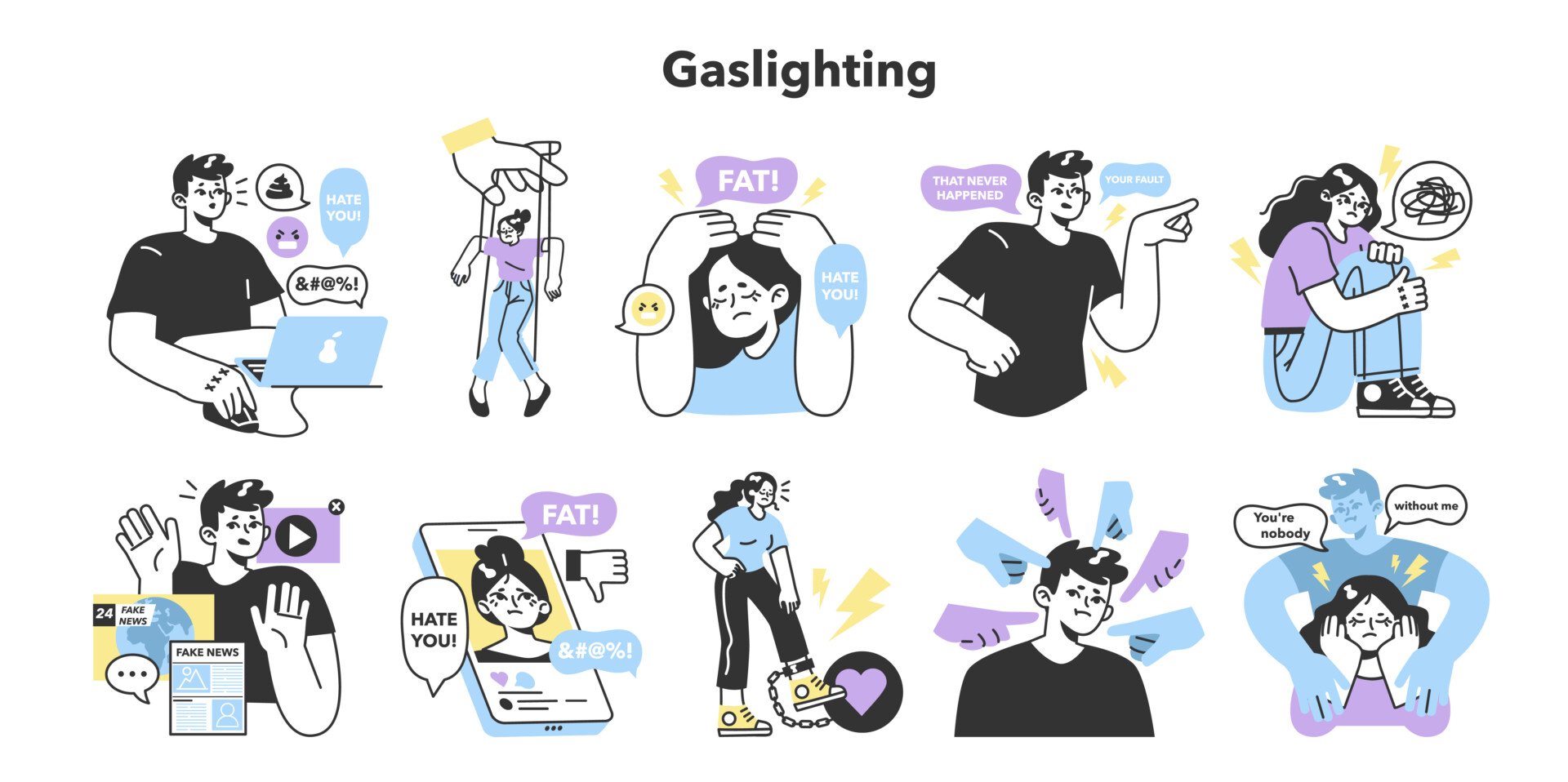
Kayla said, “I had no idea that gaslighting even existed at the time. It was only much later when I read about gaslighting that a light bulb went on in my head.
“He did that to me all the time, even in the beginning. It was little things like constantly telling me I was overreacting if I expressed how I felt.”
Kylie also experienced this, “I’d be waiting all day to know if our plans were actually happening and then sometimes, he wouldn’t contact me to say he wasn’t coming and when I would get upset about it his response was “we never actually confirmed so I didn’t think I needed to tell you.”
Gaslighting can also mean turning the tables and blaming you for their bad behavior.
Francesca’s jealous ex-partner who often burst into fits of rage would say to her, “I only reacted that way because you provoked me.”
What happened in all of these examples is that the women started to question their memory and perception.
Kayla wondered whether maybe she was “always overreacting”; Kylie asked herself if they really “never confirmed” and thought she must have misunderstood.
Francesca questioned whether she really did “provoke” him.
As therapist Esther Perel explains, whether one incident “counts” as gaslighting matters less than the broader pattern: confusion, self-doubt, and a partner’s story changing to avoid accountability.
Guideline #8: Learn the Signs of Gaslighting
Educate yourself on gaslighting and learn the signs. If a man makes you question yourself a lot and you feel confused often, it could be a sign of gaslighting.
If they constantly deny, twist the truth, and tell you what you’re feeling isn’t valid, get out of there.
Sign #9: Gut Feeling
Sometimes, we don’t or can’t consciously perceive danger, but our intuition tells us something isn’t right, and we get a “gut feeling”.
Kylie had some important things to say on this matter, “The first time he ever tried to hug me I had the most intense physiological response. Like my body just jumped into freeze mode for a second. I completely ignored it because I had no “evidence” to justify that feeling. If I could go back in time, I would tell myself to trust my body. That feeling happened for a reason, and that should have been enough. I shouldn’t have needed evidence. I wish that I had honored that warning with curiosity and trust instead of immediately dismissing it.”
She wants people to know that “It’s okay to approach people with caution, even if there is no clear evidence. I’m not saying be paranoid but if you have a feeling, a warning sign, a nagging thought, a worry…honor it, be curious about it, explore it.
“If I had done that, I think the warning signs would have been bright red flags I couldn’t have missed. But because I dismissed it, I wasn’t looking for any red flags.”
Guideline #9: Trust Your Intuition
Don’t ignore your intuition, that gut feeling you get about someone. It doesn’t mean you have to dump him immediately, just be mindful and curious.
What the Research Says About Controlling Partners
Researchers have studied controlling behavior in relationships for decades. Their work backs several of the signs above. It also adds some useful caveats.
Do Early Warning Signs Predict Abuse?
Charlot, Joel, and Campbell (2025) tested this directly. They asked 355 people in relationships to rate how often their partner showed 200 possible warning-sign behaviors. Six months later, the same people reported any abuse they had experienced.
Both the number of warning signs and how often they occurred predicted later abuse. Seven signs predicted abuse in both studies. Examples include acting arrogant or entitled, dismissing your reasoning, and reacting badly when told no.
The findings echo the public jealousy scenes, controlling decisions, and belittling comments described above.
One caution applies. Most of the abuse reported was low in severity, and the samples were largely young adults recruited through universities. The authors say future studies should test whether the same signs predict coercive control, a more severe pattern in which one partner dominates the other.
What Coercive Control Looks Like
Evan Stark (2007) argues that these signs are not separate problems. He sees them as entry points into one process he calls coercive control.
It works through isolation, intimidation, and micro-managing everyday behavior, such as how a partner dresses or socializes.
The pattern, not any single incident, causes the harm. A demand about housework or clothing can look petty to an outsider.
Backed by an implied threat, such a demand becomes high-stakes.
Emma Williamson (2010) reanalyzed interviews with women who had experienced domestic violence through this lens. She found that women often absorbed a partner’s shifting, self-contradictory rules until everyday tasks, such as grocery shopping, caused real anxiety.
Many also played down the abuse to family, friends, and sometimes themselves.
Why Do Some Partners Control?
No single cause explains controlling behavior. Personality research links narcissism most closely to psychological abuse and controlling behavior (Carton & Egan, 2017), part of the wider Dark Triad of personality traits.
That fits the belittling comments and possessive jealousy above, which can look calculated and socially skilled rather than volatile.
Attachment research adds another piece. A systematic review found that both anxious and avoidant attachment styles are linked to partner aggression (Velotti et al., 2018).
Anxious attachment works through fear of abandonment and constant checking on a partner. Avoidant attachment works through discomfort with closeness and a preference for managing distance.
Insecure attachment is common across genders. It is better read as one individual-level piece of the puzzle than a full explanation.
Final Thoughts
Here are a few other bits of information and advice the women I spoke to shared:
“The scariest thing is that once you get out of a relationship like that and really take the time to look back, only then do you see all the things you initially thought were green flags were actually that person laying down the foundation of control and abuse whether that be mentally or physically or both. It then makes you unbelievably apprehensive to try and be in another relationship. You’re just so paranoid and doubt everyone.”
“Some people don’t see controlling behavior as problematic. Codependents, for example, may just think “It means he loves me!” But it’s not love, he wants to own you and have full control.”
“I think people who have a bad relationship with themselves, who don’t trust themselves and didn’t have any control in their childhood are the ones who feel the need to control other people.
“A normal person wants you to be happy and do what you want – they don’t want to control you.”
Psychologists call this broader pattern coercive control. It is a cumulative strategy for gaining power over a partner’s choices, relationships, and sense of self, rather than a single incident (Stark, 2007).
Recognizing the signs above early is what makes it possible to name the pattern, and leave, before it goes any further.
References
Carton, H., & Egan, V. (2017). The dark triad and intimate partner violence. Personality and Individual Differences, 105, 84–88. https://doi.org/10.1016/j.paid.2016.09.040
Charlot, N., Joel, S., & Campbell, L. (2025). The predictive validity of intimate partner violence warning signs. Social Psychological and Personality Science, 16(2), 192–201. https://doi.org/10.1177/19485506231209076
Perel, E. (n.d.-a). Am I being gaslit? | Where should we begin? with Esther Perel [Video]. YouTube. https://www.youtube.com/watch?v=ZSuCS-5MSH0
Perel, E. (n.d.-b). First he loved bombed me and then it was over | Where should we begin? with Esther Perel [Video]. YouTube. https://www.youtube.com/watch?v=x9k4v2kFT1Q
Pichon, M., Treves-Kagan, S., Stern, E., Kyegombe, N., Stöckl, H., & Buller, A. M. (2020). A mixed-methods systematic review: Infidelity, romantic jealousy and intimate partner violence against women. International Journal of Environmental Research and Public Health, 17(16), Article 5682. https://doi.org/10.3390/ijerph17165682
Stark, E. (2007). Coercive control: How men entrap women in personal life. Oxford University Press.
Velotti, P., Beomonte Zobel, S., Rogier, G., & Tambelli, R. (2018). Exploring relationships: A systematic review on intimate partner violence and attachment. Frontiers in Psychology, 9, Article 1166. https://doi.org/10.3389/fpsyg.2018.01166
Williamson, E. (2010). Living in the world of the domestic violence perpetrator: Negotiating the unreality of coercive control. Violence Against Women, 16(12), 1412–1423. https://doi.org/10.1177/1077801210389162