Every day our brains must process and respond to thousands of problems, both large and small, at a moment’s notice. There is rarely time to weigh every option carefully. The sheer volume of problems we face each day can feel overwhelming.
A heuristic is a mental shortcut, or rule of thumb, that helps the brain reach a decision quickly instead of weighing every option in detail.
Psychologists study heuristics because they trade some accuracy for speed, letting people handle the thousands of small judgments daily life demands.
Most of the time this trade-off works well. It can also produce predictable errors known as cognitive biases.

Key Takeaways
- Mental Shortcut: A heuristic is a rule of thumb the brain uses to reach a decision fast, trading some accuracy for speed.
- Fast Thinking: Kahneman describes most everyday judgments as running on automatic System 1 thinking, with slower, effortful System 2 analysis as backup.
- Not an Algorithm: An algorithm always reaches a correct answer eventually; a heuristic offers a likely answer quickly, with no guarantee.
- Three classic heuristics: Availability (what comes to mind easily), representativeness (resemblance to a stereotype), and anchoring (sticking near a starting number) drive most everyday judgment shortcuts.
- Predictable Errors: Each heuristic produces the same kind of mistake every time, which is why psychologists can study and even train people to counter it.
- Debiasing: A brief exercise that changes how someone approaches a decision, not just a warning, has been shown to cut biased choices in real professional settings.
Definition
Heuristics can be thought of as general cognitive frameworks humans rely on regularly to reach a solution quickly.
A Heuristic in Action
For example, a student choosing a university subject often follows her intuition, drawn toward whatever path feels most satisfying, practical, and interesting.
There is no formula for this.
She may also weigh her strengths and weaknesses from secondary school, or write out a pros and cons list to help her decide.
She is not chasing the single best subject.
She is satisficing: settling for an option that feels good enough, rather than exhaustively comparing every course on offer.
That trade-off between effort and accuracy, saving mental energy at the cost of a little precision, is the essence of a heuristic.
These heuristics broadly apply to everyday problems, produce sound solutions, and help simplify complicated mental tasks. These are the three defining features of a heuristic.
Origins of the Concept
The concept of heuristics dates back to Ancient Greece, where the term originated from the Greek word for “to discover.”
Most of what we know today, though, comes from twentieth-century social scientists.
Herbert Simon gave the idea its name: “bounded rationality.” His work focused on decision-making under restrictive cognitive conditions, such as limited time and information.
Real minds, Simon argued, cannot behave like the all-knowing, utility-maximising decision-maker that classical economic theory assumes.
Instead, people satisfice: they settle for a solution that is good enough rather than searching for the optimal one.
That idea still shapes how psychologists study decision-making today.
This idea of optimizing an inherently imperfect analysis still frames the contemporary study of heuristics. It leads many researchers to credit Simon as a foundational figure in the field.
Kahneman’s Theory of Decision Making
Psychologist Daniel Kahneman’s research identified the two thinking systems the mind relies on to make decisions.
People make an extraordinary number of decisions every day. Most of these run on autopilot rather than careful thought, relying on either “fast” or “slow” thinking.

The fast thinking pathway (system 1) operates mostly unconsciously and aims to reach reliable decisions with as minimal cognitive strain as possible.
System 1 relies on broad observations and quick evaluative techniques: heuristics.
System 2, or slow thinking, is different. It requires conscious, continuous attention to assess a problem’s details and reach a solution logically.
Given how many decisions this adds up to, it makes sense that system 1 handles the majority of them.
The human mind needs a toolbox of efficient heuristics to support this fast-thinking pathway.
Heuristics vs. Algorithms
Heuristics and algorithms can look similar, but they are two distinct modes of cognition.
Heuristics are methods or strategies which often lead to problem solutions but are not guaranteed to succeed.
They can be distinguished from algorithms, which are methods or procedures that will always produce a solution sooner or later.
An algorithm is a step-by-step procedure that reliably solves a specific problem.
People usually associate algorithms with technology and mathematics, but our brains rely on them every day to resolve everyday issues too (Kahneman, 2011). The brain needs both.
Algorithms are a set of mental instructions built for one specific situation.
Heuristics, by contrast, are general rules of thumb that help the mind process and overcome many different obstacles. The difference is speed versus certainty.
For example, if you are thoughtfully reading every line of this article, you are using an algorithm.
On the other hand, you are using a heuristic if you skim each section for the key information.
The same is true if you focus only on the parts you don’t already understand.
Why Heuristics Are Used
Heuristics usually occur when one of five conditions is met (Pratkanis, 1989):
- When one is faced with too much information
- When the time to make a decision is limited
- When the decision to be made is unimportant
- When there is access to very little information to use in making the decision
- When an appropriate heuristic happens to come to mind at the same moment
Heuristics carry real benefits, but they also have unavoidable drawbacks worth understanding.
Speeding up decisions this way also predisposes us to cognitive biases.
A cognitive bias is a pervasive, incorrect judgment that comes from a flawed pattern of thinking.
The error rarely feels like one.
It happens when someone mistakes a subjective impression for an objective truth.
These errors are inevitable, since even a reliable shortcut occasionally misfires, and they can lead to persistent mistakes if left unchecked.
For example, consider the risks of faulty applications of the representativeness heuristic, described below.
That shortcut has a cost.
It works by judging how likely something is by how closely it resembles a familiar category, rather than by the real odds.
The technique encourages people to assign situations into broad categories based on superficial traits and past experience, saving mental effort psychologists call cognitive expediency.
That same shortcut is also the basis of stereotypes and discrimination.
The consequences are real.
In practice, these errors result in the disproportionate favoring of one group and/or the oppression of other groups within a given society.
This tension between speed and accuracy shows up across many high-stakes fields, including finance, medicine, law, and public policy.
The tradeoff between thoughtful rationality and cognitive efficiency encompasses both the benefits and pitfalls of heuristics and represents a foundational concept in psychological research.
Types of Heuristics (With Examples)
Heuristics show up across law, medicine, politics, and everyday life.
Below are the heuristics most central to the field, each with a relatable example:
- Availability: Judging likelihood by how easily examples come to mind.
- Representativeness: Judging probability by how closely something resembles a stereotype.
- Scarcity: Treating rarer items as inherently more valuable.
- Trial and Error: Testing options one by one until something works.
- Anchoring and Adjustment: Sticking close to an initial starting value.
- Familiarity: Falling back on a previously successful response.
Availability Heuristic
The availability heuristic describes the tendency to make choices based on information that comes to mind readily.
For example, children of divorced parents are more likely to have pessimistic views towards marriage as adults.
This heuristic can also make recently learned information feel more important, simply because it is easier to recall.
This bias also shapes how people judge risk. A classic study found that people rated dramatic, heavily reported causes of death as more likely than quieter killers. Accidents and homicide felt more probable than asthma or stroke, even though the quiet causes killed far more people (Lichtenstein et al., 1978).
The distortion happens because vivid, widely reported events are easier to recall, not because they are more common. A single reported plane crash can make flying feel riskier than driving, even though the statistics point the other way.
Representativeness Heuristic
By comparing a new scenario to a familiar prototype, this technique lets people quickly estimate probabilities and predict outcomes.
For example, juries are less likely to convict defendants who are well-groomed and formally dressed.
The assumption is that stylish, well-kempt people typically do not commit crimes.
This heuristic’s most celebrated test is the “Linda problem.”
Aim: Tversky and Kahneman (1983) tested whether representativeness could push people to rate a conjunction of two events as more probable than one of its parts alone.
Linda’s sketch was written for the study.
Method: Participants read a personality sketch of “Linda,” a bright, outspoken philosophy graduate concerned with social justice. They then rated how probable it was that she was a bank teller, compared with a bank teller who is also active in the feminist movement.
Results: Around 85–90% rated the conjunction as more probable. That is logically impossible, because “a feminist bank teller” can never be more likely than “a bank teller” alone.
Conclusion: People substitute representativeness for probability. Linda resembles the stereotype of a feminist far more than that of a bank teller. The combined description simply felt more believable, even though it broke a basic rule of probability.
Crucially, the error shrinks sharply when the same problem is posed as frequencies instead of probabilities, which is the very pivot Gigerenzer’s ecological-rationality critique turns on.
Scarcity Heuristic
Rarer items often feel inherently more valuable than abundant ones, and the scarcity heuristic is built on exactly that perception.
We rely on the scarcity heuristic when we must choose quickly with incomplete information.
For example, a student choosing between two universities may favor the one with the lower acceptance rate. The assumption is that this exclusivity signals a more desirable experience.
The concept of scarcity is central to behavioral economists’ study of consumer behavior (a field that evaluates economics through the lens of human psychology).
Trial and Error
This is the most basic, and perhaps most frequently cited, heuristic.
Trial and error solves a problem with a limited number of possible solutions. It works by simply attempting each option until the correct one is identified.
For example, if an individual was putting together a jigsaw puzzle, he or she would try multiple pieces until locating a proper fit.
This technique is commonly taught in introductory psychology courses.
It offers a simple illustration of what heuristics are for: reliable problem-solving shortcuts that reduce cognitive load.
Anchoring and Adjustment Heuristic
Anchoring refers to the tendency to formulate expectations relating to new scenarios relative to an already ingrained piece of information.
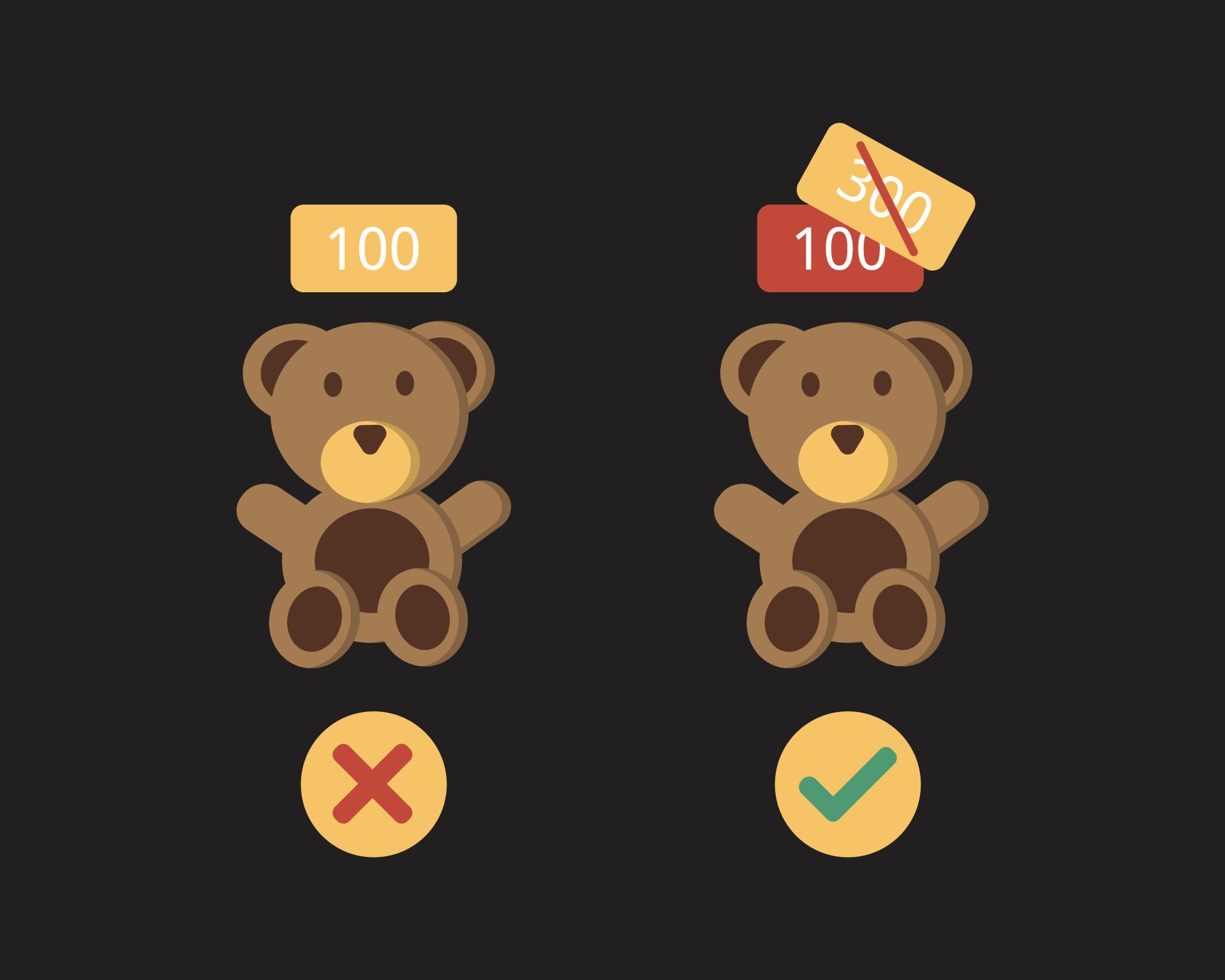
Put simply, this anchor lets a person form a reasonable estimate despite uncertainty.
For example, imagine estimating the number of days in a year on Mars. Most people would first recall that Earth’s year is 365 days (the “anchor”) and then adjust their estimate from there.
The original study is a striking case.
Aim: Tversky and Kahneman (1974) tested whether an anchor that a person can see is completely random still biases their later numerical judgements.
Method: Participants watched a wheel of fortune that was secretly rigged to stop at either 10 or 65. They then judged whether the percentage of African countries in the United Nations was higher or lower than that number, before giving their own numerical estimate.
The wheel was pure chance.
Results: The arbitrary wheel number still swayed the answers. The median guess was about 25% after the wheel stopped at 10, compared with about 45% after it stopped at 65.
Even so, people adjusted too little.
Conclusion: People do adjust away from the anchor, but the adjustment is typically too small, so the final estimate stays biased toward the starting value. That happens even when the anchor was watched being generated at random.
The anchoring effect is one of the most consistently replicated findings in the discipline, holding up even when people know the anchor is arbitrary.
Familiarity Heuristic
When a situation feels cognitively demanding, this heuristic guides action by reverting to behaviors that worked before in similar circumstances.
The familiarity heuristic is most useful in unfamiliar, stressful environments.
For example, a job seeker preparing for an interview might recall how she behaved in a past high-stakes situation, such as an important university presentation.
She then uses that memory to guide her behavior in the interview.
Many psychologists interpret this technique as a slightly more specific variation of the availability heuristic.
How to Make Better Decisions
Heuristics are ingrained cognitive processes that all humans use, and they can lead to various biases.
Both of these statements are established facts. However, this does not mean the biases heuristics produce are unavoidable.
The Evidence for Debiasing
These biases have wide-ranging impacts on societal institutions. As a result, psychologists have emphasized techniques for making sound, thoughtful, and fair decisions in daily life.
Ironically, many of these techniques are themselves heuristics.
Aim: Sellier, Scopelliti, and Morewedge (2019) tested whether a brief debiasing training could improve a real, high-stakes professional decision, not just a laboratory task.
Method: 290 graduate students took part. Some received a short training session before tackling an unannounced, realistic business case modelled on the Space Shuttle Challenger launch decision, and others received it afterward.
Nothing else about the case differed between groups.
Results: Trained students were 19% less likely than untrained students to choose the flawed, self-confirming option. Their written reasoning showed less confirmation bias, the exact pattern the training targeted.
Conclusion: Debiasing is trainable and transfers to real, high-stakes decisions. Simply warning people about a bias rarely helps, but a short structured exercise can.
Practical Techniques to Reduce Bias
Three techniques help most.
- Set explicit goals: Write out the concrete goals and values that matter for this decision before deciding.
- Take the long view: Imagine the decision’s impact a year from now, from every affected person’s perspective.
- Consider the opposite: Deliberately search for evidence that could disprove your first instinct, and slow down before any high-stakes decision.
Most importantly, understanding these mental shortcuts, and the mistakes they can cause, is itself a form of protection.
Awareness alone is not enough.
Because the substitution behind a heuristic happens automatically, simply knowing about it is a weak defense on its own.
But noticing a flawed pattern as it happens is often the first step to catching it before it leads you astray.
Critical Evaluation
The heuristics-and-biases programme has earned its influence because the errors it describes are systematic and predictable, not random noise. This turned the study of human error into a rigorous, predictive science.
Its strongest finding, the anchoring effect, is among the most reliably reproduced results in psychology, and it holds up even among experts making judgements in their own field.
The framework also travels well.
It has shaped applied practice across economics, medicine, law, and public policy. Its effects even appear about as strongly in highly capable respondents as in anyone else. That suggests the biases are a general feature of cognition, not a sign of unskilled thinking.
The programme has real limits, too.
Much of the evidence comes from artificial, one-off laboratory problems, such as word puzzles and gambles.
Real-world relevance is not always clear.
The word “heuristic” is also used loosely across the literature. Critics note that an apparent “error” can sometimes reflect a misleading question rather than flawed thinking.
The fair verdict is not blanket praise or blanket rejection, but triage: sorting the reliable effects from the fragile ones by the quality of the evidence.
Contemporary Research
Recent work asks a sharper question.
Aim: Klein and colleagues (2018) set out to estimate how reliably classic and contemporary psychological findings replicate, and to test whether failed replications simply reflect the “wrong” sample.
The scale of the project was enormous.
Method: A pre-registered, multi-site collaboration re-ran 28 published findings using identical protocols. The project spanned 125 samples, more than 15,000 participants, and 36 countries.
Results: About 54% of the effects reproduced. Typical effect sizes shrank sharply, and crucially, how much an effect varied depended far more on the effect itself than on the sample or setting it was tested in.
That last point matters most.
Conclusion: Some classic findings reproduce strongly and others do not. Reproducibility is largely a property of the effect itself, which removes the easy excuse that a failed replication just used the wrong participants.
Anchoring is one of the sturdier effects that has weathered this large-scale re-testing well, while several more context-sensitive findings elsewhere in psychology have not. As a huge, pre-registered, multi-site study, its verdict carries far more weight than any single laboratory demonstration ever could.
Ecological Rationality
Not every psychologist accepts that heuristics are best understood as flawed shortcuts.
Gerd Gigerenzer and colleagues argue that heuristics are adaptive tools matched to the structure of real environments, not crippled approximations of logic.
Ecological rationality judges a heuristic by how well it performs in its real environment, not by how closely it matches an abstract statistical rule.
Natural Frequencies and Base-Rate Problems
The clearest evidence for this view comes from a single change in wording, in a problem that had stumped most people until then.
Aim: Gigerenzer and Hoffrage (1995) asked whether people’s poor performance on base-rate problems reflects a real reasoning flaw. They tested a different explanation. Maybe the problem lies in the unnatural probability format such problems are usually posed in.
The mammography problem is the classic case.
Method: Classic base-rate problems, including the mammography screening problem, were rewritten in two mathematically equivalent formats. One used single-event probabilities. The other used natural frequencies, such as “10 out of every 1,000 women.” Researchers then compared how many participants reached the correct answer in each format.
The wording was the only difference.
Results: Only around 16% of participants reasoned correctly when the problem used probabilities. Recasting the identical problem as natural frequencies roughly tripled accuracy, to around 46-50%. Later studies found similar gains among expert physicians.
Format alone made the difference.
Conclusion: Base-rate neglect is not a hard-wired flaw. It is largely an artefact of presentation, since the mind reasons more accurately with the frequency formats humans actually encountered throughout evolutionary and everyday experience.
One refinement matters too. Krynski and Tenenbaum (2007) spelled out the causal structure of a base-rate problem instead, for example naming an alternative cause of a false-positive test.
This improved people’s reasoning as much as switching to natural frequencies did. People seem to reason well whenever statistical information maps onto their intuitive sense of cause and effect, not only when it is phrased as frequencies.
Fast-and-Frugal Heuristics
This finding anchors a broader research programme known as fast-and-frugal heuristics.
Gigerenzer, Todd, and the ABC Research Group call this effect “less is more.” They argue that simple heuristics using very little information can outperform complex strategies in uncertain environments.
The recognition heuristic is the clearest example. If you recognise one of two options and not the other, infer that the recognised one scores higher.
This lets people who know less sometimes judge better than people who know more (Goldstein & Gigerenzer, 2002).
A related heuristic, take-the-best, works almost the same way. It searches cues in order of importance and stops at the first one that distinguishes the options.
Critics counter that people use heuristics like take-the-best less often than the theory predicts. The theory also does not fully specify which heuristic the mind selects in a given situation.
Naturalistic Decision-Making
A further alternative, naturalistic decision-making, studies how experts such as firefighters, nurses, and pilots actually decide under real time pressure and high stakes.
These experts rarely compare options analytically. Instead, they rely on recognition-primed decision-making, matching the situation to a prototype from experience and retrieving a workable response directly.
On this view, an expert’s fast intuitive call is not a lapse from careful reasoning. It is the product of deep experience. It complements the heuristics-and-biases picture rather than contradicting it.
Laboratory tasks stripped of real-world context can underestimate just how well-adapted intuitive judgement really is.
This is a friendly amendment to the heuristics-and-biases programme, not a refutation of it. It says expert intuition is earned, not guessed.
Context matters more than theory alone can capture.
Two Complementary Traditions
The two traditions are best read as complementary rather than opposed.
Tversky and Kahneman’s programme charts where intuitive judgement departs from logical norms.
Both pictures can be true at once.
Gigerenzer’s programme charts where those same shortcuts are well matched to the real world.
Naturalistic decision-making sits alongside both traditions rather than against either one.
It fits neatly with both.
Across the field, twentieth-century demonstrations are increasingly being kept where they replicate, and explained rather than simply dismissed. The biases are best understood as the predictable output of an adaptive System 1 that can still be corrected.
Training, better formats, and thoughtful choice architecture all help, far more reliably than willpower alone ever could.
That covers most of how the mind decides.
A few choices still go wrong regardless.
Further Information
- Shah, A. K., & Oppenheimer, D. M. (2008). Heuristics made easy: an effort-reduction framework. Psychological bulletin, 134(2), 207.
- Marewski, J. N., & Gigerenzer, G. (2012). Heuristic decision making in medicine. Dialogues in clinical neuroscience, 14(1), 77.
- Del Campo, C., Pauser, S., Steiner, E., & Vetschera, R. (2016). Decision making styles and the use of heuristics in decision making. Journal of Business Economics, 86(4), 389-412.
What is a heuristic in psychology?
A heuristic in psychology is a mental shortcut or rule of thumb that simplifies decision-making and problem-solving. Heuristics often speed up the process of finding a satisfactory solution, but they can also lead to cognitive biases.
References
Bobadilla-Suarez, S., & Love, B. C. (2017, May 29). Fast or Frugal, but Not Both: Decision Heuristics Under Time Pressure. Journal of Experimental Psychology: Learning, Memory, and Cognition.
Bowes, S. M., Ammirati, R. J., Costello, T. H., Basterfield, C., & Lilienfeld, S. O. (2020). Cognitive biases, heuristics, and logical fallacies in clinical practice: A brief field guide for practicing clinicians and supervisors. Professional Psychology: Research and Practice, 51 (5), 435–445.
Dietrich, C. (2010). “Decision Making: Factors that Influence Decision Making, Heuristics Used, and Decision Outcomes.” Inquiries Journal/Student Pulse, 2(02).
Gigerenzer, G., & Hoffrage, U. (1995). How to improve Bayesian reasoning without instruction: Frequency formats. Psychological Review, 102(4), 684–704. https://doi.org/10.1037/0033-295X.102.4.684
Goldstein, D. G., & Gigerenzer, G. (2002). Models of ecological rationality: The recognition heuristic. Psychological Review, 109(1), 75–90. https://doi.org/10.1037/0033-295X.109.1.75
Kahneman, D. (2011). Thinking, fast and slow. Farrar, Straus and Giroux.
Kahneman, D., Lovallo, D., & Sibony, O. (2011). Before you make that big decision.
Klein, R. A., Vianello, M., Hasselman, F., Adams, B. G., Adams, R. B., Alper, S., … Nosek, B. A. (2018). Many Labs 2: Investigating variation in replicability across samples and settings. Advances in Methods and Practices in Psychological Science, 1(4), 443–490. https://doi.org/10.1177/2515245918810225
Krynski, T. R., & Tenenbaum, J. B. (2007). The role of causality in judgment under uncertainty. Journal of Experimental Psychology: General, 136(3), 430–450. https://doi.org/10.1037/0096-3445.136.3.430
Lichtenstein, S., Slovic, P., Fischhoff, B., Layman, M., & Combs, B. (1978). Judged frequency of lethal events. Journal of Experimental Psychology: Human Learning and Memory, 4(6), 551–578. https://doi.org/10.1037/0278-7393.4.6.551
Pratkanis, A. (1989). The cognitive representation of attitudes. In A. R. Pratkanis, S. J. Breckler, & A. G.
Greenwald (Eds.), Attitude structure and function (pp. 71–98). Hillsdale, NJ: Erlbaum.
Sellier, A.-L., Scopelliti, I., & Morewedge, C. K. (2019). Debiasing training improves decision making in the field. Psychological Science, 30(9), 1371–1379. https://doi.org/10.1177/0956797619861429
Simon, H. A. (1956). Rational choice and the structure of the environment. Psychological Review, 63(2), 129–138. https://doi.org/10.1037/h0042769
Tversky, A., & Kahneman, D. (1974). Judgment under uncertainty: Heuristics and biases. Science, 185(4157), 1124–1131. https://doi.org/10.1126/science.185.4157.1124
Tversky, A., & Kahneman, D. (1983). Extensional versus intuitive reasoning: The conjunction fallacy in probability judgment. Psychological Review, 90(4), 293–315. https://doi.org/10.1037/0033-295X.90.4.293

