Procedural memory is a type of long-term memory that stores information related to motor skills, habits, and actions. It allows individuals to perform tasks automatically and without conscious effort, as it involves the learning and retention of procedures, routines, and how to execute specific actions.
Key Takeaways
- What It Is: Procedural memory is a long-term memory system for skills that a person cannot bring to mind or explain, such as swimming or riding a bicycle.
- Implicit Memory: It is part of implicit long-term memory, the kind responsible for knowing how to do things rather than knowing facts.
- Milner and H.M.: Professor Brenda Milner’s experiments with the amnesic patient Henry Molaison (H.M.) played a vital role in discovering procedural memory.
- H.M.’s Skill Learning: H.M. learned a new motor skill, mirror drawing, but could not remember learning it. This showed procedural and declarative memory are separate systems.
- Brain Basis: Procedural memory relies on the dorsolateral striatum, the cerebellum (the brain structure that fine-tunes movement and timing), and the limbic system.
- Sleep Boosts It: REM sleep that follows slow-wave sleep, right after learning a new skill, significantly enhances procedural memory consolidation.

Procedural memory is a type of long-term implicit memory. It involves performing certain cognitive and motor tasks without consciously retrieving past information (Lum, Conti-Ramsden, Page & Ullman, 2012).
It is the memory for skilled actions, such as how to brush your teeth, how to drive a car, and how to swim the crawl (freestyle) stroke.
Procedural memories are inadvertently retrieved and unconsciously used to perform various motor skills and cognitive tasks.
Examples of Procedural Memory
Actions involving procedural memory often include tasks learned early in childhood, which have become ingrained through repetition.
Riding a bike is an example of a procedural memory.

Tying shoelaces is an example of a procedural memory.

Using chopsticks is an example of a procedural memory.
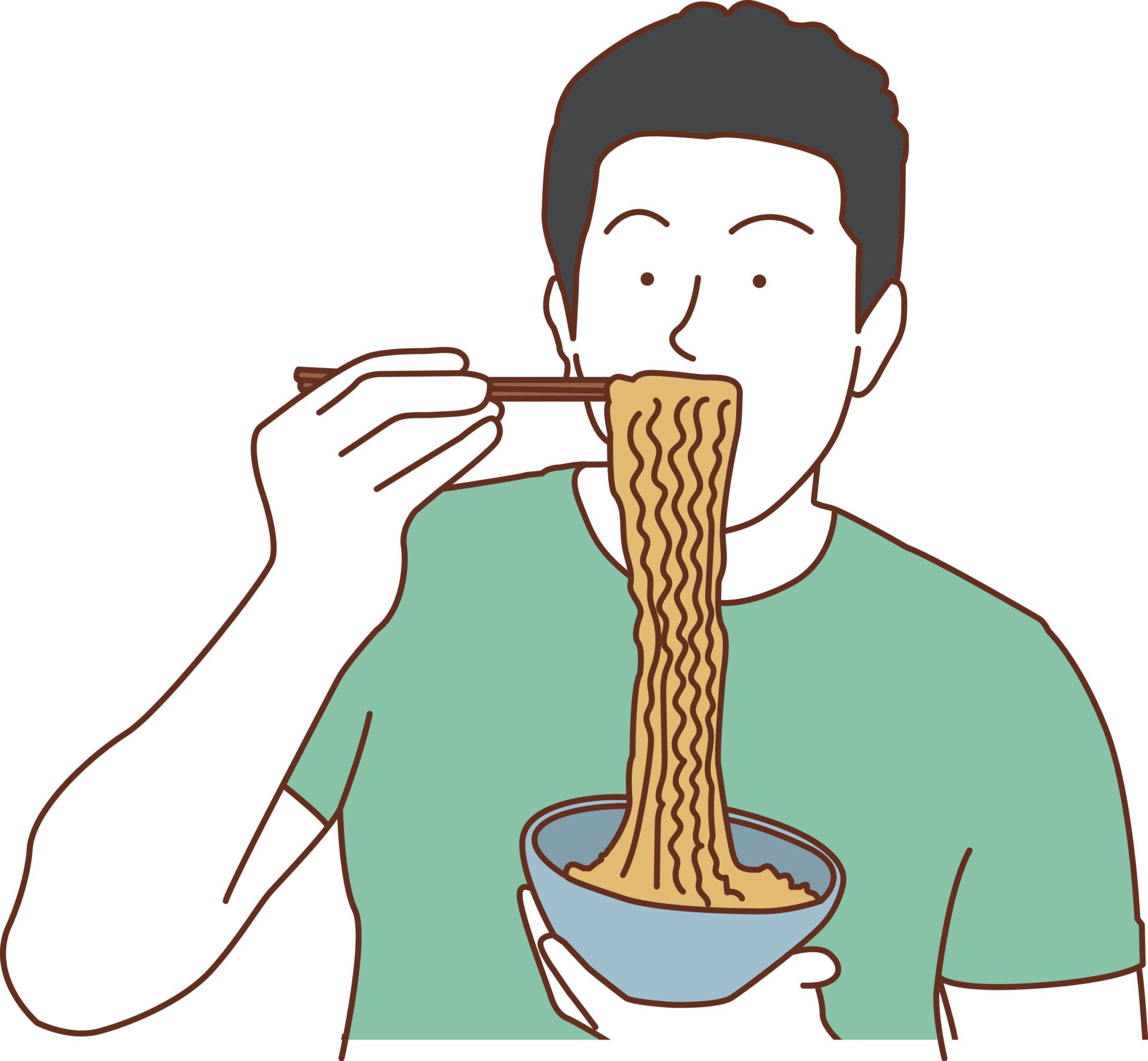
The following tasks employ procedural memory:
- Typing on a keyboard
- Playing a musical instrument
- Swimming
- Driving a car
- Brushing teeth
- Walking or running
- Operating a smartphone or computer mouse
History and Background
Serious psychological and philosophical discussion of memory has existed for nearly two centuries. The American psychologist and philosopher William James (1890) was among the first to suggest that a habit, once learned, becomes an automatic second nature. It differs from the deliberate remembering of facts and events.
Milner’s H.M. Study: Discovering Procedural Memory
Aim: Brenda Milner, at McGill University, wanted to know what H.M. (Henry Molaison) could still learn after his surgery. His memory was virtually gone (Squire, 2004).
Method: H.M. had undergone a bilateral medial temporal lobectomy to control severe epilepsy (Squire, 2009). Milner tested him on a task called mirror drawing, which required him to trace a shape while looking only at its mirror-reversed reflection.
Findings: H.M. never remembered the sessions. Yet his mirror-drawing skill improved steadily across sessions, just as it would in a healthy participant.
Conclusion: A single system could not explain H.M.’s memory. His conscious, declarative memory was devastated, but a separate system for learning skills remained intact.
Later researchers found the same pattern in other amnesic patients and extended it from motor skills to purely cognitive tasks. This ruled out an early theory that amnesia was simply a problem retrieving memories. Amnesia is a genuine memory deficit. It just leaves one domain, skill learning, unharmed.
Procedural Memory vs. Declarative Memory
Cohen and Squire (1980) drew a distinction between declarative knowledge and procedural knowledge.
Knowing How vs. Knowing That
The philosopher Gilbert Ryle (1949) first drew this distinction in everyday terms. Procedural knowledge is “knowing how”: how to play the piano, ride a bike, or tie your shoes. Declarative knowledge is “knowing that”: that London is the capital of England, or that zebras are animals.
Procedural memory is part of long-term implicit memory. It is formed unconsciously and retrieved effortlessly. We brush our teeth with little or no awareness of the skills involved.
Declarative memory, by contrast, involves the intentional, conscious recollection of past experiences and learned facts (Hine & Tsushima, 2018). There are two types: semantic memory and episodic memory.
Recalling a declarative memory takes conscious effort. Information is deliberately brought to mind and “declared”. Procedural memories work the other way round.
It is genuinely hard to explain in words how to drive a car, though describing how a car engine works is comparatively easy.
The clearest evidence for this distinction comes from patients with amnesia. They typically struggle to retain new episodic or semantic information after the onset of amnesia, even though their memory for events and knowledge learned before it remains intact. Their declarative memory is impaired.
Procedural memory tells a different story. Amnesic patients can recall skills they already knew, such as riding a bike. They can also learn new ones, such as learning to drive, at essentially the same rate as everyone else.
How Skills Become Procedural
A skill does not start out as procedural memory. It typically begins as effortful, conscious knowledge and only becomes automatic through repeated practice. Two influential accounts describe this process.
Fitts and Posner (1967) proposed that motor skill learning passes through three stages.
In the cognitive stage, the learner relies on explicit instructions. Performance is slow, effortful, and error-prone, and conscious attention is needed for almost every part of the task.
In the associative stage, errors are gradually eliminated. Movements become smoother and more consistent, and the learner needs less explicit self-instruction as parts of the skill start to run together.
In the autonomous stage, the skill has become largely automatic. It can be performed with minimal conscious monitoring and resists interference from a second, concurrent task. The performer typically struggles to describe exactly what they are doing.
Anderson (1983) offers a complementary account. His ACT theory is more mechanistic. It describes skill acquisition as the “compilation” of declarative knowledge into procedural production rules.
Knowledge begins as facts and instructions that must be consciously retrieved and applied. Practice changes this. It is progressively converted into automatic “if-then” procedures that no longer consult the original facts at all.
Both accounts agree on one central claim. Skilled performance is not procedural memory from the outset. It only becomes procedural memory through repeated practice.
Improving Procedural Memory
Research indicates that sleep aids the development of procedural knowledge via ongoing memory consolidation. This process passes new memories from a fragile condition to a robust, stable state (Walker, Brakefield, Morgan, Hobson & Stickgold, 2002). It is especially true when sleep follows practice immediately.
Consolidation of procedural memories was long thought to depend only on time. Recent studies indicate that, for some types of learning, sleep alone enhances memory consolidation (Brashers-Krug, Shadmehr, & Bizzi, 1996; Fischer, Hallschmid, Elsner & Born, 2002).
Brief naps involving non-rapid eye movement do not seem to help (Siegel, 2001). Not all sleep is equal.
Procedural memory is best enhanced by REM (Rapid Eye Movement) sleep that follows SWS (Slow-Wave Sleep). SWS comprises sleep stages three and four, the deepest type of NREM sleep (Karni, Meyer, Rey-Hipolito, Jezzard, Adams, Turner & Ungerleider, 1998).
This kind of sleep helps most right after practice. A full night or day of sleep after learning a new skill can significantly enhance memory consolidation (Mednick et al., 2003).
However, research also points out that these potential gains would be prevented if REM sleep is interrupted (Karni, Meyer, Rey-Hipolito, Jezzard, Adams, Turner & Ungerleider, 1998).
Brain Regions Related to Procedural Memory
The Basal Ganglia and Striatum
The dorsolateral striatum is the chief brain structure behind procedural memory. It aids the acquisition of new habits (Alexander & Crutcher, 1990). It is part of the basal ganglia. This is a group of interconnected structures beneath the cortex that also govern movement and habit formation.
Striatal neural plasticity lets these circuits process procedural memory and communicate between brain structures (Kreitzer, 2009). The neostriatum shares anatomy with the limbic system (Shu et al., 2000). This link was once doubted. A once-separate region called the marginal division zone is now also linked to memory.
At the molecular level, the CREB protein connects how procedural memories are acquired and stored (Pittenger, Fasano, Mazzocchi-Jones, Dunnett, Kandel & Brambilla, 2006).
This molecular evidence comes mainly from mouse studies, not direct human data.
Knowlton, Mangels, and Squire (1996): Evidence From Parkinson’s Disease
Aim: To test whether procedural learning depends on the basal ganglia rather than the medial temporal lobe, by comparing amnesic patients against patients with Parkinson’s disease.
Method: Amnesic patients, non-demented Parkinson’s patients, and healthy controls performed a weather prediction task. They guessed the outcome on each trial. The cue-outcome link was never fully predictable.
Findings: The amnesic patients learned the task normally, despite severely impaired memory for the training episode. The Parkinson’s patients showed the opposite pattern: they failed to learn the task at all, despite intact declarative memory.
Conclusion: This is a genuine double dissociation. Medial temporal lobe damage impairs declarative memory while sparing procedural learning, and striatal damage does the reverse.
This is among the most rigorous demonstrations in the field that procedural and declarative memory are functionally independent.
The Cerebellum
The cerebellum plays a vital role in fine-tuning movement. It adjusts the motor agility needed for sports, playing an instrument, or painting, and helps correct movement errors as they happen (Saywell & Taylor, 2008). This automation happens without conscious thought.
Recent evidence suggests the cerebellar cortex holds the engram. This is the physical trace where a memory is thought to be stored (Nagao & Kitazawa, 2008).
The cerebellum also supports simple procedural learning. This includes classical conditioning. In eyeblink conditioning, a reflexive blink comes to be triggered by a previously neutral tone.
This simple, cerebellum-based learning survives the same severe amnesia that destroys declarative memory, just as skill learning does above. It shows the same basic pattern holds even at the level of a single, simple reflex.
Dopamine and Plasticity
Dopamine is a neuromodulator linked to procedural memory. It helps the brain adapt its processing to new environments that demand a change in behavior, shaping the neural plasticity that underlies habit learning. This is not just a minor biochemical detail.
Diseases that destroy the brain’s dopamine supply to the striatum, above all Parkinson’s disease, selectively damage procedural, habit-based learning. Conscious, factual memory is left untouched.
This is exactly why Knowlton and colleagues chose Parkinson’s disease patients for their study above. Their damaged dopamine system offered a clean test of the striatum’s role, separate from the amnesia patients’ hippocampal damage.
Together with the basal ganglia and cerebellar evidence above, this gives procedural memory a neural basis that is doubly dissociable from declarative memory. Brain damage that impairs one system reliably spares the other.
Critical Evaluation
The evidence for procedural memory as a genuinely separate system is extensive. It also has real limits worth understanding.
Strong and Convergent Evidence
Milner’s mirror-drawing result was not a fluke. Corkin (1968) found the same pattern in H.M. using a completely different task, rotary pursuit.
Cohen and Squire (1980) then replicated it across a whole group of amnesic patients, using a cognitive rather than a motor skill. Knowlton, Mangels, and Squire’s (1996) double dissociation, described above, capped this with direct evidence that the basal ganglia and the hippocampus support two genuinely separate systems.
This is not just a behavioral pattern. It is grounded in specific brain anatomy: the striatum and cerebellum handle procedural memory, while the hippocampus handles declarative memory, as described above.
That double basis, both behavioral and neural, is what makes this one of the most secure distinctions in the whole field.
Limits of the Evidence
H.M. is, by a wide margin, the most influential single case in this field. Both Milner’s and Corkin’s key findings came from him.
A result this important resting on one surgically unique individual is a genuine limitation. The pattern has since been replicated across larger amnesic samples by Cohen and Squire (1980) and by Knowlton et al. (1996), which strengthens the evidence considerably.
Procedural memory also bundles together several different things: motor skills like cycling, perceptual skills like mirror-drawing, and habits.
These may not all work as one single, unified system.
The line between conscious and automatic is not always sharp, either. A learner driver consciously monitors almost everything. An expert driver does not. Clark and Lum’s finding, that procedural-learning impairment does not appear uniformly across disorders, reinforces this point.
Contemporary Research
Research since 2015 asks a narrower question: how reliably does procedural learning break down in different conditions, and how strong is the sleep-consolidation effect?
Does Every Condition Show the Same Deficit?
Clark and Lum (2017) pooled earlier meta-analyses across six clinical and developmental conditions, using the Serial Reaction Time Task to measure procedural learning. Developmental coordination disorder, dyslexia, Parkinson’s disease, schizophrenia, and specific language impairment all showed similar, significant impairments. Autism spectrum disorder, strikingly, showed no deficit at all.
How Much Does Sleep Really Help?
Schmid, Erlacher, Klostermann, Kredel, and Hossner (2020) pooled 48 studies, comparing people who slept after training a motor skill against people who stayed awake. Sleep produced a small but significant advantage overall (Hedges’ g = 0.43), rising to a medium effect for mirror-tracing tasks (g = 0.62).
The benefit is real. It is more modest than the classic single studies suggested.
References
Alexander, G. E., & Crutcher, M. D. (1990). Functional architecture of basal ganglia circuits: neural substrates of parallel processing. Trends in neurosciences, 13 (7), 266-271.
Anderson, J. R. (1983). The architecture of cognition. Harvard University Press.
Brashers-Krug, T., Shadmehr, R., & Bizzi, E. (1996). Consolidation in human motor memory. Nature, 382 (6588), 252-255.
Clark, G. M., & Lum, J. A. G. (2017). Procedural learning in Parkinson’s disease, specific language impairment, dyslexia, schizophrenia, developmental coordination disorder, and autism spectrum disorders: A second-order meta-analysis. Brain and Cognition, 117, 41-48.
Cohen, N. J., & Squire, L. R. (1980). Preserved learning and retention of pattern analyzing skill in amnesia: Dissociation of knowing how and knowing that. Science, 210, 207–209.
Corkin, S. (1968). Acquisition of motor skill after bilateral medial temporal-lobe excision. Neuropsychologia, 6(3), 255-265.
Fischer, S., Hallschmid, M., Elsner, A. L., & Born, J. (2002). Sleep forms memory for finger skills. Proceedings of the National Academy of Sciences, 99 (18), 11987-11991.
Fitts, P. M., & Posner, M. I. (1967). Human performance. Brooks/Cole.
Hine, K., & Tsushima, Y. (2018). Not explicit but implicit memory is influenced by individual perception style. Plos one, 13 (1), e0191654.
James, W. (1890). The principles of psychology . New York. Holt and company.
Karni, A., Meyer, G., Rey-Hipolito, C., Jezzard, P., Adams, M. M., Turner, R., & Ungerleider, L. G. (1998). The acquisition of skilled motor performance: fast and slow experience-driven changes in primary motor cortex. Proceedings of the National Academy of Sciences, 95 (3), 861-868.
Knowlton, B. J., Mangels, J. A., & Squire, L. R. (1996). A neostriatal habit learning system in humans. Science, 273(5280), 1399-1402.
Kreitzer, A. C. (2009). Physiology and pharmacology of striatal neurons. Annual review of neuroscience, 32, 127-147.
Lum, J. A., Conti-Ramsden, G., Page, D., & Ullman, M. T. (2012). Working, declarative and procedural memory in specific language impairment . Cortex, 48 (9), 1138-1154.
Mednick, S., Nakayama, K., & Stickgold, R. (2003). Sleep-dependent learning: a nap is as good as a night. Nature Neuroscience, 6 (7), 697-698.
Milner, B. (1962). Les troubles de la memoire accompagnant des lesions hippocampiques bilaterales. Physiologie de l’hippocampe, 107, 257-272.
Milner, B. (1998). The History of Neuroscience in Autobiography, Volume 2, L.R. Squire, ed. (San Diego: Academic Press), pp. 276–305.
Milner, B., Corkin, S., & Teuber, H. L. (1968). Further analysis of the hippocampal amnesic syndrome: 14-year follow-up study of HM. Neuropsychologia, 6 (3), 215-234.
Nagao, S., & Kitazawa, H. (2008). Role of the cerebellum in the acquisition and consolidation of motor memory. Brain and nerve= Shinkei kenkyu no shinpo, 60 (7), 783-790.
Pittenger, C., Fasano, S., Mazzocchi-Jones, D., Dunnett, S. B., Kandel, E. R., & Brambilla, R. (2006). Impaired bidirectional synaptic plasticity and procedural memory formation in striatum-specific cAMP response element-binding protein-deficient mice . Journal of Neuroscience, 26 (10), 2808-2813.
Saywell, N., & Taylor, D. (2008). The role of the cerebellum in procedural learning—Are there implications for physiotherapists’ clinical practice?. Physiotherapy theory and practice, 24 (5), 321-328.
Schmid, D., Erlacher, D., Klostermann, A., Kredel, R., & Hossner, E.-J. (2020). Sleep-dependent motor memory consolidation in healthy adults: A meta-analysis. Neuroscience & Biobehavioral Reviews, 118, 270-281.
Shu, S. Y., Bao, X. M., Zhang, C., Li, S. X., Chan, W. Y., & Yew, D. (2000). A new subdivision, marginal division, in the neostriatum of the monkey brain. Neurochemical Research, 25 (2), 231-237.
Siegel, J. M. (2001). The REM sleep-memory consolidation hypothesis. Science, 294 (5544), 1058-1063.
Squire, L. R. (2004). Memory systems of the brain: a brief history and current perspective.
Neurobiology of Learning and Memory, 82
(3), 171-177.
Squire, L. R. (2009). The legacy of patient HM for neuroscience. Neuron, 61 (1), 6-9.
Walker, M. P., Brakefield, T., Morgan, A., Hobson, J. A., & Stickgold, R. (2002). Practice with sleep makes perfect: sleep-dependent motor skill learning. Neuron, 35 (1), 205-211.


