Emotional dysregulation in autistic individuals refers to difficulties in effectively managing emotional responses.
This can mean difficulty managing the intensity, duration, and expression of emotions. Feelings can be hard to settle. Episodes may be prolonged, moods may shift rapidly, and seemingly minor triggers may prompt intense reactions.
Autistic individuals may struggle with identifying and communicating their emotions (alexithymia, or difficulty identifying and describing one’s own feelings). This can heighten frustration.
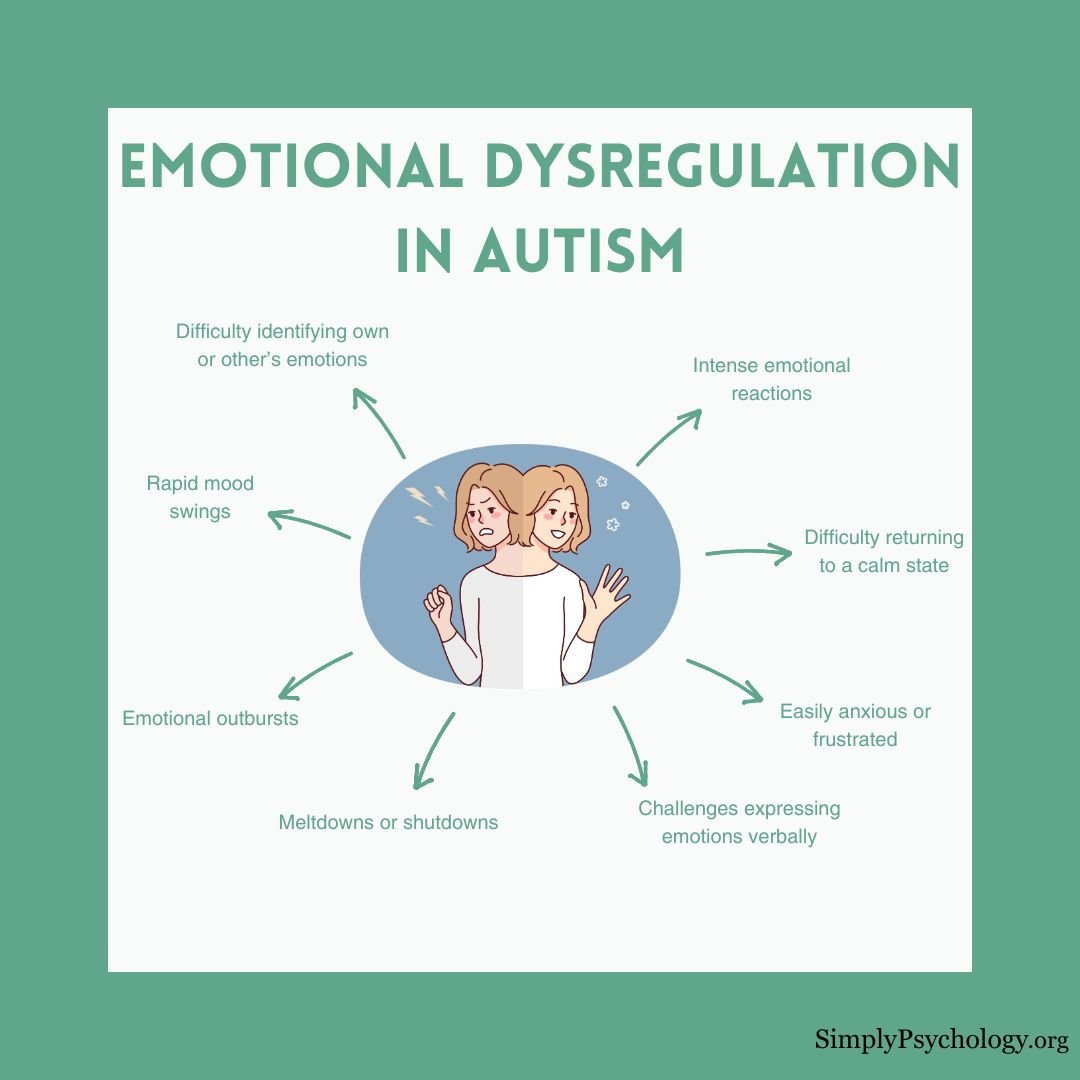
Emotional dysregulation can be influenced by autism-related characteristics. These include sensory sensitivities, social communication challenges, and difficulties with cognitive flexibility, the ability to shift attention, switch plans, and adapt to the unexpected.
Experiences vary widely among autistic individuals. They may also depend on context.
Key Takeaways
- Definition: Dysregulation means emotional responses that do not fit the situation, not simply strong feeling. It is not a diagnostic criterion or universal in autistic people.
- Signs: Intense or prolonged emotions, rapid mood shifts, meltdowns and shutdowns, and difficulty putting feelings into words.
- Triggers: Sensory overload, ambiguous messages, changes of routine, and uncertainty often combine. Changing the environment is often the most direct support.
- Misread Behaviours: Stimming, withdrawing and absorbing interests can be regulation at work, not problems to remove.
- Verdict: Supported with qualifications. Differences are documented in children, but mostly parent-reported, and evidence for adults is thinner.
- Support: Adapted strategies, rest and sensory relief come mostly from autistic people’s own accounts, not trials.
Emotional dysregulation is not exclusive to autism and can be observed in various other neurodevelopmental and mental health conditions.
It’s a prominent feature in Attention Deficit Hyperactivity Disorder (ADHD), where individuals often struggle with regulating their emotions, leading to impulsivity and mood swings.
Similarly, emotional dysregulation is also seen in conditions such as Borderline Personality Disorder, Bipolar Disorder, and even in some cases of anxiety and depression.
Signs of emotional dysregulation in autism
Autistic individuals may display several signs of emotional dysregulation (ED). ED is not a universal experience for all autistic people. It is a common challenge, though, often stemming from the interplay of core autistic characteristics and external factors.
Below are some of the signs of emotional regulation differences in autistic individuals.
These signs are not exhaustive. They may vary with individual experience and developmental stage.
Intense and Frequent Negative Emotions
Autistic individuals experiencing ED might exhibit heightened negative emotions like sadness, anger, anxiety, or frustration more frequently and intensely compared to their neurotypical peers.
Research suggests intensity is only part of the story. The difficulty may lie as much in what happens after a feeling starts.
In a laboratory task, autistic young people reacted to negative scenarios about as strongly as non-autistic peers but used different strategies afterwards (Samson et al., 2015a).
In a daily-diary study, autistic children’s own reports of anger and anxiety did not differ, although their parents reported more of both (Samson et al., 2015b). Most large-scale evidence also comes from parent report. Not every autistic person is affected.
Chris describes his emotional dysregulation as feeling an “immense combination of emotions and feelings” that make him feel nauseous.
Intense and frequent negative emotions can manifest as:
- Explosive Outbursts: These might involve sudden and disproportionate reactions to seemingly minor events. The individual may struggle to control their anger, leading to verbal or physical aggression.
- Prolonged Emotional Episodes: Difficulty recovering from emotional upset can lead to extended periods of intense emotional expression. This may include crying, shouting, or engaging in self-soothing behaviors that persist longer than might be expected given the triggering situation.
- Sustained Negative Responses: Even after the triggering event has passed, individuals with ED might hold onto negative emotions, impacting their ability to engage in subsequent activities or interactions.
- Elevated Irritability: Increased sensitivity to frustration can lead to a lower threshold for annoyance and anger. The individual might appear easily agitated or quick to anger in various situations.
For example, an autistic individual may experience intense frustration when their carefully planned schedule is disrupted by an unexpected work meeting. This frustration might persist long after the meeting has ended, affecting their productivity and interactions with colleagues for the rest of the day.
Rapid Emotional Shifts
ED can also involve significant fluctuations in emotional states, sometimes referred to as emotional lability. This means rapid, intense swings between emotional states.
Megan, a neurodivergent life coach characterizes emotional dysregulation as experiencing rapid and intense emotional shifts, describing it as “emotional whiplash.”
Rapid emotional shifts can look like:
- Abrupt Mood Swings: The individual might switch between different emotions quickly and unexpectedly. For example, they may go from laughing to crying within a short span, seemingly without a clear external trigger.
- Difficulty Regulating Emotional Intensity: Individuals might experience emotions in a magnified way, making it challenging to find a comfortable emotional middle ground.
For example, an autistic individual may be deeply engrossed in a philosophical discussion, feeling intellectually stimulated and happy. However, when the conversation shifts to a topic they find less engaging, they might suddenly experience a drop in mood and energy, struggling to maintain their previous level of enthusiasm.
Challenges with Emotional Awareness and Expression
Difficulties identifying, understanding, and communicating emotions effectively can significantly contribute to ED in autism.
Chris highlights that his difficulties in describing his emotions are not due to a lack of feeling, but rather an overwhelming intensity of emotions. This intense experience leaves him feeling “frozen” and unable to express himself.
He notes that this can be particularly challenging during a meltdown, a state where forcing communication can be counterproductive.
Challenges can manifest as:
- Alexithymia: This refers to difficulty recognizing and verbalizing one’s own emotions. Individuals with alexithymia might struggle to label their feelings accurately, hindering their ability to seek support or engage in self-regulation.
- Misinterpretation of Social Cues: Challenges with social communication, a core aspect of autism, can lead to misunderstandings and misinterpretations of emotional expressions in others. This can result in anxiety, frustration, and difficulty navigating social situations appropriately.
- Difficulty Expressing Emotions Effectively: Individuals might struggle to communicate their emotional needs and experiences to others, potentially leading to internalizing emotions or resorting to maladaptive behaviors to gain attention or regulate their emotional state.
For example, an autistic individual may feel physically unwell during a social gathering but be unable to identify that they're experiencing social anxiety. They might struggle to communicate their need for a break, instead becoming increasingly withdrawn or irritable, which could be misinterpreted by others.
Alexithymia is common but not universal. A meta-analysis of 15 studies using the Toronto Alexithymia Scale found it in about 50% of autistic participants, compared with about 5% of non-autistic participants (Kinnaird et al., 2019).
Meltdowns and Shutdowns
Autistic individuals experiencing emotional dysregulation may exhibit meltdowns or shutdowns, which are intense responses to overwhelming emotional or sensory stimuli.
These reactions can be more severe and frequent compared to typical stress responses in neurotypical individuals.
Autistic adults describe shutdowns in vivid terms. A participatory team of autistic and non-autistic researchers analysed how 50 participants described them. Six metaphors recurred, including being frozen, a computer crash, and survival mode (Paris et al., 2026).
One participant described freezing “like a statue” and being unable to move without help. Many linked shutdowns to perceived threat and self-protection.
Meltdowns and shutdowns can manifest as:
- Loss of Behavioral Control: During a meltdown, the individual may lose control over their behavior, resulting in crying, shouting, or physical actions like throwing objects or self-injury. These behaviors are not intentional but rather a result of being overwhelmed.
- Withdrawal and Non-responsiveness: Shutdowns involve a retreat from the overwhelming situation. The person may become non-verbal, avoid eye contact, or appear unresponsive to external stimuli.
- Physical Symptoms: Both meltdowns and shutdowns can involve physical manifestations such as increased heart rate, sweating, trembling, or feeling physically ill.
- Difficulty Recovering: After a meltdown or shutdown, the individual may need significant time to recover and return to their baseline state. This recovery period can last hours or even days in some cases.
For example, an autistic individual might experience a meltdown in a crowded public space. The noise, lights, and crowds cause sensory overload, when too much sensory input overwhelms the senses. They may cry or cover their ears. They may need to leave at once.
Afterward, they might need several hours in a calm, familiar setting to recover.
Coping Mechanisms and Regulatory Behaviors
Autistic individuals with emotional dysregulation may develop various strategies to manage challenging emotions.
While some of these can be helpful, others can be detrimental or pose challenges in certain contexts:
- Repetitive Behaviors: A core feature of autism, repetitive behaviors can serve an important regulatory function in response to emotional distress. For many, these behaviors (such as stimming, meaning repetitive movements or sounds like rocking or humming, or specific routines) can be calming and grounding, easing anxiety and sensory overload. It’s important to recognize that while these behaviors may sometimes interfere with daily activities, they often serve a vital purpose in emotional regulation and self-soothing.
- Social Withdrawal or Avoidance: Difficulty regulating emotions in social settings can lead some individuals to limit their social interactions or be selective about the situations they engage in. While this might be perceived as withdrawal and avoiding perceived rejection, it can also be a form of self-care and boundary-setting.
- Intense Focus on Interests: Engaging deeply with special interests can serve as a powerful emotional regulation tool for many autistic individuals. This focus can provide comfort, reduce anxiety, and offer a sense of control. While it’s important to maintain a balance with other life activities, recognizing the regulatory function of these interests is crucial.
- Self-Harm or Suicidal Ideation: In severe cases, ED can contribute to self-harming behaviors or suicidal thoughts as a way to cope with overwhelming emotional pain. It’s crucial to seek professional help if any of these behaviors are observed.
For example, an autistic individual might develop strategies to avoid supermarkets due to the overwhelming sensory input and social demands these environments often present. They may opt for online grocery shopping, schedule visits during off-peak hours, or rely on a support person to handle shopping tasks.
Autistic adults describe stimming as a tool they value.
Kapp et al. (2019) held interviews and focus groups with 32 autistic adults. Participants described stimming as a way to soothe themselves or to communicate intense emotions or thoughts. They objected to treatment aimed at eliminating it.
Some research codes repetitive behaviour as a maladaptive regulation strategy (Samson et al., 2015b). Whether it counts as harmful depends on who defines it.
A behaviour that reduces distress and harms no one is working as regulation. One that causes injury or blocks wanted activities needs support.
What can trigger emotional dysregulation in autism?
Some common triggers for emotional dysregulation (ED) in autistic individuals include:
Frustrating Situations
Autistic individuals may struggle with regulating their emotions in frustrating situations, exhibiting heightened negative affectivity, venting, and avoidance behaviors compared to their non-autistic peers.
For example, consider an autistic person attempting to complete an online job application form. They encounter several challenges:
- The website repeatedly times out, forcing them to start over.
- Questions are ambiguously worded, causing confusion.
- The form doesn’t allow progress to be saved.
While these issues might be merely annoying for a neurotypical person, they could trigger an autistic individual to experience intense anger, upset, repetitive self-talk, or complete abandonment of the task.
Sensory Sensitivities
Sensory sensitivities, a common characteristic of autism, could contribute to emotional overload and subsequent dysregulation.
This is because autistic individuals may experience heightened or altered sensory responses to stimuli like sounds, textures, and lights.
For example, an autistic person may become agitated and upset when they experience hot weather, itchy clothing, and the feel of hair on their neck at the same time.
Sensory overload can be overwhelming. It can lead to emotional distress and dysregulation.
Social Communication Challenges
Differences in social communication, a core feature of autism, can also trigger emotional dysregulation. Misinterpreting social cues can lead to frustration, anxiety, and emotional outbursts. So can struggling to express oneself.
Imagine receiving this message from your friend:
“Hey, can we talk?”
For an autistic individual, this vague message could be challenging to interpret. They might not know if they are supposed to phone, meet in person, or carry on texting.
They might not know what their friend wants to discuss. They might not know what to expect.
This ambiguity can lead to anxiety about how to respond appropriately. It can potentially trigger emotional dysregulation.
Likewise, if an autistic person struggles to identify and verbalize how they or others are feeling, misunderstandings and frustration can follow.
Similarly, struggles with theory of mind, or understanding others’ perspectives, can further complicate social interactions and heighten emotional vulnerability.
Another reading is possible. The double empathy problem argues that misunderstandings between autistic and non-autistic people are mutual, not a one-sided deficit (Milton, 2012). The gap runs both ways.
On this view, an ambiguous message is a problem of mismatched conventions between two people as much as one person’s difficulty. On either reading, clear and explicit communication lowers the load.
Transitions and Changes in Routine
Many autistic individuals thrive on predictability and routine, and unexpected changes can be highly upsetting.
This can lead to emotional distress and behavioral difficulties, as the familiar structure that provides a sense of security is disrupted.
Picture a bedtime routine that lasts about 20 minutes. One night, a phone call at the start of your routine delays you getting to bed on time. Your whole evening shifts.
An autistic person may become irritable and snappy with the person who has interrupted their routine, causing confusion, tension, and possibly a falling out.
Difficulties with Cognitive Flexibility
Cognitive inflexibility, often observed in autism, may contribute to emotional dysregulation. This inflexibility refers to challenges with shifting attention, problem-solving, and adapting to new situations.
A meta-analysis of 59 studies found small-to-moderate average difficulties in autistic people without intellectual disability, with substantial variation between individuals (Lage et al., 2024). The link to emotion is plausible rather than proven.
In a clinic sample of 94 autistic young people, cognitive inflexibility did not predict anxiety or depression symptoms (Barnes et al., 2025). The picture is mixed.
When confronted with unexpected events or demands, individuals with cognitive inflexibility may struggle to adjust, leading to frustration and emotional outbursts.
For instance, an autistic person is out at a restaurant and is served food that they did not order. While non-autistic people might be able to point out this mistake to the server straight away, an autistic person may take this unexpected event negatively.
They may also take longer to process what happened. Working out how to solve the problem can take longer too.
Intolerance of Uncertainty
Intolerance of uncertainty (IU), a tendency to find uncertain situations hard to bear, is frequently observed in autistic individuals.
This intolerance can significantly impact emotional regulation, as the unknown can be highly anxiety-provoking.
IU can lead to attempts to control situations rigidly, and when these attempts are unsuccessful, emotional dysregulation may occur.
For instance, an autistic person plans to attend a party. They feel intense anxiety because they do not know when it starts, what is planned, or when it will finish.
Everyone else seems happy to ‘go with the flow.’ The autistic person is not. All the uncertainty makes them reluctant to attend.
What Causes Emotional Dysregulation in Autism?
No single cause is established. Researchers have proposed some mechanisms that may be shared with other conditions and others that may be more specific to autism (Mazefsky et al., 2013). These remain hypotheses, not settled findings.
- Shared Mechanisms: Differences in physiological arousal and in amygdala and prefrontal circuitry may be shared with other clinical groups.
- Autism-Specific Mechanisms: Differences in how information is processed and perceived, and in cognitive flexibility, may be more specific to autism.
- Environmental Mismatch: Many triggers come from settings built for a non-autistic majority, so distress often follows when demands outrun available supports.
Community-based research on autistic burnout points to the same mismatch between expectations and available supports (Raymaker et al., 2020). Because triggers usually arise between a person and an environment, changing the environment is often the most direct way to support regulation.
Impact on Daily Life and Relationships
Below are some ways that emotional dysregulation (ED) can affect daily life and relationships. This is not an exhaustive list. The impact varies from person to person.
- Relationships: ED can lead to difficulty maintaining relationships because effectively managing and expressing emotions is crucial for building trust and fostering intimacy. When someone struggles to regulate their emotions, it can cause misunderstandings, conflicts, and strained interactions, which affect the quality of the relationship.
- Mental Health: ED is a trans-diagnostic risk factor for mental health conditions. It is associated with a range of negative mental health outcomes like depression, anxiety, and self-harm. Research suggests that ED in autistic adolescents and young adults plays a role in co-occurring anxiety and depression.
- Daily Functioning: ED can make it hard to get things done as emotional instability can affect focus. The inability to manage emotions can hinder an individual’s ability to complete tasks and achieve goals.
- Sense of Self: ED can negatively impact self-image and make it challenging for individuals to maintain a stable sense of self. The unpredictable nature of emotional experiences can lead to feelings of self-loathing and difficulty in self-acceptance.
Autistic Burnout
Autistic burnout is described by autistic people as intense mental, physical, and emotional exhaustion. It follows cumulative stress in a world not set up for them.
In a participatory project that included autistic people, Raymaker et al. (2020) analysed 19 interviews with autistic adults and 19 public internet sources.
Participants described three core characteristics. They were chronic exhaustion, loss of skills, and reduced tolerance to stimulus. They linked burnout to life stressors, including masking. These built up into a cumulative load, together with barriers to support.
As one participant put it, “I couldn’t maintain the facade anymore.”
A later systematic review of 48 studies largely agreed (Ali et al., 2025). Acceptance, rest, solitude, sensory relief, and social support helped recovery. Some people lose the ability to mask during burnout, through depletion rather than choice.
Evidence Check: What the Research Shows
Verdict: Supported with qualifications.
The core finding holds. Autistic children and adolescents show greater average regulation difficulty than non-autistic peers, but almost all of it is parent-reported, so its size is uncertain.
- Regulation Difficulties: Greater on average in autistic children and adolescents, but mostly parent-reported.
- Reappraisal and Suppression: Small studies, mostly from one research group, and not uniform.
- Interventions: Several help on parent-reported measures. Rankings are exploratory and adult evidence is thin.
Restoy et al. (2024) pooled 55 studies in a meta-analysis. Autistic participants scored about 1.31 standard deviations lower on regulation skills (10 studies).
They scored about 1.69 higher on dysregulation (1,244 autistic and 2,289 comparison participants). Differences in strategy use were small.
Autistic participants used about 0.18 fewer adaptive strategies and 0.47 more maladaptive ones. Variation between studies was very high. The review covered under-19s only, so it says little directly about adults.
Autistic people have also been found to use reappraisal less often and suppression more often. Reappraisal means reinterpreting a situation to change its emotional meaning. Suppression means hiding the outward signs of an emotion.
In 21 autistic young people and 22 matched peers, prompting reappraisal did not reliably produce it (Samson et al., 2015a). Participants did benefit when they generated one.
The adult evidence is one questionnaire study of 27 autistic and 27 matched adults (Samson et al., 2012).
These are small studies, mostly from one research group. An independent adolescent study found similar use of deliberate adaptive strategies in both groups (Mazefsky et al., 2014). “Just reframe it” is therefore not safe default advice. Neither is suppression.
Several non-pharmacological interventions improve emotion regulation in autistic children and adolescents. Li et al. (2026) combined 38 controlled trials (1,895 participants). All intervention types improved regulation compared with control.
Technology-aided instruction ranked first (SMD 0.90, 95% CI 0.41 to 1.40) and cognitive behavioural therapy sixth (0.52, 0.23 to 0.82). The intervals overlap widely, so rankings are exploratory.
Most trials used wait-list or usual-care controls and parent ratings, so the average benefit is probably overstated, though not absent.
Evidence for adults is much thinner. Most practical strategies for autistic adults, such as sensory toolkits, energy budgeting and aftermath routines, rest on autistic people’s own accounts. They are worth trying, but they are not proven treatments.
How to manage emotional dysregulation
Managing emotional dysregulation in autism depends on what specifically an individual may find challenging. Below are some general tips which may be helpful:
Practice Describing Feelings
Regularly practicing the identification and description of feelings can be beneficial. This can be through using a feelings wheel or journalling for instance.
While this might be challenging, especially during periods of heightened emotions, perseverance with this practice can be helpful.
Several steps can help. Use an emotion chart or feelings wheel, pause to consult it, and make a best guess. Guessing builds the habit of labelling.
Notice physical clues too, such as a hot face and tense muscles for anger or a fluttery stomach for anxiety. Match them to emotion words.
Drawing colours and shapes, or choosing songs for different moods, can bridge the gap before returning to words. These ideas come from guidance and autistic people’s accounts, not from trials in autistic samples.
Cultivate Awareness through Mindfulness
Mindfulness-based interventions can be helpful in managing emotional dysregulation. It can be difficult to control emotions without first being aware of them.
Developing a consistent language to communicate about emotions, combined with practicing mindfulness, can be a beneficial approach.
Evidence is encouraging for adults but thin. In a randomised trial of 42 autistic adults, a nine-week adapted mindfulness-based therapy reduced depression, anxiety, and rumination and raised positive affect, compared with a wait-list (Spek et al., 2013).
In young people, mindfulness-based interventions were not significantly better than control for emotion regulation in a network meta-analysis (Li et al., 2026). Adaptations typically simplify language, shorten practices, and start from external sounds before the breath. Mindfulness can overwhelm some people, so go gently.
Implement structured problem-solving techniques
To address difficulties with cognitive flexibility and intolerance of uncertainty, develop a structured problem-solving approach:
- Create a visual flowchart or decision tree for common challenging situations
- Break down complex problems into smaller, manageable steps
- List potential solutions and their pros/cons
- Practice applying this method to hypothetical scenarios during calm periods
When faced with unexpected changes or problems, refer to this structured approach. This can help reduce anxiety by providing a clear, logical path forward, even in uncertain situations. Over time, this technique can improve cognitive flexibility and build confidence in handling unpredictable events.
Develop a personalized emotional regulation scale
Create a visual scale representing your emotional states, tailored to your specific experiences. This can help address challenges with emotional awareness and expression:
- Identify your typical emotional states, from calm to highly dysregulated
- Assign each state a number (e.g., 1-10) and a color
- For each level, list associated feelings, physical sensations, and helpful coping strategies
- Create a visual representation of this scale (e.g., a thermometer or ladder)
Use this scale regularly to check in with yourself and communicate your emotional state to others. Act early. When you notice yourself moving up the scale, implement the corresponding coping strategies.
Share this scale with trusted individuals to help them understand and support you better. This tool can improve self-awareness, facilitate communication about emotions, and promote proactive regulation.
Utilize special interests
Engaging with special interests can serve as a powerful self-regulation tool for autistic individuals during stressful times.
To implement this strategy:
- Keep easily accessible items related to your special interest nearby (e.g., books, images, or small objects).
- Set aside dedicated time to immerse yourself in your interest when feeling overwhelmed.
- Use your special interest as a mental ‘safe space’ by visualizing or thinking about it during stressful situations.
- Create a playlist of videos or podcasts about your interest to listen to when needing to calm down.
- Incorporate your special interest into relaxation techniques, such as imagining sorting or organizing related items during deep breathing exercises.
- Share aspects of your interest with supportive people as a way to redirect focus and reduce anxiety in social situations.
Develop a “safe space” protocol
Designate a quiet, low-sensory area in your home or workplace as your safe space. Equip it with comfortable seating, soft lighting, and calming items like weighted blankets or noise-cancelling headphones.
Establish clear guidelines with others about respecting this space. A “do not disturb” sign can help when you need uninterrupted time.
Agree on how long you might need and how others should communicate with you while you’re using it. Use the space regularly, even when not overwhelmed. That makes it a familiar, effective retreat for managing emotional dysregulation.
Adapting General Advice for Autistic People
Much general advice, such as “reframe your thoughts” or “keep it in”, comes from research on non-autistic people. Autistic people may need it adapted, as the Evidence Check above explains.
- Reframing: Treat it as a skill that may need explicit support, such as concrete examples, written prompts, and practice at calm times. Difficulty with it is not failure.
- Suppression and Masking: Use masking sparingly. In a survey of 342 autistic adults, more masking went with more anxiety and depression (Evans et al., 2024).
- Changing the Situation: Leaving, planning, or adjusting the environment is legitimate regulation, not avoidance.
- Adaptation: Check that general guidance has been adapted for autistic people, and say plainly where it has not been tested.
References
Ali, D., Bougoure, M., Cooper, B., Quinton, A. M. G., Tan, D., Brett, J., Mandy, W., Maybery, M., Magiati, I., & Happé, F. (2025). Burnout as experienced by autistic people: A systematic review. Clinical Psychology Review, 122, Article 102669. https://doi.org/10.1016/j.cpr.2025.102669
Barnes, G. L., Ozsivadjian, A., Baird, G., Absoud, M., & Hollocks, M. J. (2025). Investigating the effects of transdiagnostic processes on anxiety and depression symptoms in autistic young people: The mediating role of emotion dysregulation. Journal of Autism and Developmental Disorders, 55(3), 969–980. https://doi.org/10.1007/s10803-024-06246-0
Cai, R. Y., Richdale, A. L., Uljarević, M., Dissanayake, C., & Samson, A. C. (2018). Emotion regulation in autism spectrum disorder: Where we are and where we need to go. Autism Research, 11(7), 962-978. https://doi.org/10.1002/aur.1968
Dell’Osso, L., Massoni, L., Battaglini, S., De Felice, C., Nardi, B., Amatori, G., Cremone, I. M., & Carpita, B. (2023). Emotional dysregulation as a part of the autism spectrum continuum: a literature review from late childhood to adulthood. Frontiers in Psychiatry, 14, 1234518. https://doi.org/10.3389/fpsyt.2023.1234518
Evans, J. A., Krumrei-Mancuso, E. J., & Rouse, S. V. (2024). What you are hiding could be hurting you: Autistic masking in relation to mental health, interpersonal trauma, authenticity, and self-esteem. Autism in Adulthood, 6(2), 229–240. https://doi.org/10.1089/aut.2022.0115
Kapp, S. K., Steward, R., Crane, L., Elliott, D., Elphick, C., Pellicano, E., & Russell, G. (2019). ‘People should be allowed to do what they like’: Autistic adults’ views and experiences of stimming. Autism, 23(7), 1782–1792. https://doi.org/10.1177/1362361319829628
Kinnaird, E., Stewart, C., & Tchanturia, K. (2019). Investigating alexithymia in autism: A systematic review and meta-analysis. European Psychiatry, 55, 80–89. https://doi.org/10.1016/j.eurpsy.2018.09.004
Lage, C., Smith, E. S., & Lawson, R. P. (2024). A meta-analysis of cognitive flexibility in autism spectrum disorder. Neuroscience & Biobehavioral Reviews, 157, Article 105511. https://doi.org/10.1016/j.neubiorev.2023.105511
Li, D., Huang, Y., Liu, Y., Sun, F., Zhao, T., & Yin, H. (2026). Emotion regulation interventions for autistic children and adolescents: A panoramic comparison through systematic review and network meta-analysis. Clinical Psychology Review, 127, Article 102764. https://doi.org/10.1016/j.cpr.2026.102764
Mazefsky, C. A., Borue, X., Day, T. N., & Minshew, N. J. (2014). Emotion regulation patterns in adolescents with high-functioning autism spectrum disorder: Comparison to typically developing adolescents and association with psychiatric symptoms. Autism Research, 7(3), 344–354. https://doi.org/10.1002/aur.1366
Mazefsky, C. A., Herrington, J., Siegel, M., Scarpa, A., Maddox, B. B., Scahill, L., & White, S. W. (2013). The role of emotion regulation in autism spectrum disorder. Journal of the American Academy of Child & Adolescent Psychiatry, 52(7), 679–688. https://doi.org/10.1016/j.jaac.2013.05.006
Mills, A. S., Tablon-Modica, P., Mazefsky, C. A., & Weiss, J. A. (2022). Emotion dysregulation in children with autism: A multimethod investigation of the role of child and parent factors. Research in Autism Spectrum Disorders, 91, 101911. https://doi.org/10.1016/j.rasd.2021.101911
Milton, D. E. M. (2012). On the ontological status of autism: The ‘double empathy problem’. Disability & Society, 27(6), 883–887. https://doi.org/10.1080/09687599.2012.710008
Paris, K., Lodestone, A., Houser, M., & Lewis, L. F. (2026). “Shutdowns are like you’re stuck on the blue screen of death”: A metaphor analysis of autistic shutdowns. Autism in Adulthood, 8(4), 687–697. https://doi.org/10.1089/aut.2024.0193
Raymaker, D. M., Teo, A. R., Steckler, N. A., Lentz, B., Scharer, M., Delos Santos, A., Kapp, S. K., Hunter, M., Joyce, A., & Nicolaidis, C. (2020). “Having all of your internal resources exhausted beyond measure and being left with no clean-up crew”: Defining autistic burnout. Autism in Adulthood, 2(2), 132–143. https://doi.org/10.1089/aut.2019.0079
Restoy, D., Oriol-Escudé, M., Alonzo-Castillo, T., Magán-Maganto, M., Canal-Bedia, R., Díez-Villoria, E., Gisbert-Gustemps, L., Setién-Ramos, I., Martínez-Ramírez, M., Ramos-Quiroga, J. A., & Lugo-Marín, J. (2024). Emotion regulation and emotion dysregulation in children and adolescents with autism spectrum disorder: A meta-analysis of evaluation and intervention studies. Clinical Psychology Review, 109, Article 102410. https://doi.org/10.1016/j.cpr.2024.102410
Samson, A. C., Hardan, A. Y., Podell, R. W., Phillips, J. M., & Gross, J. J. (2015a). Emotion regulation in children and adolescents with autism spectrum disorder. Autism Research, 8(1), 9–18. https://doi.org/10.1002/aur.1387
Samson, A. C., Huber, O., & Gross, J. J. (2012). Emotion regulation in Asperger’s syndrome and high-functioning autism. Emotion, 12(4), 659–665. https://doi.org/10.1037/a0027975
Samson, A. C., Wells, W. M., Phillips, J. M., Hardan, A. Y., & Gross, J. J. (2015b). Emotion regulation in autism spectrum disorder: Evidence from parent interviews and children’s daily diaries. Journal of Child Psychology and Psychiatry, 56(8), 903–913. https://doi.org/10.1111/jcpp.12370
Spek, A. A., van Ham, N. C., & Nyklíček, I. (2013). Mindfulness-based therapy in adults with an autism spectrum disorder: A randomized controlled trial. Research in Developmental Disabilities, 34(1), 246–253. https://doi.org/10.1016/j.ridd.2012.08.009

