If you picture ADHD, you might imagine a child bouncing off the walls or a person who never stops talking.
But for many, ADHD doesn’t look like an engine that won’t quit.
It looks like a quiet mind trying to process a million thoughts at once while sitting perfectly still.
According to Dr. Russell Barkley, a Clinical Professor of Psychiatry and a leading authority on the condition, ADHD isn’t just about high energy. It’s fundamentally about how the brain manages attention and impulses.
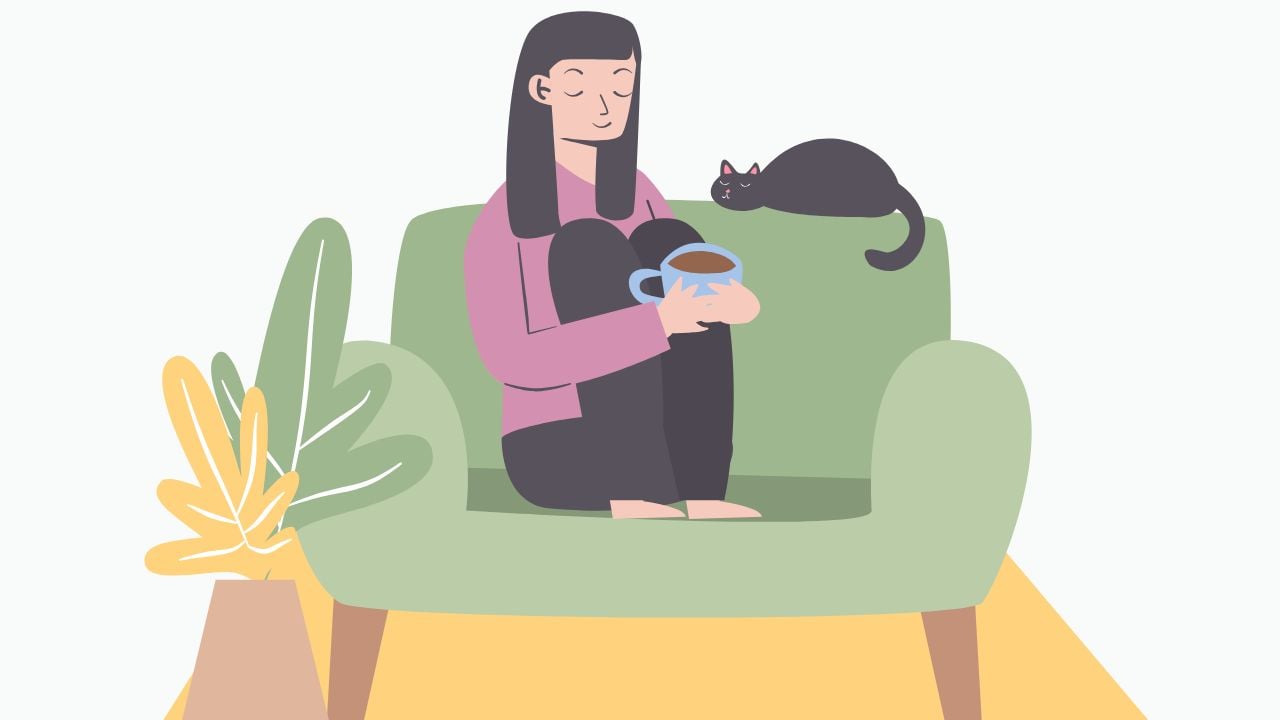
Yes, you can be both an introvert and an ADHDer. ADHD does not have to look loud: the predominantly inattentive form is typically quiet and non-disruptive, and internal restlessness tends to outlast outward hyperactivity.
This guide explores how ADHD and introversion coexist and why the “quiet ADHDer” is often the most misunderstood.
Key Takeaways
- Both Traits: Introversion and ADHD are separate, so you can be both. Quiet ADHD is easy to overlook because it rarely disrupts anyone.
- Inward Restlessness: Overt hyperactivity tends to fade with age, while internal restlessness persists. A busy mind can sit behind a still body.
- Masking: Hiding your traits to fit in is effortful and can look like introversion. It can also delay diagnosis.
- Missed Diagnoses: Girls and women are more likely to be overlooked, partly because of under-recognition and referral bias.
- Daydreaming: In one clinic sample, adults diagnosed in adulthood reported more excessive daydreaming, which may delay diagnosis.
- Next Steps: Schedule recovery time, treat your quietness as a strength, and consider ADHD coaching if masking is exhausting.
Can You Really Have ADHD and Be an Introvert?
Yes, the two can coexist. ADHD has three presentations, a label for which symptoms stand out most: mainly inattentive, mainly hyperactive-impulsive, or combined.
The “Hyperactive-Impulsive” presentation often gets the most screen time. Many adults, particularly those diagnosed later in life, fall into the Predominantly Inattentive category. That group is easily overlooked.
As Dr. Barkley explains, the physical hyperactivity often seen in children tends to decline as we age. By the time we reach adulthood, that restlessness often moves “inward.” You might not be running around the room, but your thoughts are racing.
This internal “mental hyperactivity” can make you more introverted. Managing the noise inside your head takes so much energy that social interaction can feel like a “sensory overload.”
Research on the lifespan supports this inward shift. Overt hyperactivity typically declines from childhood through adolescence, while inattention, internal restlessness and trouble regulating emotions are more likely to persist (Franke et al., 2018).
Presentations are not fixed types, either. A hyperactive young child may look mainly inattentive as an adolescent.
Quietness can have more than one source. Anxiety and depression often co-occur with ADHD, and each can disguise the other. That is why a thorough assessment looks at all of them together.
Personality research offers a useful comparison. A 2021 meta-analysis pooled 13 studies of adult ADHD (Jacobsson et al., 2021). It found links with low Conscientious Inhibition (less self-restraint) and high Negative Emotionality (frequent, intense negative feelings), though results varied. Neither trait is the same as introversion.
Common Signs of the Introverted ADHDer
Introverted ADHD looks different than the stereotypes. It’s less about “disrupting the class” and more about “fading into the background.” Here are some common signs:
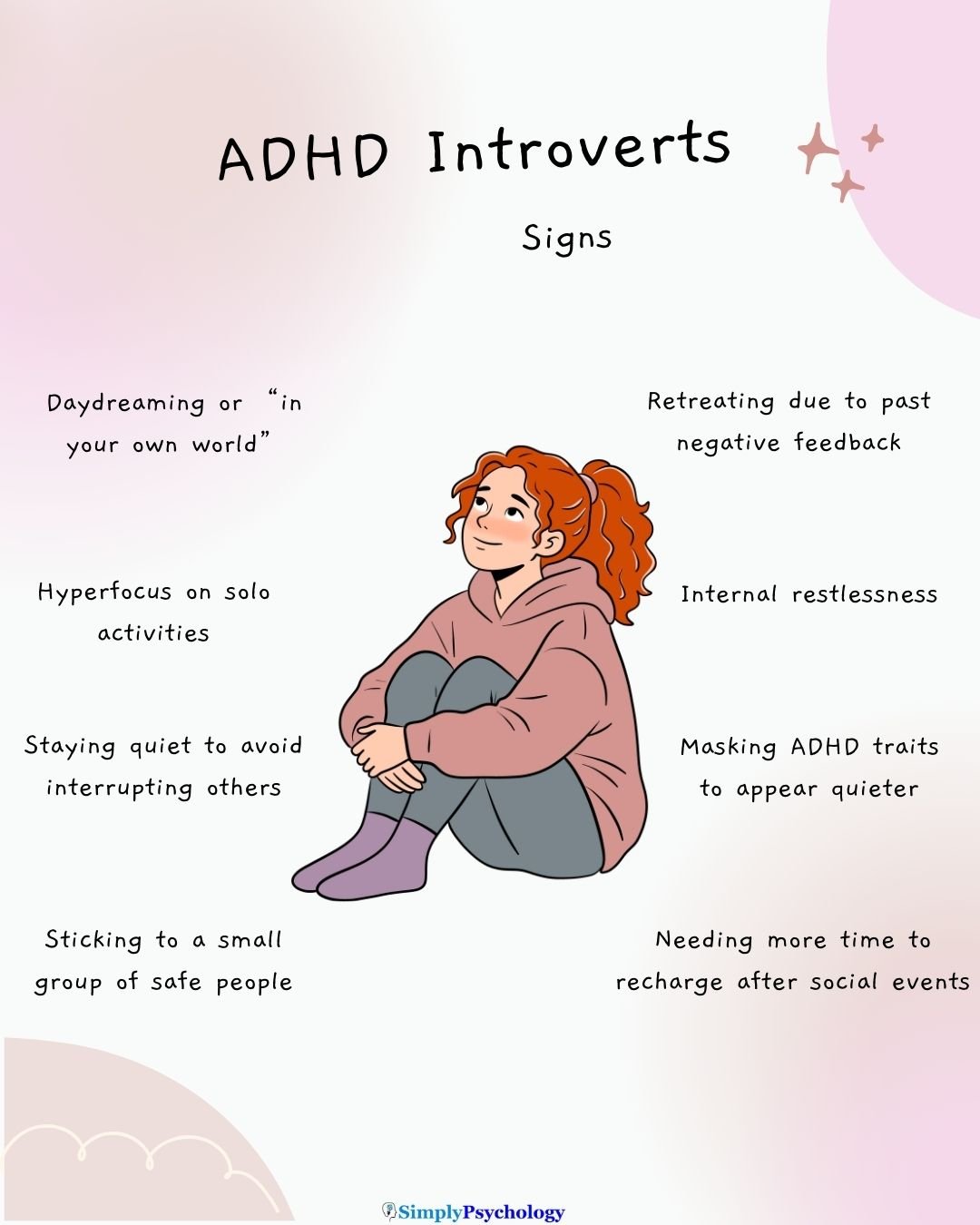
- The “Social Battery” Drain: You might love people, but socialising feels like a marathon because you are constantly following the conversation and filtering out background noise.
- Hyperfocus on Solo Hobbies: You may spend hours alone in “hyperfocus,” deeply immersed in a book, a game, or a creative project, losing all track of time.
- Thinking Before Speaking (Too Much): Unlike the impulsive “blurting out” stereotype, you might be overly careful about what you say to avoid interrupting or saying the “wrong” thing.
- Internal Restlessness: You might stay still in your seat, but you’re constantly “fidgeting” in small ways: tapping a toe, clicking a pen, or doodling.
- The “Daydreamer” Label: You’ve likely been called “away with the fairies” or “in your own world” since childhood.
Daydreaming may also delay recognition. In a clinic sample of 214 adult ADHDers, only 34.4% had been diagnosed in childhood or adolescence (Kandeğer et al., 2025).
Adults diagnosed later reported more maladaptive daydreaming (vivid, excessive daydreaming that interferes with daily life). The authors suggest it may mask and compensate for ADHD symptoms, but longitudinal studies are needed to confirm this.
Why Some ADHDers Seem Introverted: The Role of Masking
Sometimes, what looks like introversion is actually a deeply ingrained survival strategy called masking. Masking is when a neurodivergent person hides their natural traits to “fit in” or appear neurotypical. It is also effortful.
Jordan James, a neurodivergent specialist and host of The Neurodivergent Experience, describes this as a “lifetime of confusion and miscommunication.” When you spend years being told you talk too much or are “too loud,” you may eventually shut down.
Why We Mask
- To Avoid Criticism: If you’ve been shamed for your ADHD traits, you might adopt a quiet persona to stay safe.
- To Manage Energy: Dr. Barkley notes that behaving in “expected” ways is exhausting for ADHD brains. Staying quiet is often a way to save energy.
- Coping Strategies: Checking your belongings obsessively or staying silent to avoid interrupting are actually “coping skills” that can look like introverted caution.
“I went through all of that [struggling to fit in] just for you to completely diminish it… it’s a different brain.” — Jordan James.
A UK expert consensus statement (Young et al., 2020) describes the same masking in girls and women. They more often show the quiet, inattentive presentation and use strategies that compensate for, and hide, their difficulties. Many are treated for anxiety or depression before ADHD is recognized.
Because masking works, it can delay diagnosis by years.
Challenging the “Loud” ADHD Myth
The idea that ADHD equals “loud and hyper” is a narrow view. It leaves many people without the support they need, especially those more likely to mask, such as people of color and women and girls.
The numbers show the gap. In childhood, boys are diagnosed with ADHD about three times as often as girls. A UK expert consensus (Young et al., 2020) argues that this gap partly reflects under-recognition and referral bias.
Referral bias means quiet children are referred less often.
By recognizing that ADHD can be quiet, internal, and introverted, we move away from “deficit-focused” language and toward understanding neurodiversity.
Language matters here too. A 2026 survey of 902 UK neurodivergent adults (Pearson et al., 2026) found ADHD terminology far less settled than autism terminology. Participants rated “ADHDer” and its person-first alternative almost identically.
Participants described a shared sense that existing ADHD terms are inadequate. Euphemisms such as “attention differences” fared as badly as blunt clinical terms, or worse.
As Simon Scott, a broadcaster and podcast producer for The Neurodivergent Experience, notes many people are “high achievers” who are actually struggling with burnout behind the scenes.
Next Steps: How to Support Your “Quiet” ADHD
If you resonate with the “introverted ADHDer” experience, here are a few ways to support your brain:
- Schedule “Recovery Time”: If socialising drains you, build in “decompression” time after events to let your brain rest.
- Reframe Your “Quietness”: Recognize that your ability to listen and your deep internal world are strengths, not signs that you are “less ADHD.”
- Explore Coaching: Working with specialist ADHD coaches can help you regulate your nervous system and move away from exhausting masking patterns.
Research on successful ADHDers supports this strengths view. Sedgwick et al. (2019) interviewed successful ADHDers and identified positive themes through thematic analysis. Themes included energy, courage, resilience and self-acceptance.
Participants also described divergent thinking and hyperfocus, and used these attributes to compensate for their difficulties. These are the experiences of a selected group of successful adults, not everyone with ADHD.
Further reading
Franke, B., Michelini, G., Asherson, P., Banaschewski, T., Bilbow, A., Buitelaar, J. K., Cormand, B., Faraone, S. V., Ginsberg, Y., Haavik, J., Kuntsi, J., Larsson, H., Lesch, K.-P., Ramos-Quiroga, J. A., Réthelyi, J. M., Ribasés, M., & Reif, A. (2018). Live fast, die young? A review on the developmental trajectories of ADHD across the lifespan. European Neuropsychopharmacology, 28(10), 1059–1088. https://doi.org/10.1016/j.euroneuro.2018.08.001
Jacobsson, P., Hopwood, C. J., Söderpalm, B., & Nilsson, T. (2021). Adult ADHD and emerging models of maladaptive personality: A meta-analytic review. BMC Psychiatry, 21, Article 282. https://doi.org/10.1186/s12888-021-03284-1
Pearson, A., Grant, A., Leigh, J., Macdonald, S. J., Williams, K., Williams, G., Spaeth, E., Rose, K., Memmott, A., & Botha, M. (2026). ‘It’s like calling short people vertically challenged’: Language and terminology preferences among neurodivergent adults in the United Kingdom. Neurodiversity, 4, Article 27546330261428235. https://doi.org/10.1177/27546330261428235
Sedgwick, J. A., Merwood, A., & Asherson, P. (2019). The positive aspects of attention deficit hyperactivity disorder: A qualitative investigation of successful adults with ADHD. Attention Deficit and Hyperactivity Disorders, 11(3), 241–253. https://doi.org/10.1007/s12402-018-0277-6
Young, S., Adamo, N., Ásgeirsdóttir, B. B., Branney, P., Beckett, M., Colley, W., Cubbin, S., Deeley, Q., Farrag, E., Gudjonsson, G., Hill, P., Hollingdale, J., Kilic, O., Lloyd, T., Mason, P., Paliokosta, E., Perecherla, S., Sedgwick, J., Skirrow, C., … Woodhouse, E. (2020). Females with ADHD: An expert consensus statement taking a lifespan approach providing guidance for the identification and treatment of attention-deficit/hyperactivity disorder in girls and women. BMC Psychiatry, 20(1), Article 404. https://doi.org/10.1186/s12888-020-02707-9