Research methods in psychology are systematic procedures used to observe, describe, predict, and explain behavior and mental processes. They include experiments, surveys, case studies, and naturalistic observations, ensuring data collection is objective and reliable to understand and explain psychological phenomena.

Hypotheses
Hypotheses are statements about the prediction of the results, that can be verified or disproved by some investigation.
There are four types of hypotheses:
- Null Hypotheses (H0) – these predict that no difference will be found in the results between the conditions. Typically these are written ‘There will be no difference…’
- Alternative Hypotheses (Ha or H1)– these predict that there will be a significant difference in the results between the two conditions. This is also known as the experimental hypothesis.
- One-tailed (directional) hypotheses – these state the specific direction the researcher expects the results to move in, e.g. higher, lower, more, less. In a correlation study, the predicted direction of the correlation can be either positive or negative.
- Two-tailed (non-directional) hypotheses – these state that a difference will be found between the conditions of the independent variable but does not state the direction of a difference or relationship. Typically these are always written ‘There will be a difference ….’
All research has an alternative hypothesis (either a one-tailed or two-tailed) and a corresponding null hypothesis.
Once the research is conducted and results are found, psychologists must accept one hypothesis and reject the other.
So, if a difference is found, the Psychologist would accept the alternative hypothesis and reject the null. The opposite applies if no difference is found.
Sampling techniques
Sampling is the process of selecting a representative group from the population under study.
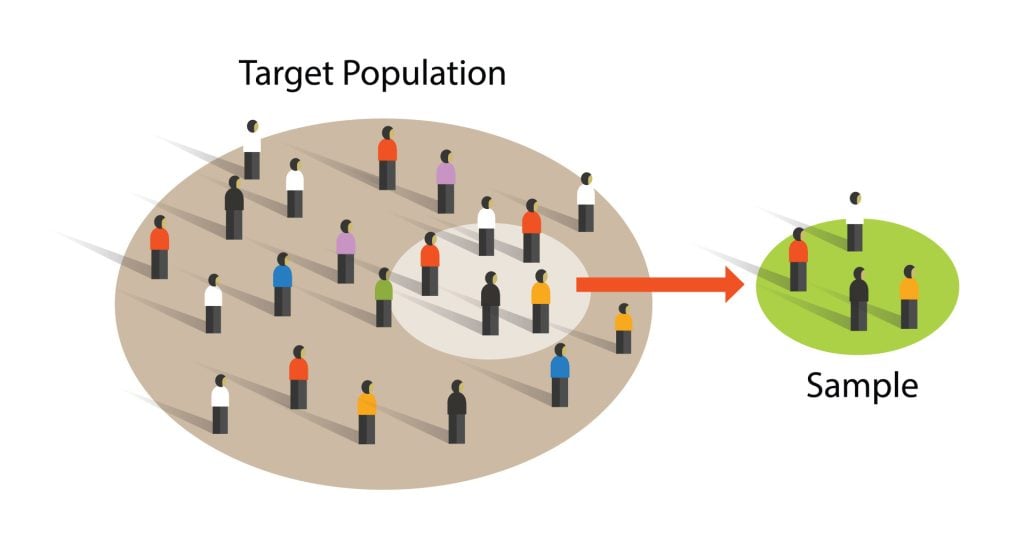
A sample is the participants you select from a target population (the group you are interested in) to make generalizations about.
Representative means the extent to which a sample mirrors a researcher’s target population and reflects its characteristics.
Generalisability means the extent to which their findings can be applied to the larger population of which their sample was a part.
- Volunteer sample: where participants pick themselves through newspaper adverts, noticeboards or online.
- Opportunity sampling: also known as convenience sampling, uses people who are available at the time the study is carried out and willing to take part. It is based on convenience.
- Random sampling: when every person in the target population has an equal chance of being selected. An example of random sampling would be picking names out of a hat.
- Systematic sampling: when a system is used to select participants. Picking every Nth person from all possible participants. N = the number of people in the research population / the number of people needed for the sample.
- Stratified sampling: when you identify the subgroups and select participants in proportion to their occurrences.
- Snowball sampling: when researchers find a few participants, and then ask them to find participants themselves and so on.
- Quota sampling: when researchers will be told to ensure the sample fits certain quotas, for example they might be told to find 90 participants, with 30 of them being unemployed.
Variables
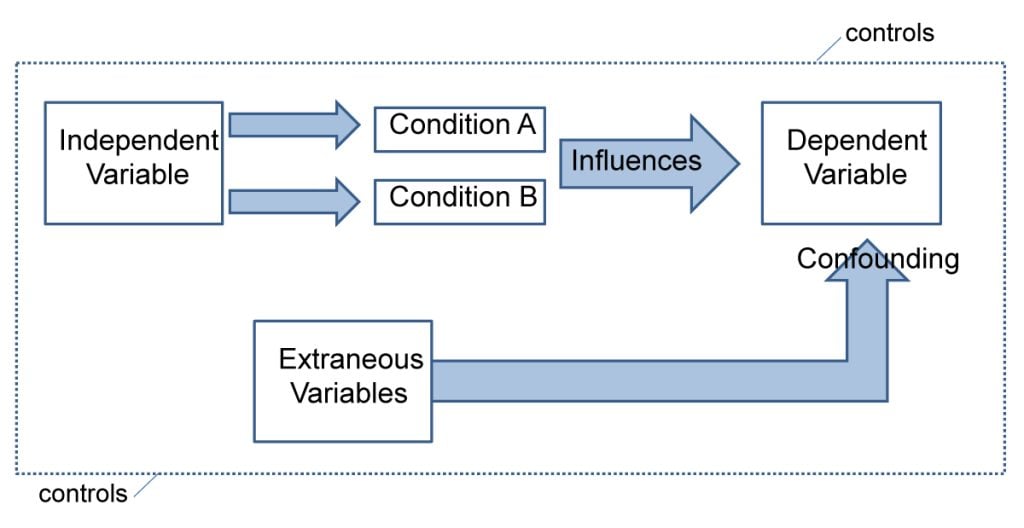
Experiments always have an independent and dependent variable.
- The independent variable is the one the experimenter manipulates (the thing that changes between the conditions the participants are placed into). It is assumed to have a direct effect on the dependent variable.
- The dependent variable is the thing being measured, or the results of the experiment.
Operationalization of variables means making them measurable/quantifiable. We must use operationalization to ensure that variables are in a form that can be easily tested.
For instance, we can’t really measure ‘happiness’, but we can measure how many times a person smiles within a two-hour period.
By operationalizing variables, we make it easy for someone else to replicate our research. Remember, this is important because we can check if our findings are reliable.
Extraneous variables are all variables which are not independent variable but could affect the results of the experiment.
It can be a natural characteristic of the participant, such as intelligence levels, gender, or age for example, or it could be a situational feature of the environment such as lighting or noise.
Demand characteristics are a type of extraneous variable that occurs if the participants work out the aims of the research study, they may begin to behave in a certain way.
For example, in Milgram’s research, critics argued that participants worked out that the shocks were not real and they administered them as they thought this was what was required of them.
Extraneous variables must be controlled so that they do not affect (confound) the results.
Randomly allocating participants to their conditions or using a matched pairs experimental design can help to reduce participant variables.
Situational variables are controlled by using standardized procedures, ensuring every participant in a given condition is treated in the same way
Experimental Design
Experimental design refers to how participants are allocated to each condition of the independent variable, such as a control or experimental group.
- Independent design (between-groups design): each participant is selected for only one group. With the independent design, the most common way of deciding which participants go into which group is by means of randomization.
- Matched participants design: each participant is selected for only one group, but the participants in the two groups are matched for some relevant factor or factors (e.g. ability; sex; age).
- Repeated measures design (within groups): each participant appears in both groups, so that there are
exactly the same participants in each group. - The main problem with the repeated measures design is that there may well be order effects. Their experiences during the experiment may change the participants in various ways.
- They may perform better when they appear in the second group because they have gained useful information about the experiment or about the task. On the other hand, they may perform less well on the second occasion because of tiredness or boredom.
- Counterbalancing is the best way of preventing order effects from disrupting the findings of an experiment, and involves ensuring that each condition is equally likely to be used first and second by the participants.
If we wish to compare two groups with respect to a given independent variable, it is essential to make sure that the two groups do not differ in any other important way.
Experimental Methods
All experimental methods involve an IV (independent variable) and DV (dependent variable).
- Lab Experiments are conducted in a well-controlled environment, not necessarily a laboratory, and therefore accurate and objective measurements are possible.
The researcher decides where the experiment will take place, at what time, with which participants, in what circumstances, using a standardized procedure.
- Field experiments are conducted in the everyday (natural) environment of the participants. The experimenter still manipulates the IV, but in a real-life setting. It may be possible to control extraneous variables, though such control is more difficult than in a lab experiment.
- Natural experiments are when a naturally occurring IV is investigated that isn’t deliberately manipulated, it exists anyway. Participants are not randomly allocated, and the natural event may only occur rarely.
Case Study
Case studies are in-depth investigations of a person, group, event, or community. It uses information from a range of sources, such as from the person concerned and also from their family and friends.
Many techniques may be used such as interviews, psychological tests, observations and experiments.
Case studies are generally longitudinal: in other words, they follow the individual or group over an extended period of time.
Case studies are widely used in psychology and among the best-known ones carried out were by Sigmund Freud.
He conducted very detailed investigations into the private lives of his patients in an attempt to both understand and help them overcome their illnesses.
Case studies provide rich qualitative data and have high levels of ecological validity. However, it is difficult to generalize from individual cases as each one has unique characteristics.
Correlational Studies
Correlation means association; it is a measure of the extent to which two variables are related. One of the variables can be regarded as the predictor variable with the other one as the outcome variable.
Correlational studies typically involve obtaining two different measures from a group of participants, and then assessing the degree of association between the measures.
The predictor variable can be seen as occurring before the outcome variable in some sense. It is called the predictor variable, because it forms the basis for predicting the value of the outcome variable.
Relationships between variables can be displayed on a graph or as a numerical score called a correlation coefficient.
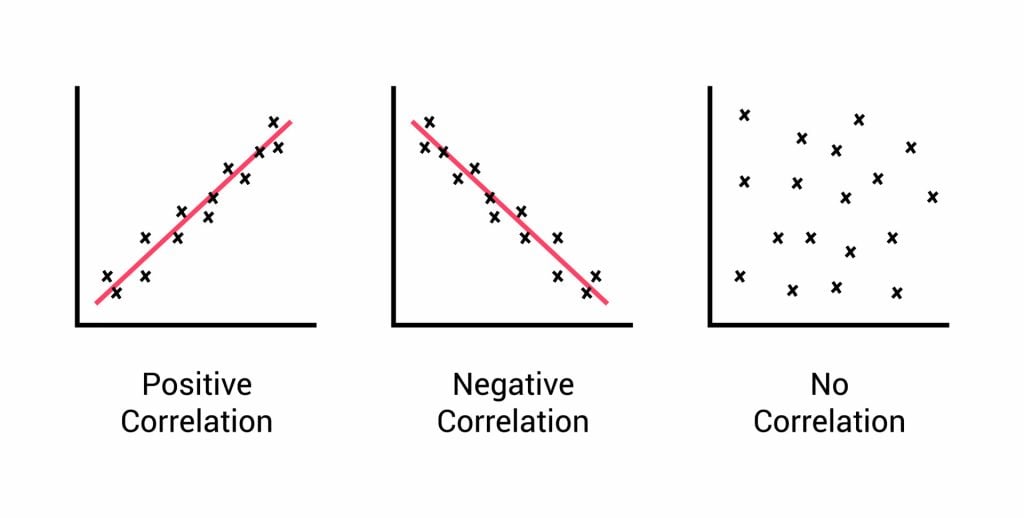
- If an increase in one variable tends to be associated with an increase in the other, then this is known as a positive correlation.
- If an increase in one variable tends to be associated with a decrease in the other, then this is known as a negative correlation.
- A zero correlation occurs when there is no relationship between variables.
After looking at the scattergraph, if we want to be sure that a significant relationship does exist between the two variables, a statistical test of correlation can be conducted, such as Spearman’s rho.
The test will give us a score, called a correlation coefficient. This is a value between 0 and 1, and the closer to 1 the score is, the stronger the relationship between the variables. This value can be both positive e.g. 0.63, or negative -0.63.
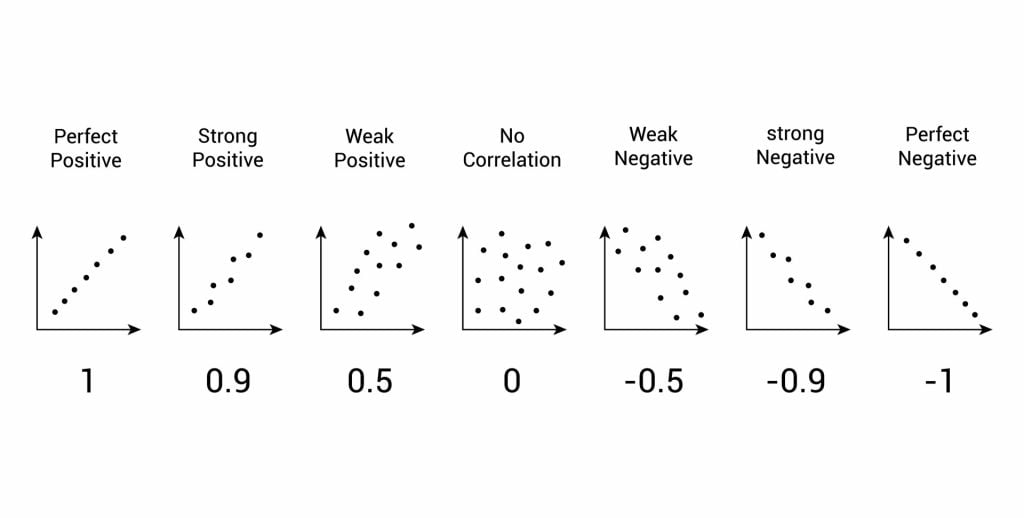
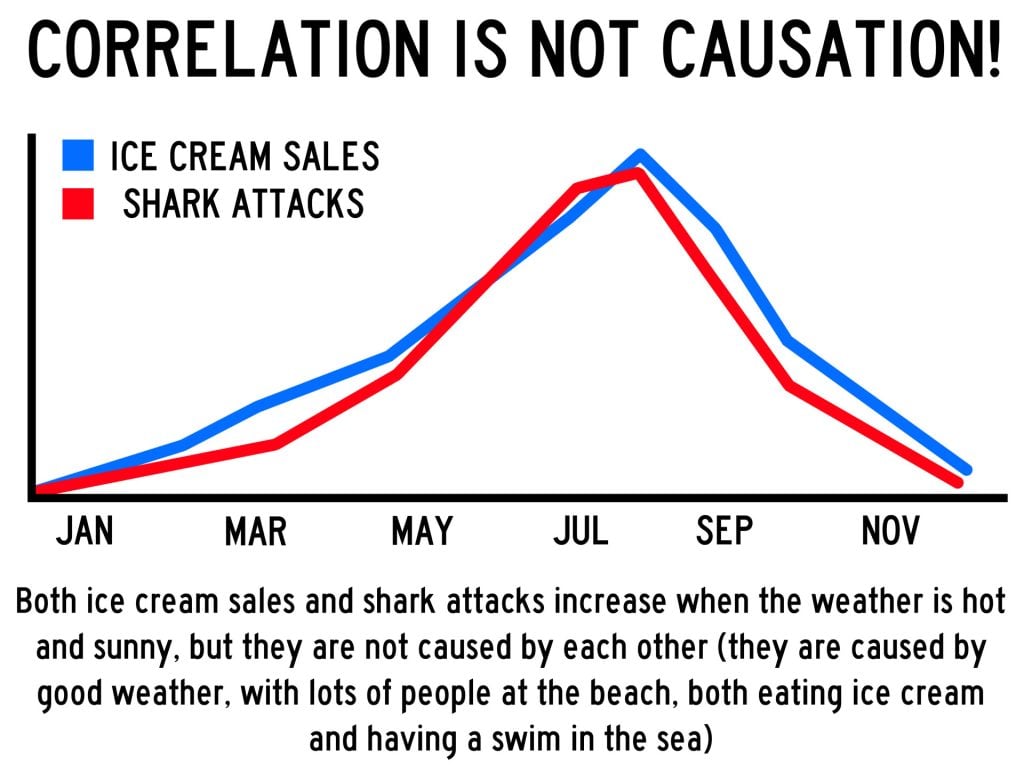
A correlation between variables, however, does not automatically mean that the change in one variable is the cause of the change in the values of the other variable. A correlation only shows if there is a relationship between variables.
Correlation does not always prove causation, as a third variable may be involved.
Interview Methods
Interviews are commonly divided into two types: structured and unstructured.
- Structured interviews are formal. The interview situation is standardized as far as possible. Structured interviews are formal, like job interviews.
A fixed, predetermined set of questions is put to every participant in the same order and in the same way.
Responses are recorded on a questionnaire, and the researcher presets the order and wording of questions, and sometimes the range of alternative answers.
The interviewer stays within their role and maintains social distance from the interviewee.
- Unstructured interviews are informal, like casual conversations. A general conversation normally precedes them, and the researcher deliberately adopts an informal approach to break down social barriers.
There are no set questions, and the participant can raise whatever topics he/she feels are relevant and ask them in their own way. Questions are posed about participants’ answers to the subject
Unstructured interviews are most useful in qualitative research to analyze attitudes and values.
Though they rarely provide a valid basis for generalization, their main advantage is that they enable the researcher to probe social actors’ subjective point of view.
Questionnaire Method
Questionnaires can be thought of as a kind of written interview. They can be carried out face to face, by telephone, or post.
The choice of questions is important because of the need to avoid bias or ambiguity in the questions, ‘leading’ the respondent or causing offense.
- Open questions are designed to encourage a full, meaningful answer using the subject’s own knowledge and feelings. They provide insights into feelings, opinions, and understanding. Example: “How do you feel about that situation?”
- Closed questions can be answered with a simple “yes” or “no” or specific information, limiting the depth of response. They are useful for gathering specific facts or confirming details. Example: “Do you feel anxious in crowds?”
- Postal questionnaires seem to offer the opportunity of getting around the problem of interview bias by reducing the personal involvement of the researcher.
Its other practical advantages are that it is cheaper than face-to-face interviews and can be used to contact many respondents scattered over a wide area relatively quickly.
Observations
There are different types of observation methods:
- Covert observation is where the researcher doesn’t tell the participants they are being observed until after the study is complete. There could be ethical problems or deception and consent with this particular observation method.
- Overt observation is where a researcher tells the participants they are being observed and what they are being observed for.
- Controlled: behavior is observed under controlled laboratory conditions (e.g., Bandura’s Bobo doll study).
- Natural: Here, spontaneous behavior is recorded in a natural setting.
- Participant: Here, the observer has direct contact with the group of people they are observing. The researcher becomes a member of the group they are researching.
- Non-participant (aka “fly on the wall): The researcher does not have direct contact with the people being observed. The observation of participants’ behavior is from a distance
Pilot Study
A pilot study is a small scale preliminary study conducted in order to evaluate the feasibility of the key steps in a future, full-scale project.
A pilot study is an initial run-through of the procedures to be used in an investigation; it involves selecting a few people and trying out the study on them.
It is possible to save time, and in some cases, money, by identifying any flaws in the procedures designed by the researcher.
A pilot study can help the researcher spot any ambiguities (i.e. unusual things) or confusion in the information given to participants or problems with the task devised.
Sometimes the task is too hard, and the researcher may get a floor effect, because none of the participants can score at all or can complete the task – all performances are low.
The opposite effect is a ceiling effect, when the task is so easy that all achieve virtually full marks or top performances and are “hitting the ceiling”.
Research Design
In cross-sectional research, a researcher compares multiple segments of the population at the same time
Sometimes, we want to see how people change over time, as in studies of human development and
lifespan. Longitudinal research is a research design in which data-gathering is administered repeatedly over an extended period of time.
In cohort studies, the participants must share a common factor or characteristic such as age, demographic, or occupation. A cohort study is a type of longitudinal study in which researchers monitor and observe a chosen population over an extended period.
Mixed methods means using more than one research method to improve the study’s validity.
Reliability
Reliability is a measure of consistency, if a particular measurement is repeated and the same result is obtained then it is described as being reliable.
- Test-retest reliability: assessing the same person on two different occasions which shows the extent to which the test produces the same answers.
- Inter-observer reliability: the extent to which there is an agreement between two or more observers.
Meta-Analysis
Meta-analysis is a statistical procedure used to combine and synthesize findings from multiple independent studies to estimate the average effect size for a particular research question.
Meta-analysis goes beyond traditional narrative reviews by using statistical methods to integrate the results of several studies, leading to a more objective appraisal of the evidence.
This is done by looking through various databases, and then decisions are made about what studies are to be included/excluded.
- Strengths: Increases the conclusions’ validity as they’re based on a wider range.
- Weaknesses: Research designs in studies can vary, so they are not truly comparable.
Peer Review
A researcher submits an article to a journal. The choice of the journal may be determined by the journal’s audience or prestige.
The journal selects two or more appropriate experts (psychologists working in a similar field) to peer review the article without payment.
The peer reviewers assess: the methods and designs used, originality of the findings, the validity of the original research findings and its content, structure and language.
Feedback from the reviewer determines whether the article is accepted.
The article may be: Accepted as it is, accepted with revisions, sent back to the author to revise and re-submit or rejected without the possibility of submission.
The editor makes the final decision whether to accept or reject the research report based on the reviewers comments/ recommendations.
Peer review is important because it prevent faulty data from entering the public domain, it provides a way of checking the validity of findings and the quality of the methodology and is used to assess the research rating of university departments.
Peer reviews may be an ideal, whereas in practice there are lots of problems. For example, it slows publication down and may prevent unusual, new work being published. Some reviewers might use it as an opportunity to prevent competing researchers from publishing work.
Some people doubt whether peer review can really prevent the publication of fraudulent research.
The advent of the internet means that a lot of research and academic comment is being published without official peer reviews than before, though systems are evolving on the internet where everyone really has a chance to offer their opinions and police the quality of research.
Types of Data
- Quantitative data is numerical data e.g. reaction time or number of mistakes. It represents how much or how long, how many there are of something. A tally of behavioral categories and closed questions in a questionnaire collect quantitative data.
- Qualitative data is non-numerical and is displayed in words. It is descriptive in nature. This type of data can come from things like interview transcripts or responses to open questionation. Open questions in questionnaires and accounts from observational studies collect qualitative data.
- Primary data is information obtained first-hand by the researcher specifically for the investigation they are conducting. Data collected by a researcher dealing directly with participants is primary data.
- Secondary data is information that already exists, having been collected by someone else or for a different purpose. E.g. meta-analysis: A type of secondary data analysis where researchers pool findings from multiple studies to create a single, overall conclusion.
Converting Qualitative Data to Quantitative Data
Sometimes, researchers might collect qualitative data but then convert it into a numerical form for analysis. This is mentioned in the sources.
Content Analysis is as a method of quantifying qualitative content via coding or categorisation. It is a form of indirect observation that examines artefacts, communications, or forms of media that people produce.
This involves taking qualitative data, such as an interview transcript or diary extracts, and converting it.
One way is to identify themes, words, phrases, or categories and count how many times they appear.
For example, scores related to mood could be categorised into groups like ‘scores under 40’, ‘scores between 40 and 60’, and ‘scores over 60’.
This allows for a numerical result per participant or per category. It’s important that this refers to converting existing data, not collecting new data differently.
Validity
Validity means how well a piece of research actually measures what it sets out to, or how well it reflects the reality it claims to represent.
Validity is whether the observed effect is genuine and represents what is actually out there in the world.
- Concurrent validity is the extent to which a psychological measure relates to an existing similar measure and obtains close results. For example, a new intelligence test compared to an established test.
- Face validity: does the test measure what it’s supposed to measure ‘on the face of it’. This is done by ‘eyeballing’ the measuring or by passing it to an expert to check.
- Ecological validity is the extent to which findings from a research study can be generalized to other settings / real life.
- Temporal validity is the extent to which findings from a research study can be generalized to other historical times.
Features of Science
- Paradigm – A set of shared assumptions and agreed methods within a scientific discipline.
- Paradigm shift – The result of the scientific revolution: a significant change in the dominant unifying theory within a scientific discipline.
- Objectivity – When all sources of personal bias are minimised so not to distort or influence the research process.
- Empirical method – Scientific approaches that are based on the gathering of evidence through direct observation and experience.
- Replicability – The extent to which scientific procedures and findings can be repeated by other researchers.
- Falsifiability – The principle that a theory cannot be considered scientific unless it admits the possibility of being proved untrue.
Statistical Significance
Significance in a statistical test means that the observed difference between the groups is unlikely to have occurred by chance.
A significant result is one where there is a low probability that chance factors were responsible for any observed difference, correlation, or association in the variables tested.
If our test is significant, we can reject our null hypothesis and accept our alternative hypothesis.
If our test is not significant, we can accept our null hypothesis and reject our alternative hypothesis. A null hypothesis is a statement of no effect.
In Psychology, we use p < 0.05 (as it strikes a balance between making a type I and II error) but p < 0.01 is used in tests that could cause harm like introducing a new drug.
A type I error is when the null hypothesis is rejected when it should have been accepted (happens when a lenient significance level is used, an error of optimism).
A type II error is when the null hypothesis is accepted when it should have been rejected (happens when a stringent significance level is used, an error of pessimism).
Statistical Tests
Statistical tests are used to determine whether there is a significant difference or a correlation between two sets of data.
When conducting research, after collecting data, statistical tests help you decide whether the observed results are likely to have occurred by chance or if they represent a real effect.
This informs the decision to accept or reject the null hypothesis.
The choice of a statistical test depends on several factors:
- Whether the study is looking for a difference or a correlation (association).
- The experimental design used (e.g., independent groups, repeated measures, matched pairs). For the purpose of choosing a statistical test, repeated measures and matched pairs designs are often considered the same.
- The level of measurement of the data (nominal, ordinal, or interval).
Tests looking for a difference:
- Sign Test: The sign test can only be used when the study is looking for a difference, employs a related experimental design (repeated measures), and has collected nominal data. To conduct a sign test, you state the hypotheses, record the data and determine the sign of the difference between conditions, find the calculated value ‘S’ (the less frequent sign), and compare it to the critical value to determine significance.
- Wilcoxon Signed-Rank Test: The Wilcoxon test is a more appropriate statistical test of difference for data from a repeated/related design where the data are at the ordinal level of measurement (non-parametric). This test is used when the same participants are assessed in both conditions and the data can be ranked.
- Mann-Whitney U Test: The Mann-Whitney U test is a non-parametric test used to compare two independent groups when the data is ordinal or interval/ratio but not normally distributed.
- Related t-test: The related t-test (also known as paired t-test) is a parametric test used to find a difference between two sets of scores from a related design (repeated measures or matched pairs) where the data is interval. Some sources suggest it can be used with ordinal data if there is justification that the test is robust enough to cope with data on a numerical scale.
- Unrelated t-test: The unrelated t-test (also known as independent samples t-test) is a parametric test used to find a difference between two sets of scores from an independent groups design where the data is interval.
Tests looking for a correlation (association):
- Spearman’s Rho: Spearman’s rho is an inferential test mainly used on ordinal data to assess the strength and direction of a correlation between two co-variables. It cannot be used as a test of difference. For data to be statistically significant, the calculated value must be equal to or higher than the critical value.
- Pearson’s r: Pearson’s r is a parametric test used to assess the strength and direction of a linear correlation between two co-variables when the data is at the interval level.
Other statistical tests mentioned:
- Chi-Squared Test: The Chi-Squared test is appropriate when investigating a difference or an association between two variables where the data is nominal/categorical. It is used when each participant’s data falls into one of several categories.
Levels of Measurement:
- Nominal Data: This is categorical data where items are placed into distinct categories that cannot be ordered. Examples include gender or colour. The mode is a useful measure of central tendency for nominal data.
- Ordinal Data: This is data that can be ordered or ranked, but the intervals between each unit are not necessarily equal and are often based on subjective opinions. Examples include rankings of preference or Likert scale responses. The median and range are appropriate descriptive statistics for ordinal data.
- Interval Data: This is data based on numerical scales with equal and precisely defined intervals. However, interval data does not have a meaningful zero point (e.g., temperature in Celsius). The mean and standard deviation are suitable for interval data, and parametric tests require this level of data.
Parametric tests (related t-test, unrelated t-test, Pearson’s r) are considered more powerful than non-parametric tests (sign test, Wilcoxon, Mann-Whitney, Spearman’s rho, Chi-Squared) and are only used if the data is interval.
When choosing a statistical test, you need to consider these three factors in relation to your study to select the most appropriate method for analysing your data and drawing valid conclusions.
Ethical Issues
- Informed consent is when participants are able to make an informed judgment about whether to take part. It causes them to guess the aims of the study and change their behavior.
- To deal with it, we can gain presumptive consent or ask them to formally indicate their agreement to participate but it may invalidate the purpose of the study and it is not guaranteed that the participants would understand.
- Deception should only be used when it is approved by an ethics committee, as it involves deliberately misleading or withholding information. Participants should be fully debriefed after the study but debriefing can’t turn the clock back.
- All participants should be informed at the beginning that they have the right to withdraw if they ever feel distressed or uncomfortable.
- It causes bias as the ones that stayed are obedient and some may not withdraw as they may have been given incentives or feel like they’re spoiling the study. Researchers can offer the right to withdraw data after participation.
- Participants should all have protection from harm. The researcher should avoid risks greater than those experienced in everyday life and they should stop the study if any harm is suspected. However, the harm may not be apparent at the time of the study.
- Confidentiality concerns the communication of personal information. The researchers should not record any names but use numbers or false names though it may not be possible as it is sometimes possible to work out who the researchers were.
Statistical Disributions
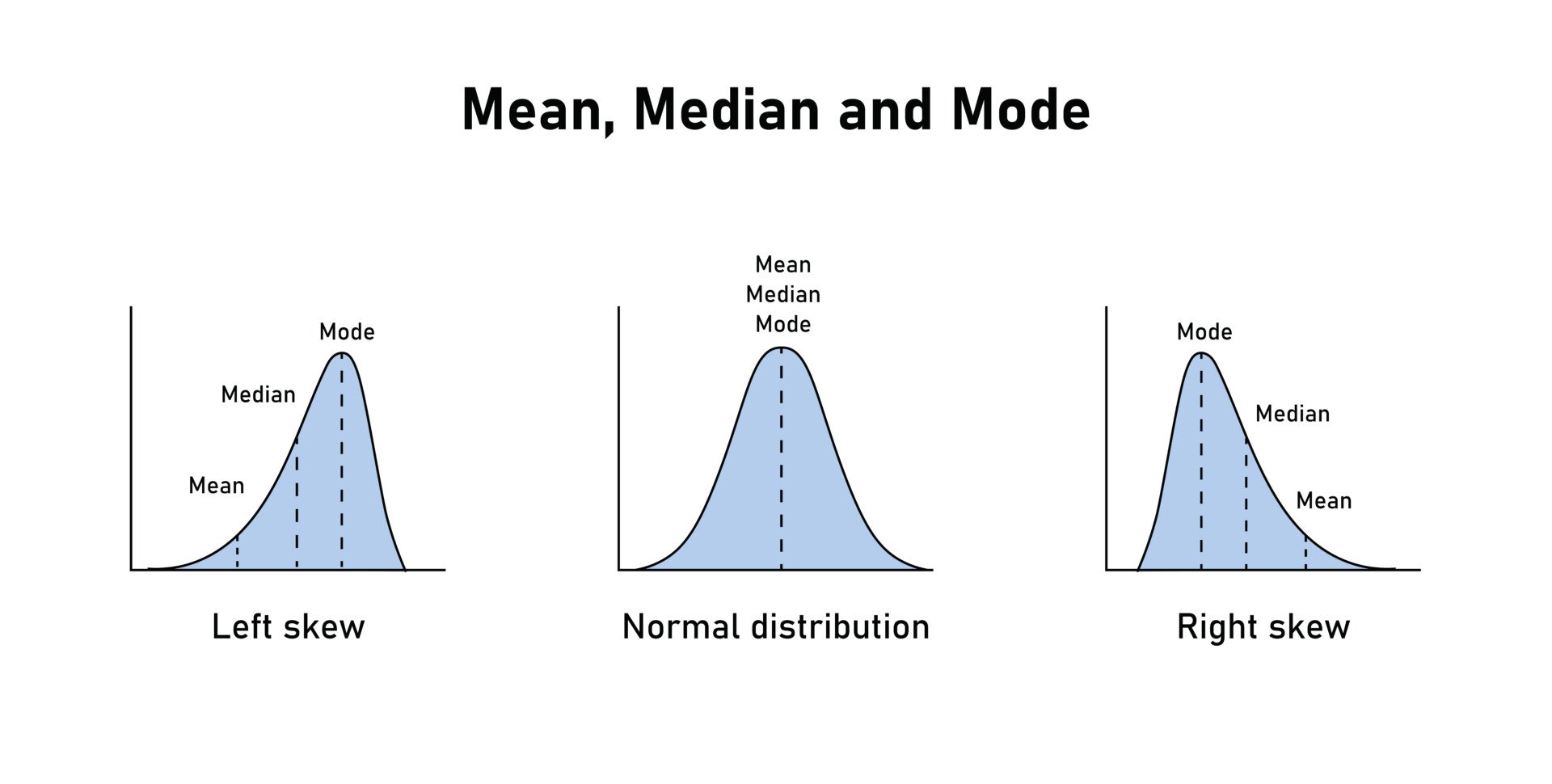
A normal distribution is symmetrical, with most of the data clustered around the mean, median, and mode, which are all equal.
The scores taper off evenly towards both extremes, forming a bell-shaped curve.s
A skewed distribution is asymmetrical, with the majority of the data concentrated at one end.
In a positively skewed distribution, the tail extends to the right, indicating a concentration of lower scores and a few high outliers.
In a negatively skewed distribution, the tail extends to the left, indicating a concentration of higher scores and a few low outliers
Research Methods Exam
Test your knowledge of AQA A-level Psychology Paper 2, Section C: Research Methods. Covers experimental methods, scientific processes, data handling, and inferential testing.
Question 1 of 1
1. Which type of experiment involves the researcher manipulating the independent variable in a controlled, artificial setting? [1 mark]
Question 1 of 1
2. Which experimental design uses the same participants in both conditions of the experiment? [1 mark]
Question 1 of 1
3. Which sampling method gives every member of the target population an equal chance of being selected? [1 mark]
Question 1 of 1
4. A variable that changes systematically with the independent variable and could provide an alternative explanation for the results is called a: [1 mark]
Question 1 of 1
5. When should a directional (one-tailed) hypothesis be used? [1 mark]
Question 1 of 1
6. What is the main purpose of conducting a pilot study? [1 mark]
Question 1 of 1
7. What term describes cues in a research study that allow participants to guess the aim and alter their behaviour accordingly? [1 mark]
Question 1 of 1
8. Which ethical principle requires researchers to inform participants about the true nature of a study after it has taken place? [1 mark]
Question 1 of 1
9. Data collected by placing responses into named categories (such as "yes" or "no") is known as: [1 mark]
Question 1 of 1
10. Which measure of central tendency is most affected by extreme scores (outliers)? [1 mark]
Question 1 of 1
11. What does a standard deviation measure? [1 mark]
Question 1 of 1
12. A correlation coefficient of −0.85 indicates: [1 mark]
Question 1 of 1
13. Which two of the following are features of a laboratory experiment? [2 marks]
(Select all that apply)
Question 1 of 1
14. Which two of the following are advantages of using a repeated measures design? [2 marks]
(Select all that apply)
Question 1 of 1
15. Which two of the following are examples of nominal data? [2 marks]
(Select all that apply)
Question 1 of 1
16. Which two of the following are reasons why a non-directional hypothesis might be used? [2 marks]
(Select all that apply)
Question 1 of 1
17. Explain one strength and one limitation of using a laboratory experiment. [4 marks]
Model Answer
One strength of laboratory experiments is the high level of control over extraneous variables. Because the study takes place in a controlled, artificial environment, the researcher can ensure that only the independent variable changes between conditions while everything else is kept constant. This means that any change in the dependent variable can be attributed to the manipulation of the independent variable, allowing the researcher to establish a cause-and-effect relationship. For example, in a memory experiment conducted in a lab, the researcher can control factors such as noise, lighting, and temperature, ensuring these do not confound the results.
One limitation is that laboratory experiments often lack ecological validity. Because the setting is artificial and the tasks may not reflect real-world behaviour, findings may not generalise to everyday life. Participants may also be aware they are being studied and change their behaviour as a result (demand characteristics). For example, memorising lists of nonsense syllables in a laboratory tells us little about how memory works in real-world situations, such as remembering a conversation or a shopping list.
Mark Scheme
AO1 (2 marks): One strength clearly outlined with elaboration (e.g., high control of extraneous variables, ability to establish cause and effect, replicability). One limitation clearly outlined with elaboration (e.g., low ecological validity, demand characteristics, artificial setting).
AO3 (2 marks): Effective explanation of why the identified features are strengths/limitations, with appropriate examples or reasoning.
Question 1 of 1
18. Explain what is meant by reliability and describe how reliability could be assessed in a psychological study. [4 marks]
Model Answer
Reliability refers to the consistency of a measure. A measurement is reliable if it produces the same or similar results each time it is used under the same conditions. If a test or method is not reliable, the results cannot be trusted and the research lacks credibility.
One way to assess reliability is through test-retest reliability. The same test or measure is administered to the same group of participants on two separate occasions, with a suitable time gap in between (long enough to prevent practice effects but short enough that the thing being measured has not genuinely changed). The two sets of scores are then correlated. A strong positive correlation (e.g., r = +0.80 or above) indicates that the measure produces consistent results over time and therefore has good test-retest reliability.
Another way is inter-observer reliability, which is used when two or more observers are recording behaviour (e.g., in an observational study). Both observers independently record behaviour using the same coding system. Their records are then correlated. A strong positive correlation suggests the behavioural categories are clear and unambiguous, meaning the observations are consistent and reliable.
Mark Scheme
AO1 (2 marks): Clear definition of reliability (consistency of measurement) and identification of at least one method of assessing it (e.g., test-retest, inter-observer reliability).
AO2 (2 marks): Description of how the method would be applied in practice, including relevant procedural detail (e.g., administering twice, correlating scores, what constitutes acceptable reliability).
Question 1 of 1
19. Discuss the use of the sign test. Explain when it is appropriate to use the sign test and describe how the test is carried out. [6 marks]
Model Answer
The sign test is a non-parametric inferential statistical test used to determine whether a difference between two conditions is statistically significant or likely to have occurred by chance. It is the simplest inferential test and is the only one students are required to calculate at AS level.
The sign test is appropriate when three conditions are met. First, the study must be looking for a difference between two conditions rather than a correlation (i.e., the hypothesis predicts a difference). Second, the experimental design must be related — either repeated measures (the same participants in both conditions) or matched pairs (participants matched on key variables). Third, the data must be at least nominal level, meaning it can be placed into categories.
To carry out the sign test, the researcher first records each participant’s scores in both conditions. For each participant, the difference between the two scores is calculated, and a positive sign (+) or negative sign (−) is assigned depending on the direction of the difference. If a participant scores the same in both conditions (a zero difference), that participant is removed from the analysis and the value of N (the number of participants) is reduced accordingly.
Next, the researcher counts the number of positive signs and the number of negative signs. The less frequent sign is identified, and this count becomes the calculated value of S. This value of S is then compared to a critical value from a sign test table at the chosen significance level (usually p ≤ 0.05). For the result to be significant, the calculated value of S must be equal to or less than the critical value. If it is, the null hypothesis is rejected and the researcher concludes that the difference between the two conditions is statistically significant.
For example, if 12 participants took part, one had a tied score (so N = 11), and 3 showed a decrease while 8 showed an increase, S = 3 (the less frequent sign). This would be compared to the critical value for N = 11 at p ≤ 0.05.
Mark Scheme
AO1 (3 marks): Clear description of the sign test including: what it tests (difference), when to use it (related design, nominal data, test of difference), and the steps involved (calculate differences, assign signs, find S, compare to critical value).
AO3 (3 marks): Discussion of the test’s use, which may include: its simplicity, the conditions under which it is appropriate, limitations (e.g., loses detailed information by reducing data to signs), or comparison with more powerful tests. Credit appropriate examples.
Question 1 of 1
20. Outline and evaluate the use of random sampling and opportunity sampling. Discuss the strengths and limitations of each. [6 marks]
Model Answer
Random sampling is a method where every member of the target population has an equal chance of being selected to participate. To carry out random sampling, the researcher obtains a complete list of all members of the target population, assigns each person a number, and then uses a random method (such as a random number generator or drawing numbers from a hat) to select the required number of participants.
A strength of random sampling is that it is the most unbiased method because every member has an equal chance of selection, making the sample more likely to be representative of the target population. This means the results are more generalisable. However, a limitation is that it requires access to a complete list of the target population, which is often impractical. It is also time-consuming, and even with random selection, the sample is not guaranteed to be representative — by chance, certain groups may be over- or under-represented.
Opportunity sampling involves selecting participants who are readily available and willing to take part at the time and place of the study. For example, a researcher might approach people in a university campus or shopping centre and ask them to participate.
A strength of opportunity sampling is that it is the easiest and most practical method to use. It is quick, convenient, and requires minimal planning, making it the most commonly used sampling method in psychological research. However, a significant limitation is that it is highly likely to produce a biased, unrepresentative sample because the researcher can only approach people who are available in a specific location at a specific time. This means the sample is unlikely to reflect the diversity of the target population, reducing the generalisability of the findings. For instance, sampling only from university students would miss other age groups, educational backgrounds, and occupations.
Mark Scheme
AO1 (3 marks): Clear outline of both sampling methods — random sampling (every member has equal chance of selection, method involves complete list and random selection) and opportunity sampling (selecting whoever is available at the time).
AO3 (3 marks): Evaluation of both methods. At least one strength and one limitation of each. May include: representativeness, generalisability, practicality, bias, time and cost considerations.
Scoring your answers…