Narcissistic abuse severely damages a victim’s mental health and emotional framework, which fundamentally changes how they approach future relationships.
- Trust Issues: The systematic gaslighting and betrayal damage the victim’s ability to trust both their own judgment and potential new partners. They often feel suspicious, hyper-vigilant, and expect betrayal, making intimacy difficult.
- Difficulty Identifying Abuse: Victims may become accustomed to high-drama, intense behavior like love bombing or constant conflict, causing them to mistake these unhealthy dynamics for excitement or passion. This can make them susceptible to repeating the pattern with another abusive partner.
- Low Self-Worth: The constant criticism and devaluation result in profound low self-esteem. Victims may feel they don’t deserve healthy love, making them settle for less or continue to seek validation from emotionally unavailable people.
- Boundary Problems: They may struggle to enforce healthy boundaries, either becoming completely isolated and withdrawn, or overly eager to please to avoid conflict, a pattern learned during the abuse.
Recovery requires rebuilding self-trust and learning to recognize healthy, stable relationship dynamics.
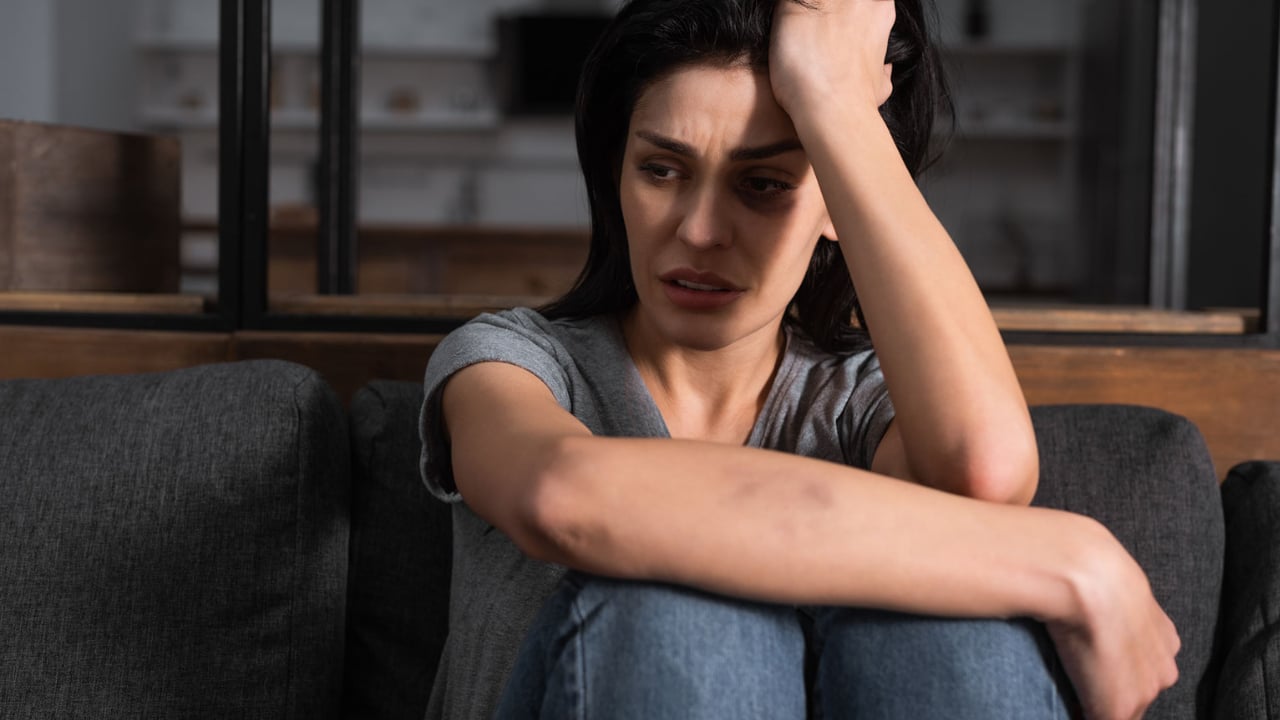
Trust Issues
It is common for individuals in abusive relationships to experience issues with trusts.
When someone has experienced narcissistic abuse, they have likely been subjected to a pattern of deceit, infidelity, manipulation, and unpredictability.
As a result, they may develop deep-rooted trust issues that can profoundly impact their ability to form and maintain healthy relationships later in life.
The Lasting Impact of Narcissistic Abuse on Trust
At the beginning of a relationship, narcissists tend to portray false images of themselves to their partners. They come across as thoughtful, kind, and genuine.
They might engage in love bombing, putting their partner on a pedestal and bombarding them with texts, calls, and gifts.
Narcissists also might put on a false front in familial relationships, with friends, or at work. They will act supportive and caring at first. Then they quickly shift to being abusive and degrading.
This hot and cold behavior gives the victim a false sense of security and makes them question their own judgments and perceptions. That confusion can outlast the relationship.
Ultimately, this can significantly impact a person’s ability to trust new people in the future.
They might be constantly on guard. They try to assess whether the new person can be trusted or might show the same abusive behaviors as a previous partner.
They may be skeptical of compliments or kind gestures, wondering if they are genuine or if they are part of a manipulative strategy.
Rebuilding trust is a gradual process that takes time and patience.
Survivors need patience with themselves. With the right support, they can learn to rebuild trust in themselves and others.
Insecure Attachment
Growing up with narcissistic caregivers or being in a narcissistic relationship can significantly impact an individual’s attachment style, often leading to the development of an insecure attachment style.
Attachment theory suggests that our early experiences with caregivers shape our internal working models of relationships and affect how we bond, connect, and relate to others throughout life.
Individuals with an insecure attachment style often feel unsafe, anxious, and fearful in relationships. They lack trust and fear abandonment (Levy et al., 2011).
As a result, they either become overly dependent on others, craving validation and reassurance, or they avoid relationships altogether.
A systematic review of 113 studies found that several detected no significant link between insecure attachment and partner violence (Velotti et al., 2018). Attachment history is best seen as one contributing factor, not the whole explanation.
Attachment styles remain relatively stable throughout life. However, research has shown that people can learn to feel more secure in relationships over time (Dansby Olufowote et al., 2019). This process is termed “earned secure attachment”.
Healing from insecure attachment patterns and earning secure attachment is a gradual process.
Steps to Develop a More Secure Attachment
- Education: Recognizing and understanding one’s attachment style is the first step toward healing. Educate yourself on attachment theory and different attachment styles so you can gain insight into how your past experiences have shaped your current attachment patterns.
- Therapy: Seeking therapy or counseling can be immensely beneficial in processing the trauma of a narcissistic relationship, addressing attachment issues, and learning healthier ways of relating to others.
- Developing Self-Worth: Building a positive self-image and greater self-esteem can help you feel more secure in relationships and less dependent on external validation.
- “Surrogate” Secure Attachment Figure: Having a role model, such as a partner, friend, or mentor who shows you how a securely attached person behaves and thinks, can be immensely beneficial.
Poor Decision-Making
Due to their past experiences, survivors might have difficulty making constructive, sound decisions. Narcissistic abuse can erode self-worth and confidence.
Victims may be left constantly questioning their own judgments and perceptions, blaming themselves for the abuse they have suffered.
A qualitative study interviewed people who had been with a partner they perceived as narcissistic (Green & Charles, 2019). One participant described losing her own point of view:
“He would tell me what the reality was and he was so convinced in his arguments that I would sort of accept his reality as my own . . . I felt like I was part of his reality to the point where I didn’t even have my own thoughts anymore.”
Elisabeth, a participant in Green and Charles (2019)
This was a small study of seven people, so her account is illustrative rather than representative.
Narcissistic partners often control most areas of their partner’s life, including finances, friendships, and social contact. Survivors often lose the chance to decide for themselves.
As a result, their ability to make decisions for themselves once they are free from the relationship is often skewed. This indecisiveness is not harmless. Research links it to a higher risk of anxiety and depression (Lauderdale et al., 2019).
In order to regain your confidence in your decision-making, you must first acknowledge that your thoughts, feelings, and needs are valid.
By developing a strong sense of self-worth, survivors can learn to feel more secure in their relationships and less dependent on external validation.
People Pleasing
People pleasing is a behavioral pattern where an individual prioritizes meeting the needs and desires of others above their own, often to avoid conflict or confrontation.
People-pleasers have a strong desire to be liked, accepted, and approved of by others, leading them to go to great lengths to avoid conflict or disapproval.
These individuals often have low self-esteem. They fear rejection and crave validation from others.
Experiencing narcissistic abuse, especially as a child, can lead to people-pleasing behavior later in life.
As a result, victims of abuse will seek constant reassurance from their partners or others to alleviate their anxiety and fears.
Therefore, building your confidence and assertiveness will help you to reduce your people-pleasing tendencies and allow you to maintain healthier relationships in the future.
Self-Destructive Habits
Narcissistic abuse can make you feel alone, destroy your confidence, and create an “empty” feeling within you. This distress can feel overwhelming.
For that reason, many survivors turn to self-destructive habits as a way to cope. These patterns take several forms:
- Substance Use and Risky Habits: Drugs, alcohol, gambling, or sex can become ways to cope with the overwhelming distress.
- Pushing Others Away: Survivors may sabotage new relationships to protect themselves from potential harm in the future.
- Repeating the Cycle: Some enter relationships with people who show similar destructive behaviors, creating a vicious cycle of abuse.
Going to therapy or a support group (e.g., a 12-step program) can be helpful for dealing with the underlying causes of these self-destructive behaviors.
Loss of Self-Worth and Distorted Self-Image
Narcissistic abuse can seriously damage a person’s sense of self.
Narcissists want to control their environments and the people in them, so they seek to destroy their victim’s self-worth to gain this authority.
Unfortunately, these feelings of confusion and worthlessness will affect your ability to form healthy and stable relationships in the future.
It can also lead to other issues. These include poor mental health, deep-rooted insecurities, substance misuse, and impaired academic or job performance.
Thus, regaining your sense of self and worth is crucial for your general well-being as well as the health of your future relationships.
Tips for Building Self-Worth
- Write down your strengths and the things you love about yourself
- Start a gratitude diary
- Start small and work your way forward
- Practice saying “no”
- Challenge yourself to go out of your comfort zone (e.g. go to a restaurant or to see a movie alone)
- Have compassion and understanding for yourself
- See a therapist or attend a support group
Effects of Narcissistic Abuse on the Mind and Body
Narcissistic abuse typically works through subtle tactics such as gaslighting, blame-shifting, and erratic behavior rather than physical violence. That makes it harder to recognize and name.
Victims are often led to believe they are to blame. Confusion about whether it even counts as abuse can persist after the relationship ends.
Trauma Symptoms and PTSD
Narcissistic abuse is a form of chronic stress and trauma, and it is associated with the profile of post-traumatic stress disorder (PTSD). Survivors commonly feel sadness, anger, and emotional numbness or emptiness.
Many also avoid reminders of the abuser and the relationship. Cognitively, the abuser’s undermining can leave a weakened sense of self, with eroded self-confidence and self-worth.
Symptoms that can follow include:
- Flashbacks, nightmares, and intrusive thoughts
- Dissociation, feeling disconnected from your thoughts, feelings, body, or surroundings
- Hypervigilance, a persistent state of heightened alertness to possible threat
- Emotional dysregulation, meaning difficulty managing intense emotions
- Trouble sleeping and concentrating
- Feelings of guilt and shame
A therapist or counselor experienced in trauma and abuse can offer validation and coping strategies.
Brain and Body Effects of Chronic Stress
Survivors often stay on constant alert for the abuser’s next emotional attack. That keeps the fight/flight response switched on.
Chronic activation of this response is linked to changes in the amygdala, the brain’s fear center. It can also disrupt emotional regulation.
Some survivors experience dissociation, depression, and emotional numbing. These can work as a way for the mind to detach from the full impact of the experience.
Chronic stress and trauma can also affect memory and concentration through their impact on the hippocampus and related brain regions (Centre for Substance Abuse Treatment, 2014). Confusion, brain fog, and memory difficulties are common.
The chronic stress of narcissistic abuse can affect physical health as much as mental health. Documented physical effects include:
- Gastrointestinal problems, such as irritable bowel syndrome (IBS), constipation, or diarrhea
- Increased heart rate and elevated blood pressure
- Breathing difficulties
- Sleep disturbance and appetite loss
- Headaches, muscle tension, aches, and stiffness
Prolonged stress and trauma can also weaken immune function. Survivors may therefore be more susceptible to infections and illness.
Trauma Bonding, Denial, and Boundary Loss
Many survivors form a complex attachment to the person who abused them, known as trauma bonding. It forms through a cycle of intermittent reward and punishment. Survivors can come to feel loyalty or gratitude toward the person abusing them.
Memories of positive moments and small kindnesses can lead a survivor to miss the abuser. They may also question how severe the abuse was or minimize the harm.
Denial often works alongside the bond. It shields a person from the full impact of the abuse by minimizing or excusing what happened. Facing the reality of the relationship is a pivotal early step in recovery.
Narcissistic partners also tend to erode a victim’s boundaries over the course of the relationship. Survivors often feel confused about their own identity. They may also struggle to set or maintain boundaries afterward (Czerny et al., 2018).
How Can I Get Past My Fear and Trust Again After Narcissistic Abuse?
Recovering from the fear and rebuilding trust after narcissistic abuse can be a challenging journey.
But, it is possible with time, self-compassion, reflection, and the right support.
Finding a therapist who has experience with narcissistic abuse or joining a support group for survivors of narcissistic abuse is highly recommended.
Tips for Healing and Rebuilding Trust
- Cut Contact: Cut off all contact with the narcissist. If this is not possible, limit contact as much as possible.
- Accept Reality: Accept that the narcissist will not change. Do not waste time or energy waiting for them to do so; focus on healing yourself.
- Prioritize Recovery: Make your well-being and recovery your priority. Allow yourself to feel anger, sadness, and other emotions without judgment.
- Say No: Learn to say no when you feel uncomfortable or overwhelmed, and communicate your needs and limits in your relationships.
- Set Boundaries: Set and maintain clear boundaries with everyone in your life. Boundaries are crucial for regaining a sense of control and safety.
- Learn About Narcissism: Understanding narcissism helps you see the abuse was not your fault. It can also help you spot early warning signs in new relationships.
- Practice Self-Compassion: Self-blame is common after narcissistic abuse. But you fell victim to manipulative behavior, and your reactions were valid responses to the abuse.
- Forgive Yourself: Treat yourself with the same care and understanding you would offer a friend.
- Practice Self-Care: Try exercise, journaling, meditation, therapy, or mindfulness. Choose whatever makes you feel good.
- Celebrate Progress: Recognize the progress you make. Each step toward healing and learning to trust again is a significant achievement.
How Long Does Recovery Take?
Recovery from narcissistic abuse is possible. The memories may remain, but the aim is to learn to cope and, eventually, to flourish despite them.
The timeline varies from person to person. It depends on the duration and intensity of the abuse, the survivor’s resilience, the strength of their support system, and their consistency in doing the healing work.
For some people recovery takes several months. For others it takes years. Either is a normal part of an individual process, not something to rush.
Progress is rarely linear. People move through periods of feeling better, interspersed with sudden waves of anger or despair. That can feel like regression even when overall progress is being made.
The stages commonly described include:
- Denial: Minimizing or excusing what happened. Facing the reality of the relationship is a pivotal early step.
- Anger: A natural response to the abuser and sometimes to yourself. It is best channeled constructively, such as through writing or exercise.
- Depression and Grief: Sadness and hopelessness are as valid as anger. Grieving, confiding in trusted people, or seeking professional help can all help.
- Acceptance: Coming to terms with having been exploited by someone you loved and trusted. The abuser’s manipulation was the cause, not any fault of yours.
- Forgiveness: Mainly self-directed, releasing responsibility, guilt, and shame. It is an act of self-compassion, not absolution of the abuser.
- Hope: Regaining a sense of possibility and confidence after the abuser’s undermining had stripped both away.
- Rebuilding a Life: Starting small, such as reconnecting with friends, hobbies, or work, then extending to bigger changes over time.
Signs of Healing and Trust Returning
Healing is a personal process, and most people sense it from the inside first. Common signs include:
- Trust: Gradually rebuilding trust in yourself and others, paying closer attention to people’s words and behavior, and spotting red flags without believing no one can be trusted.
- Firm Boundaries: Understanding what your boundaries are, how they were violated, and how to establish and maintain them.
- Self-Compassion: Releasing guilt and self-blame, and trusting your own instincts more.
- Not Wanting Them Back: Less preoccupation with the abuser and more attention for the present and future.
- Emotional Balance: Fewer intense swings, reduced anxiety and self-doubt, and a returning capacity to enjoy hobbies and relationships.
- Cognitive Recovery: As the fight/flight response settles, concentration and memory improve and your sense of reality grows stronger.
Recovery does not mean erasing the past or eliminating every symptom. It means being able to live well despite the impact of the trauma. For a fuller checklist, see signs you are healing from narcissistic abuse.
Where Can I Get Help for Narcissistic Abuse?
If you or someone you know is experiencing narcissistic abuse and needs help, there are several resources available to provide support and assistance.
Seeking the help of a licensed therapist or counselor who specializes in trauma, abuse, or narcissistic relationships can be immensely beneficial.
They can provide a safe and nonjudgmental space to process your experiences, explore your emotions, and develop coping strategies for healing and moving forward.
If the first therapist you find is not helpful, find another one – it can sometimes take a few tries to find the right person.
Shame can keep people from seeking help. Esther Perel, discussing a caller’s story on the podcast Where Should We Begin?, describes a cycle of shame.
The more alarming a partner’s behavior becomes, the less a person wants to tell friends or family. It makes their own judgment look questionable too.
Perel also suggests that wanting to prove you can handle everything alone can itself keep a person in a harmful situation. In her view, accepting support is not a failure of resilience.
These are Perel’s interpretations of one caller’s account, not empirical findings.
Finding the Right Support and Resources
Several kinds of support can be worthwhile (learn more about signs of narcissistic abuse here).
- Online Communities: Online resources, forums, and communities can help you understand narcissistic behavior, connect with others, and find valuable information.
- Helplines: Many countries have domestic violence hotlines staffed by trained professionals who can provide information, safety planning, and referrals to local services.
- Support Groups: Connecting with others who have had similar experiences can reduce isolation and provide validation and understanding.
Your safety and well-being are essential, and there are a number of resources and people ready to help you on your path to healing and recovery.
Evidence Check: Does Narcissism Predict Aggression in Relationships?
Verdict: Supported with qualifications.
Several independent meta-analyses link narcissism to aggression, including aggression toward an intimate partner. The associations are weak to moderate and rest mostly on self-report. The estimate for physical violence is small and imprecise.
Kjærvik and Bushman (2021) pooled 437 studies and found that narcissism relates to aggression (r = .26). The link was stronger when people were provoked.
Oliver et al. (2023) reviewed studies of partner violence and found a weaker link for trait narcissism (r = .15). Those studies differed considerably. Physical violence showed the smallest and least precise estimate (r = .06, 95% CI [-.00, .12]).
These are group patterns, not predictions. The evidence is also correlational, so it does not show that narcissism causes abuse.
Nor does it test what this article mainly describes: the effects on survivors and their recovery. That material rests on qualitative and cross-sectional studies.
Sources
Centre for Substance Abuse Treatment. (2014). Trauma-informed care in behavioral health services: A treatment improvement protocol. Substance Abuse and Mental Health Services Administration (US).
Czerny, A., Lassiter, P., & Lim, J. H. (2018). Post-abuse boundary renegotiation: Healing and reclaiming self after intimate partner violence. Journal of Mental Health Counseling, 40(3), 211–225. https://doi.org/10.17744/mehc.40.3.03
Dansby Olufowote, R. A., Fife, S. T., Schleiden, C., & Whiting, J. B. (2019). How can I become more secure? A grounded theory of earning secure attachment. Journal of Marital and Family Therapy, 46(3), 489–506.
Green, A., & Charles, K. (2019). Voicing the victims of narcissistic partners: A qualitative analysis of responses to narcissistic injury and self-esteem regulation. SAGE Open, 9(2). https://doi.org/10.1177/2158244019846693
Kjærvik, S. L., & Bushman, B. J. (2021). The link between narcissism and aggression: A meta-analytic review. Psychological Bulletin, 147(5), 477–503. https://doi.org/10.1037/bul0000323
Lauderdale, S. A., Martin, K. J., & Moore, J. (2019). Aversive indecisiveness predicts risks for and symptoms of anxiety and depression over avoidant indecisiveness. Journal of Rational-Emotive & Cognitive-Behavior Therapy, 37(1), 62–83.
Levy, K. N., Ellison, W. D., Scott, L. N., & Bernecker, S. L. (2011). Attachment style. Journal of Clinical Psychology, 67(2), 193–203. https://doi.org/10.1002/jclp.20756
Oliver, E., Coates, A., Bennett, J. M., & Willis, M. L. (2023). Narcissism and intimate partner violence: A systematic review and meta-analysis. Trauma, Violence, & Abuse, 25(3), 1871–1884. https://doi.org/10.1177/15248380231196115
Velotti, P., Beomonte Zobel, S., Rogier, G., & Tambelli, R. (2018). Exploring relationships: A systematic review on intimate partner violence and attachment. Frontiers in Psychology, 9, Article 1166. https://doi.org/10.3389/fpsyg.2018.01166



