Repetition compulsion is a psychological phenomenon in which an individual repeatedly re-enacts a traumatic event or its circumstances. The re-enactment seems to be an attempt to master, heal, or understand the event, even though it may cause further harm.
It’s a concept rooted in Freudian psychoanalysis, suggesting that people are “compelled” to repeat past behaviors or events.
This can manifest in various ways, such as repeatedly seeking out abusive relationships or engaging in self-destructive behaviors.
Repetition compulsion may briefly ease anxiety or distress. Long term, though, it hinders therapeutic progress and perpetuates cycles of trauma.
Trauma is a universal experience. It can be defined as the gap between an external threat and one’s inner resources to deal with it. At any time that a person is overwhelmed by fear or hopelessness, they have experienced such an event.
Key Takeaways
- Unconscious Pattern: Repetition compulsion is not deliberate self-sabotage. It is a learned, largely unconscious pull toward what feels familiar, even when that familiarity is painful.
- Freud’s Theory: Sigmund Freud coined the term, arguing that patients who cannot remember a trauma will instead “act it out” through repetition.
- Two Drivers: The pattern combines a wish for mastery (getting it right this time) with the comfort of the familiar, even when the familiar is harmful.
- Common Signs: Repeatedly entering abusive or emotionally unavailable relationships, self-destructive behavior, and recurring trauma-related dreams are all common manifestations.
- Treatment: Psychodynamic therapy, CBT, DBT, and REBT can each help someone recognize the pattern and interrupt it.
- Modern Evidence: Research since 2016 confirms that early victimization statistically predicts later victimization, though it does not prove Freud’s original unconscious-drive theory.
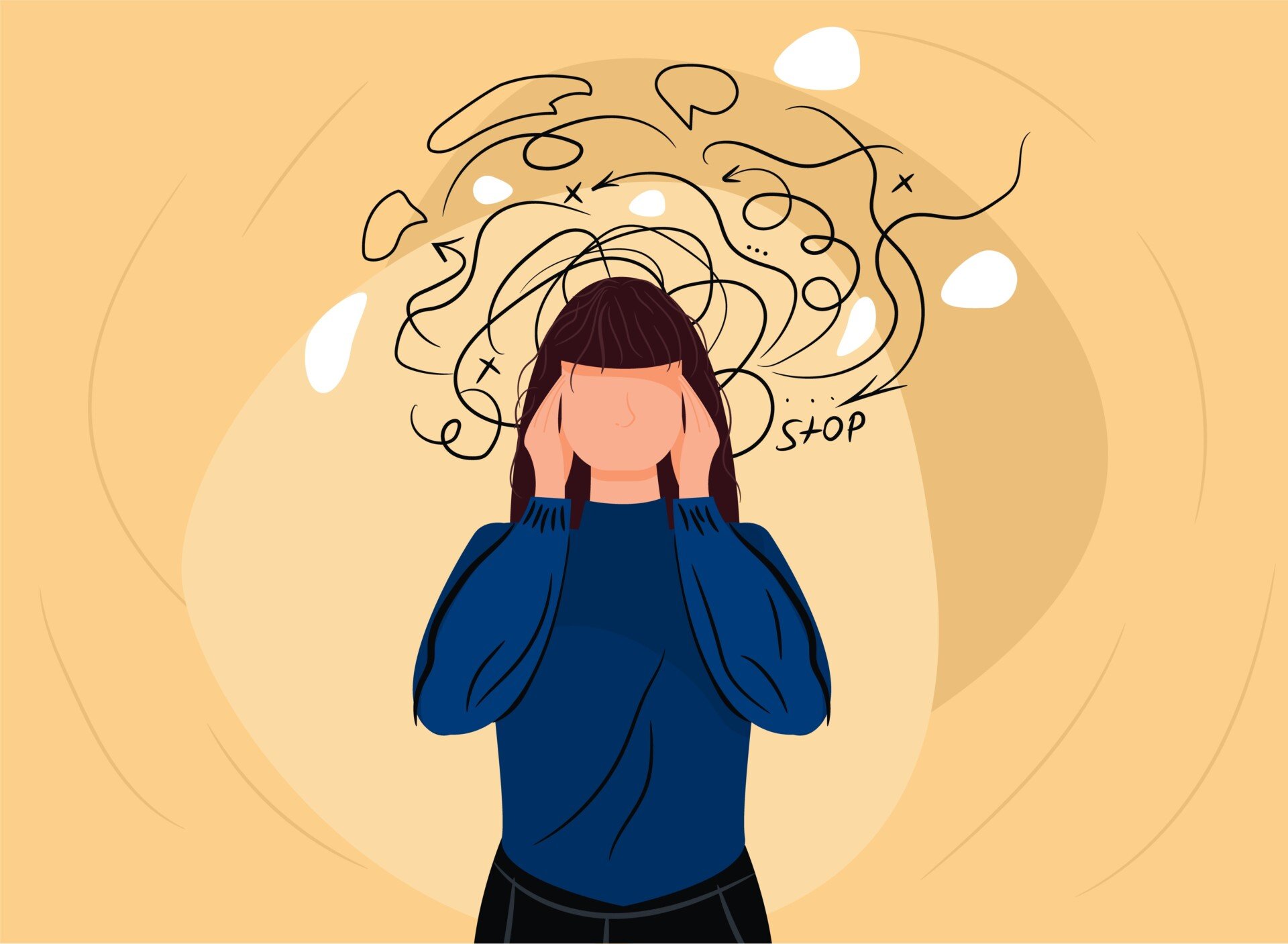
Humans tend to seek comfort in what is familiar to them. Sigmund Freud called this pull repetition compulsion. He described the drive behind it as an urge ‘to return to an earlier state of things.’
Freud held the view that a person’s inability to discuss or remember past traumatic events might lead them to repeat these traumas compulsively.
Repetition compulsion can involve people continuously putting themselves in a situation they know is not healthy. They may not even realize they’re repeating past trauma.
These actions are most apparent in the types of relationships people engage in, particularly dysfunctional ones.
Despite knowing that relationships are destructive, we may continue demonstrating patterns of these types of relationships. We may be trying to ‘fix’ what happened in the past by recreating the trauma with new relationships. Some call this an innate need to finish things.
Freud’s Theory of Repetition Compulsion
Freud named and developed repetition compulsion across two landmark papers, six years apart. Each captures a different piece of the puzzle.
Acting Out Instead of Remembering (1914)
In his 1914 paper Remembering, Repeating and Working-Through, Freud noticed that many patients in analysis could not recall their repressed memories. Instead of remembering, they acted them out.
A patient who could not recall being defiant toward a parent might become defiant toward the analyst instead. They would not realize they were repeating anything at all. Freud called this the compulsion to repeat, and described it as the patient’s substitute for remembering.
Freud linked this directly to transference. The forgotten past gets transferred onto the analyst, and onto every close relationship in the patient’s life. The stronger the resistance to remembering, Freud argued, the more the past gets relived instead of recalled.
The therapeutic answer is to work through it. This means giving the patient time to turn blind repetition into something they can consciously understand.
The Fort-Da Game and the Death Instinct (1920)
Six years later, in Beyond the Pleasure Principle, Freud pushed the idea further. Mental life is supposed to be governed by pleasure-seeking. So why do people reliably repeat experiences that bring them no pleasure at all?
Aim: Why did his eighteen-month-old grandson keep replaying one specific loss: his mother leaving the room?
Method: Freud observed the boy’s game with a wooden reel tied to a string. He threw it out of sight, calling “fort” (“gone”). Then he pulled it back into view, calling “da” (“there”). The game re-enacted his mother’s disappearance and return.
Results: The boy repeated the distressing “disappearance” part far more often than the joyful “return.” Freud read this as an attempt at mastery. The child turned something that had happened to him into something he controlled. It felt like a small act of power.
Conclusion: People sometimes repeat painful experiences to convert passive suffering into active control. This is the seed of a compulsion that can override pleasure-seeking.
Freud then proposed a controversial death instinct: an inbuilt pull to return to an earlier, tensionless state. Even Freud was not fully convinced. He admitted he did not know how far he believed it himself.
Most later psychoanalysts rejected the death-instinct theory. The core observation behind it, that people repeat what hurts them, has proved far more durable.
Examples of Repetition Compulsion
Repetition compulsion can occur in many situations, often when there is a trauma that keeps being repeated. Some examples of repetition compulsion include:
-
Someone who has experienced abuse as a child goes on to have abusive adult relationships.
-
Someone who experienced violence in their childhood is more likely to become a perpetrator of violence later in life.
-
Someone with posttraumatic stress disorder (PTSD) has recurring dreams of the traumatic experience.
-
Someone who has an emotionally distant parent or caregiver goes on to have adult relationships with people who are also emotionally distant.
-
When feeling anxious, an individual turns to their favorite movie or TV show and watches it repeatedly.
-
After being the victim of a crime, someone may seek out horror movies or watch a lot of crime documentaries to re-experience similar feelings.
Why is change hard?
Repetition compulsion is just that, a compulsion. When we repeat the past, we are not doing it on purpose, rather, it is a learned response to what we already know.

People almost feel compelled to return to a person or situation which recreates their past trauma. There are several explanations as to why people find change so hard. Some possible explanations include the following:
Familiarity of chaos
Individuals may find change hard because they are so familiar with the chaos that they see this as normal.
As a child, humans absorb what is presented to them. A child raised in a chaotic household, with a parent who has narcissistic tendencies, or around frequent abuse, absorbs these patterns as normal. They have no comparison to know otherwise.
At that time in their lives, the child has no way of comparison to what they experience. Thus, when they are older, they may be suspicious of having a relationship with someone who is not a reflection of their chaotic upbringing.
Inflexible defenses
People may have a rigid way of protecting themselves against the experience of repeating their trauma. They believe there is no point in trying to stop it and that this is just ‘the way things are.’
However, this way of thinking can unintentionally result in the re-enactment occurring anyway. If they were more consciously trying to stop the re-enactment, then they may have more luck with stopping the cycle.
Creatures of habit
As humans, we tend to seek comfort in what is familiar and predictable. Sometimes we revert to familiarity because the outcome is predictable, and even healthy change is scary.
Someone experiencing repetition compulsion might believe that new experiences will be more painful than their present situation. New experiences are too new and untested, so it often feels safer to return to what we know.
Emotional dysregulation
Someone may find change difficult if they have poorly regulated emotional reactions in response to negative stimuli. A parent or caregiver may have shut down a child when they got upset and did not comfort them.
When the child grows up, they may have internalized that they deserve to be mistreated and that there is no reason for them to be upset.
Someone with poorly regulated emotional reactions may be very sensitive to criticism and interpret this as harsh and respond in a hostile way.
Without tackling emotional dysregulation, people can be stuck in repetitive emotional cycles.
A need to recreate history
It can be hard to change when we need to recreate history. Those who seek out familiar relationships may try to recreate a traumatic event. The goal is mastery: changing the outcome to gain control over what couldn’t be controlled as a child. This process is largely unconscious.
For instance, someone may continue to be in familiar, intimate relationships with the hope that they can ‘get it right’ this time around.
They may think that if they act nicer, perform better, or use the right words, their partner will not abuse them. The need to recreate history can therefore make it difficult to make a change.
‘The idea is that the childhood wounds that are the subconscious programming from childhood is going to be replayed in an attempt by the individual to gain mastery over their experience because ultimately in childhood there was a certain level of helplessness.’
Yitz Epstein, Narcissistic Abuse and Relationship Life Coach
Trauma is not remembered
There is some evidence to suggest that to cope with a traumatic event, our brains may block our capacity to remember it.
This might happen through dissociation, which occurs at the moment that the trauma occurs. Dissociation happens when a person disconnects from their thoughts or feelings in a moment.
Likewise, the brain may block our capacity to remember after the event through a type of amnesia.
These mental escapes can inhibit our ability to identify similar threats in the future, making it more likely they will happen again.
Impact of Repetition Compulsion
Re-victimization
Due to earlier trauma, repetition compulsion can make someone more likely to be victimized again. A child who was abused, for instance, may grow up more likely to face abuse again as an adult.
The need to ‘get it right’ pulls these individuals toward relationships that mimic old wounds. The relationship goes wrong again. They feel abandoned and at fault, just as before.
As psychiatrist Bessel van der Kolk, a founder of the Trauma Research Foundation, explains, many trauma survivors reexpose themselves to situations that echo their original trauma. This happens through re-enactment, revictimization, and self-directed harm. He argues these repetitions aim for mastery, but tend to retraumatize instead.
No resolution
If patterns are continuously repeated without being addressed, the underlying issues may never be resolved.
While it may seem as if someone is healing and has grown, in reality, they may find themselves in a position where their current anxieties become overwhelming. So, they regress into those repetitive compulsions because they are familiar and comforting.
Reopened Emotional Wounds
The reasoning with many people is that if they stay in re-traumatizing relationships, they will eventually get it ‘right’ and receive the love and acceptance they need. However, emotional wounds will continue to re-open as the relationship fails, causing more pain.
If someone continues to believe they will find the correct way to please someone, they are refusing to acknowledge that their emotional wounds are keeping them from finding peace.
Self-destructive behaviors
Many people who experienced trauma as children tend to take their hurt and anger out on themselves. These behaviors include self-harming, drug and alcohol abuse, and eating disorders.
Sometimes, people will re-enact violence that was done to them as a child as a way of dealing with past hurts. Therefore, they are perpetuating their victimhood onto others and continuing the cycle.
Low self-esteem
Experiencing trauma can diminish a person’s self-esteem and self-worth. They may believe that they deserve to be mistreated and that it is somehow deserved.
A child may rationalize that being placed in foster care was something they deserved rather than a necessity for their safety.
These internalized beliefs can damage self-esteem and can result in self-sabotaging behaviors later in life.
How can repetition compulsions affect your relationship?
Below are some relationship patterns that someone who has repetition compulsion may engage in:
Seeking the wrong person
Repetition compulsion can mean that someone seeks out relationships with people who are not good for them. They may always attract the same type of person and be confused as to why this keeps happening.
They may enter into relationships with toxic people, narcissists, someone who wants to control them, abusive people, or someone who victimizes them. They may attract someone who is emotionally unavailable or only gives very minimal amounts of love when it suits them.
Detachment
Detachment is a coping mechanism that can be used by someone who experienced abuse as a child. This refers to a person’s inability to fully engage with their feelings or the feelings of others.
A child who learns to detach themselves as a form of protection is likely to continue to use this coping mechanism as an adult.
Seeking what is familiar
People often seek the comfort of familiarity. It is what they know, and it seems safer than trying something different which has not been tested.
For example, someone who has a distant parent may seek a partner who has a distant personality.
Even if they are unhappy in the relationship and don’t like their partner’s distance, they may see this as normal. They will likely continue to find similar people.
Self-hatred
After experiencing an early trauma, individuals can feel a lot of self-hatred, feeling as if they somehow deserved the mistreatment.
As they age, they may be more likely to attract others who mistreat them, reaffirming their negative self-beliefs.
Hostile behavior
If someone was abused or neglected as a child, they have a lot of built-up feelings of anger about the situation. As a result, they may become unable to control their anger as adults.
They may become excessively angry, even in response to mild inconveniences, and they could become violent to others as an unhealthy way to take out their anger on somebody.
Managing repetition compulsions
If you find that you get stuck in repetitive compulsions, some things can be done to help manage them.
Address the past
Part of the process of managing repetition compulsion is to work on addressing past trauma. Acknowledge what happened in the past. Make a conscious choice not to let those hurts control your future decisions and relationships.
Understand that the patterns you are repeating were not put there by you. You picked them up from somebody else. It happened at a time when you were more vulnerable.
The person who caused the trauma will not heal it for you. Healing is your responsibility.
You have value, no matter what trauma you have experienced in the past. You also deserve close relationships which are healthy and supportive.
Address coping mechanisms
To be able to heal from the trauma, you will also have to address any unhealthy coping mechanisms or negative behaviors that you engage in.
Some defense mechanisms are traditionally used to protect against feelings of traumatic overwhelm and can include substance abuse, self-injury, and violence against others.
Accept that history cannot be rewritten
A main reason for repetitive compulsions is the need to rewrite the past. You must accept that history cannot be rewritten. You can only find someone supportive who helps break the cycle.
Sometimes you must accept that some people will not change no matter what you do. People who cause trauma will likely need professional help, and this is not something you should carry as a burden for yourself. You cannot be expected to help someone abusive.
Consider therapy
Therapy aims to break the pattern of repetition. The trauma and dysfunction a person has experienced influence the course and pace of therapy.
Gaining control over your current life, rather than repeating trauma, is the primary goal of therapy.
In therapy, you can share your story in a safe place with someone non-judgemental. The therapist will help you to analyze what happened and how it has affected you.
As well as individual therapy, group sessions can offer acceptance and social support, especially from others who have faced similar trauma. Several structured approaches can help:
CBT: Identifies the cognitive distortions, negative self-talk, and core beliefs that drive the behavior, then restructures them.
DBT: Addresses the emotion-regulation deficits and impulsive patterns that fuel re-enactment.
REBT: Challenges the rigid, absolutist beliefs that keep the pattern locked in place.
Group therapy: Offers social support and acceptance, which can be powerful for survivors who recognize their own experience in others.
These approaches target the maladaptive thought patterns, habits, and repetitive choices that can take years to develop, so reshaping them also takes time.
Psychodynamic therapy explores a person’s past traumatic relationships to identify how and why they are re-enacting a trauma. It helps someone understand the unconscious forces driving their behavior, including unresolved conflicts that may be causing the repetition compulsion.
Self-regulation
Below are some self-regulation techniques that can be used to manage repetitive compulsions:
-
Deep breathing
-
Positive visualisation
-
Yoga
-
Journaling
These can all help to control the central nervous system’s arousal response. Through self-regulation, you should better understand what is going on around you and focus on what it is you want and need.
These are also methods to externalize any uncomfortable feelings in a healthy way rather than engaging in repetitive compulsions.
Critical Evaluation
Repetition compulsion is a compelling explanation for otherwise baffling behavior. Like any psychoanalytic concept, though, it has real strengths and real limits.
Strengths
The concept ties together trauma, attachment, transference, and defense within a single frame. Few single explanations pull that much together at once.
Reframing someone as unconsciously seeking mastery, rather than “self-sabotaging,” is both compassionate and clinically useful.
It points therapy toward the person’s origins. Not just the symptoms. It also directs attention to how the pattern shows up live, inside the therapy relationship itself.
The downstream prediction, that early victimization raises the risk of later victimization, has real research support too. This is not just clinical intuition.
Werner et al. (2016) and Girard et al. (2023), reviewed below, back the prediction with controlled and qualitative evidence. That combination of theoretical breadth and clinical usefulness is why the concept has endured for over a century.
Limitations
The theory is difficult to test.
Almost any repetition, healthy or harmful, can be reinterpreted after the fact as an attempt at mastery, which makes the core claim hard to falsify.
Other frameworks explain much of the same behavior without an unconscious drive.
Learning theory points to conditioning and reinforcement, cognitive-schema models to distorted beliefs, and attachment theory to internal working models built in early caregiving.
Each can account for similar patterns on its own.
Freud’s death-instinct theory is the shakiest part. It is essentially unfalsifiable, and most later psychoanalysts rejected it outright.
Freud himself was only tentatively convinced, admitting he was “not convinced” by his own argument. Taken together, these gaps mean the concept works better as a clinical lens than as a strictly testable scientific claim.
Contemporary Research
The clearest modern evidence concerns revictimization: people harmed early in life are, on average, more likely to be harmed again.
Childhood Maltreatment and Adult Revictimisation
Aim: Werner et al. (2016) tested whether childhood maltreatment, and childhood sexual abuse specifically, predicts adult sexual victimization in both men and women.
Method: The researchers pooled three large, independent datasets. Together, these totaled thousands of participants. They used statistical models that controlled for substance dependence and psychopathology.
Results: Childhood maltreatment predicted adult sexual victimization for both sexes, across all three samples. Curiously, the link was stronger for men than women.
Conclusion: Early sexual abuse independently raises the risk of adult sexual victimization, replicated across samples. This confirms the pattern of repetition, though it cannot test Freud’s proposed unconscious mechanism.
The Survivor’s Experience of Revictimisation
Aim: Girard et al. (2023) set out to document, in survivors’ own words, how revictimization is experienced and sustained.
Method: The team combined 15 separate qualitative studies of women who had experienced both childhood sexual abuse and intimate-partner violence.
Results: Two themes stood out. One was learned helplessness, a belief system that blocked self-protection. The other was a “broken internal compass”: distorted risk appraisal that made danger hard to spot.
Conclusion: Revictimization is sustained partly by learned helplessness and disrupted risk-evaluation. These findings fit cognitive and attachment explanations just as well as a psychoanalytic one.
Read together, the evidence sits at different levels of confidence. Repeated harm itself is well supported by controlled research. The specific claim of an unconscious “drive” to repeat is a more plausible, clinically useful interpretation than a proven mechanism.
Frequently Asked Questions
How does repetition compulsion relate to posttraumatic stress disorder (PTSD)?
While PTSD is common in people who fought in a war, it is also very common for people who experienced any type of abuse in life.
Someone with PTSD may experience repetition compulsion in the form of recurring dreams involving the traumatic event, or they may be preoccupied with the initial trauma and feel unable to move on.
Because of this, they may unintentionally put themselves in situations that trigger their PTSD symptoms, involving being in abusive relationships which mimic their initial trauma.
If someone finds themselves continually seeking triggering situations, they may be stuck in a loop of creating and repeating their own trauma.
How does cheating relate to repetition compulsion?
Infidelity can relate to repetition compulsion in a couple of ways. If a child experiences one or more of their parents cheating on the other, they may believe this behavior is normal in relationships.
If they see these behaviors as normal, they might be more likely to accept their partner cheating or continuously be with people who cheat on them.
Alternatively, someone who has experienced infidelity in their parents, or has been cheated on themselves, might be more likely to cheat on their future partners.
This may be because they see cheating as normal, it is their way of dealing with this trauma, or it is a way to victimize someone else for the pain they have experienced in the past.
Can repetition compulsion relate to narcissistic relationships?
A narcissistic parent can cause a child to feel constant guilt and blame themselves for things that are not their fault.
If someone experienced narcissism in the form of a narcissistic parent as a child, they might be more likely to form relationships with other narcissists as an adult.
This could involve having friends, co-workers, bosses, and romantic partners who are narcissistic.
Someone may be more likely to excuse the toxic behavior of the narcissist and feel compelled to try to ‘fix’ them. Trying to fix a current narcissist could be a way to rewrite the past with their narcissistic parent.
However, this is unlikely to happen and can make the individual re-traumatized and feel more guilty and at fault, thus continuing and strengthening the compulsion.
References
Bowins, B. (2010). Repetitive maladaptive behavior: Beyond repetition compulsion. The American Journal of Psychoanalysis, 70 (3), 282-298.
Chu, J. A. (1991). The repetition compulsion revisited: Reliving dissociated trauma. Psychotherapy: Theory, Research, Practice, Training, 28 (2), 327.
Epstein, Y. (Host). (2019, August). Repetition Compulsion [Audio podcast episode]. Narcissism Recovery Podcast.
Freud, S. (1962). The aetiology of hysteria. In The Standard Edition of the Complete Psychological Works of Sigmund Freud, Volume III (1893-1899): Early Psycho-Analytic Publications (pp. 187-221).
Girard, M., Fernet, M., & Godbout, N. (2023). “Like a mouse pursued by the snake”: A qualitative metasynthesis on the experiences of revictimization among women survivors of childhood sexual abuse and partner violence. Trauma, Violence, & Abuse, 25(3), 2407–2420.
Van der Kolk, B. A. (1989). The compulsion to repeat the trauma: Re-enactment, revictimization, and masochism. Psychiatric Clinics of North America, 12 (2), 389-411.
Werner, K. B., McCutcheon, V. V., Challa, M., Agrawal, A., Lynskey, M. T., Conroy, E., Statham, D. J., Madden, P. A. F., Henders, A. K., Todorov, A. A., Heath, A. C., Degenhardt, L., Martin, N. G., Bucholz, K. K., & Nelson, E. C. (2016). The association between childhood maltreatment, psychopathology, and adult sexual victimization in men and women: Results from three independent samples. Psychological Medicine, 46(3), 563–573.

