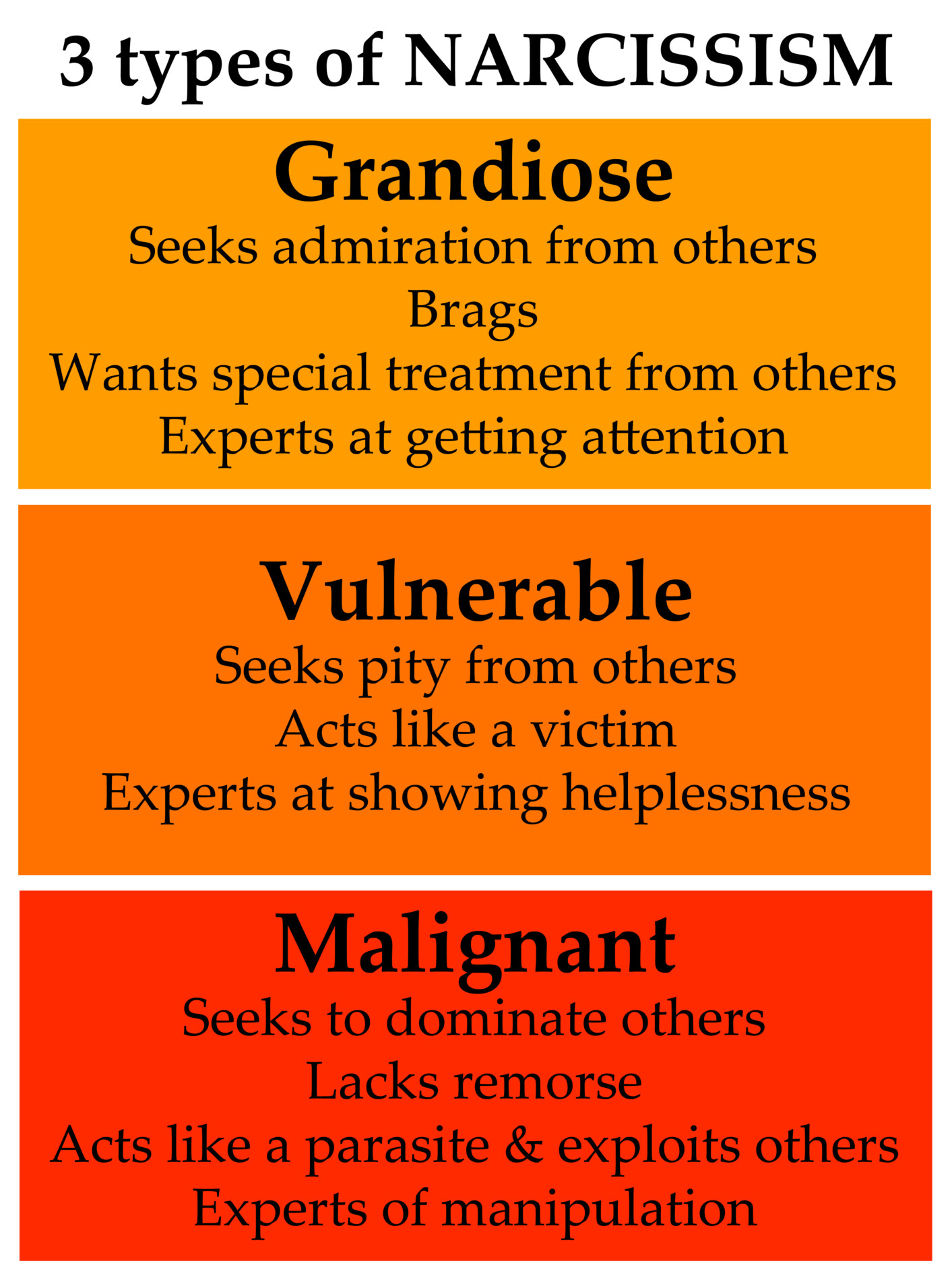
Narcissistic personality disorder (NPD) is defined by “a pattern of grandiosity, need for admiration, and lack of empathy” that impairs functioning across multiple areas of life (American Psychiatric Association, 2013).
People with NPD may exaggerate their talents, crave constant validation, and feel entitled to special treatment. Despite seeming confident, they often have fragile self-esteem.
The confidence is rarely as solid as it looks, and criticism or rejection can trigger a strong reaction. That gap can make diagnosis difficult.

This article is for informational and educational purposes only and is not intended to be a substitute for professional medical advice, diagnosis, or treatment.

Always seek the advice of your physician, therapist, or other qualified health provider with any questions you may have regarding a medical or mental health condition.

Never disregard professional advice or delay in seeking it because of something you have read on this site.
It’s important to distinguish between clinical NPD and narcissistic traits commonly seen in the general population. Not all confident, ambitious, or self-promoting individuals have NPD.
In clinical psychology, NPD is a categorical diagnosis based on clear criteria, whereas in social psychology, narcissism is treated as a spectrum.
Statistical testing of narcissism scores backs this dimensional view: it finds no natural cut-off point separating “narcissists” from everyone else (Foster & Campbell, 2007).
Key Takeaways
- Core Criteria: NPD involves grandiosity, a constant need for admiration, and a lack of empathy. A diagnosis requires five or more of nine DSM-5 traits.
- Two Presentations: Grandiose (confident, entitled) and vulnerable (anxious, hypersensitive) narcissism look different but share the same core. The same person can shift between them.
- Empathy Paradox: People with NPD often understand what others feel (cognitive empathy) without actually sharing that feeling (affective empathy).
- Contested Diagnosis: DSM-5 nearly dropped NPD, and ICD-11 replaced it with a single, severity-graded diagnosis. Estimates of how common it is range from about 1% to 6%.
- Treatment Takes Time: No single proven protocol exists, but case evidence shows some people no longer meet diagnostic criteria after years of sustained psychotherapy.
Traits of Narcissistic Personality Disorder
Narcissistic personality disorder (NPD) is characterized by a long-standing pattern of grandiosity, a deep need for admiration, and a lack of empathy.
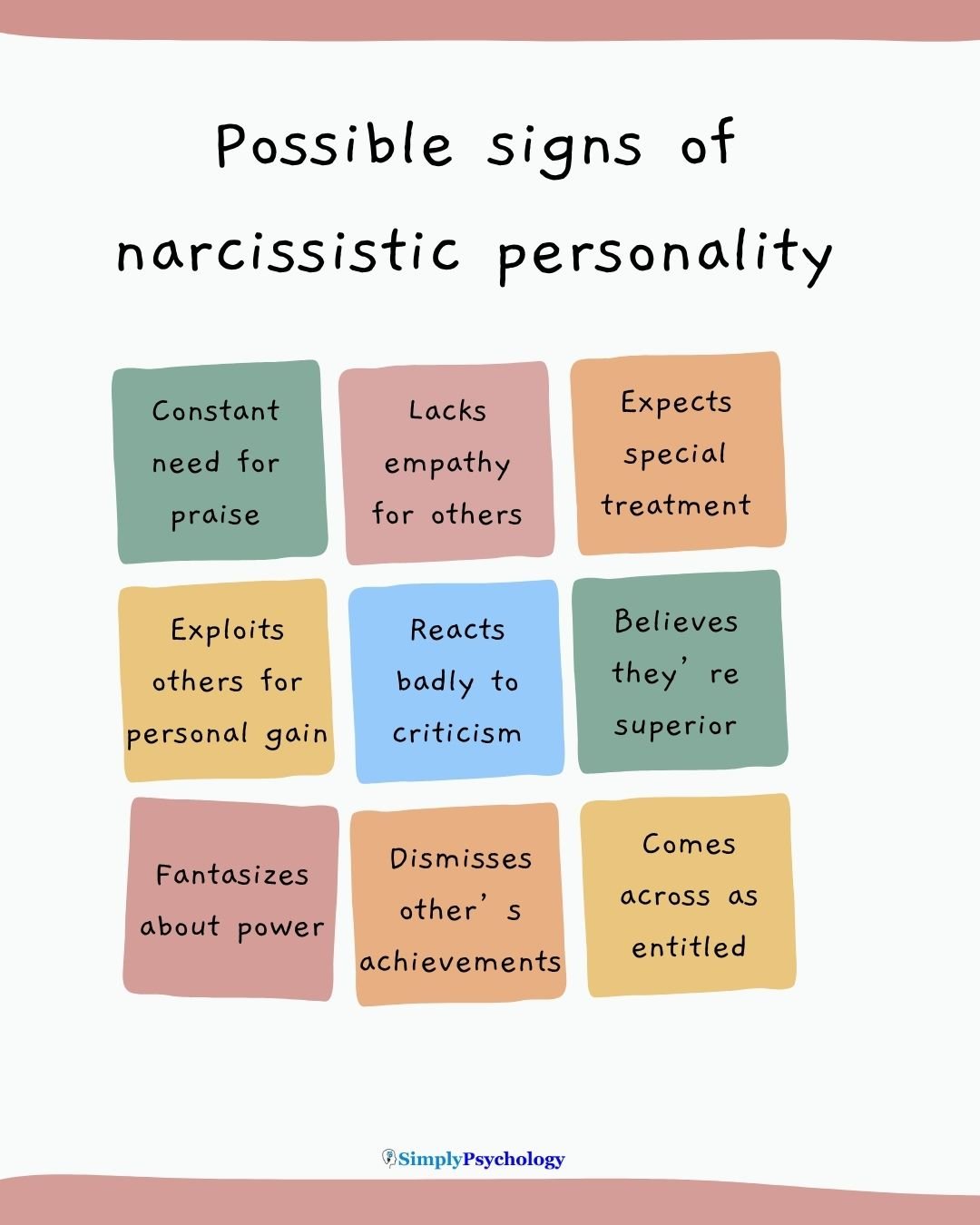
According to the DSM-5, at least five of the following traits must be present for a diagnosis. These traits typically begin in early adulthood and appear in a range of contexts, including work, family, and social life.
Grandiose Sense of Self-Importance
People with NPD tend to overinflate their abilities and expect recognition—even when it isn’t earned.
Example: A coworker may claim to be the most valuable team member, even when others contribute equally or more.
“I make people miserable with my heavy, self‑absorbed energy.”
Fantasies of Unlimited Success or Power
They may be preoccupied with ideas of brilliance, beauty, or perfect love.
Example: A friend might constantly talk about their future fame or wealth, with little realistic action toward those goals.
Belief in Being “Special”
They believe they can only be understood by, or should associate with, high-status people or institutions.
Example: Someone might refuse help from a therapist they see as “too ordinary,” insisting they need a celebrity expert.
Excessive Need for Admiration
A persistent hunger for praise, validation, and attention often drives their behavior.
Example: A parent with NPD might expect constant compliments from their children and become cold or angry if they feel ignored.
“Everything that comes out of my mouth is a subtle brag… The more people distance from me, the angrier I get.”
Sense of Entitlement
They expect special treatment and may become irritated when others don’t meet their demands.
Example: In a group project, they might demand leadership without doing their fair share of the work.
Exploitation of Others
They may use others for personal gain and lack concern for the impact.
Example: A friend may borrow money repeatedly and guilt you for not offering more, never intending to repay it.
“Sometimes I really hate myself for being this way & how people don’t know my real intentions behind my good deeds, while at other times I feel like I want to clone myself & marry me.”
Lack of Empathy
Understanding or caring about others’ emotions is often impaired.
Example: A romantic partner may dismiss your feelings entirely unless the conversation is about them.
“Weak people who don’t try to improve literally disgust me, while I respect the ones who actually put effort into being better ones, even if they don’t necessarily succeed.”
Envy and Belief Others Envy Them
They might express jealousy or assume others are jealous of them.
Example: A sibling might accuse you of being “threatened by their success” if you don’t praise them enough.
“Feeling like god then like shit when you see others doing better than you… feeling empty inside.”
Arrogant or Haughty Behavior
They often come across as condescending, critical, or dismissive of others.
Example: In social settings, they might interrupt or correct people frequently to assert superiority.
These traits are not just occasional behaviors—they form a consistent pattern that can seriously affect relationships, self-perception, and life functioning.
While someone may display narcissistic traits without meeting full criteria for NPD, the disorder involves a persistent and inflexible pattern that causes significant interpersonal or emotional problems.
First-person accounts of living with NPD are rare. The condition’s stigma discourages people from speaking publicly. So does the fact that its traits often feel normal to the person experiencing them.
Writing for the Australian broadcaster SBS, Kanika Batra was diagnosed with NPD after a breakdown at 21. She names the gap directly: “personality disorders are pervasive and cause issues in your everyday life, even if you’re in therapy” (Batra, 2021).
She recalls the “narcissistic lows” that followed. They came whenever the supply of compliments, admiration, or high marks ran out.
Batra directly challenges the popular “monster” narrative. “We are not simply arrogant; we have created a false self that serves to protect our inner core,” she writes (Batra, 2021).
That core, she says, is often damaged by childhood abuse or other trauma.
NPD and Empathy
Research suggests that people with NPD often retain cognitive empathy (understanding others’ feelings) but lack affective empathy (sharing those emotions). This allows them to read people without caring, enabling manipulation and emotional detachment—especially in grandiose narcissism
Types of Narcissistic Personality Disorder
While there’s debate over how many subtypes of narcissism exist, two commonly recognized forms are:
1. Overt (Grandiose) Narcissism
“Characterized by extraversion, low neuroticism, and overt expressions of feelings of superiority and entitlement” (Brogaard, 2019, p. 1).
People with overt narcissism:
- Appear confident, assertive, and socially skilled
- Crave admiration and status
- Believe they’re superior and expect special treatment
- Often pursue success, wealth, or influence
They may come across as charismatic but struggle with empathy and may exploit others to maintain a sense of importance.
2. Covert (Vulnerable) Narcissism
“Reflects introversive self-absorbedness, high neuroticism, hypersensitivity even to gentle criticism, and a constant need for reassurance” (Brogaard, 2019, p. 2).
People with covert narcissism:
- Appear shy, insecure, or emotionally sensitive
- Feel superior but fear rejection or criticism
- Often struggle with depression, trust issues, and envy (Emerton, 2020)
- React with defensiveness or self-pity when challenged
Despite appearing fragile, they still harbor fantasies of greatness or uniqueness and may show little concern for others’ feelings.
Key Difference:
While both types share traits like entitlement, low empathy, and inflated self-image, overt narcissists act outwardly superior, while covert narcissists conceal it behind emotional vulnerability.
Why Two Types? The Evidence Behind the Split
The grandiose/vulnerable split is not just a clinical impression. Wink (1991) tested it statistically. He analyzed six narcissism scales and found two independent factors: Grandiosity–Exhibitionism and Vulnerability–Sensitivity.
“Independent” matters here. A person’s score on one factor tells you nothing about their score on the other. Both still shared a common narcissistic core: conceit, self-indulgence, and disregard for others.
This two-factor structure has been replicated so consistently that it now organizes the field. Pincus and Lukowitsky (2010) add a caution, though.
Don’t treat “overt” and “covert” as fixed types. Grandiosity and vulnerability are better understood as broad themes, each expressed either overtly or covertly.
Clinically, the same person typically oscillates between grandiose and vulnerable states over time (Ronningstam, 2010; Caligor et al., 2015). A single snapshot can miss the diagnosis. It may simply catch someone in the “wrong” state.
How Narcissism Shows Up in Language
Research finds that people with narcissistic personality disorder often use boastful phrases (“I’m the best at this”) or subtly manipulative flattery (“Only someone as smart as you would understand me”).
Grandiose narcissists downplay others’ achievements, while vulnerable types use defensive or reactive language, especially when criticized. These patterns reflect deeper issues with identity, empathy, and self-worth.
What Causes Narcissistic Personality Disorder?
Narcissistic personality disorder (NPD) arises from a complex interplay between genetic vulnerability, early relational experiences, and environmental influences. While no single factor causes NPD, several contributing patterns have emerged in research.
Genetics and Temperament
Twin studies suggest that narcissism has a genetic component. A study of 175 twin pairs found narcissism to be the most heritable of 18 personality-disorder dimensions measured, at 64% (Livesley et al., 1993). Traits such as emotional sensitivity, impulsivity, and low empathy may be inherited.
A later twin study in China found something more specific.
Grandiosity and entitlement turned out to be partly distinct even at the genetic level, with largely separate genetic and environmental sources (Luo et al., 2014). Genes are not destiny, though. Non-shared environment still accounts for most of the remaining variation.
Childhood Experiences
Many individuals with NPD describe early environments that were either neglectful, unpredictable, or excessively focused on achievement. Contributing factors include:
- Emotional neglect or inconsistent caregiving
- Over-praise or excessive expectations tied to performance
- Harsh criticism, leading to fragile self-esteem and perfectionism
These conditions can hinder the development of a stable and secure sense of self.
Parental Overvaluation vs. Emotional Coldness
Clinical theory offers two competing explanations for where narcissism comes from.
Social-learning theory blames parental overvaluation, or treating a child as more special than reality supports. Classical psychoanalytic theory blames the opposite: a lack of parental warmth.
One large study tested both (Brummelman et al., 2015). It followed 565 children, aged 7 to 12, across four waves. Researchers measured the children’s narcissism and self-esteem, alongside their parents’ overvaluation and warmth.
The results were clean. Narcissism was predicted by parental overvaluation, not by a lack of warmth. Self-esteem was the opposite: predicted by warmth, not overvaluation.
In other words, children may partly absorb narcissism from parents who tell them they are superior or entitled to special treatment. Self-esteem works differently. It comes from a lack of warmth instead.
Attachment and Early Relational Patterns
Attachment theory offers further insight. Children who do not form secure attachments with caregivers may struggle with emotional regulation and self-worth.
Insecure or avoidant attachment styles can foster patterns of emotional detachment, defensiveness, and dependency on external validation—core features of narcissism.
For instance, a child who only receives attention when excelling may learn to equate love with achievement, fueling later entitlement or grandiosity.
Trauma and Identity Instability
Adverse childhood experiences—such as emotional abuse, rejection, or inconsistent parenting—can disrupt identity development.
In some cases, grandiosity and control become coping mechanisms to manage vulnerability or shame.
Cultural and Social Factors
Societal values also shape narcissistic traits. Western cultures that emphasize individual success, competitiveness, and appearance may reinforce narcissistic behaviors, particularly in youth.
How Is Narcissism Measured?
While there’s no single gold-standard test, clinicians use several tools to assess narcissistic traits:
- Self-report scales like the Narcissistic Personality Inventory (NPI) and Pathological Narcissism Inventory (PNI) are the most common.
- Clinical interviews (e.g., SCID-5-PD, Diagnostic Interview for Narcissism) help diagnose NPD based on DSM-5 criteria.
- Projective tests like the Rorschach and Thematic Apperception Test (TAT) may offer insight but are less standardized.
- Language patterns, such as excessive use of “I” or grandiose statements, are emerging research tools for detecting narcissistic traits.
Most importantly, having narcissistic traits doesn’t mean someone has NPD. A full diagnosis depends on persistent, impairing patterns—not just a few personality quirks.
Diagnostic Debate and Ongoing Research
Is NPD a Category or a Spectrum?
NPD’s place in the DSM-5 was almost lost. The manual’s initial proposal would have deleted the diagnosis altogether.
Miller et al. (2010) argued against deletion. They pointed to a large body of research linking narcissism to real-world harm. Any revision, they said, had to cover both grandiose and vulnerable presentations.
NPD stayed in the manual. But the debate left a mark: DSM-5’s Section III now offers an alternative model instead of a simple checklist.
It swaps a checklist for dimensions. NPD becomes impaired self- and interpersonal functioning, plus the traits of grandiosity and attention-seeking, mapped onto the Five-Factor Model’s antagonism, extraversion, neuroticism, and conscientiousness domains (Crego & Widiger, 2020).
The ICD-11 went further still. It dropped all specific personality-disorder categories, including NPD. In their place is one severity-graded diagnosis (World Health Organization, 2019).
That diagnosis uses trait qualifiers instead. They are dissociality (self-centredness, entitlement) and negative affectivity (anxiety, instability). The two systems now disagree about whether NPD is a real category at all. Statistical evidence favors the dimensional side of that disagreement (Foster & Campbell, 2007).
How Common Is NPD?
Estimates vary widely depending on how and where NPD is measured:
- National survey: A study of over 34,000 US adults found lifetime NPD prevalence of 6.2%, higher in men (7.7%) than women (4.8%) (Stinson et al., 2008).
- Stricter community studies: A systematic review using more rigorous, clinician-based diagnoses found a mean prevalence of just 1.06%. The honest range is likely 1–6% (Dhawan et al., 2010).
- Gender gap: A meta-analysis of 355 studies (about 470,000 people) found men score only modestly higher than women overall, mostly in entitlement and dominance. Vulnerable narcissism shows no gender gap at all (Grijalva et al., 2015).
- Comorbidity: NPD often co-occurs with mood, anxiety, and substance-use disorders. Depression is often what actually brings someone into treatment (Stinson et al., 2008; Caligor et al., 2015).
Contemporary Research
A field-defining review by Miller et al. (2017) argues the single most damaging practice in narcissism research has been failing to separate grandiose from vulnerable presentations.
The two have different temperamental roots and different clinical needs. Lumping them together produced years of contradictory findings.
Breaking narcissism down by trait resolves most of these old controversies. Entitlement and antagonism form the shared core. Extraversion drives the grandiose form; neuroticism drives the vulnerable one.
This trait-based view also explains why DSM-5 nearly deleted NPD, and why ICD-11 dropped it altogether (Miller et al., 2017; Miller et al., 2010).
Treatment
Although treatment for those with NPD can be difficult because these individuals generally do not believe they have a problem, there are options.
The first line of defense, and often best, is psychotherapy. The research on psychotherapy for NPD is still developing. Several types are used, and some have been adapted from treatments for borderline personality disorder.
Transference-focused psychotherapy (TFP)
This psychodynamic therapy “focuses on unconscious processes as they are manifested in a person’s present behavior” (Substance Abuse and Mental Health Administration, 1999).
It focuses on the relationship between the clinician and the client, as well as the client’s relationships with the outside world.
The treatment begins with a verbal contract between the two, laying out each member’s roles and responsibilities during treatment. The clinician and the client work together to address any issues the client may have.
Schema-focused therapy
Schema-focused therapy identifies and restructures a person’s schemas: deep-seated patterns for interpreting themselves and others. It combines psychodynamic therapy with cognitive behavioral therapy (CBT).CBT is “a short-term, goal-oriented psychotherapy treatment…” (Martin, 2016, p.1). Its goal is to “…change patterns of thinking or behavior that are behind people’s difficulties, and so change the way they feel” (Martin, 2016, p.1).
Schema-focused therapy helps replace unhealthy schemas (how the client organizes and interprets information) (Tartakovsky, 2017).
Dialectical behavioral therapy (DBT)
Dialectical behavioral therapy (DBT) has proven effective for many disorders, including NPD.
This form of CBT “focuses on mindfulness, emotional regulation, distress tolerance, and relationship skills” (Tartakovsky, 2017, p. 2).
Metacognitive interpersonal therapy (MIT)
This is a type of therapy specifically designed to treat individuals with NPD. In MIT, there are two stages: stage setting and change promoting.
Stage setting involves “gaining a deeper understanding of the person’s interpersonal relationships by exploring different situations, memories, and recurrent patterns.”
The second stage, change promoting, works to shift perspective. Tartakovsky (2017, p. 2) explains that it “includes showing individuals that their ideas do not necessarily mirror reality and that situations can be understood differently when seen from another angle.”
It also involves “building new and healthier ways of thinking, feeling, and behaving.”
Medication
In more severe cases, medication may be prescribed for conditions that occur alongside NPD, such as mood stabilizers, antipsychotics, or antidepressants.
No medication treats NPD itself. These drugs are an adjunct to psychotherapy, not a replacement for it.
Dealing with Someone With NPD
Being in a personal relationship with someone who has NPD can be challenging; however, it is possible. Here are a few steps to take when interacting with someone with NPD.
Avoid particularly negative interactions (where possible)
Try not to get into conflict with someone who has NPD or purposely try to annoy them.
This may give them ammunition to manipulate, lash out, or possibly “get revenge” on you.
Set healthy boundaries
Those with NPD often do not have healthy boundaries (Kacel et al., 2017) but this does not mean you cannot set your own.
Although it can be scary and difficult, setting boundaries lets those with NPD understand that those who care for them have strong personal values.
Setting boundaries may involve reducing contact with the person, visiting them less often, or communicating to them directly that you will not tolerate their behavior. Make sure to set boundaries carefully, and it is advisable to have someone there as support.
Self-care
Taking care of oneself is important as well. Try practicing yoga, meditation, getting enough food and rest, or doing things one enjoys. It’s important to take care of yourself first before you can care for another.
Consider therapy
If the relationship becomes too stressful to self-manage, individuals are encouraged to seek help. Psychotherapy may help set and maintain boundaries, navigate stress, and feel validated.
Consider ending the relationship
If none of these steps are working effectively, the last option is ending the relationship. This can be an especially important step if the relationship is unhealthy or abusive.
It is important to self-reflect and be honest. If need be, taking a step back may be the best option.
Do you need mental health support?
USA
Contact the National Suicide Prevention Lifeline for support and assistance from a trained counselor. If you or a loved one are in immediate danger: https://suicidepreventionlifeline.org/
1-800-273-8255
UK
Contact the Samaritans for support and assistance from a trained counselor: https://www.samaritans.org/; email jo@samaritans.org .
Available 24 hours a day, 365 days a year (this number is FREE to call):
116-123
Rethink Mental Illness: rethink.org
0300 5000 927
Further Reading
- Yakeley, J. (2018). Current understanding of narcissism and narcissistic personality disorder. BJPsych advances, 24(5), 305-315.
- Baskin-Sommers, A., Krusemark, E., & Ronningstam, E. (2014). Empathy in narcissistic personality disorder: from clinical and empirical perspectives. Personality Disorders: Theory, Research, and Treatment, 5(3), 323.
- Kohut, H. (1966). Forms and transformations of narcissism. Journal of the American Psychoanalytic association, 14(2), 243-272.
- Wink, P. (1991). Two faces of narcissism. Journal of Personality and Social psychology, 61(4), 590.
- Stinson, F. S., Dawson, D. A., Goldstein, R. B., Chou, S. P., Huang, B., Smith, S. M., … & Grant, B. F. (2008). Prevalence, correlates, disability, and comorbidity of DSM-IV narcissistic personality disorder: results from the wave 2 national epidemiologic survey on alcohol and related conditions. Journal of Clinical Psychiatry, 69(7), 1033-1045.
- Ronningstam, E. (2010). Narcissistic personality disorder: A current review. Current psychiatry reports, 12(1), 68-75.
- Caligor, E., Levy, K. N., & Yeomans, F. E. (2015). Narcissistic personality disorder: Diagnostic and clinical challenges. American Journal of Psychiatry, 172(5), 415-422.
- Ronningstam, E. (2010). Narcissistic personality disorder: A current review. Current psychiatry reports, 12(1), 68-75.
- Dhawan, N., Kunik, M. E., Oldham, J., & Coverdale, J. (2010). Prevalence and treatment of narcissistic personality disorder in the community: a systematic review. Comprehensive psychiatry, 51(4), 333-339.
References
American Psychiatric Association. (2013). Diagnostic and statistical manual of mental disorders (5th ed.). https://doi.org/10.1176/appi.books.9780890425596
Batra, K. (2021, October 19). What it’s like to live with narcissistic personality disorder. SBS Insight. https://www.sbs.com.au/news/insight/article/what-its-like-to-live-with-narcissistic-personality-disorder/ynbih9yx9
Brummelman, E., Thomaes, S., Nelemans, S. A., Orobio de Castro, B., Overbeek, G., & Bushman, B. J. (2015). Origins of narcissism in children. Proceedings of the National Academy of Sciences, 112(12), 3659–3662. https://doi.org/10.1073/pnas.1420870112
Cain, N. M., Pincus, A. L., & Ansell, E. B. (2008). Narcissism at the crossroads: Phenotypic description of pathological narcissism across clinical theory, social/personality psychology, and psychiatric diagnosis. Clinical Psychology Review, 28 (4), 638–656.
Caligor, E., Levy, K. N., & Yeomans, F. E. (2015). Narcissistic personality disorder: Diagnostic and clinical challenges. American Journal of Psychiatry, 172(5), 415–422. https://doi.org/10.1176/appi.ajp.2014.14060723
Crego, C., & Widiger, T. A. (2020). Personality disorders. In R. Biswas-Diener & E. Diener (Eds.), Noba textbook series: Psychology. DEF Publishers. http://noba.to/67mvg5r2
Di Giacomo, E., Andreini, E., Lorusso, O., & Clerici, M. (2023). The dark side of empathy in narcissistic personality disorder. Frontiers in Psychiatry, 14, 1074558. https://doi.org/10.3389/fpsyt.2023.1074558
Elleuch, D. (2024). Narcissistic Personality Disorder through psycholinguistic analysis and neuroscientific correlates. Frontiers in Behavioral Neuroscience, 18, 1354258. https://doi.org/10.3389/fnbeh.2024.1354258
Emerton, N. (2020, January 08). Narcissistic personality disorder – overt and covert. Retrieved September 08, 2020, from https://www.beu.org.uk/new-blogs/2020/1/8/narcissistic-personality-disorder-overt-and-covert
Foster, J. D., & Campbell, W. K. (2007). Are there such things as ‘“Narcissists”’ in social psychology? A taxometric analysis of the Narcissistic Personality Inventory. Science Direct, 1321–1332.
Grijalva, E., Newman, D. A., Tay, L., Donnellan, M. B., Harms, P. D., Robins, R. W., & Yan, T. (2015). Gender differences in narcissism: A meta-analytic review. Psychological Bulletin, 141(2), 261–310. https://doi.org/10.1037/a0038231
Gunderson, J. G., Ronningstam, E., & Bodkin, A. (1990). The diagnostic interview for narcissistic patients. Archives of General Psychiatry, 47 (7), 676–680.
Kacel, E., Enis, N., & Pereira, D. (2017, August 2). Narcissistic Personality Disorder in Clinical Health Psychology Practice: Case Studies of Comorbid Psychological Distress and Life-Limiting Illness: Behavioral Medicine: Vol 43, No 3.
Konrath, S., Meier, B. P., & Bushman, B. J. (2014). Development and Validation of the Single Item Narcissism Scale (SINS). PLoS ONE, 9 (8).
Livesley, W. J., Jang, K. L., Jackson, D. N., & Vernon, P. A. (1993). Genetic and environmental contributions to dimensions of personality disorder. American Journal of Psychiatry, 150(12), 1826–1831. https://doi.org/10.1176/ajp.150.12.1826
Luo, Y. L. L., Cai, H., & Song, H. (2014). A behavioral genetic study of intrapersonal and interpersonal dimensions of narcissism. PLoS ONE, 9(4), Article e93403. https://doi.org/10.1371/journal.pone.0093403
Miller, J. D., Widiger, T. A., & Campbell, W. K. (2010). Narcissistic personality disorder and the DSM-V. Journal of Abnormal Psychology, 119(4), 640–649. https://doi.org/10.1037/a0019529
Miller, J. D., Lynam, D. R., Hyatt, C. S., & Campbell, W. K. (2017). Controversies in narcissism. Annual Review of Clinical Psychology, 13, 291–315. https://doi.org/10.1146/annurev-clinpsy-032816-045244
Pincus, A. L., & Lukowitsky, M. R. (2010). Pathological narcissism and narcissistic personality disorder. Annual Review of Clinical Psychology, 6, 421–446. https://doi.org/10.1146/annurev.clinpsy.121208.131215
Ronningstam, E. (2010). Narcissistic personality disorder: A current review. Current Psychiatry Reports, 12(1), 68–75. https://doi.org/10.1007/s11920-009-0084-z
Weinberg, I., & Ronningstam, E. (2020). Dos and don’ts in treatments of patients with narcissistic personality disorder. Journal of Personality Disorders, 34(Suppl.), 122–142. https://doi.org/10.1521/pedi.2020.34.supp.122
Weinberg, I., Ronningstam, E., Ravichandran, C., & Gunderson, J. G. (2024). Can patients with narcissistic personality disorder change? A case series. Journal of Nervous & Mental Disease, 212(7), 392–397. https://doi.org/10.1097/nmd.0000000000001777
Wink, P. (1991). Two faces of narcissism. Journal of Personality and Social Psychology, 61(4), 590–597. https://doi.org/10.1037/0022-3514.61.4.590
World Health Organization. (2019). International statistical classification of diseases and related health problems (11th ed.). https://icd.who.int/