If you’re asking yourself, “Am I the problem in my relationship?”, you probably know that some of your relationship behaviors are problematic.
Maybe you shouted at your partner and said hurtful things you didn’t mean, and now you’re full of regret.
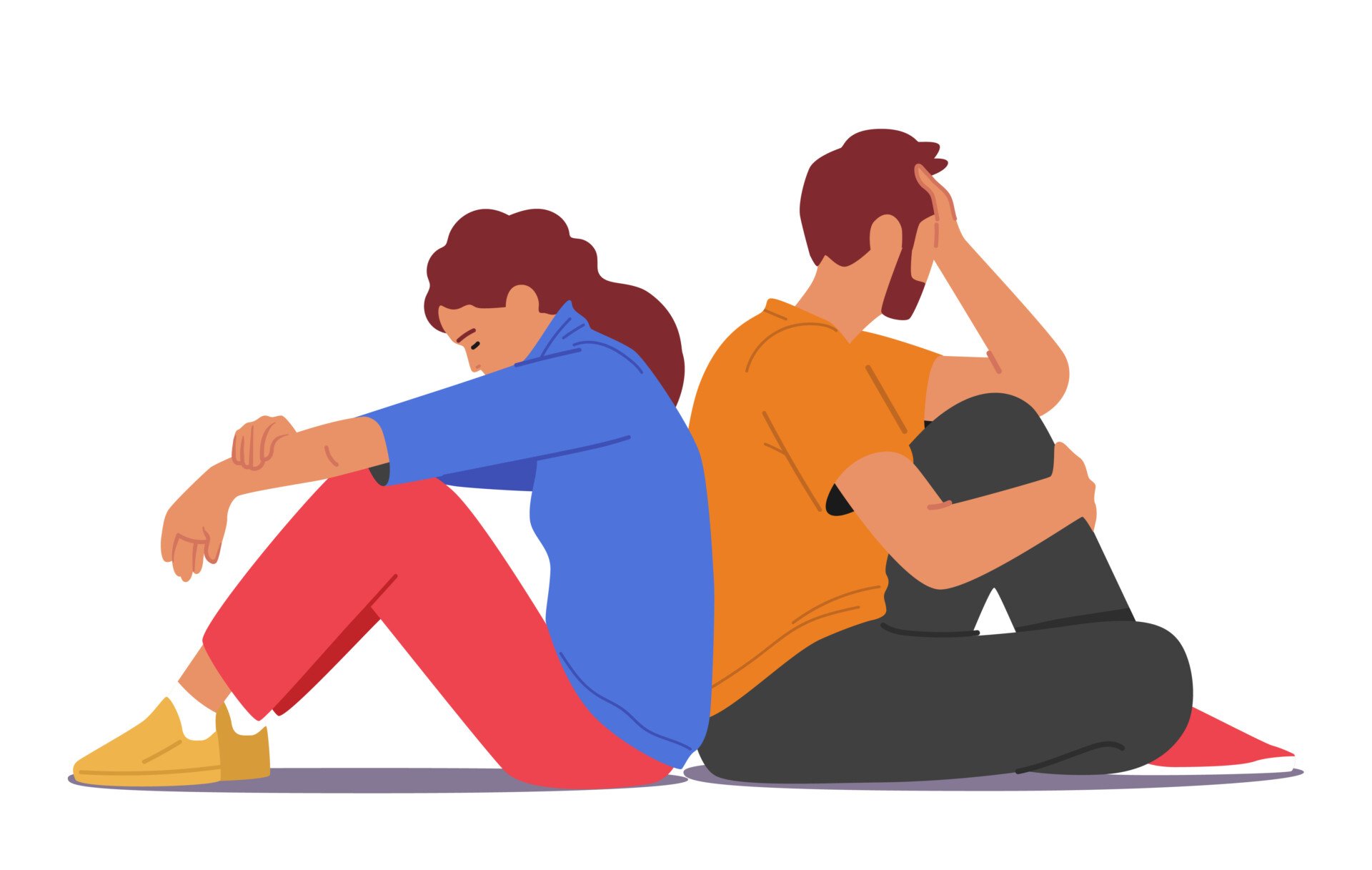
You might be urged to punish your partner and catch yourself planning how to do that best.
Asking yourself the question, “am I the problem in my relationship?”, is actually a good thing because it means you’re willing to reflect and want to do better.
Everyone can be dysfunctional sometimes – most of us have said hurtful things to our partner that we later regretted and behaved in ways that weren’t helpful.
But when this becomes a trend, and your behavior impacts your partner’s self-esteem and well-being, then that’s a serious problem.
That’s not to say the relationship is doomed and you’re beyond help – practicing self-awareness and realizing that you might be the problem (or at least part of it) is a step in the right direction.
And anyway, it’s rarely one person who’s the problem; it’s usually the dynamic between two people, so just because you’re the problem, doesn’t mean your partner is innocent.
The psychotherapist Esther Perel describes this kind of pattern as a “dance”: one partner’s withdrawal intensifies the other’s pursuit, and the pursuit intensifies the other’s need to retreat. In her words, “each person is cocreating the other.”
This mutual framing fits everyday friction. But it has a limit. It doesn’t apply to relationships involving coercive control or one-sided abuse, where responsibility isn’t meaningfully shared.
The point of this article is to identify what’s going on and find solutions, it’s not about blame. However, when you’re reading through the information, you need to be really honest with yourself.
Am I The Problem In My Relationship?
You might be aware of some of your problematic behaviors, but others may not have occurred to you yet.
When you’re reading through the signs, take a moment to reflect and ask yourself honestly: am I guilty of this?
Reflect on your own behaviors and how they might be impacting the relationship. Have an open, non-judgmental talk with your partner about the issues from both of your perspectives.
Listen, validate, and try to understand where they are coming from too. The goal is compromise and solutions, not blame or accusations.
Codependency
- Do you put your partner’s needs before your own?
- Does it make you feel resentful?
- When you feel your partner doesn’t need you, does that make you feel depressed or purposeless?
- Does saying no fill you with anxiety and guilt?
Codependent relationships are, by definition, unhealthy.
The codependent person gives and gives and never asks for their needs to be met. But they want their needs to be met and act in passive-aggressive ways when they don’t feel appreciated and valued.
They expect their partner to take on their unsolicited advice and sulk if they don’t.
Because they want to feel needed, they (unconsciously) encourage their partner to become dependent on them.
Codependent individuals tend to believe that their partner is the problem and that they do everything for the relationship. But in reality, their behavior is also problematic and damaging.
Insecure Attachment Style
- Do you push your partner away?
- Is independence the most important thing to you?
- Do relationships make you feel suffocated?
- Or, conversely, are you obsessed with the relationship?
- Are you constantly looking for signs of rejection?
- Do you need other people’s approval to feel good about yourself?
Attachment styles can have a significant impact on the health of relationships.
The pattern shows up in different ways.
If you have an avoidant attachment style, you put a lot of importance on independence. This can mean pushing your partner away and avoiding commitment, especially when things are going well.
If you have an anxious attachment style, you can become very dependent on your partner. You watch closely for rejection. This can make you overly sensitive to criticism.
The fear of losing them can take over. It then pushes you into behaviors that make your partner more likely to pull away, like clinginess or constantly seeking reassurance.
If you have a disorganized attachment style, you sway between anxious and avoidant behaviors.
Sometimes you push your partner away. Other times you cling to them instead. This inconsistency can be very confusing to your partner, who doesn’t know how to act.
You may believe people are purposefully trying to hurt you, and this can lead to passive-aggressive or openly aggressive outbursts.
Understanding your attachment style can shed light on why some of your behaviors are problematic. It develops in childhood, so it isn’t your fault. But healing your attachment insecurities is your own responsibility if you want healthier relationships.
Passive-Aggressive Behavior
Do you communicate openly and honestly with your partner or make them feel bad by being passive-aggressive?
Sarcasm, giving someone the silent treatment, and withholding affection and sex are just a few examples of passive-aggressive behavior that can be unhealthy for communication and relationships over time.
Sarcasm is a bit of a grey area.
Sarcasm can be playful and can even ease tension. For example, instead of shouting when your partner hasn’t cleaned up, you might say, “Oh, I love it when the house is decorated with your clothes.”
It becomes a problem when it’s used to belittle a partner or to dodge a real conversation.
Stonewalling, ignoring and turning away from a partner, is rarely a productive strategy. Neither is withholding affection as a form of punishment.
Even when you’re annoyed, say so directly. Tell your partner, “I need a time out” or “I need a moment to myself,” instead of shutting them out and leaving them feeling hated.
If you’ve got a problem, say so. Passive-aggressiveness never really helps.
Communication Issues
- Do you shout at your partner?
- Do you threaten them?
- Is your tone belittling and sarcastic during arguments?
- Are you a good listener, or do you interrupt your partner when they’re speaking?
- Do you make sweeping statements like “You never do anything around the house”?
Your style of communication has a very big impact on your relationship.
Being verbally abusive is problematic. You’re very rarely entitled to shout, threaten, or belittle your partner, though if your partner did something truly awful, a bit of shouting might be understandable.
Communication is helpful when you’re focusing on the solution and want to find a way that works for everyone involved. It’s unhelpful when you focus on the problem, blame, and want to make the other person feel bad.
Do you frequently criticize your partner’s financial decisions, parenting style, career choices or other things they feel are unfair oversteps? Judging too harshly can degrade loving feelings.
If you avoid communication and block your partner’s attempts at connecting and working through issues, that’s problematic.
Not listening, interrupting, not letting your partner make their point, and impatiently wanting to make your point is also problematic.
Always Looking for Arguments and Conflict
- Have you been accused of always looking for arguments and conflict?
- Do you often focus on the problems instead of wanting to find a resolution?
- During an argument, do you try to catch your partner out, or do you expect the best of them?
Some people cause fights because they crave attention but haven’t learned to ask for it directly. Others don’t know how to name their feelings, so frustration comes out as anger. For some, conflict becomes a way to feel something when an otherwise calm relationship feels boring.
Whatever the reason, it rarely brings you closer.
Constantly arguing increases emotional distance instead of closeness. The same is true of how you act within an argument: getting defensive, insisting on being right, withdrawing, or making hurtful comments during a disagreement. These are all signs pointing the same way, distinct from simply disagreeing, which is normal.
Selfish and Stubborn Behavior
- Are your needs more important than your partner’s?
- Do you think it’s your partner’s job to make you happy but not vice versa?
- Is it your way or the highway? Do you apologize and make the first move to make up?
- Or is that your partner’s job?
Selfish and stubborn behaviors and attitudes in a relationship are not helpful.
Is your partner just there to make you happy? If they don’t do what you say, do you get angry and feel like you want to break up?
If yes, then that could be a problem.
Relationships are about compromise, working things out together, making joint decisions, and finding solutions and ways to manage conflict.
Relationships are not about always putting your own needs first and having it your way every time.
Sometimes, doing things just to make your partner happy goes a long way.
Distrust and Jealousy
Do you distrust your partner? Do you think they have bad intentions? Are you very jealous?
It’s rather normal to experience some jealousy in relationships, especially if your partner is giving you a reason to feel jealous.
However, if your partner has never given you a reason to distrust them or be so jealous, then what’s going on?
Acting this way and constantly accusing your partner of doing this is unhealthy for a relationship. If your jealousy and distrust are out of control, then maybe the way forward is to work on your insecurities.
Lack of Effort or Disengagement
- Does your partner complain about you not putting any effort into the relationship?
- Have you been accused of taking them for granted?
- Do you only do what you want to do rather than making plans together?
For a relationship to work, everyone involved must put in some effort.
Hollywood likes to make us think that relationships are either perfect or doomed, but in reality, they need work and commitment.
As the vow goes, “in good times and in bad, in sickness and health.”
If you’re not into your partner and the relationship anymore, and you’ve tried everything to make it better, maybe it’s not a good fit. You might be better off going your separate ways.
But maybe it just needs some work.
Is it possible that you have stopped putting in effort and are just focusing on yourself? It might be your attitude that’s the problem!
If your partner annoys you or you notice that you don’t really like your partner, you may think that means your partner is the problem.
But if you stay with them and don’t communicate about your feelings, then that actually makes you the problem.
This kind of chronic withdrawal has a name in relationship research: the demand-withdraw pattern. One partner presses for change. The other avoids the conversation.
Christensen and Heavey (1990) observed 31 couples discussing a change one partner wanted. They found a consistent pattern. Whichever partner wanted the change was more likely to press the issue, while the other was more likely to withdraw, regardless of gender.
More recent research shows what this pattern can cost. Couples who fell into demand-withdraw during arguments about their sex life reported lower relationship and sexual satisfaction at the time, and declining happiness later on (Rosen et al., 2024).
Playing Mind Games
- Do you blame your partner a lot and avoid taking responsibility?
- Do you say “I’m fine” when you’re actually annoyed?
- Do you expect your partner to read your mind instead of just telling him/ her what’s going on?
Mind games are a form of manipulation and passive-aggressive behavior.
People who play them are trying to avoid direct communication, conflict, and accountability.
If you play mind games, you’re trying to get what you want by being underhanded, and that’s a problem.
Gaslighting is a big one.
We probably engage in accidental gaslighting sometimes, like when we tell our partner, “It’s not that bad,” when they’re upset about something.
However, if it’s your go-to strategy and you do it to manipulate your partner, that’s problematic.
Perel is a well-known couples therapist. She’s the author of Mating in Captivity.
As she explains on her podcast Where Should We Begin?, chronic confusion is itself a warning sign worth taking seriously. Responding to a caller who wondered whether she was being gaslit or was simply “overly sensitive,” Perel named “reality manipulation, scapegoating, coercion, or straight-up lying” as core tactics.
For example, it’s a problem if you:
- Cheat and deny it by saying, “You’re just paranoid/ crazy.”
- Blame your poor behavior on your partner, “I only did that because you provoked me.”
- Shut down your partner, “Not this again” or “Oh my god, you’re so annoying, why do you always have to bring that up – who cares?”
Playing mind games is bad for relationships, and you should stop playing them if you want a healthy relationship.
There’s really no benefit to playing games with your partner and his/her feelings.
Cheating and Unfaithfulness
- Do you cheat on your partner?
- Do you gossip and put them down behind their back?
- Do you lie to them a lot?
It goes without saying that cheating and being unfaithful are not good for a relationship.
Have you made up excuses for sleeping with other people and lying to your partner about it? We tend to justify our actions in all sorts of ways. That doesn’t make it any better.
If you want to open up the relationship, say so directly to your partner. Otherwise, why stay together instead of being single?
It’s probably normal to speak to your friends about your relationship and complain about certain things but you should be saying those things to your partner as well.
You should have their back and protect them. If you turn it around and imagine your partner saying those things about you to his/her friends, how would you feel?
Emotional, mental, and physical infidelity is problematic.
So, Are You the Problem?
If several, many, or all of the signs above apply to you, then your relationship behavior is problematic to some degree.
This isn’t necessarily a problem if it happens occasionally.
The honest question is whether it’s become a pattern, one that measurably affects your partner’s mental health and self-esteem.
Many of these behaviors trace back to insecurity and low self-esteem. In some cases, they’re a sign of narcissistic or otherwise toxic traits.
Recent research complicates that picture, though.
A five-year study of over 1,000 couples found the reverse link was often stronger. Perceiving more conflict predicted a later drop in a person’s own self-esteem, more than low self-esteem predicted future conflict (Richter & Finn, 2021).
In other words, insecurity may be as much a result of conflict as a cause of it. That’s worth remembering. Don’t pin every pattern above on low self-esteem alone.
But if you’re reading this article, you clearly have some introspection already. You know, at least to some extent, that the way you behave is part of the problem, and you want to do something about it.
Why Is It Hard to Judge If You’re the Problem?
Even an honest attempt to answer the questions above runs into a real obstacle. Research on attribution shows people are systematically bad at judging their own contribution to conflict, for reasons that have nothing to do with effort or self-awareness.
The Story You Tell About What Happened
When something goes wrong, you make two judgments without noticing. A causal attribution asks why it happened. A responsibility attribution asks whose fault it was, and whether it was intentional.
Bradbury and Fincham (1990) reviewed decades of research on how married couples explain each other’s behavior. They found two habitual patterns.
In a relationship-enhancing pattern, good behavior gets credited to a partner’s character. Bad behavior gets excused as situational, for example “she’s generous” versus “he snapped because he’d had an awful day.”
In a distress-maintaining pattern, it flips. Good behavior goes uncredited. Bad behavior gets read as proof of a fixed, selfish trait, for example “she’s always like this.”
Distressed couples show far more of the second pattern (Bradbury & Fincham, 1990). And it isn’t just a private belief.
Bradbury and Fincham (1992) observed married couples during a real problem-solving discussion. Wives who made more of these negative, trait-based explanations for their husband’s behavior also acted more negatively themselves during the conversation moments later.
Why You Judge Yourself More Kindly Than Your Partner
A second obstacle applies specifically to judging your own behavior. Jones and Nisbett (1971) called this the actor-observer asymmetry.
People tend to explain their own actions by pointing to the situation, for example “I snapped because I was exhausted.” But they judge others differently. The exact same action, done by someone else, gets pinned on that person’s character instead, for example “they snapped because they’re selfish.”
Miller and Ross (1975) called this the self-serving bias. It’s a tendency to credit your own successes to your own ability. Your own failures get blamed on the situation, bad luck, or other people instead.
A large meta-analysis backs this up. It pooled 266 studies and confirmed the bias is real. Its size varies by culture and context, though (Mezulis et al., 2004).
Put together, both biases point the same way. Asking “am I the problem?” runs against a documented, largely automatic tendency: explain away your own contribution to conflict, while reading your partner’s identical behavior as a character flaw.
How to Be Less Problematic in Relationships
To explore how you can manage your own toxicity and problematic behaviors in relationships, let’s look at the good behaviors and skills for a relationship.
Communication
- Practice open and honest communication
- Develop your active listening skills
- Tell your partner when you need a time out instead of stonewalling them.
- Speak your mind truthfully and tell your partner directly when you are upset about something or they did something wrong – avoid mind games at all cost
- Be kind and respectful in your communication
- Express appreciation, and don’t be shy with compliments and kind words
Conflict Resolution
- Focus on solutions rather than problems
- Listen and take feedback on board
- Expect the best of your partner and encourage them to be the best version of themselves
- Compromise and try to see things from your partner’s perspective
- Remember that having arguments sometimes is normal – how you deal with the conflict is the important part
Intimacy
- Ask for attention, intimacy, and understanding rather than creating conflict and expecting your partner to know what you need
- Take an interest in your partner’s interests
- Do things that make your partner happy, even if you wouldn’t choose them yourself, like watching their favorite film or going to a sports event
- Make decisions together
- Do things that are fun and exciting
- Work on your sex life
Trust
- Stay emotionally and physically faithful
- Talk about your fears and dreams
- Make an effort, work on things, don’t give up as soon as the road gets a bit rocky
How do you achieve that? Here’s a bit of advice:
- Work on your insecurities and build confidence
- Nurture the relationship you have with yourself
- Find out what your attachment style is and how to heal attachment insecurities
- Set boundaries and teach each other how you want to be loved
- Free yourself of narcissistic traits
- Work on your empathy and put yourself in your partner’s position before you get angry or upset
- Go to individual and/or couples therapy
Key Takeaways
- Behavior Patterns: Codependency, insecure attachment, passive-aggressive communication, chronic conflict-seeking, distrust, disengagement, mind games, and infidelity are the main patterns that can make you the problem.
- Rarely One-Sided: Recognizing your own pattern doesn’t mean your partner is faultless; relationship difficulty is usually a dynamic both people contribute to and sustain.
- Self-Judgment Bias: The self-serving bias makes it naturally harder to spot your own contribution to conflict than your partner’s.
- Self-Esteem Link: Newer research suggests perceiving conflict often erodes self-esteem more than low self-esteem causes the conflict in the first place.
- Abuse Exception: This kind of self-check assumes an everyday, two-way dynamic. It doesn’t apply to relationships involving coercive control or one-sided abuse.
- The Fix: Improving communication, conflict resolution, intimacy, and trust addresses most of the problematic patterns above.
References
Bradbury, T. N., & Fincham, F. D. (1990). Attributions in marriage: Review and critique. Psychological Bulletin, 107(1), 3–33. https://doi.org/10.1037/0033-2909.107.1.3
Bradbury, T. N., & Fincham, F. D. (1992). Attributions and behavior in marital interaction. Journal of Personality and Social Psychology, 63(4), 613–628. https://doi.org/10.1037/0022-3514.63.4.613
Christensen, A., & Heavey, C. L. (1990). Gender and social structure in the demand/withdraw pattern of marital conflict. Journal of Personality and Social Psychology, 59(1), 73–81. https://doi.org/10.1037/0022-3514.59.1.73
Jones, E. E., & Nisbett, R. E. (1971). The actor and the observer: Divergent perceptions of the causes of behavior. General Learning Press.
Mezulis, A. H., Abramson, L. Y., Hyde, J. S., & Hankin, B. L. (2004). Is there a universal positivity bias in attributions? A meta-analytic review of individual, developmental, and cultural differences in the self-serving attributional bias. Psychological Bulletin, 130(5), 711–747. https://doi.org/10.1037/0033-2909.130.5.711
Miller, D. T., & Ross, M. (1975). Self-serving biases in the attribution of causality: Fact or fiction? Psychological Bulletin, 82(2), 213–225. https://doi.org/10.1037/h0076486
Perel, E. Am I Being Gaslit? Where Should We Begin? [Video]. YouTube. https://www.youtube.com/watch?v=ZSuCS-5MSH0
Perel, E. It’s Very Hard to Live with a Saint. Where Should We Begin? [Video]. YouTube. https://www.youtube.com/watch?v=5INpJUD7G8U
Richter, J., & Finn, C. (2021). Transactions between self-esteem and perceived conflict in romantic relationships: A 5-year longitudinal study. PLOS ONE, 16(4), e0248620. https://doi.org/10.1371/journal.pone.0248620
Rosen, N. O., Dubé, J. P., Bosisio, M., & Bergeron, S. (2024). Do demand-withdrawal communication patterns during sexual conflict predict couples’ relationship satisfaction, sexual satisfaction, and sexual distress? An observational and prospective study. The Journal of Sex Research, 62(5), 787–799. https://doi.org/10.1080/00224499.2024.2386997


